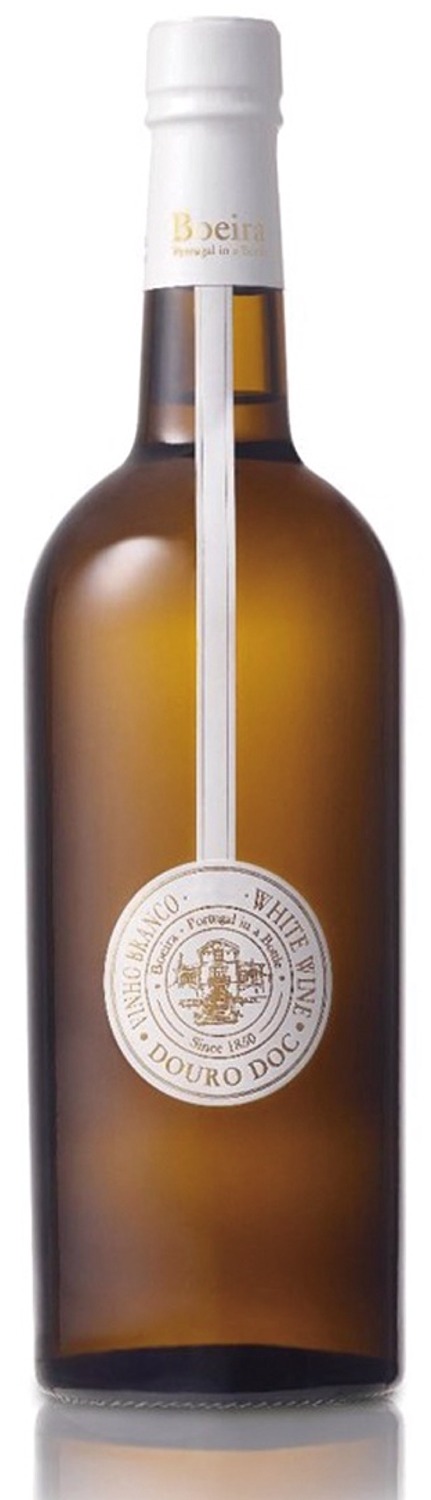
" We don't sell the wine without touching the vine "

Boeira Douro White 40% Malvasia Fina, 30% Rabigato, 20% Gouveio and 10% Fernão Pires.
Good volume in mouth revealing its fruity character, now enhanced with a citrus component. Slight mineral touch that gives it personality. It is a complex and deep wine with a persistent finish.
Good accompaniment to fish dishes, salads, and can also be drunk as appetizers. Should be consumed at a temperature between 8º and 10ºC.

Boeira Douro Reserve Red is made from 35% Touriga Nacional, 35% Tinta Roriz and 30% Touriga Franca.
Smooth attack with good structure and excellent mouth feel. Fresh, with well integrated tannins bringing elegance and a gastronomic profile to the wine. Very well balanced.
No Oak.Boeira Douro Doc Red Reserve from the Douro Valley is the result of a careful blend of different varieties from the Douro. After fermentation the wine was left in contact with its lees until bottling in order to develop complexity and richness.
Ideal for red meat dishes, such as beef or roast beef with strong spices, thus associating with some traditional Portuguese dishes such as roasted lamb or veal steak. The wine should be served between 16º and 18ºC.

Boeira White Diamond Port is made from Malvasia Fin, Viosinho, Gouveio, and Côdega de Larinho.
Clear amber color, on the nose aromas of citrus, tangerine peel, peaches and honey. In the mouth it is full but elegant, well integrated and persistent finish
Boeira White Diamond Port is the perfect companion for a number of foods including appetizers, lean fish, salads, pasta or desert like apple pie or crème brulée.

Ibizkus White Tierra Ibiza is made from 90% Malvasia and 10% of other grape varietals (Macabeo, Muscat and Chardonnay).
With the Malvasia grape as the protagonist, Ibizkus white is an intense wine with its own personality. A straw yellow color with golden hus, it is medium-bodied, smooth, creamy and aromatic with citrus fruit, stone fruit and smoked fragrances. Silky on the palate with balanced acidity..
Vineyards on the west of the island bring density and fullness to the wine while the Cala Mastella vineyards add freshness.
Malvasia is grown on calcareous clay terraces in the San Mateo region and limestone rock slopes on a vineyard close to the sea at 180-metre altitude.
Review:
"Fragrant wine with a pot-pourri of flavors: apricot, hop flowers, cucumber skin and jasmine. Slightly spritzy. Would really shine with food perhaps.
- Decanter World Wine Awards, Silver Medal - 90 pts

Pioneiro White Wine Vinho Regional Peninsula de Setubal is made from 70% Fernao Pires and 30% Moscatel Graudo
Aged on the fine lees for 5 months in stainless steel tanks
The story of this wines begun more than a century ago, with the pioneering dream of Venâncio da Costa Lima: to bring good wines to every corner of Portugal. Pioneiro wine brand was created to pay homage to his vision.
What's Unique? Pioneiro (meaning “pioneer” in Portuguese) wine vintage style label pay homage to the founder’s dream, dating back to 1914. But in a relaxed, casual way, typical of this wine producer mood.
Yellow citrine. Intense floral aroma with notes of tropical fruit, balanced and fresh flavor. A modern profile and young wine.
Made from 15 year old vines, planted on sandy soils.
Upon arrival at the winery, the grapes are destemmed and pressed gently with a pneumatic press. Then, the juice is transfered in a temperature-controlled stainless steel tank in order to start the alcoholic fermentation.
The wine didn't go through malolactic fermentation.
Pairs with fish or white meat dishes, shellfish and salads

Boeira Tawny 20 Year Port is made from 40% Touriga Nacional, 30% Touriga Francesa and 30% Tinta Roriz.
A Good Complexity of Natural Flavors of Cassis, Blackberries and Caramel.
Fermentation in steel tank and stopped by adding spirit and aged in oak barrels for 20 years. Wine was slightly filtered before bottling.
Boeira Douro White 40% Malvasia Fina, 30% Rabigato, 20% Gouveio and 10% Fernão Pires.
Good volume in mouth revealing its fruity character, now enhanced with a citrus component. Slight mineral touch that gives it personality. It is a complex and deep wine with a persistent finish.
Good accompaniment to fish dishes, salads, and can also be drunk as appetizers. Should be consumed at a temperature between 8º and 10ºC.
Quinta da Boeira was built by an emigrant named Manuel da Rocha Romariz, who returned from Brazil in the early 19th century. Knowing the Brazilian market, he registered as an exporter of Port Wine in 1850, using two trade names for the labels: ROMARIZ and BOEIRA.
These brands quickly won the consideration and confidence of consumers and distributors due to their quality, expanding to several markets, among which Portuguese, English, French and Brazilian stood out, among others.
In 1966, the property was acquired by an English family, the warehouses by a textile company and the wines were sold to a Port Wine exporting company.
In 1999 the property was put up for sale with the main interest of a contractor who intended to build luxury homes in a closed condominium.
Father João de Freitas Ferreira, director of a school in Vila Nova de Gaia, warned of the situation of the eminent possibility that the 3 hectares of the property could be transformed into massive construction, with the consequent destruction of its centennial grove.
Concerned and sensitized to the cause, Father João de Freitas Ferreira, integrating a group of ten friends, decided to acquire the property, thus protecting the centenary trees and the palace of the early 19th century.
For the acquisition of the property, a financial study was carried out with the division of investments into five phases:
FIRST PHASE
The transformation of stables and greenhouses into a multi-purpose hall with auditorium and the restoration of all paths in the gardens represented the initial phase of the project which, from the beginning, intended to transform Quinta da Boeira into a visiting room in the north of the country and, more specifically , in Vila Nova de Gaia.
SECOND PHASE
The recovery of the mansion, which was in an advanced state of deterioration, began, transforming it into offices and a luxury restaurant with a capacity for about 80 people seated.
THIRD PHASE
In order to attract tourists to the high elevation of the city of Vila Nova de Gaia, the largest bottle in the world was built, measuring 32 meters in length and 10 in diameter, thus allowing the creation of a tasting room and exhibition room to promote Portuguese wines, culture and gastronomy. It was also possible to adapt the room for the transmission of films in 3D, letting tourists know the different wine regions of Portugal.
FOURTH PHASE
With the objective of financially consolidating the entire project, Quinta da Boeira registered at the Instituto dos Vinhos do Douro e do Porto (IVDP) in 2017, thus returning to the genesis of Quinta da Boeira in 1850, as an exporter of Vinhos do Porto, under the BOEIRA brand.
FIFTH PHASE
The project, in its fifth and final phase, concluded with the construction of a 5-star hotel, with 119 rooms and 5 suites, whose construction was based on the green system. The most up-to-date environmental techniques were implemented, such as the use of groundwater to supply sanitary tanks and automatic irrigation of about 3 hectares of the property, with photovoltaic and solar energy also being used, which allowed for remarkable savings and drastic reduction in carbon emissions, transforming it into an ECO hotel.
The most recent challenge was the acquisition of the C. da Silva family home, a name also linked to the export of Port Wines, designed in the 19th century by the architect Teixeira Lopes. Quinta da Boeira is a reference in wines of superior quality, namely in Port Wine, duly certified by the Institute of Douro and Port Wines and proudly marked with the knight seal on the neck, according to the guidelines that the Observatório do Port wine advocates for the defense of the Porto Denomination of Origin.
Each Quinta da Boeira wine is a unique experience, in which Wine and Art are intimately linked, having their maximum exponent in unique bottles and which are distinguished by their shape and aesthetics, such as Diamond or Decanter.

Venancio da Costa Lima Palmela Reserva is made from 100% Castelao (also known as Periquita)
Intense garnet color, complex nose with touches of ripe fruit, jam and spices, full-bodied flavor and a very balanced finish.
100% Castelao (also known as "Periquita" and "Joao de Santarem". As the most widely-grown red grape variety in Portugal it is still often referred to in Portuguese as Periquita, although that name is legally owned by José Maria da Fonseca in the Setúbal Peninsula outside of Lisbon. It is highly adaptable to different climatic conditions and its remarkable versatility enables winemakers to make a range of wines – from the easy drinking and quaffable reds and rosados to the powerful and intense reds perfectly suited to lengthy cellaring. Castelão comes into its own and is most expressive in the Sétubal Peninsula, where it makes meaty and intense wines with aromas of red berries and blue flowers that marry well with the deft use of oak.
Made from 45 year old vines.
Classic vinification at controlled temperature (25 °C) with prolonged maceration for phenolic extraction. Wine went through malolactic fermentation.
Wine was slightly fitered before bottling to avoid sedimentation in the bottle and to ensure stability.
Pasta, Cheese, red meat and game.

Quinta de Fafide Reserva Branco is made from 50% Codega do Larinho, 30% Rabigato, 20% Viosinho
In this wine we look for an aromatic concentration and high acidity of the grapes from the very old traditional vineyards of high altitude in Douro Superior, about 550 meters above sea level, showing the full character of the varieties of indigenous Douro old vines, giving very mineral and creamy wines. Mineral aroma, citrus and tropical fruit, fresh and full-bodied on the palate, buttery texture and complexity provided by fermentation and ageing in barrels.

Rubus Reserve Pinot Noir Russian River is made from 100 percent Pinot Noir.
The Rubus Project was created by Fran Kysela as a way to source & sell incredible wines at value prices. All wines in this international project are hand-selected by Fran Kysela. Rubus wines are fruit driven, true-to-type values that over deliver - a true representation of quality for the consumer at an excellent price.
Rubus Reserve Pinot Noir is sourced from Russian River Valley. It shows complexity with raspberry and cherry notes that dance on the tongue.
Boeira Douro Reserve Red is made from 35% Touriga Nacional, 35% Tinta Roriz and 30% Touriga Franca.
Smooth attack with good structure and excellent mouth feel. Fresh, with well integrated tannins bringing elegance and a gastronomic profile to the wine. Very well balanced.
No Oak.Boeira Douro Doc Red Reserve from the Douro Valley is the result of a careful blend of different varieties from the Douro. After fermentation the wine was left in contact with its lees until bottling in order to develop complexity and richness.
Ideal for red meat dishes, such as beef or roast beef with strong spices, thus associating with some traditional Portuguese dishes such as roasted lamb or veal steak. The wine should be served between 16º and 18ºC.

All older vintage wines have been purchased from a single collectors cellar. Pictures can be requested before shipment.

Chavy-Chouet Bourgogne Blanc Femelottes is made form 100 percent Chardonnay.
This is a charming, rich, focused and delightful white. Medium-bodied with a smooth texture, the wine has a fresh backbone of acidity, clean apple and citrus flavors, and an excellent balance. A most refreshing quaff and one that is great value. A delicate, expressive wine of exceptional quality.
The grapes from this wine are grown from the Puligny-Montrachet area. (either outside of the AOC limit or with younger vines).
The grapes from this wine are grown from the Puligny-Montrachet area. (either outside of the AOC limit or with younger vines).
Aged 10 months in oak barrels (10% new, the rest in 2-3 year old barrels).