" We don't sell the wine without touching the vine "
| BUY MORE! SAVE MORE! | ||||||||||||||||||||
|
| Country: | Italy |
| Regions: | Piemonte Barolo |
| Winery: | G.D. Vajra |
| Grape Type: | Nebbiolo |
| Organic: | Yes |
| Vintage: | 2022 |
| Bottle Size: | 750 ml |
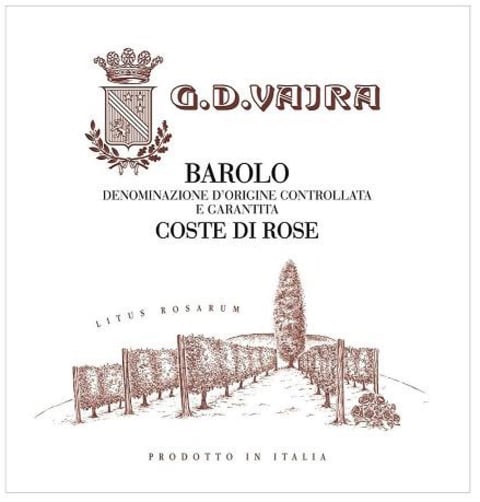
G.D. Vajra Barolo Coste di Rose is made from 100 percent Nebbiolo.
The Coste di Rose is a very seductive wine right out of the gate. Cherries and roses burst on the nose, with hints of amarena, red hard candy, wild berries, wet stone, mint and thyme. The palate is radiant and expressive, with all of the signature elements of Coste di Rose in nice evi-dence: the ethereal character, the saline, up-front tannic structure, and further whiffles of roses and cherries in the finish.
G.D. Vajra is one of Barolo's most beloved family estates, farming organically in La Morra since the early 1970s and known for fragrant, high-toned, transparent Nebbiolo. Coste di Rose is one of the highest and coolest crus in Barolo, its sandy, well-draining soils yielding especially perfumed and graceful wines; the 2022 is a touch more structured and powerful than most.
Review:
Floral, as is typical of this estate, with crunchy red fruit and rose petals. The palate is medium-bodied, with a blanket of delicate, tender fruit defined by chalky, precise yet silky tannins. Drinkable now with proper aeration, but will improve with some bottle age.
James Suckling, 96 points
-Monica Larner (Robert Parker) 95 Points
LAND There is no vineyard, no terroir, without the land. To love it is simple, but not easy. The land is generous and alive. It is beautiful. It needs understanding and time. It takes your breath away with its colors and many wonders. The land asks for absolute dedication. It asks to be loved for better or worse, in abundance and scarcity. The land is almost more than a house. It's part of our life and asks to be guarded with the same tenderness that we have for our loved ones. And the amazing thing is that, despite all the difficulties, to love it does not need any effort.
ROOTS "A tree does not grow without roots" "This is the origin of the esteem and affection for the people who have lived and loved our land. An affection that becomes a desire of identification and makes us want to share it with our friends." Giuseppe, Francesca, Isidoro. A special thank you to Mauro Fermariello, with whom we realized this interviews.

G.D. Vajra Barolo Coste di Rose is made from 100 percent Nebbiolo.
The Coste di Rose is a very seductive wine right out of the gate. Cherries and roses burst on the nose, with hints of amarena, red hard candy, wild berries, wet stone, mint and thyme. The palate is radiant and expressive, with all of the signature elements of Coste di Rose in nice evi-dence: the ethereal character, the saline, up-front tannic structure, and further whiffles of roses and cherries in the finish.
Review:
-Wine & Spirits 96 Points

G.D. Vajra Bricco Delle Viole Barolo is made from 100 percent Nebbiolo.
The Barolo Bricco delle Viole shows the signature verticality of its vineyard. The wine is beautifully layered and - while restrained as it’s always the case in the youth of Bricco delle Viole - it also shows a complexity of layers with purple flowers, sweet spices and mineral tones. The palate is noble, with a refined acid spine and profound tannins that promise a long aging potential.
Among the historical vineyards of Barolo, Bricco delle Viole is the highest and the closest to the Alps. It rises from 400 to 480 meters above sea level, on the Western ridge of the village. Its name, “Hill of Violets”, originates from the flowers that blossom early here due to the perfect south exposure. Up above the fogs, Bricco delle Viole enjoys the earliest sunrise and the last sunset every day. Thanks to its vines dating back to 1949 and -now- 1931, a dramatic diuturnal temperature range and this pure light, Bricco delle Viole generates a sophisticated and profound Barolo DOCG of bright aromatics, chiseled tannins and subtle minerality. 2018 is a vintage that shows many nuances of Bricco delle Viole: beyond the signature verticality of this site, the wine offers high tones laced with mineral nuances and plenty of energy and youth.
Review:
The 2018 Barolo Bricco delle Viole is not super intense, but it is balanced in its own way. The wine is subdued but complete with softly yielding tannins to support an elegantly streamlined mouthfeel. Bricco delle Viole is a high and cool growing site in Barolo at 400 to 480 meters in elevation with characteristic Sant'Agata marl soils with fossils. The wine represents a selection of fruit from over seven hectares. With fermentation in steel tank and aging in large Slavonian oak, you are invited to a silky, lifted and beautifully delicate experience with an accessible personality.
-Wine Advocate 95 Points
An elegant version, this red features rose, black currant, cherry, mineral and a hint of eucalyptus aromas and flavors. Linear in profile, this is solidly built on a graceful frame, with finely woven tannins and vibrant acidity.
- Wine Spectator 95 Points

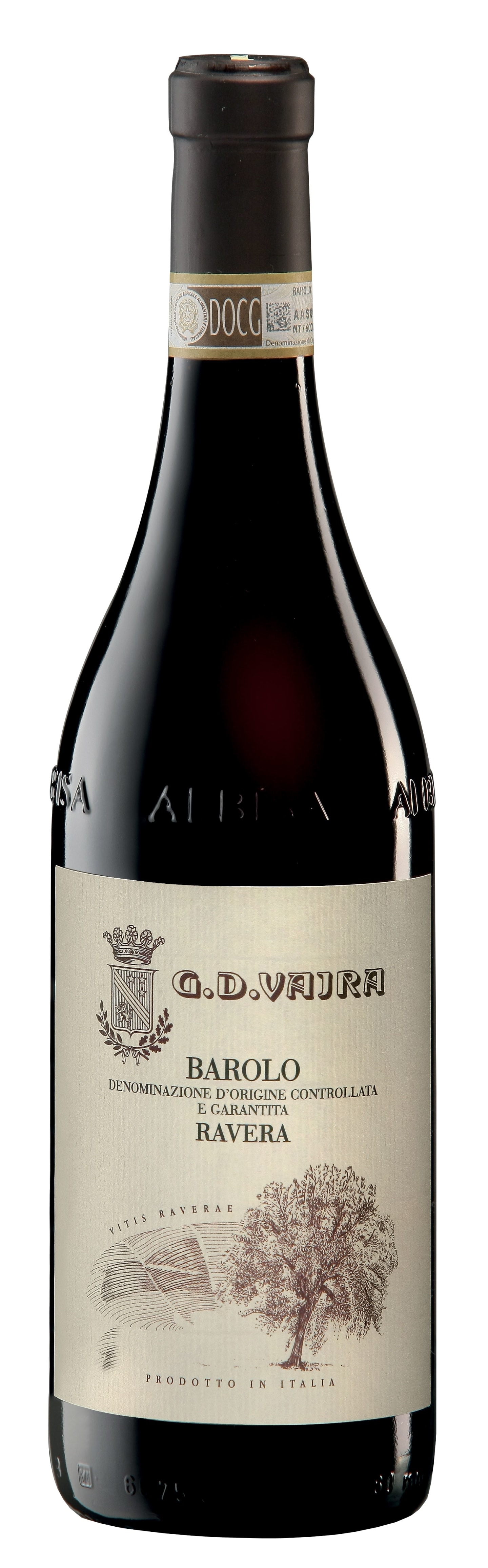
G.D. Vajra Barolo Ravera is made from 100 percent Nebbiolo.
The Barolo Ravera shows a striking balance of all tones. Red and dark fruits on the nose are interlaced with mineral hints and the iron tones which are such a signature of Ravera. The wine has brilliant drinkability, with a layered, ample mid palate and a racy finish.
Review:
-Robert Parker's Wine Advocate 94 Points

G.D. Vajra Freisa 'Kye' Langhe Rosso is made from 100% Freisa.
DESCRIPTION: In 2004, Freisa was discovered to be the closest relative to Nebbiolo, thus explaining the deep bond this variety has with Piemonte and its people. With a noble profile and similar characteristics to the Nebbiolo, we have been bottling a dry Langhe DOC Freisa ever since 1989. Kyé means ‘who is?’ and represents the surprise for this indigenous and forgotten grape.
VINEYARD AND TERROIR: Estate vineyards, the oldest located in San Ponzio, on the lower west border of Bricco delle Viole. This is the closest vineyard to the winery, and a selezione massale planted by Aldo in 1980.
GROWING: In 1971, Aldo Vaira was one of the earliest adopters of organic farming in Piemonte. Vineyards have been nurtured and soil preserved by grassing and cover crop for almost 50 years now. With an incredible ratio of manual work per hectare, farming at Vajra is a labor of love and “recipe-free” attention. Intense research is also placed into monitoring and improving the biodiversity of both flora and fauna not just in the vineyards, but also in the winery fields and forests. The winery is sustainably certified (UNI EN 11233:2009) and will be again fully organic certified since 2019.
Langhe DOC Freisa Kyè displays a beautiful, translucent garnet color. The aromatics are a combination of redcurrant and wild mountain berries, layered with a touch of sweet spices, fresh leather, and candied japonica prune. The mouth is juicy, succulent, with lots -yet never hefty- tannins. There is a beautiful structure in this vintage and a lovely, lovely finish.
Review:
-Vinous 93 Points

Luigi Baudana Barolo Baudana is made from 100 percent Nebbiolo.
A deep red in the glass introduces aromas of pure cherries and plums accented with spice, graphite, eucalyptus and licorice. Warm and dry character with firm tannins balanced by a fresh and gentle acidity. A unique soil composition with blue clay translates in a wine with a powerful elegance.
Luigi Baudana is a small, historic estate in Serralunga d'Alba, farmed since 2009 by the Vaira family of G.D. Vajra, who kept the Baudana name and its old vines — including a parcel planted in 1960 — intact. Serralunga's calcareous, magnesium-rich soils give Barolo its most structured, long-lived expression, and the balanced 2022 vintage produced perfumed, firmly tannined Nebbiolo built for the cellar.
Review:
An incisive, compelling nose, showing wild berries, a touch of smoke and an equally vivid eucalyptus note. The deep palate has pronounced, integrated acidity and juicy yet delicate, transparent fruit so typical of the vintage. Balanced, focused tannins combine with freshness, adding further dimension. This needs a couple of years to come together. From vines planted in 1960. Better in 2028.
James Suckling, 96 points
-Monica Larner (Robert Parker) 94 Points

Falletto di Bruno Giacosa Barolo is made from 100 percent Nebbiolo
The 2018 vintage was well received after the turbulent 2017 growing year. A longer winter heralded in heavy rains in May and June, which gave the vines much needed water after the previous year's drought. Throughout the summer, conditions were generally ideal with warm days and cool nights, making harvest an overall success. Early samples of Barbaresco and Barolo are indicating a soft, balanced vintage.
Red garnet in color. Intense and fine aromas of fresh red fruit. The palate presents good freshness, excellent structure and fine, velvety tannins.
Review:
-Wine Independent 98 Points

Argot Napa Cabernet Sauvignon Sugarloaf Vineyard is made from 100 percent Cabernet Sauvignon.
Sugarloaf’s terroir continues to impress with its expression of classically-styled Napa Valley Cabernet Sauvignons — impeccably pure black and red fruit character; broad, rich, perfectly ripe tannins; classic Napa Valley notes of cigar leaf, eucalyptus, and freshly-tilled earth; and definitive complexities of clove, all-spice and bay leaf. Having assessed past vintages with a few years of age, we have come to greatly value the significant reward Sugarloaf delivers after a few years in the cellar.
From Block 6, an acre of fiercely steep, ferociously rocky hillside, located in Napa’s far south-eastern foothills, deeply affected by the cooling influences of San Pablo Bay. One of the latest harvests in all of Napa Valley each vintage. Mother Nature was kind to this site in 2019, being our most bountiful year here ever. With perfect set, and vines displaying great health, this normally stingy hillside delivered superlative quality, without restraint of yield. After a slow start in the Spring, 2019’s particularly warm September and October played beautifully to the vineyard’s strengths, and delivered a classic Halloween-time harvest.
Review:
-Lisa Perrotti-Brown (Robert Parker) 97 Points

Domaine de la Janasse has been in the Sabon family since 1967, today run by siblings Christophe and Isabelle. Their Châteauneuf-du-Pape Blanc — Roussanne-led, with Grenache Blanc and Clairette — is consistently one of the finest whites in the appellation, combining richness with purity and the ability to age for two decades.
Review:
Based on 70% Roussanne and 15% each Grenache Blanc and Clairette and aged 12 months in 20% new French oak with the balance in used barrels and concrete. It has a medium gold hue and delivers remarkable intensity in its ripe stone fruits, fresh croissant, honeyed flowers, and orange blossom nuances. It's medium to full-bodied, has a pure, seamless, layered mouthfeel, beautiful balance, and a fabulous finish that will evolve for 20+ years if well stored. Drink 2025-2045.
Jeb Dunnuck 98 Points