" We don't sell the wine without touching the vine "
| BUY MORE! SAVE MORE! | ||||||||||||||||||||
|
| Country: | France |
| Region: | Beaujolais |
| Winery: | Manoir du Carra |
| Grape Type: | Gamay |
| Organic: | Yes |
| Vintage: | 2024 |
| Bottle Size: | 750 ml |
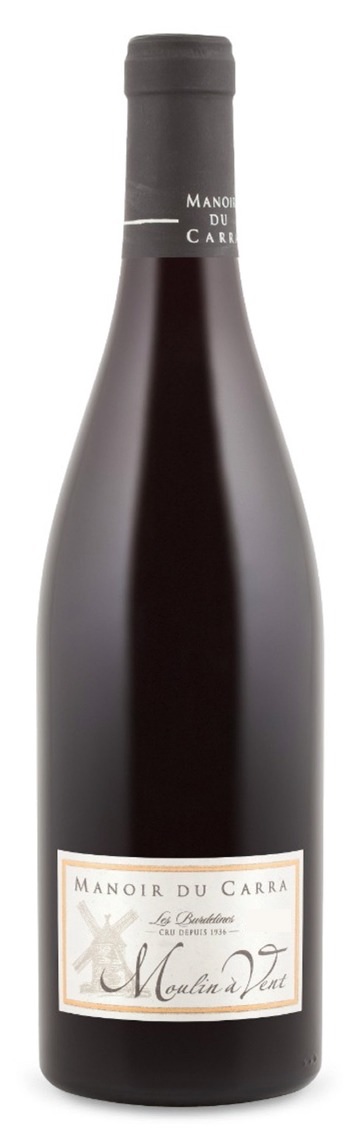
Manoir du Carra Moulin-à-Vent Les Burdelines is made from 100 percent Gamay. Measuring 660 hectares (1,630 acres) in size, there are 280 examples of this AOC on the market.
The wine is produced in the lieu-dit “Les Burdelines”, which belongs to the 18 'climates' registered by the National Institute for Designations of Origin.
Intense color between garnet and deep ruby. Red fruit nose with floral, smoky and forest notes. The mouth is rich and well structured. In a few years the aromas will evolve towards more spice, musk and venison
The Domaine Manoir du Carra Estate
Domaine Manoir du Carra is located in the small town of Denice, 5 km from Villefranche-sur-Saone, 45 km south of Mâcon and 40 km north of Lyon. The property dates back to 1850, and has been bequeathed from father to son for five generations. It is now owned by Jean-Noel Sambardier and his wife. Like many Beaujolais producers, part of their wine is sold to negociant, to which they sell at least 25% of their production each year.
The Domaine Manoir du Carra Vineyard
30 hectares (74.10 acres) total, divided along the North-South axis between Beaujolais A.O.C (10 ha= 24.70 acres) and Beaujolais-Villages A.O.C. (20 ha=49.40 acres). The Sambardiers own 50 vineyard plots. The vines are 50-100 years old. Yields are 55 hl/ha.

Manoir du Carra Beaujolais Cru Moulin a Vent Les Burdelines is made from 100 percent Gamay,
Cru Moulin-à-Vent is called the “King of Beaujolais” and is known to age the longest and be the most tannic. Measuring 660 hectares (1,630 acres) in size, there are 280 examples of this AOC on the market.
The wine is produced in the lieu-dit “Les Burdelines”, which belongs to the 18 'climates' registered by the National Institute for Designations of Origin.
Intense color between garnet and deep ruby. Red fruit nose with floral, smoky and forest notes. The mouth is rich and well structured. In a few years the aromas will evolve towards more spice, musk and venison
Review:
-Wine Enthusiast 92 Points

The 2005 vintage was the Sambardier family's first release of the Juliénas, the oldest Cru of Beaujolais, that was named for the famous Roman Emperor Julius Caesar.
The vineyards are located in the lieu-dit "En bottiere" on granite and schist soil types.
Young and dynamic winemaker Frederic Sambardier only produces 4,800 bottles or 400 cases (12/750ml) from 0.8 hectare (1.97 acre). The vines average over 50 years old. Skin maceration during fermentation for 10-12 days. Finally, the wine has had 4 months of aging in foudre (large barrel). Egg white fined, the wine is bottled unfiltered.
Imported - 150 cases 6/750 ml
Beautiful ruby red color. Pleasing and graceful, this full-bodied Julienas displays spices and ripe red and black fruit aromas (red currant, blackberry). This well balanced wine shows soft tannins and a long lasting finish. Excellent now, it will show even better after a few years of cellaring.
This is a perfect match with game, poultries, white meats and cheeses or even by itself as an aperitif.

Manoir du Carra Beaujolais Cru Fleurie Clos des Deduits is made from 100% Gamay grapes coming from the lieu dit "Montee de la Tonne".
The vineyard measures 1.5 hectare and the average age of the vines is 50 years. Yield: 48 hl/ha
Manual harvest; Semi-carbonic maceration for 10-12 days; Aging in Foudre for 3-4 months; Slight filtration.
Intense red color, subtle fruity and floral aromas of violet, berry and cinnamon. Ample in the mouth, fruit flavors. Even better after a few years of cellaring.
Excellent with red and game meats, and cheeses.

Manoir du Carra Bourgogne Blanc Le Soly is made of 100% Chardonnay. Average 50 year old vines.
The nose shows step by step fruity, smoky and mineral aromas. A slight oaky hint in the end with a lingering finish: those are typical Chardonnay aromas.
The wine is estate bottled.Ageing is done on fine lees during 3 to 5 months. About 40% of the wine has its alcoholic and malolactic fermentation in oak barrels (new, one, two or three wine barrels) with a weekly “Bâtonnage” (lee stirring) during 6 months. In the end, the wine in the barrels is blended with the wine in vats. Manual harvest of very ripe grapes. Selection of the best grapes on a vibrating sorting table, light pressing. The alcoholic fermentation takes place in cold stainless-steel vats.

Manoir du Carra Beaujolais Cru Fleurie Vers le Mont is made from 100 percent Gamay.
Intense red color, subtle fruity and floral aromas of violet, berry and cinnamon. It also has a distinctive aroma of Peony and Lily flowers, typical of the "Sur le Mont" terroir. Ample in the mouth with plenty of ripe red and black fruit flavors. The structure is full and the tannins are round and elegant. Even better after a few years of cellaring.
Of the top ten Cru sites of Beaujolais, Fleurie is one of the top three. The wines show finesse, fullness, and flavor. Fleurie does age well for 3-5 years from vintage. The area was named for a Romain General named Floricum, not for the word flower in French. The size of this AOC is 875 hectares of grapes (2,161 acres) and about 180 examples of this Cru are available on the market. This Cru is known as the “Queen of Beaujolais” and the earth is slightly unusual for having blue color, due to magnesium in the soil.
Inte
It is ample in the mouth and has a lot of r
Even better after a few years of cellaring.
Excellent with red and game meats, and cheeses.

Manoir du Carra Beaujolais Blanc Pierres Dorées is made from 100 percent Chardonnay.
The nose shows step by step floral and fruity aromas. A vanilla hint in the end with a lingering finish: those are typical Chardonnay aromas.

• 100% pure Sauvignon Blanc, crafted from grapes grown in the most notable and warmer regions of California’s coastal hills. Each block contributes a distinct element to the blend, resulting in a layered and complex style.
• The harvest dates were determined by physiological maturity, which varied widely in the 2023 vintage due to the wet winter leading to a cool summer. Nevertheless, the extended hang time reduced grapes with low sugar, firm acid, minimal pyrazines, and intense flavor expressions.
• Upon arrival at the winery, the whole clusters underwent a gentle pressing, and the juice underwent a cold settling process for two days. Subsequently, it was racked off the heavy lees into stainless steel tanks, where it underwent a chill fermentation with native yeast – which contributed to the balanced mouthfeel, set against a backdrop of minerality and acidity.
• Following fermentation, the wines remained in tank, with the lees being stirred weekly for nearly four months before the final blend was assembled. No malolactic fermentation was allowed, preserving the vibrant fruit and floral notes, alongside the natural tension characteristics of this blend.
Color:
Medium yellow straw hue.
Aroma:
Asian pear, honeysuckle, passionfruit,
green melon, and a citrus bouquet.
Palate:
Refreshing stone fruit, grapefruit, and tropical flower. This wine has a well-balanced mouthfeel with bright and lively acidity.
Food Pairing:
Oysters on the half shell with mignonette sauce,
niçoise salad, a blue cheese pear tart and crab cakes.

Twomey Russian River Valley Pinot Noir is made from Pinot Noir.
From the Duncan family of Silver Oak, Twomey's Russian River Valley bottling draws on some of Sonoma County's most celebrated cool-climate sites, where coastal fog and long, even growing seasons give Pinot Noir its signature red-fruit lift and silky texture. The 2023 was fermented with a small proportion of whole clusters and aged about ten months in roughly a quarter new French oak — a restrained, Burgundian approach that keeps the fruit front and center.
The result is a fragrant, medium-bodied Pinot of crunchy cherry and raspberry fruit, woven with cedar, baking spice, and a floral note of rose petal and violet, carried by bright acidity and fine, supple tannins.
Review:
Savory and spicy aromas of ripe wild strawberries and dark cherries precede a lovely medium-bodied palate whose silky texture provides ballast for blood oranges, mixed berries, almond cake and dried flowers. Perky acidity and scrubby herbs add further detail. Drink or hold.
-James Suckling 93 Points
"Incredibly consistent year to year, this is a cherry- and raspberry-fruited Pinot Noir with nuances of pine forest and elegant cedarwood. Medium-bodied on the palate, a core of crunchy red fruits is lifted by apple-skin tannins and bright acidity, which gradually softens to reveal a creamier mid-palate beneath a canopy of vanilla-scented rose petals. A lovely and fragrant vintage for this wine."
— Jonathan Cristaldi, 93 Points