
" We don't sell the wine without touching the vine "
| BUY MORE! SAVE MORE! | ||||||||||||||||||||
|
| Country: | United States |
| Regions: | California California (Sonoma County) |
| Winery: | Merryvale |
| Grape Type: | Pinot Noir |
| Vintage: | 2022 |
| Bottle Size: | 750 ml |
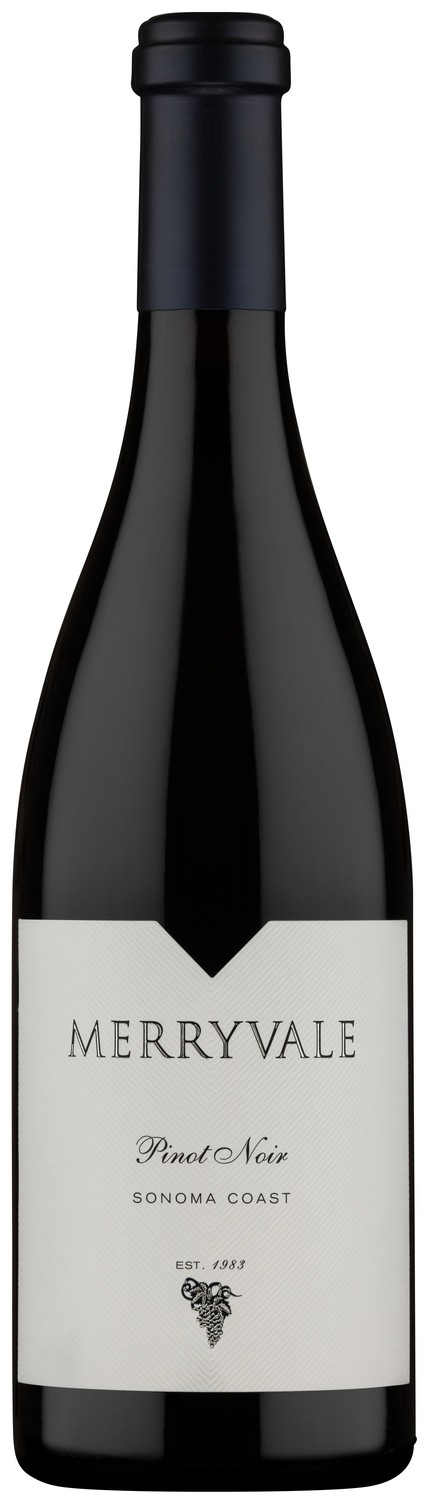
Merryvale Pinot Noir Sonoma Coast 2022 is made from Pinot Noir.
From the cool, fog-swept vineyards of the Sonoma Coast — including fruit from the celebrated Durell and Sunchase sites — this is Merryvale's elegant, Burgundian-minded take on California Pinot Noir. A mix of Dijon and heritage clones (667, Pommard, 777 and 828) was largely destemmed, fermented with native yeasts, and aged about ten months in roughly 40% new French oak — restraint that lets the fruit lead. Expect a perfumed, silky glass: black cherry, raspberry and dark berry lifted by forest floor, cola spice and a whisper of graham cracker, with bright acidity and fine, polished tannins carrying a long finish. Lovely now and over the next decade.
Winery Info: Merryvale Vineyards was founded in 1983 and makes its home in the historic Sunny St. Helena winery on Main Street — a stone landmark built in 1933 as the first winery raised in the Napa Valley after Prohibition, and the cellar where Robert and Peter Mondavi first made wine with their father, Cesare. The Schlatter family has owned and run Merryvale since the 1990s, today led by René Schlatter. At its heart lies the Historic Cask Room, where two stories of century-old 2,000-gallon oak casks line the walls. Four decades on, Merryvale remains a quintessential St. Helena house.
Review:
A wonderful interplay of brightness and savoriness captures the elegance of wines from the Sonoma Coast. Aromas of crushed red raspberries, sauteed mushrooms and wild blackberries. On the palate there’s red fruit and black pepper, with bright, crunchy acidity and taut tannins. The finish is long, with umami flavors. Medium-bodied. Drink or hold.
-James Suckling 94 Points
Merryvale Vineyards was founded in 1983 and makes its home in the historic Sunny St. Helena winery on Main Street — a stone landmark built in 1933 as the first winery raised in the Napa Valley after the repeal of Prohibition, and the cellar where a young Robert and Peter Mondavi first made wine alongside their father, Cesare. A group of partners bottled the first Merryvale wine in 1983, purchased the Sunny St. Helena property in 1986, and after an extensive restoration renamed it Merryvale Vineyards.
The Swiss-born Schlatter family became involved in the early 1990s and has owned and run the winery ever since, today led by René Schlatter. At its heart lies the Historic Cask Room, where two stories of century-old 2,000-gallon oak casks line the walls beneath crystal chandeliers. Four decades on, Merryvale remains a quintessential St. Helena house, crafting Bordeaux-inspired blends alongside a range of Napa Valley and Sonoma wines.

My Favorite Neighbor Cabernet Sauvignon is made from 79% Cabernet Sauvignon, 8% Malbec, 6% Syrah, 4% Petite Sirah, 3% Petit Verdot.
A homage to Stephan Asseo of L’Aventure Winery became an obsession. Sourced from exceptional vineyard sites around Paso Robles, San Luis Obispo and south to Edna Valley, this wine is cultivated meticulously by the farmers who have become My Favorite Neighbors. With their dedication to the land, we are able to craft a world class wine without any shortcuts or compromises. Welcome to our Neighborhood.
The 2022 My Favorite Neighbor is everything you’ve come to expect from our flagship Cabernet Sauvignon, sourced from our favorite Paso Robles growers who lend their neighborly spirit to the wine. Effusive aromas of raspberry and currant reveal notes of blue fruit and purple flower. On the palate, juicy red fruits are interwoven with hints of black cherry, cinnamon and toasted oak. Structured tannins carry into a long, chewy finish. Whether it’s a casual backyard barbecue or a fine celebratory meal, this versatile wine has you covered for summer and beyond.
Review:
-Jeb Dunnuck 93 Points

Faust Cabernet Sauvignon 2023 is made from 82% Cabernet Sauvignon, complemented with Merlot, Cabernet Franc and Petit Verdot.
Elegantly structured and polished, the 2023 Faust Napa Valley Cabernet is exquisitely balanced between freshness and richness on the palate. Cool forest notes lift from the glass and meld with oak spice, bay laurel, and fragrant underbrush, while the wine’s signature star anise gives way to beautifully concentrated flavors of Luxardo cherry, blueberry compote, and dark cocoa. Fine-grained tannins wrap around a backbone of acidity that persists—with intriguing wet-slate minerality—endlessly on the finish. Sourced primarily from Faust’s Coombsville estate vineyard in Napa Valley.
Review:
-James Suckling 96 Points

Belle Glos Clark and Telephone Vineyard Pinot Noir is made from 100 percent Pinot Noir.
The Clark & Telephone Vineyard was established in 1972 and planted with “own root” Martini clone vines. Located just 13 miles from the ocean and situated on a west-facing slope, this vineyard experiences weather patterns that pull from west to east to bring cool fog and coastal breezes inland until August when Santa Ana winds begin.
We harvested early in the morning so the fruit would arrive at the winery while the grapes were still cool to preserve their vineyard-fresh flavors. After destemming (but not crushing) the berries, we cold-soaked the must for 14 days to soften the skins and allow for ideal extraction. During fermentation in a combination of closed and open-top stainless steel fermenters, we used both punch-down and pump-over techniques to extract color and phenolics. We aged the wine in 100% French oak (60% new) for up to 12 months. After the wine underwent malolactic fermentation, we racked it twice before bottling.
Deep ruby red in color with lush aromas of ripe cherry, nutmeg, dark chocolate and holiday baking spices. Bold and complex flavors of black plum, crushed raspberry and blueberry pie linger on the palate. The texture is rich and lively, and leads into a warm and structured finish.

I feel this wine expresses the greatness of California and its hidden pockets where Cabernet can excel. The cold Pacific Ocean running the entire length of the state presents maritime influences – and with each small distance eastward the climate warms. Stony soils, south facing slopes and moderately warm conditions are the keys to producing dark, rich and good tasting Cabernet.
A small release from Caymus Vineyards, this wine is a California-appellation Cabernet Sauvignon – supple, dark and rich, bearing the signature hallmarks of Caymus. It is sourced from sites throughout the state which feature climatic conditions, soils and topography that are ideally suited to Cabernet. This project stems from excitement over California's diverse vineyard land, often in lesser-known areas, with the potential to produce exceptional Cabernet.

Mordoree Lirac Blanc Reine des Bois is made from 30% Grenache, 20% Clairette, and 15% each Viognier, Roussanne, and Marsanne, as well as splashes of Picpoul and Bourboulenc.
Color : green gold
Aromas : white fruits, peach, apricot, pear, violet.
Palate : rounded, long finish, highly flavoured.
Ageing Potential : 4-5 years.
Surface : 4 Ha. Yield : 35 Hl./Ha. Vineyard age : 30 years Terroir : Clay / chalk with pebble stones. Harvest : by hand Vinification : skin maceration and direct pressing with temperature control. Fermentation : oak barrel fermentation for 25% of the total volume
Pairs well with appetizers, fish, seafood.
Review:
-Yohan Castaing (Robert Parker) 92 Points

Booker Vertigo Red Blend is made from 7% Syrah, 32% Mourverde, 9% Grenache, 7% Petite Syrah, 5% Tannat.
Vertigo is our Syrah-heavy "G-S-M". It is spicy, structured, and always performs. The name is a nod to the steepness of the hillside on our estate where we grow the fruit for this wine. Starts with aromas of spice, dark chocolate and soft purple fruits on the nose. The palate surprises you with a touch of cayenne amongst juicy ripe fruit. We recommend making this your BBQ staple. Pair with pork ribs, bourbon chicken, or “bring on the bacon” to quote our tasting room team!
Review:
-James Suckling 95 Points

Ferren Pinot Noir Sonoma Coast is made from 100 percent Pinot Noir.
100% native fermentation (primary and secondary), long cool fermentations often lasting up to a full year, minimal lees stirring, no additions of any kind (commercial yeast, water, acid, enzymes, etc., never any fining or filtration). Aged 18 months in 15% new French oak (Francois Freres, Vosges, Troncais Forrests)
Review:
-Audrey Frick (Jeb Dunnuck) 98 Points
-Erin Brooks (Robert Parker) 96 Points

This classy and poised Pinot Noir displays an array of dark berry notes, including raspberry, blackberry, blueberry, and ripe cherry, along with a hint of baking spices. Balanced tension and refined tannins on the palate make the wine both elegant and effortlessly delicious, with subtle flavors of cedar and cassis lingering on the finish.
Review:
-James Suckling 93 Points
-Jeb Dunnuck 94 Points

Kosta Browne Sonoma Coast Pinot Noir is made from 100 percent Pinot Noir.
Dark cherry, raspberry, and elderberry intertwine with intriguing hints of fresh basil, and pomegranate. Decadent fruit flavors unfold, showcasing remarkable acidity with dynamic structure and an enduring finish.
Our Appellation Series wines embody our unwavering commitment to exploration and the artistry of crafting soulful, thought-provoking wines that pay homage to the world’s extraordinary terroirs.
The Sonoma Coast is the largest appellation in Sonoma County, strongly influenced by its proximity to the ocean and heavy rainfall—producing more than twice the annual amount of its inland neighbors.
Our Sonoma Coast vineyards span the northern true coastal zone and the southern edge of the appellation. This distinctive blend is made from 11 different clones, fermented in predominantly stainless steel, and aged for 16 months in 38% new oak. The resulting wine has an energetic acidity with cascading layers of black cherry and elderberry, followed by a lasting finish.
Fact of Note: This Sonoma Coast blend was the longest to ferment in stainless steel from our Appellation Series.
Review:
-Decanter World Wine Awards 94 Points

Paul Hobbs West Sonoma Coast Pinot Noir is made from 100 percent Pinot Noir.
Hailing from the newly established West Sonoma Coast AVA,.
Lovely ruby red shades catch the eye, while exotic notes of tart Morello cherry and pungent pine forest swirl with fresh raspberry. Bright, pure fruit carries through on the palate, layered with earthy hints of damp loam and rocky salinity, all backed by the elegant, fine-grained tannins and stylish grip that cool West Sonoma Coast offers at its best.
Review:
-Tasting Panel 97 Points

Merryvale Sonoma Coast Chardonnay is made from Chardonnay.
Merryvale Vineyards works out of a historic 1933 stone cellar in St. Helena — the first winery built in Napa Valley after Prohibition, and where the Mondavi brothers made their earliest wines. Owned by the Swiss Schlatter family since 1996, Merryvale draws on prized vineyard sites across Napa and Sonoma. This Sonoma Coast Chardonnay — barrel fermented and aged roughly ten months in about 30% new French oak — is the first Merryvale has sourced across cool-climate Sonoma Coast sites. It is bright and energetic, with layers of lemon and lime zest, apricot and white peach leading to a long, mineral-driven finish.
Review:
"This marks the first Chardonnay Merryvale has sourced from excellent sites across the Sonoma Coast. The wine is barrel fermented and aged for 10 months in approximately 30% new French oak. It is expressive and energetic and showcases elegant layers that build on its medium-bodied richness and refined minerality. Bright notes of lemon and lime zest are complemented by apricot, crunchy white peach, and grapefruit zest, leading to a long, mineral-rich finish. This beautifully balanced and vibrant Chardonnay offers complexity and freshness with every sip."
- Jonathan Cristaldi, Wine Enthusiast, 93 Points

Cattail Creek Pinot Noir Sonoma Coast is made from 100 percent Pinot Noir.
The cool maritime influence of the Sonoma Coast appellation is on full display in this elegant Pinot Noir. Aromas of fresh cherry, raspberry, and violet give way to a silky, medium-bodied palate with layers of red fruit, subtle earthy notes, and gentle spice. The wine's bright natural acidity and fine-grained tannins create a beautifully balanced structure, making it a versatile companion at the table. Enjoy now or cellar for 3-5 years.

Sainte-Marie Bourgogne Blanc Vieilles Vignes is made from 100 percent Chardonnay.
The wine has a perfect light yellow color with green hues. Nose of white flower, sweet spice and bitter orange. Fresh and delicious attack. It shows roundness and a slight buttery note with a very saline finish that makes you slightly salivate.
Excellent with Seafood, grilled fish, clams and oysters of course. Also great with goat cheese or Comté cheese.
Aged on lees for 6 months in stainless steel vats. Adjustment of sulphites at the end of MLF and before bottling. Filtration on earth then on 1.2µ cartridge after bonding with bentonite.Machine harvest, and direct pressing with a pneumatic horizontal press. Static settling. Alcoholic and malolactic fermentation in stainless steel vats with native yeast and bacteria.
This wine is declassified Chablis, due to exceeding the volume limit per hectare it could not be labeled Chablis. They call it “over-production” Burgundy, but we call it an outstanding value. This exact same juice is selling for three times as much under the Chablis AOC label!

Thorn Clarke Terra Barossa Shiraz is made from 100 percent Shiraz
Deep purple red. Aromas of ripe plums, cherries and earth with subtle notes of vanilla and cloves. The aromas follow through onto the palate with a fruit focus, subtle oak notes and soft, rounded tannins. The wine walks the line between medium and full bodied with a plush mouthfeel.
The grapes are crushed and de-stemmed into fermenters. Yeast is added immediately once in fermenter and the ferments are pumped over twice daily to maximise colour, tannin and flavour extraction. Cooling is used to ensure ferment temperatures remain in the 22-25 degree celcius range which will allow the fruit to display maximum fruit expression. Pressing then occurs approximately seven days after crushing and the wine is then put into predominately American oak to mature.



