
" We don't sell the wine without touching the vine "
| BUY MORE! SAVE MORE! | ||||||||||||||||||||
|
| Country: | United States |
| Regions: | California California (Sonoma County) |
| Winery: | Merryvale |
| Grape Type: | Chardonnay |
| Vintage: | 2022 |
| Bottle Size: | 750 ml |
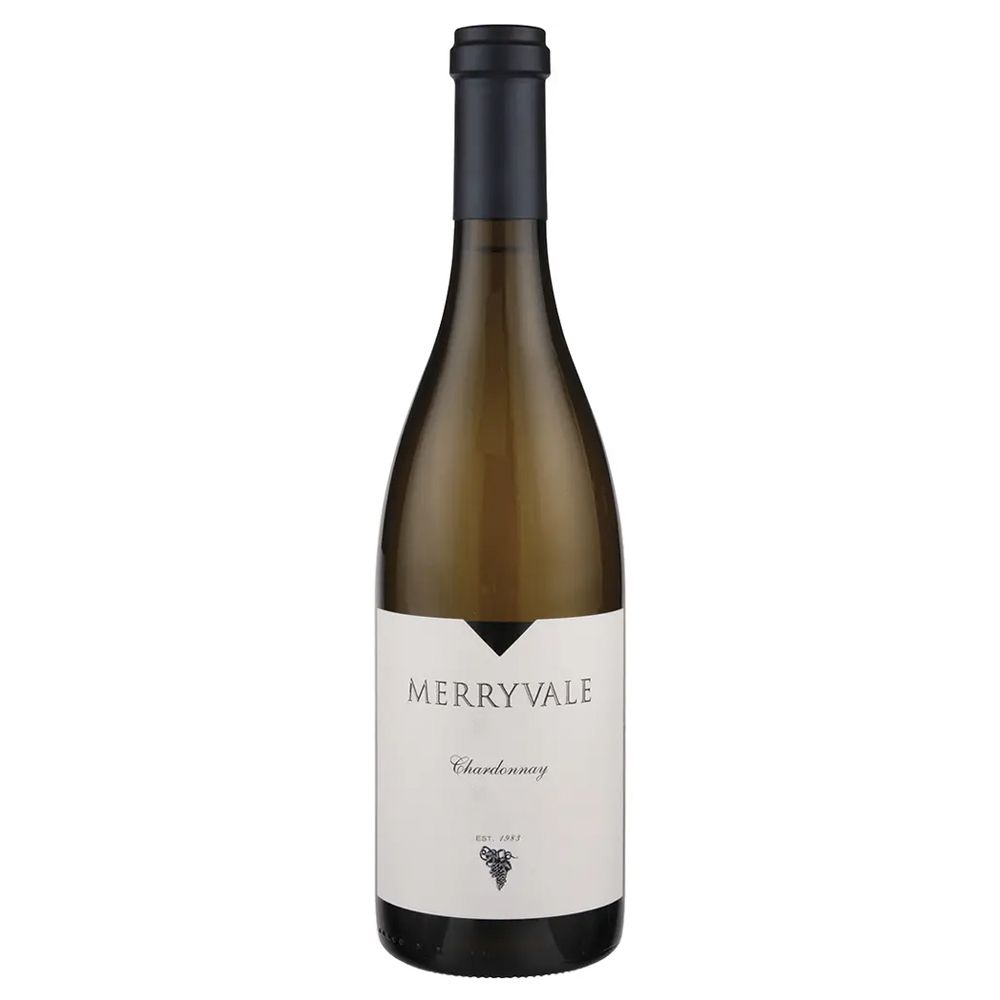
Merryvale Sonoma Coast Chardonnay is made from Chardonnay.
Merryvale Vineyards works out of a historic 1933 stone cellar in St. Helena — the first winery built in Napa Valley after Prohibition, and where the Mondavi brothers made their earliest wines. Owned by the Swiss Schlatter family since 1996, Merryvale draws on prized vineyard sites across Napa and Sonoma. This Sonoma Coast Chardonnay — barrel fermented and aged roughly ten months in about 30% new French oak — is the first Merryvale has sourced across cool-climate Sonoma Coast sites. It is bright and energetic, with layers of lemon and lime zest, apricot and white peach leading to a long, mineral-driven finish.
Review:
"This marks the first Chardonnay Merryvale has sourced from excellent sites across the Sonoma Coast. The wine is barrel fermented and aged for 10 months in approximately 30% new French oak. It is expressive and energetic and showcases elegant layers that build on its medium-bodied richness and refined minerality. Bright notes of lemon and lime zest are complemented by apricot, crunchy white peach, and grapefruit zest, leading to a long, mineral-rich finish. This beautifully balanced and vibrant Chardonnay offers complexity and freshness with every sip."
- Jonathan Cristaldi, Wine Enthusiast, 93 Points
Merryvale Vineyards was founded in 1983 and makes its home in the historic Sunny St. Helena winery on Main Street — a stone landmark built in 1933 as the first winery raised in the Napa Valley after the repeal of Prohibition, and the cellar where a young Robert and Peter Mondavi first made wine alongside their father, Cesare. A group of partners bottled the first Merryvale wine in 1983, purchased the Sunny St. Helena property in 1986, and after an extensive restoration renamed it Merryvale Vineyards.
The Swiss-born Schlatter family became involved in the early 1990s and has owned and run the winery ever since, today led by René Schlatter. At its heart lies the Historic Cask Room, where two stories of century-old 2,000-gallon oak casks line the walls beneath crystal chandeliers. Four decades on, Merryvale remains a quintessential St. Helena house, crafting Bordeaux-inspired blends alongside a range of Napa Valley and Sonoma wines.

Domaine de la Janasse Chateauneuf-du-Pape Cuvee Chaupin is made from 100 percent Grenache.
Chaupin is Domaine de la Janasse's single-parcel expression of old-vine Grenache, drawn mostly from the sandy-soiled Chapouin lieu-dit with smaller parts from La Crau and Janasse, some of the oldest vines planted in the early twentieth century. The Sabon family has run the estate near Courthezon since 1967 - today the brother-and-sister team of Christophe and Isabelle - and Janasse stands among Chateauneuf-du-Pape's benchmark producers. Partially destemmed and aged twelve months in foudre and demi-muids, Chaupin is the purest, most perfumed side of Grenache in its homeland.
Review:
All Grenache sourced mostly from the Chapouin lieu-dit with a splash from Janasse, the 2023 Châteauneuf Du Pape Cuvée Chaupin shows a medium ruby hue followed by a pretty, perfumed, remarkably elegant profile. It has a core of sweet red and black berry fruits, absolutely heavenly Provençal aromatics of herbes de Provence, black olive, pepper, and flowers, plus ripe, velvety tannins, flawless balance, and a great finish. Partially destemmed and aged 12 months in 70% foudre and 30% demi-muids, this heavenly 2023 will drink beautifully over the coming two decades. There are roughly 1,500 cases produced. Drink 2025-2045.
-Jeb Dunnuck 99 Points

Corinne Perchaud Chablis Premier Cru Fourneaux is made from 100% Chardonnay.
Les Fourneaux sits on the south-facing flank of Chablis' right bank, where the warm, sun-trapping exposure — the "oven" its name evokes — ripens Kimmeridgian-grown Chardonnay to a riper, more expansive style than the village cuvee. The wine is expressive and vivacious, with beautiful aromas, well-balanced richness, and the chiselled, stony minerality that defines fine Chablis. Built to drink now and to age.
Winery Info: Domaine Corinne Perchaud is a family estate in Fleys, on the eastern edge of the Chablis appellation, farming plots across Fleys, Chichee and Fontenay on the region's classic Kimmeridgian clay-limestone soils.

Laurent-Perrier Grand Siecle No. 26 is a blend of 58% Chardonnay, 42% Pinot Noir
white gold in color with delicate and persistent bubbles, Grand Siecle No. 26 offers a very complex nose which mixes honeysuckle, lemon, clementine and fresh butter aromas, followed by notes of hazelnut and a touch of honey. The feel in the mouth is very delicate and fresh with candied lemon and fresh hazelnut aromas. The palate is silky and mineral with notes of honeysuckle, flaked almonds and clementine.
It pairs with high quality produce and refined dishes, including shellfish, noble fish and white meats such as Thai style langoustine tartare and fine roasted poultry.
Vintage in Champagne is usually synonymous with excellence for Prestige Cuvées. Contrarily, Laurent‑Perrier believes that only the art of assemblage can offer what nature can never provide, that is, the perfect year.
The expression of the perfect year is that of a great champagne wine that has long ageing potential and over time develops depth, intensity and aromatic complexity yet retains its freshness and vibrancy.
Since 1959, Grand Siècle has been revealed only 26 times in bottle format and 23 times in magnum.
The « Grand Siècle » (Great Century) is the name given to one of the most prosperous periods (17th century) in the history of France known for the capacity of man, through his works, to create what nature cannot. Louis XIVth, known as the « Sun King », by creating the « Château de Versailles » and its gardens, was the architect of this model of harmony, balance and perfection.
The symmetry and perspective of the « Jardins à la française », the capacity to grow Mediterranean fruits (especially Oranges inside the « Orangerie ») in such a Northern climate, creating the Grand Canal, the fountains and ponds with no nearby rivers are many illustrations of this ability of man to sublimate natural elements. The name of Grand Siècle was chosen for Laurent‑Perrier’s Prestige Cuvée based on this common vision to reach a perfection that Nature, on its own, cannot provide.
Review:
-James Suckling 100 Points

Xavier Vignon Almutia Clair-Obscur Châteauneuf-du-Pape Blanc is 40% Grenache Noir, 25% Mouvedre, 10% Roussane, 10% Grenache gris, 10% Grenache blanc & 5% Syrah.
Worn in the Middle Ages, an Aumuce was a purple cap that served as a cloak for clergymen as a way of concealing their whiteness, just as the black skin of the grape conceals its white juices. In Latin, this cape is called en Almutia. A blend of black and white grape varieties.
Almutia is the definition of vivacity, liveliness, expressed through the pulp of mainly black grape varieties. The multi-vintage approach has been choosen to bring complexity to the wine.
Pale yellow and translucent with tangy notes of apple and pear on the nose. The palate is lively and ample, revealing aromas of citrus and honeysuckle.
The grapes were harvested early, in mid-August, i.e. one month before the harvest intended for the production of red wines.
The grapes are then destemmed and crushed, then placed in vats for draining followed by settling for severals days to sediment the pigments.
Fermentation in stainless steel tanks
No ageing in wood and no stirring of the lees to maintain the perfect level of acidity.
Pairs best with scallop or lobter risotto, soft cheeses & truffle.

Merryvale Pinot Noir Sonoma Coast 2022 is made from Pinot Noir.
From the cool, fog-swept vineyards of the Sonoma Coast — including fruit from the celebrated Durell and Sunchase sites — this is Merryvale's elegant, Burgundian-minded take on California Pinot Noir. A mix of Dijon and heritage clones (667, Pommard, 777 and 828) was largely destemmed, fermented with native yeasts, and aged about ten months in roughly 40% new French oak — restraint that lets the fruit lead. Expect a perfumed, silky glass: black cherry, raspberry and dark berry lifted by forest floor, cola spice and a whisper of graham cracker, with bright acidity and fine, polished tannins carrying a long finish. Lovely now and over the next decade.
Winery Info: Merryvale Vineyards was founded in 1983 and makes its home in the historic Sunny St. Helena winery on Main Street — a stone landmark built in 1933 as the first winery raised in the Napa Valley after Prohibition, and the cellar where Robert and Peter Mondavi first made wine with their father, Cesare. The Schlatter family has owned and run Merryvale since the 1990s, today led by René Schlatter. At its heart lies the Historic Cask Room, where two stories of century-old 2,000-gallon oak casks line the walls. Four decades on, Merryvale remains a quintessential St. Helena house.
Review:
A wonderful interplay of brightness and savoriness captures the elegance of wines from the Sonoma Coast. Aromas of crushed red raspberries, sauteed mushrooms and wild blackberries. On the palate there’s red fruit and black pepper, with bright, crunchy acidity and taut tannins. The finish is long, with umami flavors. Medium-bodied. Drink or hold.
-James Suckling 94 Points

Our organically farmed high-density Estate parcel sits at the top of the ridge amongst the diverse coastal forest. Although the soil is sandy, there’s a vein of clay in the subsoil that holds winter rain and allows us to dry-farm the vines. The tight spacing keeps the clusters and soil shaded during the summer heat, which allows the fruit to retain all the nuance of the site. The wine produced here has a character - a signature - all to itself and cannot be replicated elsewhere; it's the antithesis of fruity, forward, easy-to-understand Californian Chardonnay. The grapes are small with thick skins, producing a high level of fruit extract, which translates to deep texture and structure in the wine itself. Concentration allied to freshness is the essence of this wine, and it ages beautifully in bottle for ten to twelve years.
The wine’s aromas and flavors are incredibly complex and diverse, akin to citrus oil, preserved lemon, sage, fennel and caraway. The wine is deep, powerful, and layered with oyster shell freshness cutting through the natural density. Lemongrass, spearmint, and grapefruit power the finish, which pulsates with intensity. You could decant this for an hour before serving to hasten its development. Drink between 2025 and 2030. Serve no cooler than 55º F.
Review:
-Jeb Dunnuck 96 Points
-James Suckling 97 Points

Ferren Chardonnay Sonoma Coast is made from 100 percent Chardonnay.
The Sonoma Coast bottling is a blend of barrels from Ferren's single vineyard offerings; Lancel Creek, Silver Eagle, Volpert, and Frei Road Vineyards. The wine is always somewhat more approachable early in its life as less new oak is used in the blend. Pure and translucent fruit is the hallmark of this cuvée. Citrus, quince, sea spray, and minerals are buoyed by refreshing acidity and a seamless finish.
Review:
-James Suckling 98 Points
-Wine Spectator 93 Points

Ferren Pinot Noir Sonoma Coast is made from 100 percent Pinot Noir.
100% native fermentation (primary and secondary), long cool fermentations often lasting up to a full year, minimal lees stirring, no additions of any kind (commercial yeast, water, acid, enzymes, etc., never any fining or filtration). Aged 18 months in 15% new French oak (Francois Freres, Vosges, Troncais Forrests)
Review:
-Audrey Frick (Jeb Dunnuck) 98 Points
-Erin Brooks (Robert Parker) 96 Points

Bydand Chardonnay Sonoma Coast is made from 100% Chardonnay
Aged for 16 months in 30% new French oak, 70% neutral French oak
Farmed by one of California’s most respected and longest operating grape-growing families, the Roberts Road Vineyard is located in the Petaluma Gap. Sitting on well draining gravel soils, coastal winds allow for a long, slow and even growing season. Planted in 1998 these Dijon 95 grapes provide minerality and vibrancy to a full-bodied wine with impressive purity of flavor and mouth-feel. French oak barrels add subtle toast to aromas of pear, stone fruits and white citrus.

DuMOL 'Isobel' Charles Heintz Vineyard Sonoma Coast Chardonnay is made from Chardonnay.
Founded in 1996, DuMOL is one of the Russian River Valley's benchmark producers of Chardonnay, Pinot Noir and Syrah, built on meticulous, small-lot winemaking under longtime winegrower Andy Smith. "Isobel" is DuMOL's bottling from the legendary Charles Heintz Vineyard, planted high on a ridge above Occidental on the far Sonoma Coast — some of California's oldest and most coveted Chardonnay vines, now more than forty years old. Fermented and aged in cigar-shaped French oak barrels, the 2023 captures the site's signature oily texture and breadth alongside crystalline, mineral energy.
Review:
"The 2023 Chardonnay Isobel Charles Heintz Vineyard was brought in on October 12 and 14, very late by historical standards. It captures all the magic of this site in its oily texture and breadth. Citrus confit, white pepper, flowers and crushed rocks are all beautifully delineated. For readers who want to know what Charles Heintz Chardonnay is all about, this is it!"
- Antonio Galloni, Vinous, 96 Points

Thus, the first Édition of Krug Rosé, a singular Champagne achieving an astonishing balancing act between finesse and substance, came to be.
The story of Krug Rosé dates back to 1983. With Joseph’s non-conformist spirit at heart, the 5th generation of the Krug family gave birth to a new composition, a bold rosé inspired by the House’s reputed art of blending, to be re-created each year.
Krug Rosé is an unexpected rosé Champagne combining elegance and boldness – inspired by the dream of the fifth generation of the House of Krug to conceive a rosé Champagne that did not exist, a rosé Champagne that could be re-created every year.
Krug Rosé 27ème Édition is a blend of 38 wines from 9 different years, the youngest of which is from 2015, while the oldest dates back to 2005. ▪ It was completed with 10% traditionally macerated Pinot Noir of the year blended from plots in Aÿ and Mareuil-sur-Aÿ, to add a unique spiciness, colour and structure. Its final composition is 57% Pinot Noir, 23% Chardonnay and 20% Meunier. ▪ A stay of around seven years in Krug’s cellars gives Krug Rosé 27ème Édition its unique expression and elegance.
At first sight, its subtle pale pink colour holds a promise of elegance. On the nose, aromas of rose hips, cured ham, mulberries, redcurrant, peony, pepper and pink grapefruit. On the palate, delicate flavours of honey, citrus and dried fruit with a long finish, enhanced by its fine bubbles complete the experience.
Review:
-Tasting Panel 99 Points

Antonio Camillo Vermentino 2025 is made from Vermentino. It is the sea-breeze white from Antonio Camillo, best known for his Ciliegiolo but equally at home with the Maremma's signature coastal white grape. The estate sits near Capalbio in southern Tuscany, where Camillo has farmed his own old vines with a low-intervention hand since 2006.
Fermented in steel to keep it fresh and precise, this Vermentino is crisp and saline, with citrus, green apple and white flowers over a stony, almost briny finish. Pour it cold alongside seafood, fried vegetables or a sunny afternoon.



