" We don't sell the wine without touching the vine "
| BUY MORE! SAVE MORE! | ||||||||||||||||||||
|
| Country: | France |
| Region: | Burgundy |
| Winery: | Courtault-Michelet |
| Grape Type: | Chardonnay |
| Organic: | Yes |
| Vintage: | 2024 |
| Bottle Size: | 750 ml |
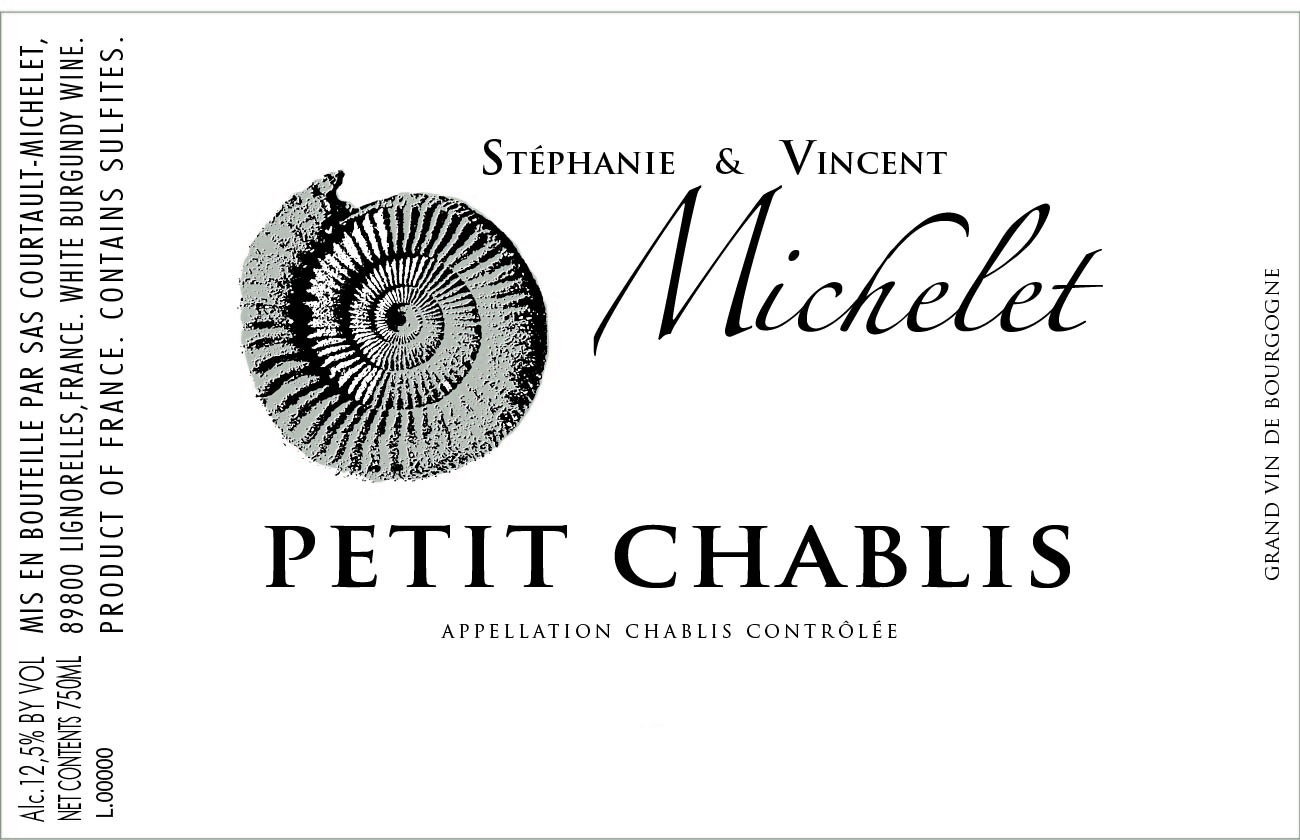
Michelet Petit Chablis is made from 100 percent Chardonnay.
Golden color. White flowers, fresh, lime and citrus aromas. Pleasant mouthfeel, supple, crisp, fruity flavors.
Machine harvested at full maturity (around Sep. 25th - lasts 12-18 days); pneumatic press; fermentation in temperature controlled stainless steel tanks for 8-10 days; M.L (2 months after the harvest); aging on the lees until February; racking; fining if necessary; cold stabilization; filtration right before bottling in April.
Ideal as an aperitif, the wine is an excellent companion to seafood.
Domaine Courtault-Michelet Estate
This is a new Estate, founded by Stephanie Courtault and her husband Vincent Michelet.
Stephany is the daughter of Jean Claude Courtault, who runs a family winery founded in 1984. Jean Claude arrived in Lignorelles in 1974 to work as a vineyard manager for one of the village's wine estates. In 1984, JC Courtault purchased 1.5 hectare of 4 year old vines in the Chablis area. Then, he rented a piece of land in the Chablis appellation area that he planted with the help of his wife, Marie-Chantal. This dynamic estate aims to fuse tradition with modernity.
Date Founded: 1984
A native of Touraine, Jean-Claude Courtault arrived at Lignorelles in 1974 to work as Vineyard Manager for one of the village's wine estates.
In 1984, JC Courtault seized the chance to buy 1.5 hectares of 4 year old vines in the Chablis area. Next, he rented a plot of land in the Chablis appellation area, which he then planted up with the help of his wife, Marie-Chantal. And so the Estate Jean-Claude Courtault came into being.
JC Courtault enlarged and worked his vineyard over time, whilst still fulfilling his duties as Vineyard Manager. He began producing wine, and in 1987, the process of bottling and marketing started. That year's wine was rewarded with a gold medal at the "Concours Général des Vins de Paris" competition. This medal was just the first of many awards and prizes that have punctuated JC Courtault's career, a mark of the quality and consistency of his wines.
The 1994 edition of the Guide Hachette gave something of a commercial boost to the Estate Jean-Claude Courtault, after it awarded the 1992 Chablis a favourite buy distinction.
In 1995, with the estate boasting a dozen hectares of Chablis and Petit Chablis, Jean-Claude Courtault decided to devote himself to wine-growing on a full-time basis. He built a wine storehouse that included all the features necessary for optimal operating efficiency.
The estate has continued to develop its vineyard and now boasts a total of 17.60 hectares in production. This development drive is due to continue, with the arrival of Stéphanie, daughter of JC and MC Courtault, and her husband, Vincent Michelet. From now on it will be up to them to take up the challenge of producing Chablis wines.
The estate produces three of the four appellations found in the Chablis wine-growing region : Petit Chablis, Chablis, Chablis 1er Cru and Chablis Grand Cru Valmur
Some 50,000 bottles are sold in France and abroad.
Domaine Courtault-Michelet Vineyards
The wines of the Estate Jean-Claude Courtault are particularly renowned for their strong fruit character, the wine-grower's signature, if you like. These wines are regularly singled out for their quality, as can be seen in the Guide Hachette and various competitions - concours de Paris, Mâcon, Vignerons Indépendants. The Estate Jean-Claude Courtault sells and produces wines that have come from the estate's own vines.
The estate's vines are planted in accordance with the tradition of the Lignorelles area, in other words, every 5 rows, sufficient space is left for a tractor to pass. Planting density is on average around 6000 to 7000 vines per hectare, roughly equivalent to the mean for the Chablis wine-growing region.
This vineyard is sited on relatively hilly ground. Some plots have required considerable work on them before planting, with gradients of up to 1 in 2.5 (40%) possible. The oldest plots have 35 year-old vines.
Grape Harvest generally begins at the end of September and lasts between 12 to 18 days, depending on the year. Our main aim is to harvest the grapes at their optimal ripeness. This allows us to obtain a higher sugar content in the grapes whilst still maintaining pH and acidity at the levels needed to make a well-balanced wine.

Michelet Chablis Premier Cru Beauroy is made from 100 percent Chardonnay.
Chablis is the northernmost wine region of Burgundy, renowned for producing some of the world's finest and most mineral-driven Chardonnay. The Premier Cru 'Beauroy' vineyard is located on the right bank of the Serein River on slopes with Kimmeridgian clay and limestone soils rich in fossilized oyster shells.
This wine displays a brilliant pale gold color with green reflections. The nose offers aromas of citrus, white flowers, and characteristic flinty minerality. On the palate, it is precise and elegant with bright acidity, flavors of green apple and lemon, and a long mineral finish.
Pairs excellently with oysters, shellfish, sushi, or simply prepared white fish.

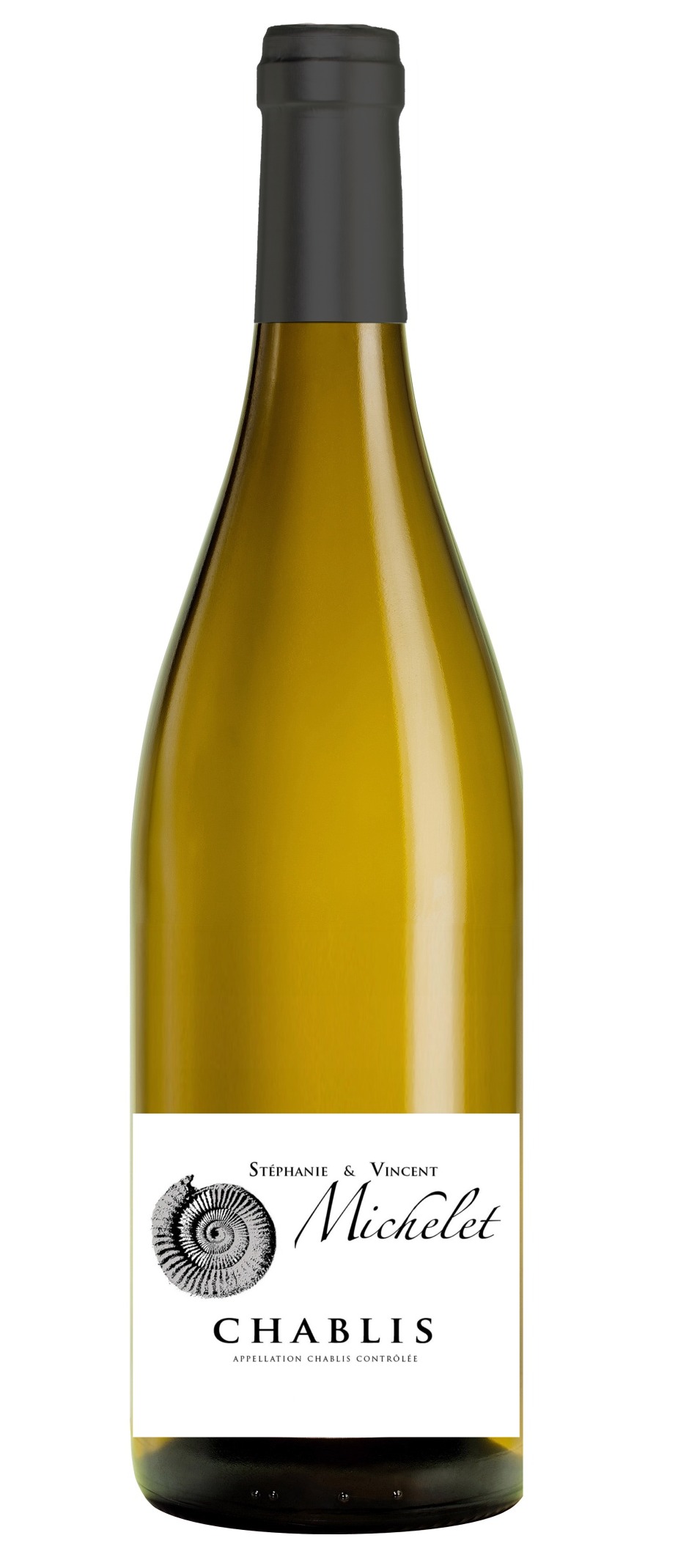
Michelet Courtault Chablis AOC is made from 100% Chardonnay.
Golden colored and very aromatic with white flowers, fresh fruit, lime, citrus aromas as well as a bergamot. Pleasant mouthfeel, supple, crisp, fruity flavors. There is a touch of acidity, revealing a deliciously integrated minerality.This Chablis is produced from vineyards located on slopes benefiting from a mainly south, southwest sun exposure in villages of the Northwestern part of the Chablis area (Lignorelles, Beine, Villy and Chablis).
Ideal as an aperitif, the wine is an excellent companion to seafood, smoked salmon for example.
Michelet Chablis Premier Cru Beauroy is made from 100 percent Chardonnay.
Chablis is the northernmost wine region of Burgundy, renowned for producing some of the world's finest and most mineral-driven Chardonnay. The Premier Cru 'Beauroy' vineyard is located on the right bank of the Serein River on slopes with Kimmeridgian clay and limestone soils rich in fossilized oyster shells.
This wine displays a brilliant pale gold color with green reflections. The nose offers aromas of citrus, white flowers, and characteristic flinty minerality. On the palate, it is precise and elegant with bright acidity, flavors of green apple and lemon, and a long mineral finish.
Pairs excellently with oysters, shellfish, sushi, or simply prepared white fish.

Cellier du Chateau de la Chaume Petit Chablis is made from 100 percent Chablis.
Color: Pale yellow
Bouquet: White flowers, honeysuckle, linden tree and dried fruits.
Palate: Very pleasant, balanced with tension and nice minerality
Drink as an Aperitif or pair with fish, shellfish.
Chaume Petit Chablis 2025 is made from Chardonnay.
Color: pale yellow. Bouquet: white flowers, honeysuckle, linden and dried fruit. Palate: very pleasant and balanced, with tension and a lovely minerality.
Drink as an aperitif or pair with fish and shellfish.

Pearmund Cellars Petit Manseng 2024 is made from Petit Manseng.
A refreshing, crisp, dry white with notes of grapefruit and hints of candied pineapple on the nose. Pearmund Cellars is the largest producer of this standout varietal in the Americas.
Alcohol content: 12.5%. Residual sugar: 0%.

Corinne Perchaud Chablis is made from 100% Chardonnay.
A classic, unoaked Chablis grown on the Kimmeridgian clay-limestone of the appellation's right bank. Drawn from the family's plots around Fleys, Chichee and Fontenay, it shows aromas of ripe white fruits over a core of wet-stone minerality, finishing taut, saline and precise — the benchmark expression of cool-climate Chardonnay.
Winery Info: Domaine Corinne Perchaud is a family estate in Fleys, on the eastern edge of the Chablis appellation, farming vineyards across Fleys, Chichee and Fontenay on classic Kimmeridgian clay-limestone soils.

Luigi Baudana Barolo Baudana is made from 100 percent Nebbiolo.
A deep red in the glass introduces aromas of pure cherries and plums accented with spice, graphite, eucalyptus and licorice. Warm and dry character with firm tannins balanced by a fresh and gentle acidity. A unique soil composition with blue clay translates in a wine with a powerful elegance.
Review:
New leather, forest floor and woodland berry aromas come to the forefront along with a whiff of blue flower. It's opens smooth and savory but its true structure shows up midpalate, delivering juicy Morello cherry, licorice and hazelnut framed against a backbone of fresh acidity and tightly-wound, fine-grained tannins. Drink 2026–2036. Kerin O’Keefe
-Wine Enthusiast 95 Points
Rich, exuding cherry, raspberry, plum and floral notes, with iron, tobacco and tar accents lending complexity. Shows terrific balance and depth, with a tightly wound structure that bodes well for future development.
- Wine Spectator 94 Points

William and John Graham founded their Port house in 1820, and for more than two centuries the name has stood among the greatest in the Douro. Since 1970 the firm has been owned and run by the Symington family, who farm their own quintas — Quinta dos Malvedos chief among them — and personally make every Graham's wine.
A Graham's Vintage Port is drawn from the oldest vines on the steepest terraces and released only when the year merits it. The 2024 shows the classic Graham's signature: a deep, opaque core of black fruit and violets, framed by ripe tannin and the house's hallmark seam of sweetness that carries through a long, structured finish.
Built to reward the cellar, it will drink beautifully for decades. 750ml.
Review:
-Luis Gutiérrez (Robert Parker) 97 Points
-Neal Martin (Vinous) 97 Points
-James Suckling 95 Points