" We don't sell the wine without touching the vine "
| Country: | South Africa |
| Region: | Swartland Region |
| Winery: | Mullineux Family Wines |
| Grape Type: | Chenin Blanc |
| Organic: | Yes |
| Vintage: | 2016 |
| Bottle Size: | 750 ml |

Kasteelberg Chenin Blanc is made from 100 percent Chenin Blanc.
The Kasteelberg range of wines celebrates the discovery of the Riebeek Valley and the Kasteelberg mountains in 1661. Kasteelberg stands sentinel over the fertile valley below. From the slopes of the mountains, hand-selected grapes are expertly crafted with care to produce rare and expressive wines.
Limited release, single-vineyard Chenin Blanc from hand-selected grapes from the foothills of the majestic Kasteelberg Mountain, Kasteelberg Chenin Blanc embodies excellent craftsmanship that transforms the harsh Swartland terroir into the pinnacle of our winemakers’ art.
Together with the age-old tradition of Dry Land viticulture, it resulted in an elegant, aromatic and richly textured wine, with characteristics typical to Chenin Blanc grown under these conditions. Citrus, lemon zest, ripe apple and tropical flavors are only some of the flavors that charm the nose. The palate follows through with flavors of melon, a touch of spice and well-integrated wood for exceptional balance and a luxurious, lingering finish.
Once harvested, the grapes are hand-sorted, de-stemmed & crushed into temperature-controlled gravitational drainers. Only the free-run juice is chilled and settled overnight. The juice is then racked off into new, 300 L, oak barrels (50% French oak, 50% Hungarian oak) and wild yeast fermented in the barrels. Fermentation is temperature controlled and lasted around 22 days. The wine is then matured in the oak barrel on the gross lees for 12 months before being racked off, filtered and bottled. After bottling the wine is further bottle-matured for at least 6 months before release.

Riebeek Chenin Blanc is made from 100 percent Chenin Blanc.
As the unofficial drink of the Riebeek Valley, the Riebeek Chenin Blanc is the perfect every day wine that offers uncomplicated quality for the novice and connoisseur alike.
Packed with upfront tropical fruit, the nose charms with an abundance of guava and gooseberries. The pallets follows through with fruit flavors, balanced by a crisp acid to ensure a fresh and fruity style of wine.
Grapes came from both bosstok and trellised vines with some of the vineyards as old as 46 years. Fermentation was done at lower than usual temperatures to capture the fresh fruit flavors.
Very accessible and suited to almost every occasion, the Riebeek Chenin Blanc never disappoints.

The Royal Chenin Blanc Old Vines Steen is 100 percent Chenin Blanc.
As the unofficial drink of the Riebeek Valley, Chenin Blanc is the perfect every day wine that offers uncomplicated quality for the novice and connoisseur alike. Packed with upfront melon fruit, the nose charms with an abundance of guava and gooseberries as well as the signature hint of honey. The palate follows through with fruit flavors balanced by a crisp acid to ensure a fresh and fruity style of wine.
Enjoy well-chilled as a lovely crisp glass on its own but ideal for al fresco dining and with light summer fare. Beautiful with salads, anti pasti and seafood.

Brulesecaille Blanc Grande Reserve is made from 75% Sauvignon Blanc, 25% Sauvignon Gris.
Average age of the vines is 25 years.
Manual harvest from September 19th-20th 2016.
Direct press at low pressure (whole cluster) with low amount of SO2, settling at 10°C.
Addition of yeast and alcoholic fermentation in casks 400 liters.
Raised on the lees for 6 months with regular batonnage (stirring of the lees).
Bottling in april 2017.
Fish, seafood, white meats, fine goat cheeses.

Inglenook Rubicon is made from 93% Cabernet Sauvignon 7% Cabernet Franc.
Since its inaugural vintage in 1978, Rubicon has been the Estate's premier red wine, reflecting the soul of the property and expressing Francis Coppola's wish to create a Bordeaux-styled grand wine, that is, "a wine that can please contemporary taste, but with a historical aspect [that defines] our vineyards at their zenith."
Rubicon was named after the small river crossed by Julius Caesar in 49 B.C., declaring his intention to gain control of Rome, thereby launching a civil war among opposing factions. Over time the phrase "crossing the Rubicon" has come to signify any irreversible action with revolutionary intent or the outcome of which holds great risk. True to its uncommon depth, Inglenook's Rubicon continues to be a testament to the finely tuned rendering of a risk well-taken.
2016:
After four years of drought, a winter with average rainfall was welcome, as it provided ample soil moisture for a strong start to the 2016 growing season. Average late-spring temperatures and limited precipitation minimized the risk of frost during mid-May bloom, ensuring average yields. June closed with a heat spell, slowing vine canopy growth at the ideal time. Harvest of the blocks contributing to the 2016 Inglenook Rubicon blend occurred under optimum conditions from September 6th through September 27th.
Ideal harvest conditions endowed the 2016 Rubicon with the three elements associated with a truly great wine from the Rutherford appellation: complexity, balance, and elegance. The aromas are intense and focused with top notes of creamy, sweet vanilla, and black licorice wound around a core of exquisitely ripe black cherry and crème de cassis. This refinement extends directly to the palate, where the wine is both broad and deep with sensuous, silky tannins. Supremely balanced in terms of both opulence and complexity, ripe black fruits and an ultra-smooth texture provide an impressive crescendo to a very long finish.
Review:
The 2016 Cabernet Sauvignon Rubicon is a wine of total precision and class. Translucent and energetic, with distinctly mid-weight structure, the 2016 is a wine of reserve, tension and breeding. Shy at first, the 2016 has a lot to offer, but it needs a number of years in bottle to be at its most expressive. Cedar, tobacco, licorice and wild cherry add the closing nuances.
- Antonio Galloni 97 Points

Alexandre M Mon Chenin Cuvee 20 NV is made from 100% Chenin Blanc.
Mon Chenin means "My Chenin". This is MY PERSONAL view of the Chenin blanc from France.
Floral and fresh white fruits. Mouth with floral character and yellow fruits. Finish clean fresh and dry.
S: 3g/L
Serve as Apéritif, seafood, fishes with buttery sauce, Asian cuisine, hard cheeses.
This wine is part of our Single Terroir range, which consists of wines showing a great expression of the terroir from which they come.
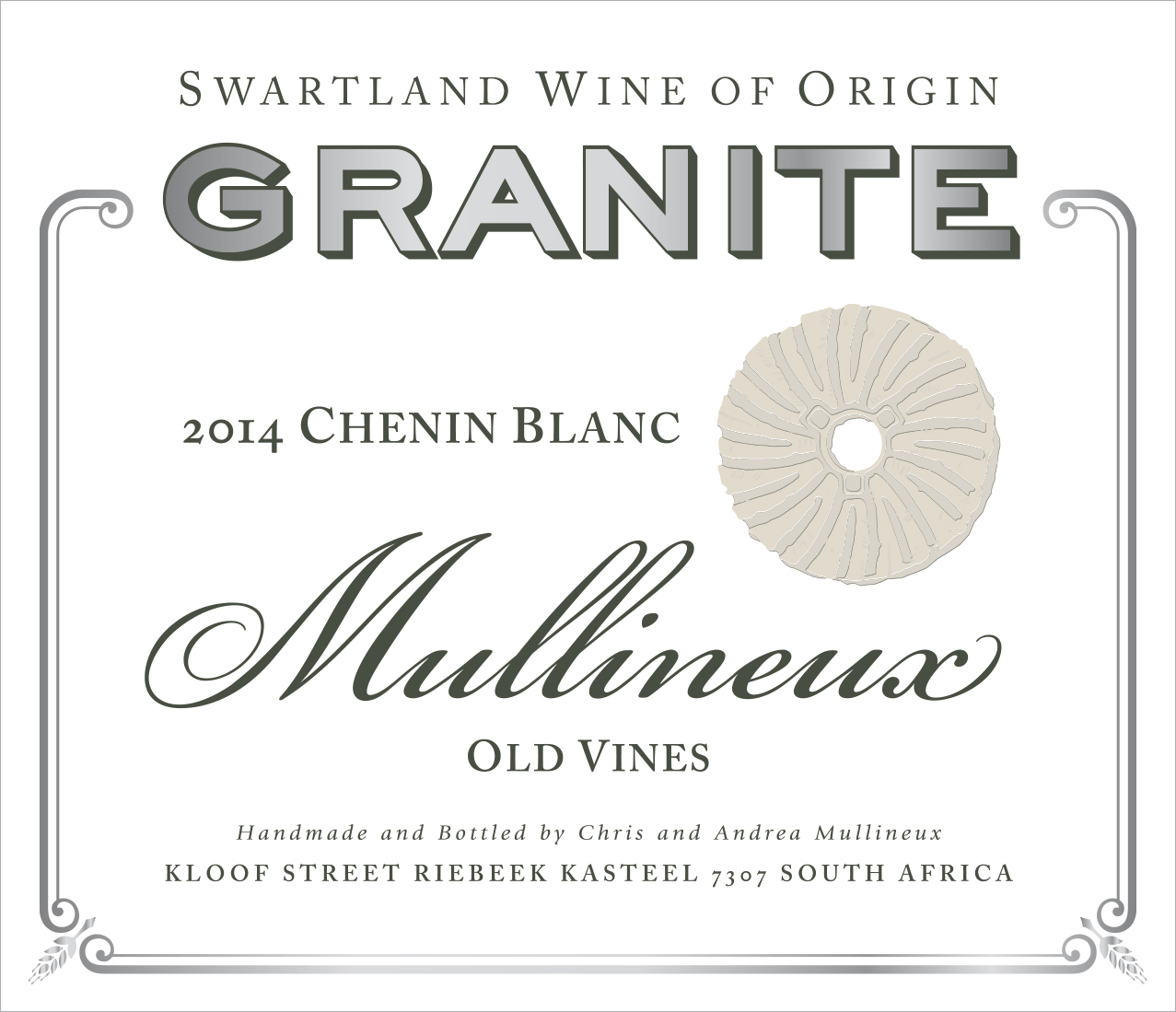
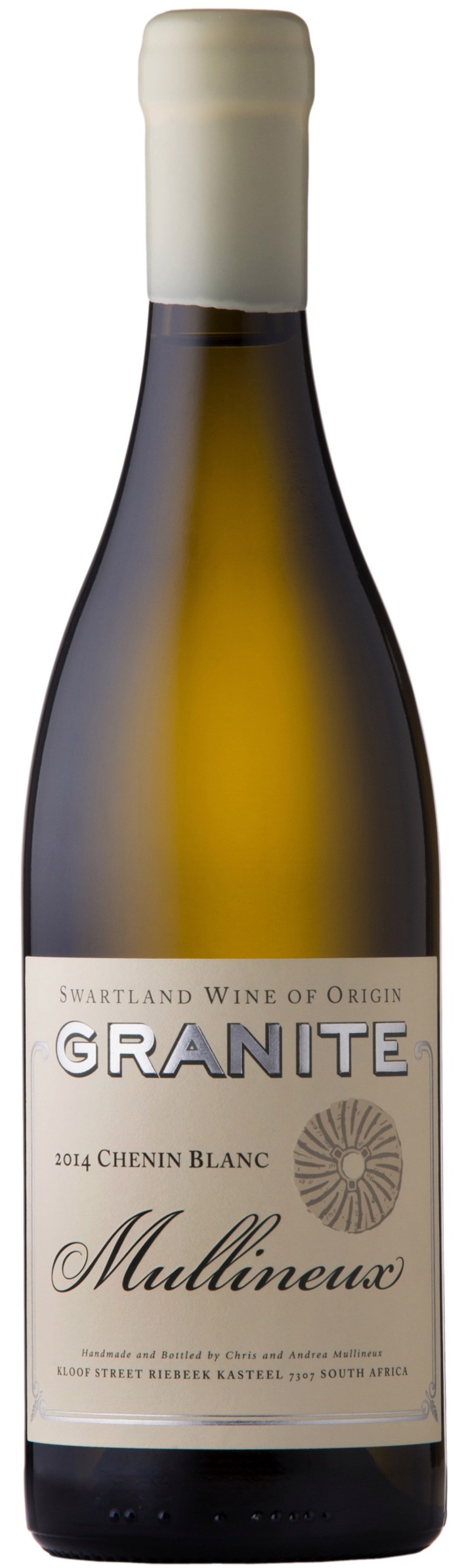
Grapes for our Granite Chenin come from 2 parcels of sustainably farmed old vine, dry farmed Chenin Blanc bush vines planted in the decomposed Granite soils of the Paardeberg Mountain. The Vineyards are 38 and 42 years old respectively. These very deep decomposed Granite soils tend to produce wines with great acidity and a flinty, stony aromatic profile.
The Granite Chenin tends to exhibit a fantastic natural acidity that balances out the texture and mid-palate that all Swartland white wines possess. The nose is flinty with some stone fruit and citrus aromatics. Best served at about 12 °C, this wine will show optimally if decanted when drunk within the first 3 years after bottling.
"The Mullineux’s Granite Chenin comes from two very different Swartland parcels, which contribute richness and cooler elegance respectively. Appley, fresh and stony, with subtle baking spices, some beeswax and a backdrop of older oak and a leesy texture. 2018-24. - Tim Atkin"
- Tim Atkin (South African Report 2017), 94 pts
The Mullineux Family Winery Estate
This is a small, highly focused family winery producing a select family of hand-crafted wines from the granite and shale based terroirs of the Swartland Region of South Africa.
Chris was born in Cape Town, raised in Johannesburg, and introduced to the world of wine while studying accountancy at the University of Stellenbosch. After braving his way through accounting, he enrolled into winemaking for a second degree, and on graduating took a position starting up a boutique organic winery in Tulbagh, where he was in charge of the vineyards and cellar for 5 very enjoyable years. In addition to stints at de Trafford and Rustenberg wineries in South Africa, Chris has also worked harvests at top wineries in Cote Rotie, Bandol, the Languedoc, Roussillon, and California. Over the years Chris has had good exposure to the people, vineyards and wines of the Swartland. This has lead to a growing love for, and firm belief in the region, and he looks forward to many creative and hard working vintages in this region with his family.
Andrea developed her passion for wine at the family dinner table, growing up in San Francisco. After studying Viticulture and Oenology at UC Davis and completing a handful of harvests in the Napa Valley, Andrea decided to broaden her winemaking knowledge overseas. After a harvest in Stellenbosch, she went on to work in Chateauneuf and, on the same trip, met Chris at a wine festival in Champagne! Andrea's love for South African wine (and Chris) brought her back to South Africa where they learnt that their compatibility extended into the vineyards and cellar. When Andrea is not hard at work in the cellar, her creative energies flow into the kitchen where she loves cooking up a storm, glass of wine in hand.
The Mullineux Family Winery Vineyards
Very low summer rainfall coupled with afternoon and evening breezes off the Atlantic Ocean result in low disease pressure. Vineyards are often planted in amongst the natural rhenoster veldt and fynbos, which provide refuge for predators of vineyard pests, and help reduce the spread of disease. Weeds struggle to establish themselves and spread, making it easier to control them without the need of herbicides.
Chris and Andrea have put together a group vineyards in the most interesting parts of the Swartland, which are mostly found around the shale and schist based Riebeek Kasteel Mountain, and the granite based Paardeberg mountain.
Lammershoek - The deep white, granitic soils on Lammershoek produce wines that are exceptionally pure, with a granitic perfume that shines through in red and white varieties.
Kasteelsig - The soils, found on the rolling hills north of Malmesbury, are a deep combination of red gravel and iron, and produce dark, concentrated wines that are the flesh of our blends.
Kloovenburg - The highly varied row directions and aspects bring much complexity to wines, and the high shale content of the soils gives serious structure, and brings an earthy spicy character to syrah planted in them.
Mountain View - The soils are shale based, which drain easily, reducing vigor and providing grapes of perfume, freshness and structure.
The vineyards are planted with grape varieties (which are mostly Mediterranean in origin) that are ideally suited to the environment, and are farmed sustainably and in harmony with their surroundings: Syrah, Chenin Blanc, Grenache Blanc, Clairette, Viognier.

Verite La Joie Red is made from 84% Cabernet Sauvignon, 7% Merlot, 5% Cabernet Franc, and 4% Petit Verdot, .
The 2018 La Joie displays a brilliant violet core with a thin rim of bright ruby. Generous fruit-for- ward aromas of ripe black currant and black cherry are followed by earthy notes of fresh conifer, dried mushroom, black olive, dusty clay, anise and clove. The palate is rich and structured; possessing similar flavors of the nose, refined tannins, well-balanced acidity and a complex, luscious finish.
Review:
A blend of 84% Cabernet Sauvignon, 7% Merlot, 5% Cabernet Franc, and 4% Petit Verdot, the 2019 La Joie is deep garnet-purple in color. It has a wonderfully flashy and flamboyant nose of blackcurrant cordial, redcurrant jelly, plum preserves, and potpourri with hints of chocolate mint, tilled soil, chalk dust, and forest floor. The medium to full-bodied palate is very taut and muscular with tons of bright, crunchy black fruits and wonderful tension, finishing with tons of earthy nuances. 2,500 cases were made.
-The Wine Independent 100 Points
The 2019 La Joie is an elegant expression that offers power, freshness and expressive, floral character. A blend of 84% Cabernet Sauvignon, 7% Merlot, 5% Cabernet Franc and 4% Petit Verdot, it has a deep ruby color and opens slowly from black cherries and blueberries to accents of violets, ground coffee and licorice. The full-bodied palate has generous, grainy tannins, detailed, perfumed flavors and bright acidity, finishing with an alluring iron character.
Robert Parker 99 Points

Fefinanes Albarino de Albarino is 100 percent Albarino
Fresh fruit aromas of apricot and peach slices with notes of lemon and green apple. Pretty notes of honey and wet nutmeg, and the mouth is round, clean, and pleasant with baked apple, honey, and lemon.
This is a classic Albariño which is good young, but actually improves over two to three years and remains quite drinkable for up to five years. Owner Juan Gil comments that the wine really starts to come into its own in June/July, and he actually prefers it 18 or more months after it's made. A Fefiñanes "vertical" of three or four vintages can provide some most interesting surprises.