
" We don't sell the wine without touching the vine "
| BUY MORE! SAVE MORE! | ||||||||||||||||||||
|
| Country: | Italy |
| Region: | Marche |
| Winery: | Zaccagnini |
| Grape Types: | Sangiovese Montepulciano |
| Vintage: | 2024 |
| Bottle Size: | 750 ml |
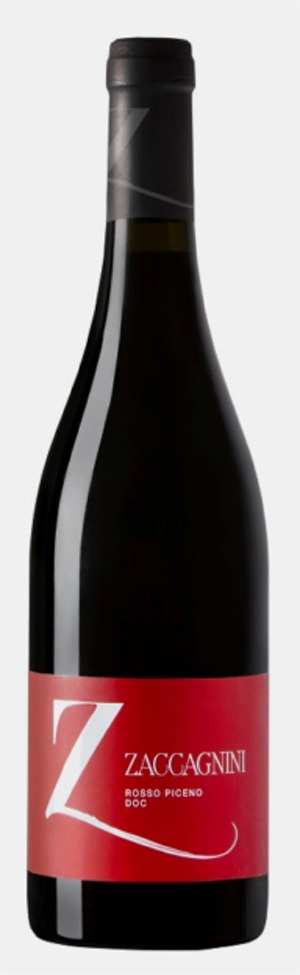
Zaccagnini Zeta Rosso Piceno 2024 is made from Montepulciano and Sangiovese.
Winery Info: Fratelli Zaccagnini is a family estate in Staffolo, in Italy's Marche region. Best known for its Verdicchio, the house also draws on the local Rosso Piceno appellation for its reds.
Medium-bodied, with ripe red-cherry and plum fruit, soft tannins and an easy, food-friendly finish. A versatile everyday Italian red.
In 1973 the Zaccagnini brothers established their Azienda Agricola (farm company), driven by a hobby, that became a real passion over time. Mario devoted himself to this activity and passed on his passion to daughter Rossella and to Franco, making the farm a 100% family-owned estate. In recent years spectacular improvements in product quality have been obtained thanks to a careful selection of the grapes, to the research and new technologies.
The Salmàgina vineyards extend to 42 hectares in the Municipality of Staffolo, Ancona, 500 meters above sea level. The strategic climate and particular soil that has been rich in iodine in the recent past, combined with the hard work of Zaccagnini, allowed to obtain great and distinctive wines (for example the excellent quality of "Verdicchio"). The vineyard colors the fields, leaving uncultivated spaces to the historical remnants of Mediterranean maquis, aligned to the west, protected from the north wind and from the dangers of bad weather.
For the last 10 years the Zaccagnini Azienda Agricola has been practicing clone experimentation of native varietals, fermentation temperature control and microbiogically sterile bottle filling. Through these important researches, thanks to an accurate grapes selection and the long experience in this field, the quality of Zaccagnini wine has achieved spectacular improvements.

Zaccagnini Zeta Rosso Piceno is made from Montepulciano and Sangiovese.
Winery Info: Fratelli Zaccagnini is a family estate in Staffolo, in Italy's Marche region. Best known for its Verdicchio, the house also draws on the local Rosso Piceno appellation for its reds.
Medium-bodied, with ripe red-cherry and plum fruit, soft tannins and an easy, food-friendly finish. A versatile everyday Italian red.

Zaccagnini Falerio Pecorino DOC 2024 is an italian white wine made from 100% Pecorino.
Straw yellow color, with golden to greenish reflections.
On the nose this wine is complex and intense, with floral, herbaceous and fruity notes.
Pairs well with any seafood, white meat and vegetables or soft cheese.

Codirosso Chianti is made from 90% Sangiovese, 7% Canaiolo, 3% Colorino.
Vinification: fermentation in stainless steel at controlled temperatures for 7 to 8 days with an additional 7 to 8 days on the skins. The juice is pumped over daily for 10 days at the beginning of the fermentation. The wine is then racked and goes through malolactic.
Ruby red color with purple reflections. Intense vinous bouquet with hints of violets and dark cherry fruit.The flavor is full of ripe fruit and a hint of spice. It is well balanced and dry. The finish is persistent and satisfying.
Food pairing: grilled, braised or roasted meats

Zaccagnini Verdicchio dei Castelli di Jesi 100% Verdicchio.
Verdicchio is an historic wine that has been made since the 1400’s. There is an ancient bond between the Verdicchio vine and the region of Le Marche, a seaside province on the Adriatic sea, which stems from a cherished relationship with the Benedictine, and later the Camaldolese, Monks. The monks helped spread Verdicchio vines – which had been present for centuries – as well as viticultural-oenological techniques throughout the Marche region. The efforts of the monks, along with improvements in the quality of the vines & vinification methods, have allowed Verdicchio to thrive for centuries. At one time, Verdicchio measured 65,000 hectares (158,080 acres) of grapes throughout Italy.
Verdicchio means “little green one”, in reference to the grape and the color of the resulting wine. The Verdicchio grape – which also goes by Giallo and Turbiana (Lake Garda) – is grown across Italy, and it is closely related to Trebbiano and Greco. The grape is subject to mutations.
The wine is refreshing, exhibiting lemon citrus flavors, aromas of flowers and apples, with herbaceous qualities.
Review:
-Wine Enthusiast 91 Points
Zaccagnini Verdicchio dei Castelli di Jesi 100% Verdicchio.
Verdicchio is an historic wine that has been made since the 1400’s. There is an ancient bond between the Verdicchio vine and the region of Le Marche, a seaside province on the Adriatic sea, which stems from a cherished relationship with the Benedictine, and later the Camaldolese, Monks. The monks helped spread Verdicchio vines – which had been present for centuries – as well as viticultural-oenological techniques throughout the Marche region. The efforts of the monks, along with improvements in the quality of the vines & vinification methods, have allowed Verdicchio to thrive for centuries. At one time, Verdicchio measured 65,000 hectares (158,080 acres) of grapes throughout Italy.
Verdicchio means “little green one”, in reference to the grape and the color of the resulting wine. The Verdicchio grape – which also goes by Giallo and Turbiana (Lake Garda) – is grown across Italy, and it is closely related to Trebbiano and Greco. The grape is subject to mutations.
The wine is refreshing, exhibiting lemon citrus flavors, aromas of flowers and apples, with herbaceous qualities.

The Special Club concept started in 1971. A dozen wine growers from some old families of Champagne had an idea to familiarize people with the originality of the “Champagne de Vigneron” (Champagne of wine grower), thanks to prestigious vintages.
In the beginning, they created an association called the “Club des Viticulteurs Champenois” and chose a bottle with a special shape, created exclusively for them & used only by then. In 1988, they changed the bottle and the label. In 1999, the Club changed its name to “Club Trésor of Champagne.”
The Club Trésors comprises 28 artisan wine makers, selected from the finest areas of the Champagne region, each one recognized for the quality of their work. The Club Trésors is the only organization in Champagne to select its members according to a set of unrelenting quality standards:
Roland Champion's Special Club selection has rich and structured aromas. Very pleasant and generous roundness, nice length in mouth. Golden color with buttery and fruity aromas. All the expression of a magnificent terroir for your most pleasurable moments.
-75x150.jpg "Valminor Albarino Rias Baixas 2025")
Valminor Albarino Rias Baixas is made from 100% Albarino.
Albariño is native to the Miño River region, which separates Galicia and the Rias Baixas DO from Portugal; it is prized for its characteristic citrus aroma and high acidity. Valminor Albarino presents a yellow-straw color. On the nose it shows a wide fruity range, with notes of fresh grapefruit, apricot and melon. In the mouth it combines fruity flavors and freshness with a rounded acidity, resulting in a balanced wine with an opulent taste and a slight spritziness.



