
" We don't sell the wine without touching the vine "
| Country: | United States |
| Regions: | California California (Napa) |
| Winery: | Alejandro Bulgheroni |
| Grape Type: | Cabernet Sauvignon |
| Organic: | Yes |
| Vintage: | 2019 |
| Bottle Size: | 750 ml |
Alejandro Bulgheroni Lithology Beckstoffer To Kalon Vineyard Cabernet Sauvignon is made from 100 percent Cabernet Sauvignon.
Alejandro Bulgheroni Estate Lithology is a series of single vineyard and AVA-designated wines made from select sites within Napa Valley. Lithology Beckstoffer To Kalon Vineyard is produced solely from fruit grown in the historic Beckstoffer to Kalon Vineyard planted in 1865 by W.H. Crabb and represents Oakville's famous bench land.
Review:
The 2019 Cabernet Franc Lithology Beckstoffer To Kalon Vineyard just shines for its bouquet, which is classic To Kalon with its floral, incense, spicy, red and black-fruited aromatics. These all flow to a medium to full-bodied, utterly seamless Cabernet Franc that’s balanced, has laser-like precision, and a great finish. This isn’t the biggest or richest wine in the lineup, but it’s Cabernet Franc in all its glory, with soaring aromatics and complexity, ample richness and texture, and a beautiful sense of finesse and elegance. It’s going to keep for 15-20 years with no issues.
-Jeb Dunnuck 98 Points
Composed of 90% Cabernet Sauvignon and 10% Cabernet Franc, the 2019 Lithology Cabernet Sauvignon Beckstoffer To Kalon Vineyard is a barrel sample with a deep garnet-purple color. It needs a fair bit of coaxing to unlock scents of blackberry pie, warm blueberries and cassis plus suggestions of spice cake, underbrush, candied violets and chocolate box. The full-bodied palate brings forth loads of earthy layers to accent the rich, black fruits, framed by plush tannins and lovely freshness, finishing long and fragrant.
-Wine Advocate 97 to 99 points
The 2019 Cabernet Sauvignon Lithology Beckstoffer To Kalon Vineyard is one of the very finest wines I have tasted from Alejandro Bulgheroni's Napa Valley project. The 2019 To Kalon captures all the pedigree of this iconic Oakville vineyard, and yet also remains nuanced and wonderfully finessed for an intense wine. To Kalon Cabernets are rarely this elegant, but the Bulgheroni 2019 sure is.
-- Antonio Galloni 97 Points
Alejandro Bulgheroni Lithology Beckstoffer Dr. Crane Vineyard Cabernet Sauvignon 99% Cabernet Sauvignon, 1% Cabernet Franc.
Here the Cabernet comes to us typically flawless, and the wines are as such. There is blue fruit, blueberries, black plums, blackberries, and cassis to the aromas, as well as stones, mineral, chocolate, fresh tobacco, and subtle herbs. It is incredibly full-bodied, but at the same time effortlessly drinkable, with ultra-smooth tannins and a positive, long, upturned finish. 70-75% new French oak is the norm for us with Dr. Crane, and those flavors are absorbed to become a vanillin complexity, sweetness, and length. An unbelievable wine.
Review:
You don’t see many Cabernet Franc-dominated wines from this site, but the 2019 Cabernet Franc Lithology Beckstoffer Dr. Crane Vineyard is certainly impressive. Offering more herbal, chocolate, gravelly earth, and espresso aromas and flavors, it has full-bodied richness and, as expected, is a powerful, opulent expression of this noble variety. The blend is 83% Cabernet Franc and 17% Cabernet Sauvignon, aged 20 months in 80% new French oak. It will benefit from short-term bottle age and drink nicely for 20 years.
-Jeb Dunnuck 97 Points
Alejandro Bulgheroni Lithology Cabernet Sauvignon is made from 100 percent Cabernet Sauvignon.
We only produced a scant 50 cases of this wine this year, far too small an amount considering how great it turned out. There’s that typical saturated to the rim deep purple color, with intense cassis, herb, and milk chocolate, bricks and forest floor, black plum pudding aromas. In the mouth, there’s a great balance, with notable oak and vanilla notes intertwined with dense black fruits. It’s an opulent and plush style, yet finishes with sweet grippy tannins.
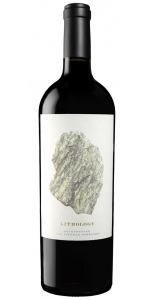
Alejandro Bulgheroni Lithology Beckstoffer Las Piedras Cabernet Sauvignon is made from 100 percent Cabernet Sauvignon.
From a St. Helena vineyard planted by early Napa settler Edward Bale more than 150 years ago, and later serving as the estate vineyard for the area’s first winery built by Henry Pellet in 1860, the Las Piedras site always gives us our prettiest wine. When placed next to Dr. Crane and To-Kalon wines, the Las Piedras show a certain elegance, with a very graceful entry and finely detailed complexity. We produce it with at least 75% new French oak, so there is a floral, spicy, and vanilla accent to the intense red and black fruits, cassis, and black cherry liqueur. What distinguishes this bottling is the beautifully fine tannins, delicate texture, and stunning purity. (Less than 100 cases made.)
Fermentation 70% Oak, 24% Concrete, 6% Puncheon
Review:
"The 2018 Cabernet Sauvignon Lithology Beckstoffer Las Piedras Vineyard comes from a world-class site outside of St. Helena and is all Cabernet that spent 20 months in 80% new oak. It offers a touch more red fruit as well ample cassis, spring flowers, loamy earth, and spice-like aromas and flavors. It has a wonderful sense of minerality, ultra-fine tannins, a dense, layered texture, and incredibly purity of fruit. It’s another just about off the charts release from this estate."
- Jeb Dunnuck 98 Points
Force Majeure Cabernet Sauvignon Red Mountain is made from 100 percent Cabernet Sauvignon.
The estate Cabernet Sauvignon is grown primarily along the southwest ridge of the vineyard. The vines produce small berries with bountiful flavor, concentration and intensity, but also a good degree of finesse, excellent structure and layers of complexity that will continue to develop during extended bottle aging for those who want to cellar and age their wines. The wine is powerful, elegant, full-bodied.
Bottled unfined and unfiltered.100% free run
Pumpovers and punch-downs, up to 45 day macerations
Native yeast, 5 day cold soaks
22 months in 75% new French oak barrels
Fermented in concrete and stainless closed top tanks.
Review:
Another gem is the 2019 Cabernet Sauvignon Red Mountain Estate, a deep, concentrated, powerful Red Mountain Cabernet Sauvignon that I suspect will be up there with the legendary wines from this terroir. Beautiful cassis, graphite, lead pencil shavings, and damp earth notes give way to a full-bodied effort that has a liqueur of rocks-like minerality, flawless balance, building yet polished tannins, and a great finish. Hide bottles for 4-5 years, and it will evolve for 25-30 years if properly stored. Best After 2026.
-Jeb Dunnuck 98+ Points
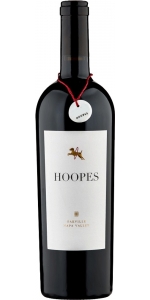
Hoopes Cabernet Sauvignon Oakville is made from 100 percent Cabernet Sauvignon.
“Our flagship wine is, and always has been, the soul of our farm. Crafted from our ten-acre vineyard in the heart of Oakville, planted in 1983, it was previously a fruit source for a number of famous estates until we started winemaking ourselves. The soil is dense in geologic composition, featuring four different types of soil. One, volcanic, is unheard of in the Oakville sub-appellation, with the exception of To Kalon, and is rarely, if ever present, in valley floor vineyards. We harvest this vineyard in fourteen small batches, despite the small size, to ensure the perfect balance of acid, flavor, and tannins. "
This wine's deep garnet hue invites you to dive into the nose as it opens with soft fruity-floral aromas of lilac and rose petals then moving into red fruits, pencil shavings, honey and plum. The aromas are deceptively delicate and refined with an ethereal quality. The mouth is more concentrated leaning towards ripe, rich black fruits. Juicy blueberry and sweet licorice flavors carry into the mid-palate with an open, spacious and inviting character. Lush, elegant, tannins support a mouthwatering finish with a savory aspect and notes of black tea bringing the wine to a balanced and layered close.
Review:
The 2019 Cabernet Sauvignon Oakville brings more elegance and finesse. Coming all from Oakville and aged 28 months in 50% new barrels, it has perfumed red and black fruits, lots of spicy oak, medium body, and just a seamless, pretty, elegant profile that's going to evolve nicely for 10-15 years.
-Jeb Dunnuck 94 Points
It is hard to imagine with the Lithology range receiving 298 points out of 300 for the three single-vineyard wines, that there could possibly be a wine above them. But there is, and it is our Estate wine. Blended several times very intently by masters of their craft Philippe Melka and Michel Rolland, this is the ultimate expression of our house’s work. Positive, full-bodied, and quite powerful, there’s the expected crème de cassis and blackberry from St. Helena Cabernets, with mineral, herb, subtle tobacco and vanilla, plum skins, and pie crust, purple flowers, forest-conifer notes, and very fine tannic structure. It is a magnificent, and magnificently elegant expression of this house, and when asked recently, Monsieur Rolland stated plainly to me, “oh yes indeed – this is the best one, the best yet…”
Review:
Pure perfection in Cabernet, the 2019 Cabernet Sauvignon Alejandro Bulgheroni is all varietal and comes two-thirds from Oakville with the balance from sites in St. Helena and Rutherford. Aged 20 months in 70% new French oak and put together by Philippe Melka and Michel Rolland, it has an incredibly pure, full-bodied, massive yet weightless style that I suspect couldn’t be achieved anywhere outside of Napa Valley. Cassis, blackberries, leafy herbs, lead pencil shavings, and tobacco leaf are just some of the nuances here, and it’s full-bodied, deep, and concentrated on the palate while maintaining an ethereal, seamless, utterly perfect balance between its fruit, alcohol, tannins, and acidity. As good as it gets, it needs just 2-4 years in the cellar and will evolve gracefully for at least 20-25 years.
-Jeb Dunnuck 100 Points
The land of Alejandro Bulgheroni Estate was once part of the Rancho Carne Humana Spanish land grant given to Edward T. Bale in 1841. Bale married the niece of Mexican General Vallejo and was awarded the grant shortly after. Their daughter, Caroline, married Charles Krug and received a dowry of a 20-acre piece of the Rancho that would eventually become Charles Krug Winery.
Gradually, the Rancho was sold and divided into smaller lots. in 1860, our 13-acre parcel was sold for $2,070 to John Howell, a prominent blacksmith in Napa County and for whom Howell Mountain was named.
In modern history, the estate was first planted to grapes by Jim and Nena Talcott in 1975. Under their ownership, a charming stone winery was built to vinify the property's grapes.
The property then served as the Founders Room for the wine portfolio of H. William Harlan and produce the first vintages of The Napa Valley Reserve.
After its acquisition by Alejandro Bulgheroni, he began an extensive renovation and enhancement project to upgrade the old stone winery, plant new vineyard blocks, transform the tasting salon and re-envision the future of the property.
The winery renovations provided upgraded infrastructure and new equipment, dedicated solely to the vinification of Lithology wines. In future years, additional vineyard blocks will be planted at the highest elevation of the property and a cave will be built for barrel storage and aging.
Alejandro Bulgheroni Estate
Certified organic, the Estate vineyard is at the base of Howell Mountain and the Vaca Mountain range where rich, volcanic soils are found, resulting in wines that are deep and ripe with structure, firm tannins, and acid for long cellaring. The site is comprised of a very thin layer of soil, less than one foot in depth, that rests on igneous rocks and materials weathered from volcanic ash. This well-drained, mineral-rich soil is ideal for cultivating Cabernet Sauvignon.
Alejandro Bulgheroni Estate is planted in two parts, one above and one below the beautiful stone barn and winery on Meadowood Lane in St. Helena. It has had several well-known owners beginning with John Howell, the blacksmith for whom they named the mountain, then Charles Krug. In modern history, the site was first planted to grapes by Jim and Nena Talcott, in 1975. Under their ownership, a charming stone winery was built to vinify the property’s grapes. The property then served as the “Founders Room” for the wine portfolio of H. William Harlan and produced the first vintages of “The Napa Valley Reserve.” Now, under the Alejandro Bulgheroni Estate banner, the vineyard is producing some of the finest Cabernet in the area, and we recently added a small block for Sauvignon Blanc as well.
Beckstoffer Dr. Crane
Dr. Crane Vineyard sits at the base of the western hills of St. Helena. A window into showcasing one for the grapes that gave birth to Cabernet Sauvignon from one of California's most legendary single-vineyard plots of earth. Napa pioneer, Dr. George Belden Crane originally planted Dr. Crane Vineyard in 1858. Acquired by Beckstoffer Vineyard in 1997, the vineyard's gravelly loam soils were replanted in 1998 to multiple clones of Cabernet Sauvignon, Petit Verdot, and Cabernet Franc.
Beckstoffer Las Piedras
The history of the Beckstoffer Las Piedras Vineyard closely resembles that of Alejandro Bulgheroni Estate. It was once part of the Rancho Carne Humana Spanish land grant given to Edward T. Bale by Mexican General Vallejo. It was first planed by Bale to Mission grapes, making it one of the first vineyards planted in the Saint Helena Appellation. Henry Amstutz, one of California's first great winemakers, replanted the vineyard to wine grapes in 1860. In 1983, Beckstoffer Vineyards purchased the property and planted two clones of Cabernet Sauvignon.
The vineyard, located at the base of Sulfur Creek, is comprised of well-drained soils created from the Creek's run-off and peppered with rocks and small pebbles. Aptly named Las Piedras by vineyard workers, the name translated in English means "the stones". Its effect on wines is marked with a fresh vibrancy and deeply concentrated fruit.
Beckstoffer To Kalon
Perhaps the most famous of the Beckstoffer vineyards, and certainly one of the most celebrated in Napa’s history. Planted by H. W. Crabb, in 1868, as the Hermosa Vineyard, it was 250 acres and already the most famous vineyard in California when it was renamed To Kalon (meaning “highest beauty” in Greek.) Mr. Crabb lived long enough to expand the vineyard several times and made it one of the most successful wine cellars prior to Prohibition. Afterward, it passed to a couple of families who cared well for the vineyard until it was finally purchased (in part) by Andy Beckstoffer, in 1993, and replanted in 1994. Even after 150 years, the reputation of this “Grand Cru” vineyard has never been greater.
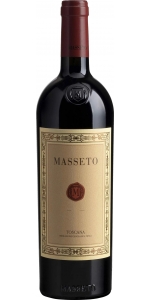
Masseto 2020 is a wine that has embraced all the key traits of the vintage. It displays excellent concentration both in terms of colour and bouquet. They remain persistent and vivid in the glass without subsiding over time. The potency of this wine returns on the palate with beautiful length and balsamic flavours. The integrity of the tannin reveals the ageing potential typical of Masseto.
Review:
Intense and full on the nose, fragrant with ripe black fruit, floral aspects and soft spicing. Round and full on the palate, it's rich and muscular yet tight and neatly coiled with a liquorice, graphite, pepper, cinnamon and clove tang that gives this immediate but enjoyable spice. Feels well worked, juicy with high acidity that lifts the palate and gives freshness and brightness alongside really quite mouthwatering strawberry and raspberry fruit with such captivating dried floral and bitter orange rind aspects. Tannins are super fine and so well integrated yet this maintains a grip and hold from the very beginning through to a long and sustained finish. Nuanced and complex, still packing a punch in terms of power, but this feels sophisticated, suave, purposeful and controlled. Not elegant, this is more of a caged animal with it's full potential yet to be unveiled, but it is classy. A truly delicious wine with so much purity and sense of place. Malolactic fermentation in 100% new barroques, with each batch kept separate for the first 12 months of ageing before being blended and returned to barriques for another year, totaling 24 months. The wine was then aged for a further 12 months in bottle before being released.
-Decanter 100 Points
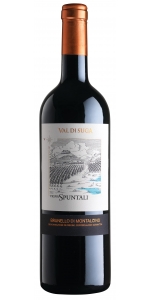
This is a 6 pack with 2 bottles each from vintages from 2013, 2015, and 2016.
***Tenimenti Angelini Val di Suga Vigna Spuntali Brunello di Montalcino 2016:
The 2016 Vigna Spuntali Brunello di Montalcino is the most brooding of the lineup from Val di Suga and is sourced from the southwest of the region on sandy soils. There are aromatics of black raspberry, licorice, menthol, sage, cinnamon, and iron-rich earth. Its Mediterranean influence is felt on the palate with ripe black cherry, dried herbs, and sun-baked earth. This is the fullest bodied and most savory of the Val di Suga lineup, with more roundness and grip. Its structure will benefit from cellaring for several years and will be great drinking over the next 20 years or more. 2026-2040.
-Jeb Dunnuck 96 Points
***Tenimenti Angelini Val di Suga Vigna Spuntali Brunello di Montalcino 2015:
The 2015 Vigna Spuntali Brunello di Montalcino is more introverted on first opening, with notes of black plum, licorice, dried Mediterranean herb, and sun-baked earth. On the palate, it offers a tart dried fruit character, with a building tannin structure that finishes with tomato leaf, and bitter herbs. The most rustic and burly of the wines in the lineup of the 2015 Val di Suga vintage, it will benefit from allowing some time in cellar to see how this matures and its tarriness develops. Drink 2026-2036
-Jeb Dunnuck 94 Points
***Tenimenti Angelini Val di Suga Vigna Spuntali Brunello di Montalcino 2013:
Plenty of spices and fresh herbs on the nose, such as dried rosemary and nutmeg, to match the underlying dried redcurrants and cranberries. Full-bodied with plenty of concentration, but still shows a very sturdy, tannin backbone and punchy acidity, to drive this through to a long finish. Drink in 2021.
-James Suckling 94 Points
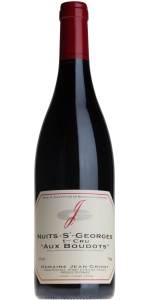
Domaine Jean Grivot Nuits-Saint-Georges Premier Cru Aux Boudots is made from 100 percent Pinot Noir.
Domaine Jean Grivot is among the great names in Burgundian wine. Étienne Grivot and his wife Marielle took over from Étienne’s father Jean Grivot in 1987. The vineyards are densely planted and farmed organically “sans certification” while the aim in the cellar is for balance and clear expression of terroir.
Jean Grivot’s 38.3 acres spread across 22 appellations with vineyards in the communes of Vosne-Romanée, Vougeot, Chambolle-Musigny, and Nuits-Saint-Georges. Besides the three grand crus, there are 8 premier crus including the much lauded Les Beaux Monts and Suchots in Vosne-Romanée. The grapes are completely de-stemmed and fermentation is spontaneous.
Nuits-Saint-Georges Aux Boudots 1er cru lies in the “Zone Vosnoise” or northern end of Nuits-Saint-Georges just below Les Damodes. It borders Vosne-Romanée Aux Malconsorts 1er just to its north. Its position slightly lower on the slope with deep soil full of pebbles results in a richer and fuller wine.
The grapes are destemmed and maceration à froid usually lasts just a day or two. The alcoholic fermentation is spontaneous and malolactic fermentation occurs in barrel. Depending on the vintage, the proportion of new oak is around 30-60% for the premier crus.
The wine shows aromas and flavors of red berries, herbs, and purple flowers. The palate is rich with ripe fruit and medium weight with bright acidity and fine tannins. Aging in 30-60% new Burgundian pièce brings notes of vanilla, toast, and baking spices.
Red Burgundy might be the world’s most flexible food wine. The wine’s high acidity, medium body, medium alcohol, and low tannins make it very food-friendly. Red Burgundy, with its earthy and sometimes gamey character, is a classic partner to roasted game birds, grilled duck breast, and dishes that feature mushrooms, black truffles, or are rich in umami.
Reviews:
‘The 2020 Nuits Saint-Georges Aux Boudots Ter Cru has the best aromatics among Grivat Nuits Saint-Georges with very well defined red berry fruit, briary and lignt sous-bois aromas. The palate is medium-badied with fine-grain tannins, slightly savory on the entry, fresh and saline on the finish. This has real verve and class, though it will benefit from time in bottle
-Vinous 93-95 Points
A wine with the substance and structure to support the generous lashings of new oak used for maturation, and the overall effect is elegant and classic in style. Aux Boudots, where Grivot has 0.85ha, is at the northern edge of Nuits, just over the border from Vosne-Romanée Malconsorts. They began to pick on the 3rd of September – Etienne specified that they are very particular that the tannins are ripe and do what they can to prolong the vegetative cycle. Still, the grapes were picked with an entirely correct pH of around 3.4.
-Decanter 94 Points
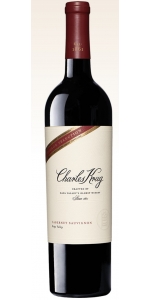
Charles Krug Peter Mondavi Family Vintage Selection Cabernet Sauvignon is made from 100 percent Cabernet Sauvignon.
Review:
The 2016 Cabernet Sauvignon Vintage Selection has a deep garnet-purple color and features exuberant notes of crushed black cherries, mulberries and blackcurrant cordial with touches of unsmoked cigars, menthol, yeast extract and pencil shavings. Full-bodied, concentrated and opulent in the mouth, it has a solid line of plush tannins and plenty of backbone freshness to lift the generous fruit to a long fruity finish.
-Wine Advocate 95 Points
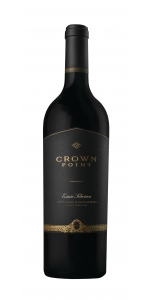
Crown Point Estate Selection is made from 75% Cabernet Sauvignon, 10% Merlot, 6% Petit Verdot, 6% Cabernet Franc, 3% Malbec.
The 2016 Crown Point Estate Selection exhibits a heady aromatic array of baking spices, ripe red and black fruits, with deep intonations of earth and minerals. The palate is elegant and bright, with appealing acids and nuanced notes of savory mocha and dried herbs. Polished and seamless, the tannins finish with a comet-like trail of textural opulence highlighted by glossy flavors of baked berry pie and warm toast. Recommended drinking window: now through 2030s.The 2016 Estate Selection is representative of all five red Bordeaux varieties. The selection process starts in the vineyard and continues on through the winemaking process: only the best lots make the final blend. All blocks were harvested & fermented separately. The individual components were blended after 12 months in barrel. Total time in 225 liter French oak barrels was 26 months.
Review:
Deeply colored, the 2016 Estate Selection checks in as 75% Cabernet Sauvignon, 10% Merlot, 6% Petit Verdot, 6% Cabernet Franc, 3% Malbec that was brought up 26 months in 75% new French oak. Deeply colored, it has a smoking good bouquet of crème de cassis, smoke tobacco, lead pencil, camphor, and hints of chocolate. This gives way to a powerful, opulent Cabernet Sauvignon that has plenty of sweet tannins, a layered, multi-dimensional texture, no hard edges, and an awesome finish. I’d happily put this beauty in a lineup of top Napa Valley Cabernet Sauvignon and blends.
-Wine Enthusiast 97 Points
There’s an impressive amount of complexity on the nose of this bottling by winemaker Adam Henkel, from crushed graphite and concentrated black strawberry to cinnamon pastry, licorice and a brush of herbs. The sip is intense, with leathery but chiseled tannins presenting flavors of charred black currant, licorice, black olive, dried flower and white pepper
-Jeb Dunnuck 97 Points
Crown Point Estate Selection is made from 70% Cabernet Sauvignon, 10% Merlot, 10% Malbec, 5% Cabernet Franc, 5% Petit Verdot.
The 2017 Crown Point Estate Selection is an engaging wine with notes of red fruit, strawberries, and vibrant floral tones of violets in harmony with toasted coffee notes. On the palate, the wine displays a gentle sweetness married with fine grain tannins, a velvety texture providing a long finish.
Review:
There's a purity to the nose of this bottling that reveals deep, lush waves of boysenberry paste alongside a savory tone of charred beef. Polished tannins frame the sip, where ample amounts of rich black plum and blackberry are enhanced by caramel, coffee bean and mocha flavors, with acidity holding tight into the finish.
Wine Enthusiast 96 Point
Argot Bastard Tongue Pinot Noir is made from 100 percent Sonoma Pinot Noir.
Inheriting an unbroken string of success, the “Bastard Tongue” arrives fully-formed and ready to impress. Always a blend from multiple Pinot Noir vineyards, this iteration of “BT” was selected from three distinct sites, each making their own unique contribution of Sonoma County terroir to the wine’s character.
Exploding forth on a tidal wave of high-toned, intense red and black fruits, this is a Pinot Noir that no stemware can contain. The palate’s profound depth is balanced by an inherent freshness, allowing the wine to crackle with brambly energy, while sustained by bass notes of underbrush, black tea, pie spice and baker’s chocolate. A formidable rendition of “Bastard Tongue”, and a deserving successor to its line.
Night harvested by hand throughout September, cluster and berry sorted by hand, de-stemmed, no crushing. 7-day cold soaks, followed by native fermentation in open-top bins. Average time on the skins, 14 days. Aging 20 months in French oak, 100% new. Never racked prior to bottling. Bottled unfined, unfiltered.
Very versatile for pairing. Goes well with grilled meat, vegetable, fish, poultry and cheese.
Review:
"The 2022 'Bastard Tongue' Pinot Noir from Argot is utterly mind-blowing. It immediately draws you in with its seductive aromatic of fresh black raspberries, wild strawberries and even a touch of blueberry all woven together with sweet spices, cinnamon, crushed violets and earthy undertones. On the palate, the wine is both rich and graceful, with a lively acidity that elevates the sweet red fruit notes of red currant and black raspberries. Fine, polished tannins provide a round, silky texture that leads into a supple finish that lingers with sweet berries and sweet spices. This Pinot Noir offers a beautiful balance of elegance and complexity, drinking beautifully now, with a depth that promises further enjoyment. This is one of the most delicious bottles of Pinot Noir I can recall." - 98 Points, International Wine Report
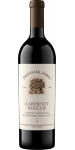
Freemark Abbey Bosche Cabernet Sauvignon is made from 93% Cabernet Sauvignon, 7% Merlot.
Nestled in the heart of the Rutherford Bench, the Bosché Vineyard has the ideal terroir for growing elegant and balanced Cabernet. The 2019 vintage opens with aromas of chocolate covered cherry, blueberry, graphite, and forest floor. The palate is rich and supple with notes of forest fruit compote, cigar box, mocha, and carob. The tannins are already silky and integrated which means it drinks wonderfully now and will age gracefully for decades. .
Review:
From a valley floor site and a blend of 90% Cabernet Sauvignon and 10% Merlot, the 2019 Cabernet Sauvignon Bosche offers a great bouquet of both red and black fruits as well as notes of herbes de Provence, loamy earth, and spicy oak. Brought up in two-thirds new French oak, it’s medium to full-bodied, has ultra-fine tannins, and beautiful overall balance. A brilliant 2019, it will evolve for 20+ year
Jeb Dunnuck 96 Points



