
" We don't sell the wine without touching the vine "
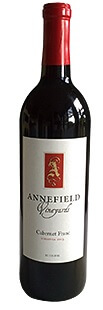
| Country: | United States |
| Region: | Virginia |
| Winery: | Annefield Vineyards |
| Grape Type: | Cabernet Franc |
| Vintage: | 2013 |
| Bottle Size: | 750 ml |
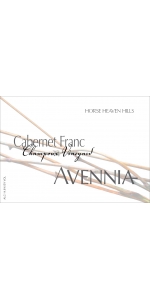
Avennia Cabernet Franc Champoux Vineyard is made from 100% Cabernet Franc.
This very limited bottling shows the compelling potential of Cabernet Franc from a top vineyard. Though it’s often used as a spice in Avennia's Bordeaux blends, this wine, from the legendary Champoux Vineyard, has its own unique character and complexity that convinced them to feature it alone.
Review:
A stellar Cabernet Franc. Gorgeous, effusive aromas of roasted hatch pepper, smoked sea salt, dried violets and candied red fruit. The palate is nicely integrated but will knit together further with time. Red-fruited and full with pomegranate molasses, tart cherries and savoury notes of smoky sage. Beautiful.
- 96 points, Decanter
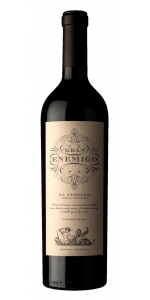
Enemigo El Enemigo Gran Enemigo is made from 100% Cabernet Franc.
In the spectrum of people who pay attention to detail, winemakers are often incredibly detail-oriented. This can sometimes spill over to become an internal battled, and, as Alejandro Vigil and Adrianna Catena state, "We are our own worst enemy." El Enemigo pays homage to this internal struggle.
The nose presents sweet aromas of black ripen fruits with hints of vanilla and chocolate, which appear after the oak ageing. The mouthfeel is sweet with structured, persistent tannins due to the natural acidity of this wine, leading into an excellent long finish.
Review:
The nose of the 2018 Gran Enemigo El Cepillo Single Vineyard, from a low-yielding and drier year, is full of curry, a note that was a constant across the three vintages I tasted together, but it tends to be stronger in low-yielding and dry years like this. It's also floral and comes through as aromatic and a little exotic, in a good way, with elegance, persistence and very pure flavors. It has fine-grained tannins, great acidity and balance. 7,200 bottles. All these single-vineyard bottlings mature in ancient 4,000-liter oak foudres for some 15 months.
-Wine Advocate 97 Points"Pretty and inviting on the nose with gorgeous aromas of floral violet, cassis and completed with a lifted, delicate liquorice note. The palate is graced with deep herb, pepper, crunchy red fruit and graceful, silky tannins."
-Decanter 97 Points
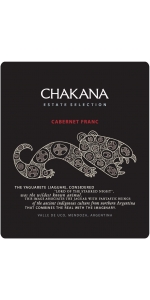
Chakana Cabernet Franc is made from 100 percent Cabernet Franc.
Chakana is the name of the Southern Cross constellation. Its rotation in the sky throughout the year made it an effective agricultural calendar for the ancient Andean people.
Expressive and ripe nose, juicy texture and intense fruit. Excellent balance, well integrated tannins and stunning minerality.
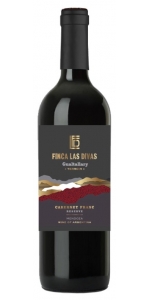
Finca las Divas Cabernet Franc Reserve Gualtallary is 100% Cabernet Franc.
Named in honor of different divas because of the detailed attention to each varietal and plot, consequence of the terroir, origin of the Andes slopes.
Deep violet red in color. Its aromas are intense and concentrated, with hints of black and red fruits with smoky touches obtained during its oak aging.
In the mouth it is persistent, full of juicy yet firm tannins and balanced acidity. It is frank and expressive, modern and of great personality.
Pairs with red meat, pasta with tomato sauce and hard cheeses.
Review:
"It’s worth buying anything with Cabernet Franc on the label from Finca Las Divas, such is the grape’s connection with the terroir here. Matured in foudres and older barrels, this is engagingly scented and refreshing, showing leafy, cut-grass aromas, bramble, plum and black cherry fruit flavours, scented mocha oak and filigree tannins. 2026-32."
Tim Atkin (April 2025), 92 pts
Finca las Divas Cabernet Franc Reserve Gualtallary is 100% Cabernet Franc.
Named in honor of different divas because of the detailed attention to each varietal and plot, consequence of the terroir, origin of the Andes slopes.
Deep violet red in color. Its aromas are intense and concentrated, with hints of black and red fruits with smoky touches obtained during its oak aging.
In the mouth it is persistent, full of juicy yet firm tannins and balanced acidity. It is frank and expressive, modern and of great personality.
Pairs with red meat, pasta with tomato sauce and hard cheeses.
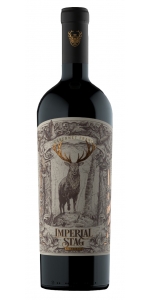
Bright deep ruby color, with spicy aromas reminiscent of red pepper, pepper and slight sensations of licorice.
In the mouth we can again find the typicity in its spicy flavors, balanced tannins, fresh, vibrant acidity and good volume.
Persistent, complex finish, with the authentic characteristics of a great Cabernet Franc.
Perfect companion for red and game meats, pasta, stews, rice and a variety of winter cuisine dishes.
The 2013 Cabernet Franc is classically refined, with intense aromas of fresh berries layered with spice and smoke. With substantial weight and a velvety texture, the wine evinces flavors of boysenberry, blueberry, warm spice and pipe tobacco through a long finish. The touch of earth and spice with beautifully balanced acidity make this an exceptional food pairing wine. Delicious now, the wine will continue to improve up to ten years from vintage.
The Annefield Grape Varietals
AWHITE QUARTZ SAPPONY INDIAN arrowhead was found at the site, so we have christened this vineyard Arrowhead. The first three-acre vineyard planting is on Georgeville silt loam, which produces moderate vine vigor.
With our deep, well drained soils, hot summers, and relatively mild winters, the climate and soil in Charlotte County are perfect for grapevines. We are taking advantage of these great conditions and have selected grape varieties that flourish here and produce the best tasting wines. Our vineyard is situated at 500-ft. elevation in an area with excellent air drainage.
Ripening fruit at Annefield Vineyards
Ripening fruit at Annefield.
We are implementing all necessary vineyard practices to optimize the quality of our fruit. These include the use of the Vertical Shoot Positioning system to train the vines, shoot thinning and leaf pulling throughout early summer, two hedgings per season, and fruit thinning on vigorous varieties.
In April 2006, we planted our first three acres. We started with Viognier, Cabernet Franc and Cabernet Sauvignon. The Viognier and Cabernet Franc were grafted onto 3309 Couderc rootstock, and the Cabernet Sauvignon grafted onto Millardet et de Grasset 101-14. Both were selected because they are less vigorous than other rootstocks and grow well in our rich Virginia clay:
Viognier – Viognier is a white grape from the Rhone Valley that makes full-bodied, powerfully perfumed, intensely floral, spicy wines. Its rich and complex aroma is like overripe apricots mixed with orange blossoms. Other descriptors are lime, honeysuckle, jasmine, ginger, and melon. Like Chardonnay, Viognier takes well to oak and to malolactic fermentation.
Cabernet Franc – One of the major red wine grapes of the Bordeaux region, Cabernet Franc is the leaner sibling of Cabernet Sauvignon and often blended with it, not only in France but in Meritage-style New World blends. On its own it is less full-bodied, less tannic and less acidic than Cabernet Sauvignon but it may be more aromatic, fruity, herbal, or vegetal. Cabernet Franc’s primary fruit aromas often suggest raspberry, cherry, strawberry and, especially, plum. It almost always shows a distinctive aroma of violets and a slightly spicy flavor. When it shows vegetal characters, they tend toward bell pepper or stems. With oak treatment, smoke, toast, and tar characters emerge. Extended bottle age promotes earth, mushroom, and cedar aromas.
Cabernet Sauvignon – Cabernet Sauvignon is often called the “king” of red wine grapes. In the great wines of the Medoc region of Bordeaux, Cabernet Sauvignon is always blended (with Merlot, Cabernet Franc, and sometimes Petite Verdot and/or Malbec), while elsewhere in the world it may be blended, or bottled on its own. At its best, Cabernet Sauvignon produces wines of tremendous intensity and depth of flavor. It can be firmly tannic and it usually shows dark purple color, firm acidity, full body, and concentrated flavors. It has an affinity for oak and often spends a year or more in barrel, gaining vanilla, toffee, cedar, and/or coconut flavors. Typical fruit aromas of Cabernet Sauvignon are black currant, blackberry, plum, and black cherry with occasional notes of rhubarb or prune. Herbal notes of pepper, asparagus, green or black olive, mint/menthol/eucalyptus and spice notes of ginger, oregano and anise might be found. The particular appeal of Cabernet Sauvignon, however, lies less in its fruit aromas and more in the subtle flavors that develop with years of bottle aging and the complex interaction between the fruit, tannins, fermentation, alcohol and oak.
In 2011, we will plant three additional varietals: Vermentino, Pinot Grigio and Vidal Blanc, all grafted onto Millardet et de Grasset 101-14.
Vermentino – With its bright acidity, aromas of citrus leaf and mineral, and refreshing finish, this grape will most likely become a favorite at Annefield Vineyards. This late-ripening white grape variety is primarily found in Italian wine, though it is thought to be Spanish in origin. Grown in several countries bordering the Mediterranean, its best known examples come from Northern Italy, particularly in the region of Liguria, and the island of Sardinia, where the wines are crisp, citrusy and generally unoaked. It is also the most widely planted white grape on the island of Corsica, where high altitude and hot climate vineyards produce more full-bodied wines with heady floral aromas. On the French mainland the grape is known as Rolle, where it is found in Côtes de Provence and Languedoc. Vermentino is a vigorous grower, resistant to drought, and usually ripens towards the middle of the harvest cycle. The wine is usually a pale straw color and relatively low in alcohol, with crisp acids, citrus-leaf aromatics, and pronounced minerality. Vermentino shows flavors of green apple and lime, heightened by refreshing acidity, good richness and medium body.
Pinot Grigio – Pinot Grigio, or Pinot Gris, as it is known in France, is a white wine variety that is thought to be a mutant clone of Pinot Noir. We know of it from the Middle Ages in Burgundy, where it was probably called Fromenteau. It spread from Burgundy to Switzerland by 1300. Reportedly the grape was a favorite of Emperor Charles IV, who had cuttings imported to Hungary by Cistercian monks. In Italy, Pinot Grigio is found in Lombardy around Oltrepo Pavese and in Alto Adige, Italy’s northernmost wine region. The grape is also prominent in the Friuli-Venezia Giulia region. The grape was popular in Burgundy and Champagne until the 19th century, but poor yields and unreliable crops caused it to fall out of favor in those areas. The same fate nearly occurred in Germany, but vine breeders in the early 20th century were able to develop clones that would produce a more consistent and reliable crop. For our planting we chose two French clones propagated by the Foundation Plant Services at the University of California, Davis; these are intended to complement each another, for one has a mineral, steely quality (Clone 9), and the other is more fruity and complex (Clone 4). A marriage of the two should produce a wine that tastes strongly of stone fruit and citrus with a flinty, mineral edge.
Vidal Blanc – Vidal Blanc has proven to be among the most versatile varietals in North American viticulture. Vidal Blanc is a hybrid bred from the crossing of the over-productive and under flavored Ugni Blanc (known as Trebbiano in Italy) and an older hybrid, Rayon d’Or. Vidal’s high, natural acidity makes it suitable for a wide range of styles, from light and crisp with racy acid, to slightly off-dry, to Ice Wine. The grape is well suited to cold climates, due to its mid-season ripening and its ability to produce good crops from secondary buds in the event of a late spring frost Vidal produces large clusters of thick-skinned berries, and ultimately, wines with fruity floral characteristics, with grapefruit and pineapple notes. The grape’s thick skin allows this varietal to thrive in Virginia.
Annefield Vineyard:
MUCH OF THE ROCK AND SOIL AT Annefield derives from weathering of the Precambrian rocks that underlie much of the county. Rocks formed during the Precambrian era are between 4.5 billion and 560 million years old. Eons of weathering of these Precambrian rocks have given rise to the Wissahickon schist and gneiss formations, which merge with rocks composed of volcanic material in the area. These complex formations underlie the Georgeville and Herndon loam soil series that is well represented at the farm.
Annefield Vineyards: The first vineyard block is planted in Georgeville series soil.
The first vineyard block is planted in Georgeville series soil.
Although the farm’s soil appears consistent on the surface, there are actually four different classifications of soil on the property:
Georgeville – The Georgeville series consists of deep, well drained soils that have a red clayey layer in the subsoil. These soils are undulating to hilly and are on uplands. They formed in material weathered from metamorphosed sedimentary rock. These soils are strongly acid or very strongly acid subsoil and are low in natural fertility.
Herndon – The Herndon series consists of deep, well drained undulating and rolling soils on uplands. These soils formed in the weathered products of metamorphosed sedimentary and volcanic rocks. These soils have a strongly acid to very strongly acid subsoil and are low in natural fertility.
Annefield Vineyards: Note the mixture of clay and weathered rock in the Cabernet Sauvignon block.
Note the mixture of clay and weathered rock in the Cabernet Sauvignon block. Orange – The Orange series consists of deep, somewhat poorly drained to moderately well drained soils that have a very plastic, clayey layer in the subsoil. These soils are undulating to rolling and are on uplands. They formed in material weathered from greenstone, slate and other fine-grained basic rocks. These soils have a medium acid to neutral subsoil and are low to medium in natural fertility.
Appling – The Appling series consists of deep, well drained soils that have a clayey layer in the subsoil. These are undulating to hilly soils on uplands. They formed in the weathered products of acid igneous and metamorphic rocks. Appling soils have a strongly acid to very strongly acid subsoil and are low in natural fertility.
Dominus Napa Valley Red Blend is made from 88% Cabernet Sauvignon, 7% Cabernet Franc, 5% Petit Verdot.
The historic Napanook Vineyard, a 124-acre site west of Yountville, was planted in 1838. This vineyard was the source of fruit for some of the finest Napa Valley wines. Estate-bottled in the spirit of the Bordeaux châteaux, Dominus Estate is dry-farmed to allow natural stress and good concentration of fruit. Grape clusters are crop-thinned to allow sun and air to pass in between, helping to achieve full maturation and soften the tannins. Only 20% to 40% new French oak barrels are used in order to limit the extraction of oak notes. To express the unique terroir, the classic Bordeaux grape varietals of Cabernet Sauvignon, Merlot, Cabernet Franc and Petit Verdot are planted with different root stocks best suited for the varying soil composition of gravel, heavy clay and loam.
Reviews:
One of the legendary Dominus, the 2021 Cabernet Sauvignon is unquestionably in the same league as the 2018, 2016, 2015, 2013, 2010, and 1991, and to my mind, wine simply doesn't get any better. Sporting a dense purple hue as well as an incredible perfume of blackcurrants, crushed stone, cedar pencil, smoke tobacco, and baking spices, it s rich, full-bodied, and voluptuously textured, with ripe yet building tannins. It reminds me slightly of the 2010 (maybe the 2013), and I suspect it will have a similar evolution. Hide bottles for 7-8 years, and it will evolve gracefully for 30+ years. Hats off to the team of Christian Moueix and director Tod Mostero.
Jeb Dunnuck 100 Points
Obsidian Vineyard Syrah is bathed in terroir. The vines experience severe stress, pushing the roots ever deeper through rock in search of water, producing miniature clusters of intense power. Given the wine’s natural propensity for tannin, we take extreme care in the cellar to chisel/whittle its rough edges and leave room for richness to flatter its distinctive scaffold. The mid-palate supports flavors of roasted coffee beans, sarsaparilla, and dark chocolate. The finish marches on long after most wines have tired.
Our estate vineyard — the six-acre Obsidian Vineyard in the Knights Valley AVA — has an incredibly complex soil structure. It takes its name from a layer of volcanic obsidian rock that was discovered when we drilled for water.
Chocolate ganache, black currants, fig, graphite, and an expansive mouthfeel.
Review:
"Joe Donelan believes his Obsidian Vineyard is one of the world’s greatest sites for Syrah. I’ve visited the site twice, and can say candidly it certainly sits among the most striking vineyards I've ever laid eyes on within the U.S. It sits like a rock on a promontory—two switchbacks to reach the top—and the stones under the top soil, quite literally, never stop emerging from the ground. The place has an ancient, almost sacred, temple-like feel. It is consistently swept by afternoon breezes. The vineyard was replanted in 2017 after fires ravaged it. Winemaker David Milner laid out the site at denser spacing than before, at 2,000 vines per acre to keep yields per vine low while still achieving sensible tonnage, averaging around three tonnes per acre. Viognier was planted for co-fermentations, alongside some Cabernet Sauvignon, for a single vineyard bottling of that grape. ‘God put on his viticultural hat when he designed this site,’ says Milner. The vineyard is planted with ENTA 174, 877, and Alban 1 clones, along with Donelan Heritage selections certified virus-free. The wine, the 2023 vintage release (the first from the new vines), was aged for 21 months in 36% new oak and co-fermented with 1.8% Viognier, using 32% whole clusters. And it is positively gorgeous: composed of nine different blocks, each fermented separately, then assembled through sequential blending, with no racking until bottling. From just five-year-old vines, this wine is utterly extraordinary—something oddly achievable from young vines on rare occasion. I tasted this wine from the same bottle over three days. While the high-toned espresso-bean and cedar accents are present at first pull of the cork, they mellow out a day later, and the fruit profile is so vibrant. This is the sign of an excellent wine. I first tasted wines from the Donelan’s Obsidian Vineyard years ago at Tasting Panel Magazine in the late, great Anthony Dias Blue’s office. Cushing Donelan showed the wines, and to this day, I recall the first moment I put my nose into a glass of Obsidian Syrah. In early January of 2026, as I nosed this brand new release of Obsidian Syrah, I was transported straight back to that tasting twelve years ago. What’s remarkable is that the aromatics are unmistakably the same, yet from these new, more densely planted vines, the aromas are more refined—precision-farmed wines from young vines delivering a level of detail and poise that feels beyond their years. So what’s in the glass? Pure red, black, and blue fruit nuances layered with tobacco, white truffle character, violet pastille, and an intoxicating perfume. White pepper notes emerge on the medium- to full-bodied palate, framed by velvety tannins. Iron-like and crushed slate minerality underpins dazzling black cherry and blackberry fruit, brown spices, and blood orange richness. There’s a velvety, iron-fist quality here that exudes polish, complexity, and undeniable quality. You want to drink it now—and you absolutely can—but it will also reward time in the cellar. Either way, you’ll be utterly wowed. And when you realise the price is under £100, the achievement becomes even more staggering. As these vines mature, what will become of them in subsequent vintages? I suspect that as the vines mature, they'll go in and out of phases, but so long as Mother Nature cooperates, I expect this wine to continue to dazzle each vintage. - Jonathan CRISTALDI"
Decanter (January 5th 2026), 100 points
This is the first vintage of the Obsidian Syrah after wildfires torched the vineyard in 2017, leading to significant redevelopment. Throughout all those years, the Donelans have exhibited remarkable patience and a clear sense of purpose. This is their reward: a truly magnificent, towering wine of the highest level.
Knights Valley is one of the most magical grape-growing districts in the United States, but it is not very well known because only a few estate wineries are located there.
The 2023 Syria Obsidian Estate is one of the most profound, moving wines I have tasted in Sonoma County. Blackberry, gravel, incense, chocolate, lavender, and dried herbs race out of the glass. Delicate yet powerful, the 2023 is spectacular. It is also very fairly priced in today’s market.
Vinous 100 Points



