" We don't sell the wine without touching the vine "
| BUY MORE! SAVE MORE! | ||||||||||||||||||||
|
| Country: | United States |
| Regions: | Washington Washington (Walla Walla) |
| Winery: | Avennia |
| Grape Type: | Cabernet Sauvignon |
| Vintage: | 2020 |
| Bottle Size: | 750 ml |
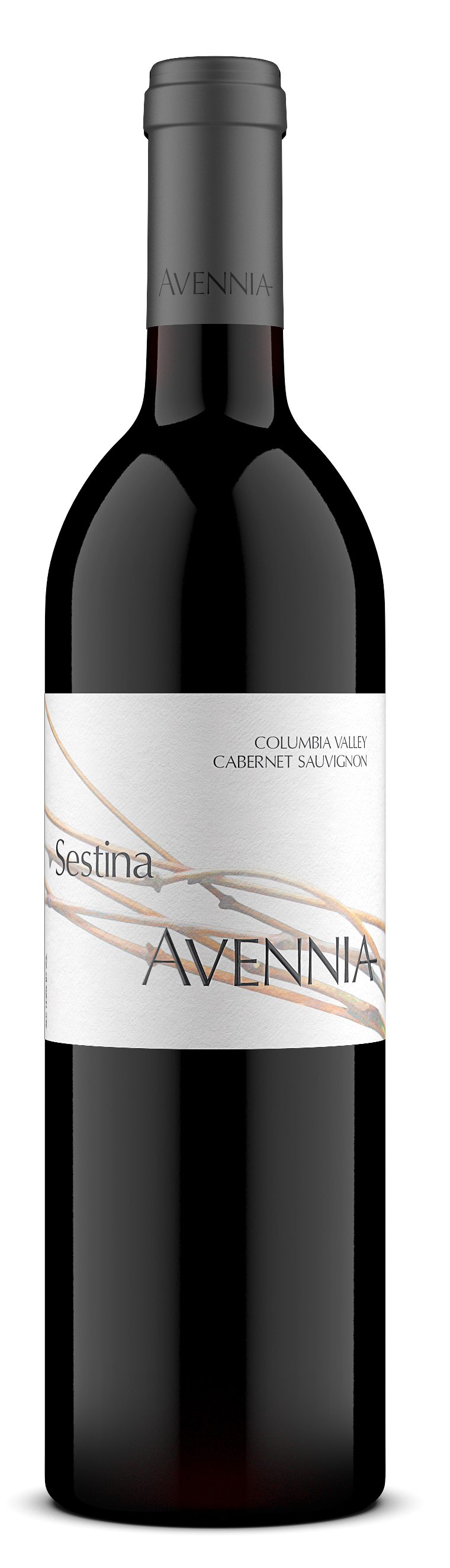
Avennia Sestina Red Blend is made from 77% Cabernet Sauvignon, 17% Merlot, 6% Cabernet Franc.
The Sestina is a poetic form from Medieval France. Just as a contemporary poet can use an old form like the Sestina to express modern ideas, we use the traditional Bordeaux blend to make modern wines that express Washington fruit. Sestina is our vision for an old vine blend where the focus is on structure, balance, and complexity. This wine is designed for the cellar, but is enjoyable now.
Sestina: This wine is a blockbuster, with black currant, black raspberry, saddle leather, freshly tilled earth, vanilla, and violet on the nose. Exceedingly rich and balanced on the palate, with great poise and structure for long aging. The finish echoes with fresh black fruits, minerally touches, and floral notes.
Review:
The 2020 Sestina showed beautifully, with lots of ripe black fruits, tobacco, and spring flower notes in a medium to full-bodied, fresh, focused, elegant style. It has fine tannins and a great finish and should drink nicely right out of the gate. The tannins here are terrific.
Jeb Dunnuck 94-96 Points
The Avennia Estate
Our goal is to make wines that evoke clarity: clarity of place, clarity of type, clarity of purpose.
We believe this is best expressed by using the classic French varietals and blends, with methods passed down over generations. We work within this context to allow Washington vineyards and terroirs to distinguish themselves. Terroir is only readily appreciable in a well-formed, harmonious wine. Structure is the backbone from which beauty can radiate.
Avennia is inspired by the Roman name for the city of Avignon, and signifies for us the heart of Old World winemaking. Our wines are designed to tease rather than flaunt; pique interest, not beg for attention. They stand for elegance, delicacy, purity. Our wines are made to enhance conversation, not dominate it, and will be a welcome guest at the table

The 2021 Domaine Joseph Voillot Volnay Les Champans Premier Cru is from the domain’s largest premier cru holding, 4.2 acres whose vines date from 1934, 1971, and 1985. Champans is down-slope in the premier cru band, and its wine typically has more fruit and power than other Voillot Volnays.
Review:
‘The 2021 Volnay Les Champans Ter Cru has much more brightness and delineation than the Fremiets this year, with red cherries, wild strawberries and ust a touch of iodine and sous-bois. This is nicely focused. The palate is medium-bodied with sappy red fruit, fine structure, pliant tannins and a harmonious finish. Not the most complex Champans encountered from this address, yet it has class.
-Vinous 91-93 Points
The 2021 les Champans is also a simply stunning example of this fine premier cru vineyard. The beautifully elegant nose wafts from the glass in a blend of red and black plums, cherries, spit-roasted quail, a complex base of soil, woodsmoke, coffee bean and a deft touch of vanillin oak. On the palate the wine is pure, full-bodied and shows off superb depth at the core, great soil signature, ripe, fine-grained tannins and a long, nascently complex and very promising finish. This is a touch more reserved on the palate than the Fremiets and will take a bit longer to blossom, but it is going to be stellar. 2034-2085.
93+ pts- John Gilman, View from the Cellar #102

Argot Simpatico Ranch Chardonnay is made from 100 percent Chardonnay.
Powerful aromas of key-lime, white flowers, orange blossoms and a fierce, flinty, sauvage note define a wildly complex nose. Once in the mouth, gracefully pronounced textures coat the palate delivering an exotic interpretation of cool-climate Chardonnay character — lime peel, orange blossom, ginger and clove —lingerings deep into a vibrant finish.
Planted 1978. Shallow volcanic soils on the gently-sloped, south-facing foothills of Bennett Peak on Bennett Valley’s floor. One of California’s coolest Chardonnay vineyards. In the final year of 3-year draught cycle, Simpatico Ranch saw its earliest ever harvest and smallest crop, exposing a reserve of exoticism and minerality previously untapped. A watershed vintage for both the vineyard, and appellation. Night harvested by hand on 9/16, whole-cluster pressed direct to barrel; no settling to ensure maximum lees contact. Barrel fermented on heavy lees. Malolactic fermentation. 16 months in French oak, 50% new. Finished 2 months in steel tank, low Sulphur during barrel elevage.
Review:
The 2021 Chardonnay Simpatico Ranch needs a lot of swirling before it shoots from the glass with notes of lemon tart, orange blossoms, candied ginger, and fresh nectarines with hints of crushed rocks, struck flint, and nutmeg. The medium to full-bodied palate delivers amazing tension, with tight-knit citrus and spice layers and a fantastically well woven satiny texture, finishing long and layered. "We only get about 1.5 tons per acre here," said owner/winemaker Justin Harmon. "This comes from old vines on AXR rootstock."
-Wine Independent 97 Points

Avennia Sestina Cabernet Sauvignon is made from 77% Cabernet Sauvignon, 17% Merlot, 6% Cabernet Franc.
The story of this wine - The Sestina is an ancient form of poetry from Medieval France. Just as a modern poet can fill this form with new expressions, Avennia uses the traditional Bordeaux blend to express Washington. Sestina is their vision for an old vine, complex blend where all of the components complement each other. This wine is designed for the cellar, so the emphasis is on structure, balance, and complexity.
Winemaker Tasting Notes - “Good deep ruby/garnet color, with aromas of black cherry, fresh black currant, dark mocha, cigar box, and graphite. The palate is lively and dense with mountain berries, mocha, vanilla honey, damp earth, and wildflowers. The finish shows a distinct chalky minerality and beautiful tension. This is a classically balanced and ageworthy Sestina. Drink 2025-2040.” - Chris Peterson, Winemaker
Review:
"The Cabernet Sauvignon-dominated release from Peterson, the 2017 Sestina comes from the Red Willow, Bacchus, and Dionysus vineyards. Rocking levels of crème de cassis, sappy herbs, violets, and cedar pencil all flow to a full-bodied, incredibly pure, polished 2017 that offers flawless balance, ripe tannins, and a great, great finish. It's more approachable than normal yet is still going to evolve for 15 to 20 years. The blend is 77% Cabernet Sauvignon, 17% Merlot, and the rest Cabernet Franc, all raised 20 months in 50% new French oak."
- Jeb Dunnuck (April 2020), 95 pts
Avennia Sestina Red Blend is made from 76% Cabernet Sauvignon, 15% Merlot, 9% Cabernet Franc.
The Sestina is a poetic form from Medieval France. Just as a contemporary poet can use an old form like the Sestina to express modern ideas, we use the traditional Bordeaux blend to make modern wines that express Washington fruit. Sestina is our vision for an old vine blend where the focus is on structure, balance, and complexity. This wine is designed for the cellar, but is enjoyable now.
Sestina: This wine is a blockbuster, with black currant, black raspberry, saddle leather, freshly tilled earth, vanilla, and violet on the nose. Exceedingly rich and balanced on the palate, with great poise and structure for long aging. The finish echoes with fresh black fruits, minerally touches, and floral notes.
Review:
The 2021 ‘Sestina’ is a gorgeous blend of 76% Cabernet Sauvignon with smaller parts Merlot and Cabernet Franc. Needing about 30 minutes in the decanter to fully unwind, this yields beautiful black florals that mingle well with wet stone, Black Forest Cake and suggestions of huckleberry with garrigue notes. The palate is soft and refined with a silky texture and beautiful sense of elegance and weight. This is seamless throughout the drinking experience, loaded with black fruit flavors with dark chocolate shavings and suggestions of underbrush. Refined tannins frame this stunning heavyhitter of a Cabernet that is already drinking beautifully now at the three year mark. Savor this beauty now and over the next fifteen to twenty years.
-Owen Bargreen 96 Points
"The book end to the Right Bank-inspired Valery, this is the Left Bank-inspired wine which blends 76% Cabernet Sauvignon, 15% Merlot and 9% Cabernet Franc. Sourced from old vine Bacchus, Dionysus, Red Willow and DuBrul grapes, it’s given the rock star treatment with 21 months in 50% new French oak. I love the flavors of the well-chosen barrels, which match those spicy/toasty notes to fruit with both power and palate presence. Beautifully structured, powerful yet restrained, with ripe black fruits that trail into powdery tannins, this is a special wine with a long life ahead."
- Paul Gregutt 97 Points
Avennia Sestina Red Blend is made from 76% Cabernet Sauvignon, 15% Merlot, 9% Cabernet Franc.
The Sestina is a poetic form from Medieval France. Just as a contemporary poet can use an old form like the Sestina to express modern ideas, we use the traditional Bordeaux blend to make modern wines that express Washington fruit. Sestina is our vision for an old vine blend where the focus is on structure, balance, and complexity. This wine is designed for the cellar, but is enjoyable now.
Sestina: This wine is a blockbuster, with black currant, black raspberry, saddle leather, freshly tilled earth, vanilla, and violet on the nose. Exceedingly rich and balanced on the palate, with great poise and structure for long aging. The finish echoes with fresh black fruits, minerally touches, and floral notes.
Review:
Toast, black and blue fruit, graphite and tobacco on the nose, followed by a firm, compact and full-bodied palate. Sturdy tannin frame. Slightly hard at the moment. Try from 2027.
-James Suckling 92 Points

Avennia Red Willow Cabernet Sauvignon is made from 100% Cabernet Sauvignon.
The Red Willow Cabernet is a true blockbuster.
Coming from one specific block of 30 year old vines at this iconic vineyard, then strictly barrel selected, this is the essence of powerful, old vine Washington Cabernet. After all of our efforts promoting the idea of the Bordeaux blend, it would take a pretty compelling argument to suspend that idea and make a 100% varietal Cabernet. In 2016 Red Willow provided us with just that. Each time we tasted it in the barrel, the belief grew that this was something special. Something we can't make every year. In the end we were won over, and decided to make a limited amount of this wine. But don't be fooled, as this too is a blend and a selection. Each year as we are tasting the grapes as harvest approaches, we notice that the vines near the bottom of this long, steep west-facing slope, are a little different. The vines at the bottom are in a little richer soil, and get a little more water, so we pick them separately, sometimes even a week or ten days apart, and keep them separate in barrel.
This wine is all from the top of the vineyard, with its lower yield and poorer soils giving more concentration and interest. Then further, nearly every combination of new and used French oak barrels were trialed to find the best blend. It's not enough just to use the four best barrels, but to trial each combination to see how they complement each other. For a wine with this much mass, 100% new French oak was used for the first time at Avennia. It is a wine that needs a little cellaring to start, but should last a very long time.
Review:
The flagship Cabernet, the 2018 Cabernet Sauvignon Red Willow Vineyard is all varietal, from old vines in a great vineyard in Yakima Valley, that spent 20 months in 80% new French oak. It reveals a deep purple hue as well as a backward, brooding nose of smoked blackcurrants, tobacco, scorched earth, and violets. It has beautiful richness yet takes plenty of coaxing to open up. On the palate, it's medium to full-bodied and has a nicely textured, balanced mouthfeel, plenty of tannins, and outstanding length. It's mostly potential at this point and is going to benefit from at least 4-5 years of bottle age, but my money is on it having 20+ years of prime drinking.
-Jeb Dunnuck 96 Points

Avennia Red Willow Cabernet Sauvignon is made from 100% Cabernet Sauvignon.
The Red Willow Cabernet is a true blockbuster.
Coming from one specific block of 30 year old vines at this iconic vineyard, then strictly barrel selected, this is the essence of powerful, old vine Washington Cabernet. After all of our efforts promoting the idea of the Bordeaux blend, it would take a pretty compelling argument to suspend that idea and make a 100% varietal Cabernet. In 2016 Red Willow provided us with just that. Each time we tasted it in the barrel, the belief grew that this was something special. Something we can't make every year. In the end we were won over, and decided to make a limited amount of this wine. But don't be fooled, as this too is a blend and a selection. Each year as we are tasting the grapes as harvest approaches, we notice that the vines near the bottom of this long, steep west-facing slope, are a little different. The vines at the bottom are in a little richer soil, and get a little more water, so we pick them separately, sometimes even a week or ten days apart, and keep them separate in barrel.
This wine is all from the top of the vineyard, with its lower yield and poorer soils giving more concentration and interest. Then further, nearly every combination of new and used French oak barrels were trialed to find the best blend. It's not enough just to use the four best barrels, but to trial each combination to see how they complement each other. For a wine with this much mass, 100% new French oak was used for the first time at Avennia. It is a wine that needs a little cellaring to start, but should last a very long time.
Review:
"The 2016 Cabernet Sauvignon Red Willow Vineyard is 100% Red Willow Cabernet Sauvignon that will spend roughly 20 months in close to 100% new French oak. Blackcurrants, smoked herbs, chocolate, and graphite notes all give way to a full-bodied, plump, rich, concentrated effort that's going to be better with short-term cellaring and keep for two decades."
- Jeb Dunnuck (April 2018), 94-96 pts

Deep ruby in color, this wine boasts aromas of cassis, blueberry, pomegranate, and currants. Notes of tobacco, chocolate, and toasted spices follow, bringing an immense depth to this wine. The palate is full-bodied and rich with ideal balance between concentrated fruit and freshness. From its mouthwatering acidity and flawlessly integrated oak, it finishes with notes of blackberry jam, cacao, and mocha complemented with herbaceous tones of fennel and thyme.
Review:
The 2020 Cabernet Sauvignon is cut from the same cloth as the 2019, yet is perhaps richer and more expansive, with slightly less elegance. Currants, chocolate, toasted spices, and tobacco all define this beauty, and it has full-bodied richness, flawlessly integrated oak, good acidity, and a great finish. Anyone doubting the quality that can be achieved in Cabernet Sauvignon from Paso Robles owes it to themselves to try one of these wines.
-Jeb Dunnuck 97-99 Points

“1752” is the name of the Damilano Barolo Cannubi Riserva, in honor of the year in which the historic bottle was first marked “Cannubi”. It still exists today perfectly conserved by the Manzone family in Bra, close to Barolo. The bottle is clearly marked as being of “1752” vintage, indicating that Cannubi historically precedes Barolo.
About the Vineyard:
The Cannubi Cru is in found within one of the 6 core zones which comprise a UNESCO heritage site in Italy. A mixture of Tortonian and Helvetian calcareous marl gives the grapes intense aromas of cherry, plum and tobacco, rose and violet in sequence. Its low potassium and high calcium/magnesium content offer the wine a fine and polished touch. The vineyard is located at about 270 m. a.s.l. and has a south-east sun exposure. Barolo Riserva Cannubi 1752 It is a small plot of about 2 hectares of Nebbiolo vines, currently between 30 and 50 years of age.
Tasting Notes:
Garnet ruby red in color, the bouquet is intense and balanced, with notes of violet, red fruit, cherry and plum, spices, liquorice, cocoa, leather and tobacco. Dry, robust, full-bodied, very persistent, rich and velvety
Food Pairing:
This wine is excellent with typical piedmontes pasta (tajarin, ravioli); perfect with red meat, braised and roast meat, game and absolutely ideal with all types of cheeses.
Review:
The purity of this wine is pretty phenomenal with blackberries, strawberries, fresh flowers and licorice. Hints of tar. It’s full-bodied, yet composed and compact with ultra fine tannins and a long, flavorful finish. Very structured. Try after 2024.
-James Suckling 97 Points

Shirley & David Maudry Sancerre Blanc Cuvee Signature is made from 100% Sauvignon Blanc.
Our Sancerre has citrus aroma and its inimitable "gun flint" notes. Fruity, minerality and freshness in the mouth to leave the taste full of emotions.
RS: less than 1g/L
TA: 4.5g/L
Pairing: Aperitif, fish, seafood, oysters, white meats, spicy dishes and Asian cuisine.