
" We don't sell the wine without touching the vine "
| BUY MORE! SAVE MORE! | ||||||||||||||||||||
|
| Country: | Germany |
| Region: | Mosel |
| Winery: | Weingut Bastgen |
| Grape Type: | Riesling |
| Vintage: | 2023 |
| Bottle Size: | 750 ml |
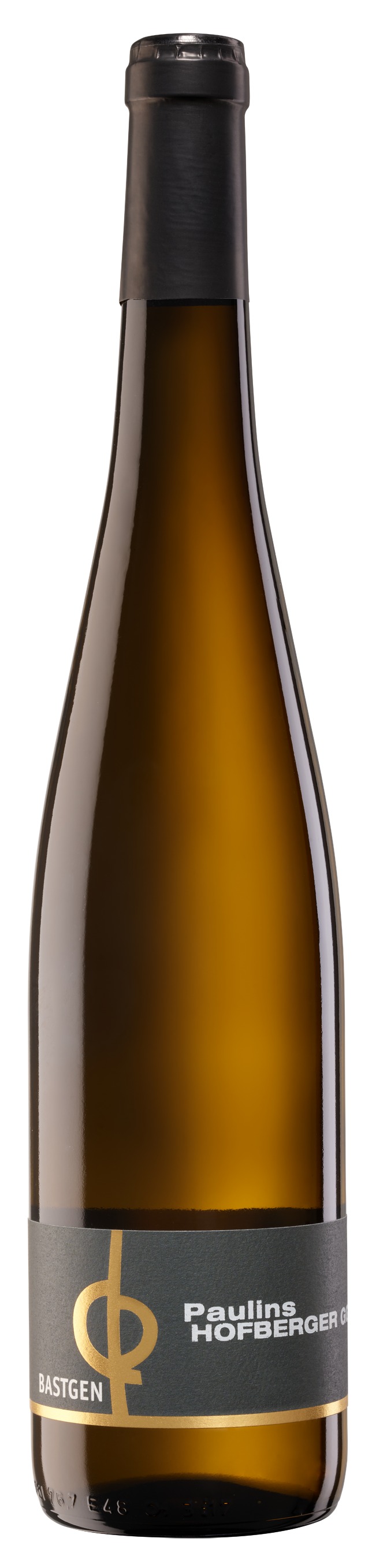
Scents and flavors of peach and yellow plum, citrus and mineral notes. Extremely long, white peach finish.
This wine is a 100 case Cuvee produced from the steepest part of the Paulinschofberger vineyard, 65 % slope. Vine age is 105 years old. "Grosses Gewachs" Großes Gewächs: (great growth = Grand cru), a designation used by VDP members in all regions except Mosel and Rheingau to designate top-level dry wines from selected sites (the highest level of quality). Dry means dry on the palate. The maximum yield is 50 hl/ha, from a classified vineyard. The natural minimum density of must is around 90° Oechsle. The wines are produced using exclusively traditional production methods. The wines are tested and approved by a test body before and after bottling. Hand Harvest (no machine harvest). The wine must not be released before September the year after it was made.
Review:
"In spite of the abundant yellow fruit aromas (think Mirabelle plums more than peaches), this is a very cool and sleek style of Mosel GG with great herbal freshness. Although this has excellent concentration, it definitely needs time to give its best due to the bone-dry style. Quite a steely, tightly wound finish, but very long. Drinkable now, but best from 2026. - Stuart PIGOTT (Senior Editor)" - James Suckling (August 30th 2024), 95 pts
The Weingut Bastgen Estate
The property was founded in 1850 and is located in the tiny hamlet of Monzel, along the middle Mosel. The current owners are Armin Vogel (husband) and Mona Bastgen (wife) who began working in the winery in 1993. The average total production is 3,300 cases. They export mainly to Germany, Switzerland, U.K and the U.S. Their wines are bottled in screwcaps.
The Weingut Bastgen Vineyard
They meticulously tend 4.5 ha (11.11 acres) of which 80% is Riesling. The soil is made of slate. Their vineyards are located in Kesten and Brauneberg, on a steep terrace, and planted to 50-year old vines. Fortunately for Bastgen, they own part of the famous Brauneberger Juffer Sonnenuhr. The vines produce very small, ripe berries that are very tasty.

Bastgen Kestener Paulinshofberg Riesling Spatlese is 100 percent Riesling.
Yellow color with green highlights.
Beautiful peach aromas on the nose, rich and ripe fruits on the mouth with a refreshing acidity and honey notes. A very pleasing wine.
They meticulously tend 4.5 ha (11.11 acres) of which 80% is Riesling. The soil is made of slate. Their vineyards are located in Kesten and Brauneberg, on a steep terrace, and planted to 50-year old vines. Fortunately for Bastgen, they own part of the famous Brauneberger Juffer Sonnenuhr. The vines produce very small, ripe berries that are very tasty.

Scents and flavors of peach and yellow plum, citrus and mineral notes. Extremely long, white peach finish.
This wine is a 100 case Cuvee produced from the steepest part of the Paulinschofberger vineyard, 65 % slope. Vine age is 105 years old. "Grosses Gewachs" Großes Gewächs: (great growth = Grand cru), a designation used by VDP members in all regions except Mosel and Rheingau to designate top-level dry wines from selected sites (the highest level of quality). Dry means dry on the palate. The maximum yield is 50 hl/ha, from a classified vineyard. The natural minimum density of must is around 90° Oechsle. The wines are produced using exclusively traditional production methods. The wines are tested and approved by a test body before and after bottling. Hand Harvest (no machine harvest). The wine must not be released before September the year after it was made.
Review:
"Very smoky nose of sealing wax and candied citrus. This medium-bodied dry riesling is strikingly original and has good balance on the impressively structured palate, but it does lack a bit of charm. Long, firm finish. May well show better after further bottle age. From organically grown grapes. Drink or hold. - Stuart PIGOTT (Senior Editor)" - James Suckling (November 9th 2023), 91 pts
Scents and flavors of peach and yellow plum, citrus and mineral notes. Extremely long, white peach finish.
This wine is a 100 case Cuvee produced from the steepest part of the Paulinschofberger vineyard, 65 % slope. Vine age is 105 years old. "Grosses Gewachs" Großes Gewächs: (great growth = Grand cru), a designation used by VDP members in all regions except Mosel and Rheingau to designate top-level dry wines from selected sites (the highest level of quality). Dry means dry on the palate. The maximum yield is 50 hl/ha, from a classified vineyard. The natural minimum density of must is around 90° Oechsle. The wines are produced using exclusively traditional production methods. The wines are tested and approved by a test body before and after bottling. Hand Harvest (no machine harvest). The wine must not be released before September the year after it was made.

Bastgen Berncastel-Cueser Weisenstein Riesling Spatlese Trocken is made from 100 percent Riesling.
Bright, clean, fresh and zesty. Grapefruit like flavors. Fruity aromas and a nice minerality, typical of the Riesling grape grown on blue slate soil. Round, rich and a very long finish. The grapes for this wine are vigorously selected. Botrytis is not tolerated. At harvest the grapes are fully ripened, have a golden color, and a soft tartness. After a long spontaneous fermentation in a traditional 1000L barrel, the wine just reaches the dry stage. This gives the wine a creamy structure that interplays with ripe yellow and exotic fruit aromas.
They meticulously tend 4.5 ha (11.11 acres) of which 80% is Riesling. The soil is made of slate. Their vineyards are located in Kesten and Brauneberg, on a steep terrace, and planted to 50-year old vines. Fortunately for Bastgen, they own part of the famous Brauneberger Juffer Sonnenuhr. The vines produce very small, ripe berries that are very tasty.

A heavenly, full-bodied dry Riesling with forceful minerality from 100-year-old vines grown in the blue slate soil of Graach.
Graach is a small village in the Mosel valley. It’s steep slate slopes produce wines that combine elegance with rustic strength. Grosses Gewächs (GG) is the designation for an estate’s best dry wine from a Grosse Lage (grand cru) vineyard. This limited-production wine was fermented with indigenous yeasts and kept in the barrel, on the full lees, for a year before bottling. The extended maturation time allows the wine to develop greater texture and a deeper natural harmony. This is a fully ripe wine, with vibrant aromatics and a pronounced acidity that gives it a brilliant structural precision.
Review:
Convincing proof that 2020 is an excellent vintage for dry GG on the Mosel! Cool and stony with delicate white-peach and white-currant aromas. Really takes off at the intensely slatey and racy finish.
-James Suckling 95-96 Points

Dr. Loosen Wehlener Sonnenuhr Alte Reben Riesling Grosses Gewachs is made from 100 percent Riesling.
This is one of the greatest vineyards in the Middle Mosel. This precipitously steep, rocky vineyard consistently yields some of the most elegant and sophisticated white wines in the world. Citrus and white peach flavors predominate when the wines are young, turning to a pure expression of the mineral soil as they age.

The Grade Napa Cabernet Sauvignon Winfield Vineyard is made from Napa Valley Cabernet Sauvignon.
“This wine expresses a focused balancing act of dark, rich black fruit, and a fine tannin structure, illuminated through the core with a laser-like acidity. The wine displays a deep purple-red hue with a cranberry halo. Aromas of cassis, cinnamon, citrus oil, roasted meat, and lilac swell from the glass.
“The palate is marked by a wave of jet-black brambly fruit up front, followed by an exotic spice mid-palate and a long, complex finish that lasts and lasts expressing notes of flowering jasmine, and oolong tea. The silky tannins hold everything together and will certainly allow this wine to evolve in the cellar for at least 7-10 years.” - Thomas River Brown
Review:
The 2018 Cabernet Sauvignon Winfield Vineyard is an absolutely gorgeous wine that conveys a striking interplay of richness, power and nuance. Silky and restrained for this site, the Winfield offers up a compelling melange of red fruit, iron, cedar, tobacco, rose petal and dried herbs, all in a mid-weight style that is incredibly appealing. The Winfield is a selection taken from Blocks 1, 4 and 5.
-Vinous 94 Points

Marie Baron Sancerre Blanc is made from 100 percent Sauvignon Blanc.
Sancerre is one of the most iconic white wine appellations in the world, located in the eastern Loire Valley on steep hillsides overlooking the Loire River. The appellation's Kimmeridgian marl, limestone, and flint soils produce Sauvignon Blanc of exceptional minerality and elegance.
This wine shows a bright, pale straw color with aromas of gooseberry, citrus, and white flowers, underscored by a characteristic chalky minerality. On the palate, it is vibrant and refreshing with crisp acidity, flavors of lime and green apple, and a clean, lingering finish.
Classic pairing with fresh goat cheese (especially Crottin de Chavignol), oysters, grilled fish, or asparagus.



