
" We don't sell the wine without touching the vine "
| BUY MORE! SAVE MORE! | ||||||||||||||||||||
|
| Country: | Portugal |
| Region: | Douro |
| Winery: | Boeira |
| Grape Type: | Touriga Nacional |
| Vintage: | 2024 |
| Bottle Size: | 750 ml |
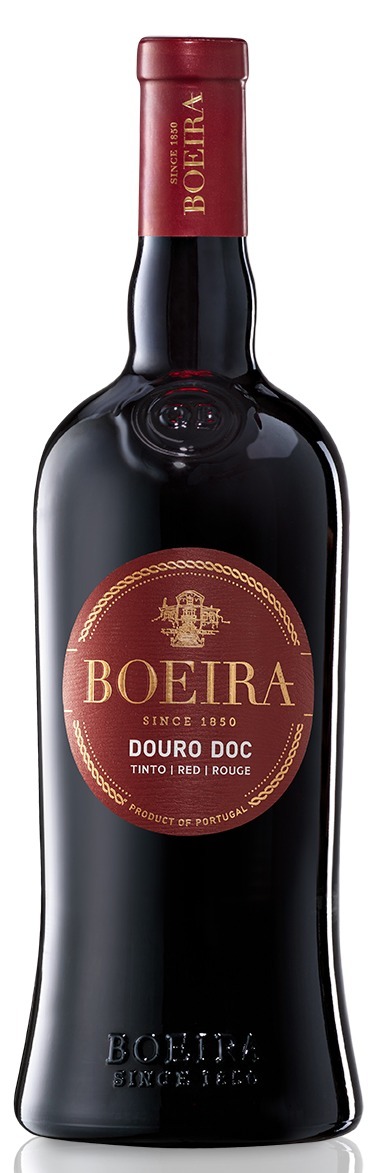
Boeira Douro Red is made from 35% Touriga Nacional, 35% Tinta Roriz and 30% Touriga Franca.
Deep ruby color with purple hints. Aromas of red and black fruits, toasty notes and dark chocolate. Smooth on the palate with good structure and excellent mouthfeel. Fresh, with well integrated tannins bringing elegance and a gastronomic profile to the wine. Very well balanced. Boeira Douro DOC Red from the Douro Valley is the result of a careful blend of different varieties from the Douro. After fermentation the wine was left in contact with its lees until bottling in order to develop complexity and richness.
Pair with pork roast stuffed with prunes and apricots, grilled meats, marinated leg of lamb, chicken curry, pasta with beef or pork ragout, vegetable timbale with roasted tomatoes and grilled almonds. A very “friendly” food wine.
Quinta da Boeira was built by an emigrant named Manuel da Rocha Romariz, who returned from Brazil in the early 19th century. Knowing the Brazilian market, he registered as an exporter of Port Wine in 1850, using two trade names for the labels: ROMARIZ and BOEIRA.
These brands quickly won the consideration and confidence of consumers and distributors due to their quality, expanding to several markets, among which Portuguese, English, French and Brazilian stood out, among others.
In 1966, the property was acquired by an English family, the warehouses by a textile company and the wines were sold to a Port Wine exporting company.
In 1999 the property was put up for sale with the main interest of a contractor who intended to build luxury homes in a closed condominium.
Father João de Freitas Ferreira, director of a school in Vila Nova de Gaia, warned of the situation of the eminent possibility that the 3 hectares of the property could be transformed into massive construction, with the consequent destruction of its centennial grove.
Concerned and sensitized to the cause, Father João de Freitas Ferreira, integrating a group of ten friends, decided to acquire the property, thus protecting the centenary trees and the palace of the early 19th century.
For the acquisition of the property, a financial study was carried out with the division of investments into five phases:
FIRST PHASE
The transformation of stables and greenhouses into a multi-purpose hall with auditorium and the restoration of all paths in the gardens represented the initial phase of the project which, from the beginning, intended to transform Quinta da Boeira into a visiting room in the north of the country and, more specifically , in Vila Nova de Gaia.
SECOND PHASE
The recovery of the mansion, which was in an advanced state of deterioration, began, transforming it into offices and a luxury restaurant with a capacity for about 80 people seated.
THIRD PHASE
In order to attract tourists to the high elevation of the city of Vila Nova de Gaia, the largest bottle in the world was built, measuring 32 meters in length and 10 in diameter, thus allowing the creation of a tasting room and exhibition room to promote Portuguese wines, culture and gastronomy. It was also possible to adapt the room for the transmission of films in 3D, letting tourists know the different wine regions of Portugal.
FOURTH PHASE
With the objective of financially consolidating the entire project, Quinta da Boeira registered at the Instituto dos Vinhos do Douro e do Porto (IVDP) in 2017, thus returning to the genesis of Quinta da Boeira in 1850, as an exporter of Vinhos do Porto, under the BOEIRA brand.
FIFTH PHASE
The project, in its fifth and final phase, concluded with the construction of a 5-star hotel, with 119 rooms and 5 suites, whose construction was based on the green system. The most up-to-date environmental techniques were implemented, such as the use of groundwater to supply sanitary tanks and automatic irrigation of about 3 hectares of the property, with photovoltaic and solar energy also being used, which allowed for remarkable savings and drastic reduction in carbon emissions, transforming it into an ECO hotel.
The most recent challenge was the acquisition of the C. da Silva family home, a name also linked to the export of Port Wines, designed in the 19th century by the architect Teixeira Lopes. Quinta da Boeira is a reference in wines of superior quality, namely in Port Wine, duly certified by the Institute of Douro and Port Wines and proudly marked with the knight seal on the neck, according to the guidelines that the Observatório do Port wine advocates for the defense of the Porto Denomination of Origin.
Each Quinta da Boeira wine is a unique experience, in which Wine and Art are intimately linked, having their maximum exponent in unique bottles and which are distinguished by their shape and aesthetics, such as Diamond or Decanter.

Boeira Douro Red is made from 35% Touriga Nacional, 35% Tinta Roriz and 30% Touriga Franca.
Deep ruby color with purple hints. Aromas of red and black fruits, toasty notes and dark chocolate. Smooth on the palate with good structure and excellent mouthfeel. Fresh, with well integrated tannins bringing elegance and a gastronomic profile to the wine. Very well balanced. Boeira Douro DOC Red from the Douro Valley is the result of a careful blend of different varieties from the Douro. After fermentation the wine was left in contact with its lees until bottling in order to develop complexity and richness.
Pair with pork roast stuffed with prunes and apricots, grilled meats, marinated leg of lamb, chicken curry, pasta with beef or pork ragout, vegetable timbale with roasted tomatoes and grilled almonds. A very “friendly” food wine.

Boeira White Diamond Port is made from Malvasia Fin, Viosinho, Gouveio, and Côdega de Larinho.
Clear amber color, on the nose aromas of citrus, tangerine peel, peaches and honey. In the mouth it is full but elegant, well integrated and persistent finish
Boeira White Diamond Port is the perfect companion for a number of foods including appetizers, lean fish, salads, pasta or desert like apple pie or crème brulée.
Review:
The NV White Diamond Port is the estate's 10-year Tawny based on Málvasia Fina, Viosinho, Gouveio, and Côdega de Larinho. Caramelized orange, toffee, fig, and spicy white chocolate notes all shine on the nose, and this beauty hits the palate with medium to full-bodied richness and a round layered, incredibly seamless mouthfeel. It's all about its seamless, decadent, sweetly fruited, yet balanced style.
-Jeb Dunnuck 94 Points

Daydreamer Red Blend is 60% Pinotage, 20% Shiraz and 20% Grenache.
Bright red and black berry fruit with pink pepper and a hint of violets on a silky palate with fine tannins, that offer weight and length on a fresh, juicy finish.
The wine is 100% unoaked.
Review:
"Easy-sipping blend with light strawberry aromas. The palate offers ripe red fruit and moderate freshness, leading to a medium finish with a hint of dried herbs.
— Jesica VARGAS"
- Wine Enthusiast (November 2025), 88 pts

Mas Redonne Bandol Rose is made from 55% Mourvèdre, 35% Cinsault, 10% Grenache.
Nice light salmon color, typical of Bandol.
The wine expresses some citrus, Pomelos (a delicious type of grapefruit) and lots of white fruit aromas and minerality.
The flavors are fresh, fruity and very aromatic with tons of apricot and mango.
Grilled salmon, chicken dishes as well as salads, sushi and sashimi.

Boeira Fine White Port is Malvasia fina, Viosinho, Gouveio and Codega de Larinho.
Straw yellow color.
Rich and fragrant nose dominated by honey aromas.
In the mouth, fresh palates with perfect acidity and an excellent finish.
Harvest by hand.
Porto wine classical method with skin maceration and short alcoholic fermentation in stainless steel tanks followed by fortification.
As an appetizer served chilled. It goes well with dried fruits and salty snacks.

Medium intensity ruby color.
Nose dominated by red fruits.
In the mouth, elegant structure with solid but well integrated tannins. Rich and fruity finish.
RS: 104 g/Liter
TA: 3.8 g/Liter
pH 3.73

Aiurri Rioja is made from 80% Tempranillo, 15% Grenache, 5% Graciano.
Chalky, mineral and pure, with blood orange and blackberry fruit and scented oak. "Aroma: Complex and intense, where black fruits accompany spicy notes, highlighting black pepper and licorice. In the background, the notes of aging appear, with tones of dry tobacco and leaf litter. Taste: Powerful wine with good structure, but at the same time with notable freshness. It generates very pleasant and elegant tactile sensations. It is a wine where balance, concentration and sensations of fullness prevail. Color: Deep cherry color with a high layer."
Review:
Very well-made, a harmonious melange of fresh, plummy fruit with fine spices, warm bread and minerals. High-grade oak adds a bit of warmth. Medium- to full-bodied with firm tannins. Structured yet long. The wood tannins will integrate in two more years. Drinkable now but better from 2027.
-James Suckling 94 Points




