" We don't sell the wine without touching the vine "
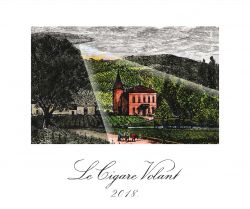
| Country: | United States |
| Region: | California |
| Winery: | Bonny Doon Vineyard |
| Grape Type: | Grenache |
| Vintage: | 2018 |
| Bottle Size: | 750 ml |
Bellevue Cotes de Bordeaux-Castillon Cé Ma Cuvée is made from 70% Merlot and 30% Cabernet Franc
The wine is made with 70% Merlot and 30% Cabernet Franc. Average age of the vines is 50 years old (everything is between 40 and 60 years old).
Cé Ma Cuvée is a tribute from Michel Lydoire to his 2 daughters:
Cé is for Céline. She is like the Merlot grape varietal. Pleasant and calm.
Ma is for Marina. She is like the Cabernet Franc grape varietal. Tough and with a lot of character.
The color is deep and inky.
The nose is spicy, fruity and oaky with some nice vanilla and coconut aromas.
The mouthfeel is complex, with ripe red and black fruit flavors. Some spiciness and integrated oak flavors.
The wine starts as the Vieilles vignes, but some wine is aged in 500-liter American Oak Barrels for 18 months.
They are using a mix of different toastiness for the barrels. Some high toast and some are medium toast.
This is a fun wine that can be enjoyed with any food, charbroil burgers, grilled vegetables, cheeses ... or even with dark chocolate desserts.

All older vintage wines have been purchased from a single collectors cellar. Pictures can be requested before shipment.
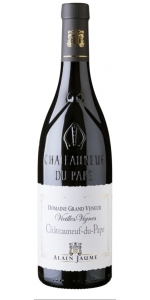
Grand Veneur Chateauneuf Du Pape Vieilles Vignes is made from 50% Grenache, 40% Mourvedre, 10% Syrah
Matured in concrete vats (40%) and oak casks (60%)
It boasts an inky/purple color in addition to a gorgeous perfume of crushed rocks, jammy black fruits, charcoal and graphite. Blackberry aroma with an air of dates pressed in alongside – this is sweet-noted. It is easy to appreciate, a sleek and stylish start. The palate holds excellent fruit that runs well and has kick. Its tannins move round freely and a minted finale comes forward. Its dark fruit is tasty, darkens on the finish, where tar and char from its oak enter. It is all very much together, a bundle of harmony, and will gain local attributes as it ages.
An outstanding Chateauneuf du Pape which display the best of its terroir.
The vines are 50 to 100+ year old. They are planted on red clay soils covered with pebble stones.
Harvest is destemmed and crushed. Fermentation temperature is controlled at 30°C. Vatting period of 18 to 20 days. Matured in concrete vats (40%) and oak casks (60%).
The vineyards are located in the north of Châteauneuf du Pape. GRAND VENEUR «Vieilles Vignes» cuvee is produced from the older vines. Thanks to time and an organic growing, roots go very deep in the soil. Yields are naturally low and grapes highly concentrated.
The vines are 50 to 100+ year old. They are planted on red clay soils covered with pebble stones.
Winemaking and aging
Harvest is destemmed and crushed. Fermentation temperature is controlled at 30°C. Vatting period of 18 to 20 days. Matured in concrete vats (40%) and oak casks (60%).
Pair with venisson, duck, braised lamb or strong cheese.
Review:
"Up with the crème de la crème of the vintage, the 2018 Châteauneuf Du Pape Vieilles Vignes is a bigger, richer wine than the Les Origines cuvée and has a beautiful core of smoked black fruits, candied violets, peppery garrigue, and scorched earth-like aromas and flavors. Playing in the medium to full-bodied end of the spectrum, it’s flawlessly balanced and has terrific tannins, a stacked mid-palate, and a great finish. It certainly shows the more front end-loaded, fleshy, mildly concentrated style of the 2018 vintage, yet the balance is top-notch, and it’s just a thrill to drink today. It should evolve nicely for 10-15 years."
- Jeb Dunnuck (October 2020),96 pts
Johann Michel Cornas Cuvee Mere Michel is made from 100 percent Syrah.
Cuvee Mère Michel was first introduced in 2016 and is not produced every year. This wine is a tribute to Johann Michel' wife, Emmanuelle, and a nod to the French song, La Mere Michel. This wines comes from Selection Massale (replanting new vineyards with cuttings from exceptional old vines from the same property) cuttings of Serine off the 1947 Yves Cuilleron vineyard at Chavanay. The vineyards are located in the lieu-dit "Les Cotes" at an altitude of 230 meters and benefiting from a southern sun exposure.
Review:
"Only made in top vintages, the 2018 Cornas Mère Michel is a tribute to Johann's wife and a play on the French song "La Mere Michelle." Brought up in a new demi-muid, it's a richer, broader wine compared to the Cuvée Jana yet still has incredible Cornas style in its red, black, and blue fruits as well as notes of toasted spice, roasted meat, chocolate, and wild herbs. Rich, full-bodied, and opulent, it has a touch more upfront appeal and should be drinkable in just 4-5 years yet also evolve for two decades." -
Jeb Dunnuck (Northern Rhône: The 2018s and 2019s, November 19th 2020), 98 pts
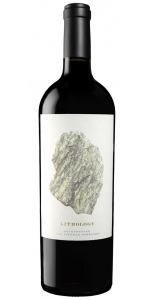
Alejandro Bulgheroni Lithology Beckstoffer Las Piedras Cabernet Sauvignon is made from 100 percent Cabernet Sauvignon.
From a St. Helena vineyard planted by early Napa settler Edward Bale more than 150 years ago, and later serving as the estate vineyard for the area’s first winery built by Henry Pellet in 1860, the Las Piedras site always gives us our prettiest wine. When placed next to Dr. Crane and To-Kalon wines, the Las Piedras show a certain elegance, with a very graceful entry and finely detailed complexity. We produce it with at least 75% new French oak, so there is a floral, spicy, and vanilla accent to the intense red and black fruits, cassis, and black cherry liqueur. What distinguishes this bottling is the beautifully fine tannins, delicate texture, and stunning purity. (Less than 100 cases made.)
Fermentation 70% Oak, 24% Concrete, 6% Puncheon
Review:
"The 2018 Cabernet Sauvignon Lithology Beckstoffer Las Piedras Vineyard comes from a world-class site outside of St. Helena and is all Cabernet that spent 20 months in 80% new oak. It offers a touch more red fruit as well ample cassis, spring flowers, loamy earth, and spice-like aromas and flavors. It has a wonderful sense of minerality, ultra-fine tannins, a dense, layered texture, and incredibly purity of fruit. It’s another just about off the charts release from this estate."
- Jeb Dunnuck 98 Points
Bonny Doon Le Cigare Volant Cuvee Oumuamua is made from 52% Grenache, 35% Cinsault, 13% Syrah.
As our story unfolds, we learn that with the 2018 vintage, there has been a fundamental change in the style of Le Cigare Volant. Not that there was anything at all “wrong” with the thirty-four vintages preceding the current one, mind you. For a number of reasons, mostly, alas, drearily fiscal/economical, the older style of Cigare has unfortunately proven to be a not particularly sustainable proposition at least from a financial perspective. The “new” Cigare, with a re-adjustment of the encépagement, by which we have dropped Mourvèdre from the mix and elevated the percentage of the (greatly underappreciated) and quite brilliant variety, Cinsault, creates a style of wine far more approachable and seductive in its youth.
“Cuvée Oumuamua?”
We call this cuvée, “Oumuamua,” (or “scout” in Hawaiian), so named in light of the recent mysterious cigar-shaped object/visitor to our solar system, initially imagined to be some sort of asteroid, but believed by none other than the chairman of the Astronomy Dept. at Harvard University to possibly be a sort of probe, perhaps a solar-powered light-sail, sent on a kind of reconnaissance mission to check us out. (Ok, this last part is a bit of interpolation.) Anyhoo, it has been agreed that this was a very, very strange object that recently came to visit. And it appears that it may have arrived in the very nick of time, to bring a sort of much-needed revitalization to our planet, and by metaphoric extension, to the Cigare brand itself.
TASTING NOTES
The color is a deep, vivid violet-red, owing in part to the lower pH of the wine. On the nose, the wine has a haunting kirsch nose (I suspect that’s the Cinsault), along with associated small red fruit (red and black currant) and perhaps a suggestion of blackberry. My colleague, Nicole Walsh and I toil away at the Cigare blend every year, and while the blend will change (sometimes radically, as it has this year), we share an idea of the Platonic form of Cigare, and the ‘17 certainly embodies that form. It goes something like this: Juiciness, fruit (but not confected or overripe), brightness, exuberance, joy, and not least, a sense of savoriness. I realize I’m not speaking orthodox wine parlance. We look above all for balance and for liveliness, for vinous qi. This wine is still incredibly young and just wants to jump out of its shoes.
INEYARD | PRODUCTION NOTES
The Alta Loma Vineyard in the Arroyo Seco area of Monterey County, was planted years back to one of the earlier selections of Tablas Creek Grenache clones, typically not a great selection for imparting real backbone or structure to the wine, but capable of making a wine that is enormously pretty and fragrant; in cool years, the fragrance of cassis or black currant is almost overpowering; most surprisingly, the Grenache in cool years from this vineyard is profoundly black in color. The Cinsault was sourced from the Loma del Rio Vineyard, a vineyard, under a previous nom de guerre (San Bernabe), we know quite well. This was the first year of production for the Cinsault and it was thinned multiple times both for enhanced concentration and evenness of ripening. The cooler climate gives the Cinsault a wonderful articulation of flavor, but what is most noteworthy is the fact that we were able to coferment the Cinsault with Syrah from the equally cool Mesa Verde Vyd. in the Santa Ynez Valley. Something magical happens when Syrah and Cinsault marry; the healthy tannin titer from the Syrah seems to give more structure to the Cinsault, helps to stabilize the color, and in general, insures that the blend will not evanesce tout de suite into the aetherial plane. The spicy, licorice component from the Syrah is a perfect foil to the Griotte cherry derived from the Cinsault.
Appellation: Monterey County
Vineyards: 48% Alta Loma, 35% Loma Del Rio, 6% Mesa Verde, 6% Zayante, 4% Rancho Solo 1% Lieff
Alcohol by Volume: 13.5%
TA: 6.1 g/L
pH: 3.62
Production: 11,500 cases
Cellaring: Drinkable upon release (6/19) with ageability of 7-10 years
Pomerols Beauvignac Syrah Rose is 100% Syrah
Pink colored, firm in the style of a Tavel rosé, the wine shows strawberry aromas, candy notes on the nose and cherry and pomegranate flavors on the palate. The wine is silky, elegant, crisp and refreshing.
The Syrah is bled off after 8 hours of maceration.