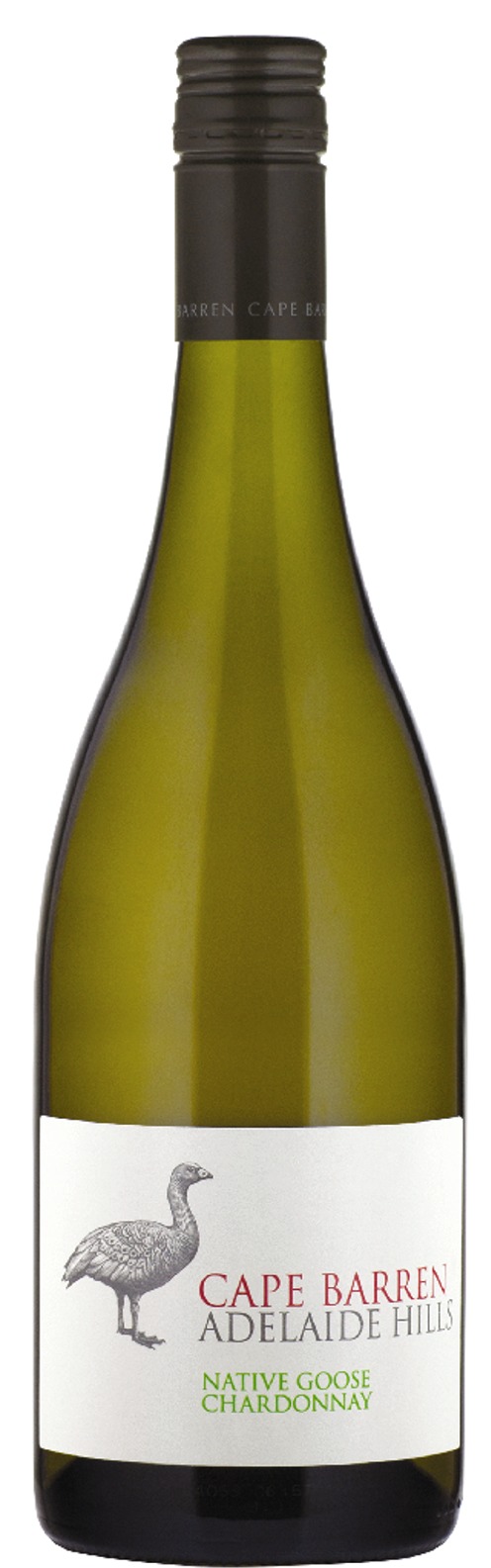
" We don't sell the wine without touching the vine "
| Country: | Australia |
| Region: | South Eastern Australia |
| Winery: | Cape Barren Estate |
| Grape Type: | Chardonnay |
| Vintage: | 2015 |
| Bottle Size: | 750 ml |
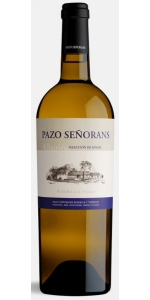
Pazo de Senorans Seleccion de Anada Albarino is made from 100 percent Albarino.
Straw yellow with greenish tints, vivid and brilliant. High intensity and very expressive. Profusion of aromas with traces of mineral. Great volume and ample body leaving a lasting impression from beginning to end.
Reviews:
The 2015 Albariño Selección de Añada is nothing short of phenomenal. For some reason, I hadn't tasted the young 2015 Albariño at the time it was released. It comes from the Los Bancales vineyard planted some 50 years ago and fermented with indigenous yeasts but without malolactic fermentation. It has a bright, almost fluorescent color and a complex, subtle and nuanced, elegant and expressive nose, with notes of sea shells and sea breeze, grass and white flowers. It's very clean, and the palate shows great balance and even feels a bit young. It has remarkable acidity and freshness (seven grams of tartaric acid) with good ripeness and 13% alcohol. This matured in tank with lees for over 30 months and was bottled in June 2024. It feels more serious and less exotic than earlier vintages. 18,000 bottles produced. This is the finest vintage that I can remember. Bravo!
-Wine Advocate 97 Points
Tech:
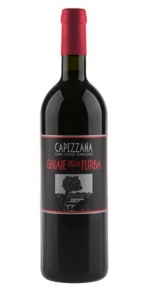
Capezzana Ghiaie Della Furbia Toscana IGT is made from Cabernet Sauvignon 40%, Syrah 35%, Merlot 25%.
In 1979 Ugo Conti Bonacossi created Ghiaie della Furba from vineyards planted among the pebble (Ghiaie) rich soils of the Furba stream. Originally planted with clippings from the famed Chateau Lafite estate in Bordeaux, the wine was made from Cabernet Sauvignon, Cabernet Franc and Merlot until the blend was changed in 1998 with the addition of Syrah. The inclusion of Cabernet Franc was slowly discontinued and today the blend includes Cabernet Sauvignon, Merlot and Syrah and is made only in the best vintages
Review:
This wine starts with pine needles and crunchy red fruit on the nose, with wet slate, cedar and tobacco leaf slowly emerging. The palate turns richer, with cherries, blackberries, dark chocolate, a little tar, coffee and sambuca. Tannins are very firm and the acid vibrant through a long finish.
-Wine Enthusiast 93 Points
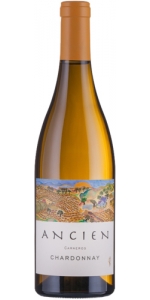
Ancien Chardonnay Carneros is made from 100 percent Chardonnay.
Chardonnay Carneros owes its style, depth, and structure to intensely flavored, low yielding, heirloom clones growing in two Carneros vineyards: on the Napa side, the Toyon Farm and on the Sonoma side, the Sangiacomo Vella Ranch. Ancien Wines hand-selected the cuttings themselves, from older vineyards in the Carneros area. These cuttings are reputed to have origins tracing to Paul Masson who imported them from Burgundy in the early 1940’s, from Louis Latour's renowned Corton Charlemagne vineyard. These selections are often referred to as “Old Wente”or “Robert Young,”denoting the sourced mother blocks in the 1960s.
Notes of ripe apple and honeydew melon greet and are delicately perfumed by notes of freesia and citrus blossom. Brighter notes of lime and Meyer lemon match the refreshing acidity of this wine, balanced by a creamy palate and leading to a finish that will continue to lengthen in the coming months. A wonderfully textured and vibrant Chardonnay displaying the best of Carneros.
Chardonnay Carneros is guided toward a layered, complex, and expressive style that develops gracefully in the bottle and shows enticing minerality, vivacious fruit, length and structure. The watchword is balance. Grapes were pressed as whole clusters, settled and fermented entirely in French oak from four different coopers, chosen for their unique synergism and support of the fruit on the palate. One third of the barrels were new. A variety of yeasts were used, including native strains, and fermentation proceeded evenly and slowly, averaging a cool 55°F. The wine was aged on its yeast lees, which were stirred weekly through the spring.
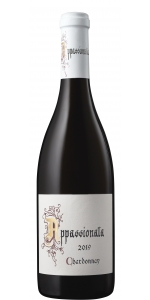
J. Christopher Appassionata Chardonnay is made from 100 percent Chardonnay.
Appassionata Chardonnay is the expressive summit of this classic Burgundian variety in the Willamette Valley. Fermented and matured in large (500-liter) oak casks, it rests on the full lees for two years before bottling. It then rests in our cellar for another year before its release, three years after vintage. The wine’s elegant texture, fine structure and extended maturation time ensure a long life for this vibrant Chardonnay.
Whole-cluster pressing; native yeast fermentation in 500-liter French oak barrels; natural malolactic fermentation; 21 months maturation on the lees.
Review:
Anyone questioning Chardonnay’s potential in the Willamette Valley should try this rich and sophisticated wine. A silky texture, is met with mouthfilling flavors of orange sorbet, pineapple and challah bread, as well as a hint of mint. The aromas of lemon curd and petrichor are equally delightful.
- Wine Enthusiast 94 Points

Holocene Aureolin Chardonnay is made from 100 percent Chardonnay.
164 cases produced
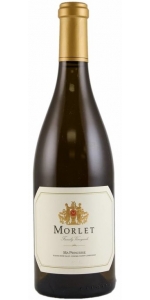
Morlet Family Vineyards Ma Douce Chardonnay is made from 100 percent Chardonnay.
The cool maritime breeze and mild and sunny mountain climate create ideal conditions for this hillside vineyard located on the second ridge from the Pacific Ocean. Handcrafted using classical Burgundian winemaking techniques, this wine is dedicated to Jodie Morlet. It is ‘My Sweet’ or ‘Ma Douce.’
Full yellow color. Aromas of lemon drop, Crème Brulée and orange zest intermixed with strong notes of minerality (wet stones) and fresh hazelnut. Full-bodied, mineral driven, this wine displays a creamy texture and very long mineral finish. Built to age gracefully for a decade, this wine is already very approachable.
Propietary Name Ma Douce
Name Meaning My Sweet “Douce brize” from the Ocean
Varietal composition Chardonnay
Type of wine Vineyard designated
Appellation Fort Ross-Seaview
Vineyard singularity On the second ridge off Ocean High elevation Goldridge soil
Typical harvest date End of October
Picking Manual, small lugs, refer truck
Sorting Cluster by cluster
Fermentation In barrel through native yeast 100% Malolactic
Upbringing Sur lies with bâtonnage
French oak from selected coopers
Bottling Unfiltered
Cellaring time 5-10 years
Serving Slightly below room temperature Decanted when served young
Review:
"Lots of white peach, quince, white flower, and green almond notes emerge from the 2020 Chardonnay Ma Douce, a full-bodied barrel sample with beautiful depth as well as freshness."96 Points Jeb Dunnuck:
A very zesty palate with good acidity bite, and showing fruit flavours of pear and peach pith, contributing to a soft, round and mouth-filling palate showing lemon curd creaminess from 30% having undergone Malo-Lactic Fermentation. The wine displays excellent balance and restrained high quality oak.
After harvesting in the very cool early morning, the grapes were destemmed without crushig, direct into the press. Gentle pressing allowed extraction of the prime juuice, whilst still maintaining the delicacy and elegance. Fermentation proceeded in stainless steel tank with about half the solids retained until about the mid-point of sugar conversion, when the juice was then filled to French oak Hogsheads to complete fermentation. lees stirring was performed weekly for 3 months, and 30% of the wine underwent MLF. the wine was matured in the same oak barrels for 8 months before filtration and bottling.
Cape Barren Estate:
Cape Barren was founded in 1999 by Peter Matthews, who worked tirelessly to create wines of distinction from some of the oldest vineyards in McLaren Vale. Peter sold the business in late 2009 to Rob Dundon and Tom Adams, who together have amassed in excess of 50 years experience in winemaking, viticulture and international sales.
Rob Dundon, Winemaker, has been making wine for almost 35 years, including vintages in Germany. He was originally Senior Red Winemaker for Thomas Hardy Wines based in McLaren Vale, then created his own company Beresford Wines, which ultimately included a second brand Step Rd. Rob's wines over the years have won almost 2,000 medals and 200 trophies at Wine Shows. He spent many years as the International Sales Manager for Step Rd, so knows the intricacies involved in establishing export markets.
Tom Adams, Viticulturist, experience in the Wine Industry spans 26 years. His background and training is in viticulture, and he managed one of the most iconic and respected vineyards in Australia, the famous Metala Vineyards of around 800 acres. He developed the Brothers in Arms portfolio and established this as a well respected and formidable wine brand across the world. His ability to set up export markets and promote the wines, is highly regarded in the Industry. In 2003 he won the prestigious Australian Wine and Brandy Export Wine of the Year award. Tom pioneered significant water conservation techniques, which have gone on to be adopted by several Government departments across Australia.
Cape Barren Geese: Towards the end of each summer, we are greeted in our vineyards by the arrival of magnificent Cape Barren Geese. These are amongst the rarest of the world's geese, and are native to Australia. The birds are named after Cape Barren Island where the birds were first sighted centuries ago. Our friendly colony lives on Kangaroo Island to the south of McLaren Vale, and they fly into our vineyards searching for grain and grape seeds after harvest.
Cape Barren Vineyards:
Cape Barren wines are produced from vineyards particularly hand selected for their exceptional quality and consistency. Our reds are produced from the world renowned McLaren Vale region, from vines older than45 years.
These seriously old vines produce wines of supreme concentration and complexity not seen in younger vines. It is this history on which our future lies.
With its picturesque and undulating terrain, and maritime climate, McLaren Vale is one of the finest regions in the world for grape-growing — especially for Shiraz and Grenache. The long warm summers are cooled by afternoon sea breezes, resulting in very mild nights, and controlled ripening and flavor development. The whites are sourced from Adelaide Hills vineyards grown above 400m from sea level.
Here the temperatures drop dramatically, especially at night, and the soils can be demanding and unforgiving, leading to smaller, more intensely flavored fruit.
The region is a veritable maze of valleys and glens, with a criss-cross of slopes which offer every conceivable aspect and micro-climate variation. This not only makes the region both charming and strikingly beautiful — but also challenging.
Pago de Carraovejas Ribera Del Duero is made from 90% Tempranillo, 6% Cabernet Sauvignon and 4% Merlot
The most honest interpretation of the Carraovejas Valley.
Body, structure and balance with a vibrant background. Delicacy, harmony and passion for detail are perceived in a wine that reflects the unique character of the valley in an outstanding way.
The 2022 vintage was characterized by cool winter months and extremely low rainfall, reaching limits that had not been observed for years. Due to the good rainfall of the previous year, the vines had good accumulated water reserves, which allowed the vineyard to have a good phenological cycle and normal development. Budding and flowering were perfectly developed in each of the varieties worked, and a homogeneous and balanced development of the plants was achieved. The summer was excessively hot, with several episodes of heat waves, which were mitigated by drip irrigation. Veraison, which was slower than in previous years, and ripening began in early August and the berries developed very uniformly. Harvest began on September 12 and ended on September 28.
Pago de Carraovejas 2022 is the most honest reflection of the valley to which it owes its name. An environment in which the vines climb the slopes to form a unique landscape. On the surface, its tertiary soil of limestone marl, clay and sandstone outcrops force the vines to self-regulate and give their best. Plots that converge in an orography marked by its unique mesoclimate. The vineyards are distributed from the middle zones to the moors that exceed 900 meters in altitude; from the gentle undulation that descends towards the stream, to the plots that exceed 30% slope. South- and north facing slopes, each with its own personality, create the profile of the Carraovejas Valley.
The grapes for Pago de Carraovejas 2022 were harvested by hand after an initial selection of bunches in the vineyard. Subsequently, in the winery, a double selection was made: first by cluster then by berry. Gravity must production allows maximum respect for the raw material. During the fermentation process, indigenous yeasts and lactic bacteria from our own estate were used. The wine was aged in French and American oak barrels for 12 months. The entire process was marked by precision and care in every detail. For greater protection, the wine contains sulfites. Finally it was clarified with natural egg white and bottle in spring of 2024.
Review:
A concentrated, dense Ribera del Duero, but there is a lot to like if you enjoy plushness, with its lush blackberry fruit and dark chocolate. Fine-grained and full-bodied on the palate, but fresh and still pretty tense, with chalky tannins. Drink from 2025.
-James Suckling 93 Points
-75x150.jpg "Maranones Garnacha Vinos de Madrid Sierra Gredos 2022")
“Marañones is so to say our signature vine. This is why the winery was named after this location.
It is part of the mountain at 800 m in altitude, oriented North. We find there the three types of granite of San Martin: the white granite, the brown and the pink. Each vineyard at Marañones has a different soil. Some are on a hill. Others are more towards the plains.
In this wine we wish to convey the Marañones area so representative of the whole winery. this is why we make this wine from the great Garnacha grape. We use a mix of vines since it is not a Parcela wine, which would be much more delicate and of more limited production.
The 100 percent Garnacha expresses itself fully, both in the nose and in the mouth, with flavours of blackthorn, a sensation of fleshy fruit retaining a slightly crispy texture. Then comes a full silkiness, with the granularity of these granite soils rich in quartz. That nugget of quartz is noticeable in the texture, length, fineness, elegance and the floral element of the wine.”
bright, ruby Grenache with wild herb, flower and crunchy red fruit flavors. Sharp tannins add structure to this full-bodied wine.