
" We don't sell the wine without touching the vine "
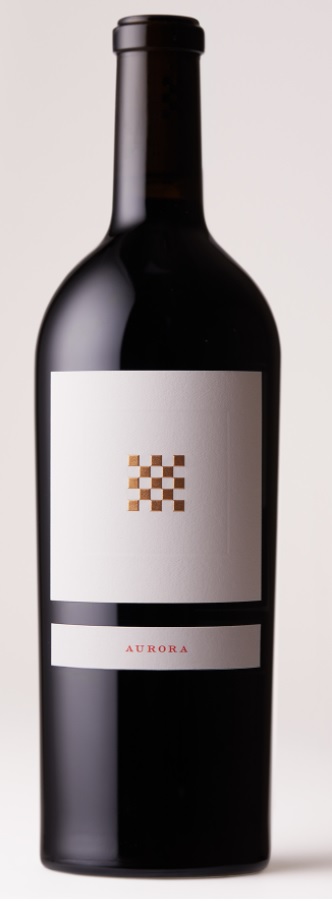
| Country: | United States |
| Regions: | California California (Napa) |
| Winery: | Checkerboard Vineyards |
| Grape Type: | Cabernet Sauvignon |
| Organic: | Yes |
| Vintage: | 2018 |
Avennia Red Willow Cabernet Sauvignon is made from 100% Cabernet Sauvignon.
The Red Willow Cabernet is a true blockbuster.
Coming from one specific block of 30 year old vines at this iconic vineyard, then strictly barrel selected, this is the essence of powerful, old vine Washington Cabernet. After all of our efforts promoting the idea of the Bordeaux blend, it would take a pretty compelling argument to suspend that idea and make a 100% varietal Cabernet. In 2016 Red Willow provided us with just that. Each time we tasted it in the barrel, the belief grew that this was something special. Something we can't make every year. In the end we were won over, and decided to make a limited amount of this wine. But don't be fooled, as this too is a blend and a selection. Each year as we are tasting the grapes as harvest approaches, we notice that the vines near the bottom of this long, steep west-facing slope, are a little different. The vines at the bottom are in a little richer soil, and get a little more water, so we pick them separately, sometimes even a week or ten days apart, and keep them separate in barrel.
This wine is all from the top of the vineyard, with its lower yield and poorer soils giving more concentration and interest. Then further, nearly every combination of new and used French oak barrels were trialed to find the best blend. It's not enough just to use the four best barrels, but to trial each combination to see how they complement each other. For a wine with this much mass, 100% new French oak was used for the first time at Avennia. It is a wine that needs a little cellaring to start, but should last a very long time.
Review:
The flagship Cabernet, the 2018 Cabernet Sauvignon Red Willow Vineyard is all varietal, from old vines in a great vineyard in Yakima Valley, that spent 20 months in 80% new French oak. It reveals a deep purple hue as well as a backward, brooding nose of smoked blackcurrants, tobacco, scorched earth, and violets. It has beautiful richness yet takes plenty of coaxing to open up. On the palate, it's medium to full-bodied and has a nicely textured, balanced mouthfeel, plenty of tannins, and outstanding length. It's mostly potential at this point and is going to benefit from at least 4-5 years of bottle age, but my money is on it having 20+ years of prime drinking.
-Jeb Dunnuck 96 Points
Justin Isosceles Proprietary Red Paso Robles is made from 83% Cabernet Sauvignon, 9% Merlot, 8% Cabernet Franc.
In 1987, we made our first vintage of a wine styled after the famous First Growth producers of Bordeaux, created with the same uncompromising care as the Grands Vins of those venerable chateaux. For more than 30 vintages, ISOSCELES has been our flagship wine and quality benchmark for this style of wine here on the Central Coast of California. A blend based on Cabernet Sauvignon supported by Cabernet Franc and Merlot, the 2018 ISOSCELES shows why Paso Robles is such a great place to grow these varieties.
Full-bodied, with ripe black fruit, complex baking spice and amazingly ready to drink right out of the gate, you can try a bottle or two now, but make sure to save a few to enjoy this wine as it continues to evolve after some time in the cellar.
Appearance: Deep ruby/purple core with black secondary color, lighter toward the rim with moderate plus viscosity and slow forming, moderately stained tears.
Aroma: Very aromatic and complex with ripe black cherry and cassis fruit, vanilla, cinnamon and licorice spice with sweet tobacco, cedar, leather and camphor notes.
Palate: Full-bodied with ripe black cherry and blackcurrant fruit complemented with baking spice and oak notes on entry. Sustained fruit and spice are joined by savory autumn leaf, cedar and leather on the mid-palate with mouth filling, fine tannins that lead into a long, complex and balanced finish with attractive fruit, spice, cedar and subtle camphor notes.
Try it with a classic herb crusted roasted rack of lamb, a grilled prime ribeye steak, or the exquisite cheeseburgers with tomato, arugula, bacon jam and chive aioli from The Restaurant at JUSTIN.
Review:
A stunning Bordeaux blend with smooth, intense flavors of plum, toast, and chocolate. Dense, layered, and balanced, with a long, concen- trated finish.
-Tasting Panel 95 Points
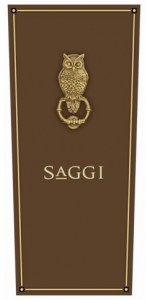
Long Shadows Saggi Red is made with 58% Sangiovese, 30% Cabernet Sauvignon 12% Syrah. Among Tuscany's oldest and most prestigious wine families, Ambrogio and Giovanni Folonari teamed with Allen Shoup to produce a wine that showcases Washington State's terroir with plenty of Italian character. Saggi (meaning "wisdom") is a stunning blend of two outstanding Washington Sangiovese vineyards. Candy Mountain Sangiovese gives the wine its dark fruit flavors and appealing notes of anise. Dick Boushey's Yakima Valley Sangiovese, planted in 1992, adds vibrancy and liveliness. Because Cabernet Sauvignon has the potential to overtake Sangiovese, the Folonaris work closely with Sagemoor Vineyards to carefully select blocks of Cabernet they know from experience deliver elegant character and refined tannins. Syrah, also from Sagemoor, adds to the wine's dark color and rich mid-palate.
Review:
The 2018 Red Wine Saggi is mostly Candy Mountain Sangiovese (58%) with Cabernet Sauvignon (30%) and Syrah (12%). Gilles Nicault has created a sensational, one-of-a-kind blend here. The wine explodes out of the glass with potpourri and anise tones alongside a beautiful core of red and dark fruits. The palate offers tobacco, milk chocolate and boysenberry flavors, serious depth and concentration, insanely good range and an opulent sense of texture. Complex and delicious with firm tannins and a touch of hedonism, this sensational and novel blend will provide drinking enjoyment for another 15 years to come.
-Vinous 95 Points
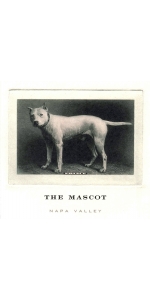
Mascot is a small-production label founded by Will Harlan in Napa Valley. The wines under this label are made from the younger vines of Harlan Estate, BOND, and Promontory, but The Mascot bottles share an exclusive preview at the development of their estates. Founded as an initial experiment to see what the young vines were capable of producing, the wines were initially only shared with close friends and family. By 2008, Will officially released the first vintage to the public since production had increased significantly. They create just one wine made from Cabernet Sauvignon, and the bottle is aged for five years before release. Assembled into a single, youthful expression, this wine shares a glimpse into the evolution and pedigree of its parent estates.
Tasting Notes:
Following a vintage full of changing conditions and demanding decision points, the steady and pleasant progress of the 2018 vintage left our team, at times, in limbo. Contradictory as it may seem, the dramas that sometimes punctuate the definitive months for the growing season help to frame the winegrowing team’s course of action; yet the tranquil succession of weeks that emerged between spring and fall in 2018 left almost entirely open the question of when to harvest. Healthy rainfall in March and April preceded a benevolent summer, whose mildness was interrupted only briefly by a few warming periods. The fruit of the young vines maintained a measured balance that gave the team little indication that harvest was imminent. Fog and temperate days followed in September, when—relying more on instinct than empirical cues—we began to pick. This judgment—as well as the gentle nature of the season—is confirmed in the subtle, ethereal power of the vintage, which reveals itself first in the deep, brooding aromas of dark fruit, black tea, and herbal notes. The texture expands around a lifted structure, as powdery tannins gently resolve. This diffused, enigmatic softness is anchored on the mid-palate by a gratifying density, which prepares the senses for a flourish of hidden energy and vivid detail that illuminates the finish.
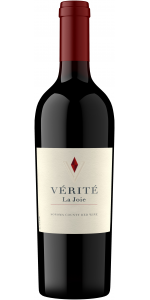
Verite La Joie Red is made from 76% Cabernet Sauvignon, 9% Merlot, 7% Cabernet Franc,5% Petit Verdot, 3% Malbec.
The 2018 La Joie displays a brilliant violet core with a thin rim of bright ruby. Generous fruit-for- ward aromas of ripe black currant and black cherry are followed by earthy notes of fresh conifer, dried mushroom, black olive, dusty clay, anise and clove. The palate is rich and structured; possessing similar flavors of the nose, refined tannins, well-balanced acidity and a complex, luscious finish.
Review:
Blackberries, black mushrooms, violets, flowers, and dark tobacco. Black truffle, too. Full-bodied, yet in check and pretty. The fine tannins frame the wine perfectly. Really long and focused. Seamless. Elegance with power. This will age incredibly well, but already so gorgeous to try. 76% cabernet sauvignon, 9% merlot, 7% cabernet franc, 5% petit verdot and 3% malbec. Try after 2026, but attractive now.
-James Suckling 99 Points
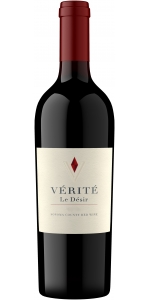
Verite Le Desir Red is made from 82% Cabernet Franc, 12% Merlot, 6% Malbec.
The 2018 Le Désir has a dark inky appearance with a violet hue that extends to the rim. The compelling characteristics of Cabernet Franc are expressed on the nose and palate with flavors of crunchy cranberry, ripe raspberry, red currant, dried sage, crushed mint, and cinnamon bark; followed by spice cake, subtle vanilla liquor, and singed toast. The persistent finish and bright acidity suggest the wine will continue to evolve in the cellar for many years to come.
Review:
The Cabernet Franc blend of the trio, the 2018 Le Desir is 82% Cabernet Franc, 12% Merlot, and 6% Malbec, and as with all these wines, it was brought up in new barrels. Ruby/purple and not completely opaque, it offers up a classic Cabernet Franc nose of mostly red fruits, spring flowers, damp earth, cedary spices, and truffle. Medium to full-bodied on the palate, it shines for its incredible elegance and purity more than outright power, yet it still brings plenty of richness. With ultra-fine tannins, perfect balance, and one heck of a great finish, it's another great, great wine from this estate.
Jeb Dunnuck 98+ Points
Vintners Dennis O’Neil and Steph Martin began development of Checkerboard Vineyards in 1999 and retained winemaker Martha McClellan to create a portfolio of wines reflecting the mountainside. The estate includes four vineyard sites of different elevation, exposure and soil composition, providing the foundation for a portfolio that includes Checkerboard Aurora Vineyard, Checkerboard Coyote Ridge Vineyard, Checkerboard Nash Creek Vineyard, Checkerboard Kings Row, Checkerboard Sauvignon Blanc, and Checkerboard Rose. Grapes are harvested at dawn in micro-lots and delivered steps away to the winery where clusters are sorted, discarding any blemished ones. Individual berries are hand-selected for vinification and transferred for fermentation, by hand, to Taransaud wooden tanks, stainless tanks, and individual wooden barrels.
Farming is based on long-term sustainability and includes water conservation and monitoring, permanent cover crops planted in alternating rows, and the use of entomology for pest control and the development of soils with good organic matter and microbiology. Checkerboard Vineyards is a member of Fish Friendly Farming which promotes environmentally-friendly land practices and water quality management. Aurora Vineyard is located in a small valley midway up Diamond Mountain and on a large knoll at an elevation of 1,200 feet. The knoll bulges outward, giving the vineyard full Southern exposure and open light from the East and West and protection from Napa Valley’s summer fog. Six acres are planted in the knoll’s rich, volcanic soils that are riddled with basalt cobble in a loamy red clay. The remaining six acres are planted in a deep gravely mix of volcanic ash and chips of decomposed Rhyolite that were washed down from the steep, rocky crags of Diamond Mountain above.
There's a fresh, sweet aroma to the 2016 Checkerboard Aurora Vineyard that builds excitement and anticipation for what's to come. On approach, the palate is juicy and expansive and explodes with flavors of blackberry, mulberry, dark cherry, caramel, leaf tobacco and green olive. The wine continues with a voluptuousness that's linear and constant yet lifted by natural acidity. The finish is showy, long and lingering with finely polished tannins. An exceptional vintage.
Checkerboard Vineyards is located on the southeast facing slope of Diamond Mountain in Napa Valley. The estate includes a winery, cave and four vineyard sites, joined by a two-and-one-half mile drive spanning the valley floor to the top of the ridge. This dramatic setting is the inspiration for the distinctive, exceptional wines of Checkerboard Vineyards.
The winery is dedicated solely to the vinification of Checkerboard Vineyards wines and was built to control every aspect of winemaking.
Eight custom Taransaud French Oak Upright Casks are used to create numerous, small lots of wine from micro-harvests of each vineyard.
he estate has four vineyard sites of different elevation, exposure and soil composition.
Spring Meadows Vineyard is situated at 600 feet in elevation on a meadow surrounded by Oak, big leaf Maple and Madrone trees. The soils are rich from the neighboring woods and the site enjoys full east to west sun exposure.
Coyote Ridge Vineyard is located on a long undulating ridgeline that runs Eastward downhill from the Aurora Vineyard knoll. The vineyard blocks are perched on the hillside above Nash Creek Canyon to the South and share the same red iron oxide clay as the upper blocks of Aurora Vineyard. Though the soils are similar, the Southern and slightly Eastern exposure of Coyote Ridge, along with its lower 900 foot elevation, allows the top of the summer fog line to reach the Vineyard. This creates an entirely different microclimate and growing cycle for its vines.
Aurora Vineyard is nestled in a small valley midway up Diamond Mountain on a large knoll located at an elevation of 1,200 feet. The knoll projects off the mountainside, giving the vineyard full Southern exposure and open light from the East and West and protection from Napa Valley's summer fog. Six acres of the vineyard are planted in the knoll's rich, volcanic soils that are riddled with basalt cobble in a loamy red clay. The remaining six acres are planted in a deep gravely mix of white volcanic ash and chips of decomposed Rhyolite that were washed down from the steep, rocky crags of Diamond Mountain above.
At 2,000 feet in elevation and at the top of the Estate is Nash Creek Vineyard. The blocks rest just below the East ridge of Diamond Mountain on a steeply sloping terrace composed entirely of Rhyolite. At this elevation, winter temperatures are colder and extend into early Spring, and bud break takes place up to six weeks later than our vineyards below. By early Summer, Nash Creek Vineyard catches up and surpasses the growth of the Aurora and Coyote Ridge Vineyards. This due to the lingering daytime heat absorbed by its rocky base and the nighttime convective warmth rising from the Napa Valley below, providing nearly round-the-clock grape maturation.
Farming practices at Checkerboard Vineyards are based on long-term sustainability and include water conservation and monitoring, permanent cover crops planted in alternating rows, and the use of entomology for pest control.
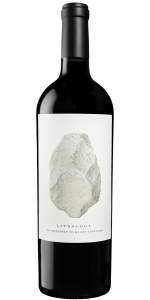
Alejandro Bulgheroni Lithology Beckstoffer To Kalon Vineyard Cabernet Sauvignon is made from 100 percent Cabernet Sauvignon.
Alejandro Bulgheroni Estate Lithology is a series of single vineyard and AVA-designated wines made from select sites within Napa Valley. Lithology Beckstoffer To Kalon Vineyard is produced solely from fruit grown in the historic Beckstoffer to Kalon Vineyard planted in 1865 by W.H. Crabb and represents Oakville's famous bench land.
Review:
The 2019 Cabernet Franc Lithology Beckstoffer To Kalon Vineyard just shines for its bouquet, which is classic To Kalon with its floral, incense, spicy, red and black-fruited aromatics. These all flow to a medium to full-bodied, utterly seamless Cabernet Franc that’s balanced, has laser-like precision, and a great finish. This isn’t the biggest or richest wine in the lineup, but it’s Cabernet Franc in all its glory, with soaring aromatics and complexity, ample richness and texture, and a beautiful sense of finesse and elegance. It’s going to keep for 15-20 years with no issues.
-Jeb Dunnuck 98 Points
Composed of 90% Cabernet Sauvignon and 10% Cabernet Franc, the 2019 Lithology Cabernet Sauvignon Beckstoffer To Kalon Vineyard is a barrel sample with a deep garnet-purple color. It needs a fair bit of coaxing to unlock scents of blackberry pie, warm blueberries and cassis plus suggestions of spice cake, underbrush, candied violets and chocolate box. The full-bodied palate brings forth loads of earthy layers to accent the rich, black fruits, framed by plush tannins and lovely freshness, finishing long and fragrant.
-Wine Advocate 97 to 99 points
The 2019 Cabernet Sauvignon Lithology Beckstoffer To Kalon Vineyard is one of the very finest wines I have tasted from Alejandro Bulgheroni's Napa Valley project. The 2019 To Kalon captures all the pedigree of this iconic Oakville vineyard, and yet also remains nuanced and wonderfully finessed for an intense wine. To Kalon Cabernets are rarely this elegant, but the Bulgheroni 2019 sure is.
-- Antonio Galloni 97 Points
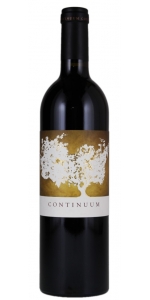
Continuum Red Blend 2021 is made from 45% Cabernet Sauvignon, 35% Cabernet Franc, 11% Merlot, 9% Petit Verdot.
A vintage set apart for its perseverance and resilience, the 2021 Continuum is one of refined concentration – a resounding expression of both measured intensity and enduring vibrancy. This is a multi-layered magnificent vintage that reveals floral notes, with black cherry and wild foraged mixed berries throughout. One can perceive the chemise, sage, and bay giving a gorgeous savory expression, reflective of the natural environment that surrounds the Sage Mountain Vineyard. 2021 is a wine of incredible complexity and nuance – a wine for the ages.
WINEGROWING- Continuum is estate grown on our Sage Mountain Vineyard. It’s location, high on Pritchard Hill along the eastern ridge above Oakville, overlooks Napa Valley and the San Francisco Bay. The rocky, volcanic soils of the site focus the vine’s energy keeping yields low yielding fruit of depth and complexity. 38 acres of mature estate vineyard, planted in 1991 and 1996, with additional plantings in 2004, 2010, together comprise 38 distinct vineyard blocks. Cabernet Sauvignon, Cabernet Franc, Petit Verdot, and Merlot are grown from 1300 to 1600 feet in elevation, on western and southern facing aspects with slight northern and eastern slopes in places. This diversity of plantings on our volcanic soils are the essence of the complexity of Continuum.
PRODUCTION- Continuum is 100% estate grown, produced and bottled. All fruit is selectively hand-harvested at night. The fruit is then sorted before and after de-stemming, and gravity fed into French oak or concrete tanks. A threeday cold soak is followed by fermentation, receiving three to four pumpovers daily, and délestage two to three times in total during the most active period. The wine remains on skins in tank for 20 to 40 days. All lots are then drained, basket pressed, and transferred with lees for malolactic fermentation and aging. Continuum spent 22 months in barrel. 63 percent of French oak barrels were new and 35 percent were once used. A single concrete amphora was also used for aging. The wine clarified slowly and settled naturally in our cold barrel room, was racked sparingly and bottled without fining or filtration. Each vineyard lot was tasted and carefully considered many times to assemble the blend. TASTING NOTES- Continuum shows energy and verve. The wine expresses purity and precision, with high tone aromatics of red and blue fruit, deep plum and rose oil. This vintage shows an approachable nerve of the land in the refined mineral quality on the palate. The surrounding native vegetation of bay and sage is evidenced in an earthy, savory profile. This is a shimmering, silky and harmoniously integrated wine with densely packed fine grain tannins.
DECANTING- For the fullest sensory experience we encourage decanting to allow the wine to breathe before serving. Decanting awakens the wine’s more purely fragrant expression and enhances the suppleness of the palate. Continuum is accessible and enjoyable upon release; however extended aging will be richly rewarded.
Review:
This note is written before the final blend of the 2021 Continuum. Deep purple-black in color, it hits the ground running with an intense nose of red and black currant preserves, lilacs, baker's chocolate, and graphite, leading to an undercurrant of black olives and red loam. On the medium to full-bodied palate it is very lively, grainy and super-concentrated, finishing long and shimmery.
-Wine Independent 98-100 Points
The 2021 Continuum is a blend of 45% Cabernet Sauvignon, 35% Cabernet Franc, 11 % Petit Verdot, and 9% Merlot. Deep garnet-purple colored, notes of black cherries, warm cassis, and plum preserves storm from the glass, giving way to nuances of dark chocolate, violets, and Sichuan pepper. The full-bodied palate is fabulously concentrated and yet so energetic, delivering firm, finely grained tannins and wonderful freshness, finishing long and perfumed. Wow.
-Wine Palate 100 Points
This is so aromatic with blackcurrant, blackberry, graphite, iron, pine bark and orange peel. Hints of wild sage and peppermint. Seductive perfumes. Full-bodied with extremely well-integrated tannins that have great length. Elegant firmness at the finish. The quality of the tannins is some of the best I have had in a young Continuum. Seamless silk. Great finish. 45% cabernet sauvignon, 35% cabernet franc, 11% merlot and 9% petit verdot. Best after 2027.
-James Suckling 99 Points
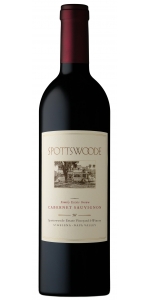
Young and present, this is an energetic and bold expression of violets, lavender, and cassis mixed with dark chocolate, cherry, plum, and graphite. A wine happy to be tucked away in the cellar, and it’s also expressing itself beautifully now.
Review:
Lovely fragrant blackberry and black cherry fruit, cassis, and rich tobacco spices with lovely fresh earth notes and a sweet kiss of new wood cedar. Incredibly concentrated dark berry fruit with fabulously angular tannins with smooth long beams with crisp edges. Purple florals, dried sagebrush, and chocolate shavings with lids of graphite and deep iron-like mineral character. And a finish of dark saturated fruit that goes and goes for days. There are purple floras too. Polished and bright, with vivacious acidity and freshness evident from the sip to the finish. Wow, this wine.
-Decanter 98-100 Points
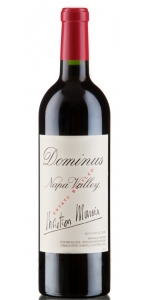
Dominus Napa Valley Red Blend is made from 88% Cabernet Sauvignon, 7% Cabernet Franc, 5% Petit Verdot.
The historic Napanook Vineyard, a 124-acre site west of Yountville, was planted in 1838. This vineyard was the source of fruit for some of the finest Napa Valley wines. Estate-bottled in the spirit of the Bordeaux châteaux, Dominus Estate is dry-farmed to allow natural stress and good concentration of fruit. Grape clusters are crop-thinned to allow sun and air to pass in between, helping to achieve full maturation and soften the tannins. Only 20% to 40% new French oak barrels are used in order to limit the extraction of oak notes. To express the unique terroir, the classic Bordeaux grape varietals of Cabernet Sauvignon, Merlot, Cabernet Franc and Petit Verdot are planted with different root stocks best suited for the varying soil composition of gravel, heavy clay and loam.
Reviews:
One of the legendary Dominus, the 2021 Cabernet Sauvignon is unquestionably in the same league as the 2018, 2016, 2015, 2013, 2010, and 1991, and to my mind, wine simply doesn't get any better. Sporting a dense purple hue as well as an incredible perfume of blackcurrants, crushed stone, cedar pencil, smoke tobacco, and baking spices, it s rich, full-bodied, and voluptuously textured, with ripe yet building tannins. It reminds me slightly of the 2010 (maybe the 2013), and I suspect it will have a similar evolution. Hide bottles for 7-8 years, and it will evolve gracefully for 30+ years. Hats off to the team of Christian Moueix and director Tod Mostero.
Jeb Dunnuck 100 Points
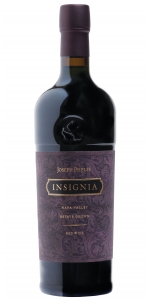
Joseph Phelps Insignia is made of 93% Cabernet Sauvignon, 5% Petit Verdot and 2% Malbec.
The 2019 Insignia opens with heady aromatics of red fruit, crème de cassis, leafy tobacco and delicate dried rose petals. The palate is juicy and dense with expressive layers of blackberry, raspberry, black currant, and dark chocolate. A dynamic wine offering captivating energy, length, complexity and refinement. The 2019 Insignia marks the first vintage to include fruit from the new Joseph Phelps vineyard named El Venadito, located in the Oak Knoll District, just south of the winery’s Yountville Vineyard.
Review:
Another beautiful wine from this team, the 2019 Insignia is mostly Cabernet Sauvignon but includes smaller amounts of Merlot and Malbec, brought up all in new barrels, sourced from seven estate vineyards. It has a classic varietal and incredibly complex nose of crème de cassis, freshly sharpened pencils, green tobacco, and damp earth, with a kiss of background sappy spring flowers. Seemingly from a cooler year with its freshness, vibrancy, and herbal, floral character on the nose, it's nevertheless full-bodied and beautifully concentrated on the palate, with ultra-fine tannins, a seamless, layered mouthfeel, and a gorgeous finish. Unquestionably up with the finest vintages of this cuvée, this is legit awesome juice that’s going to offer incredible pleasure over the coming 20-25 years. Hats off to winemaker Ashley Hepworth.
- Jeb Dunnuck 99 Points
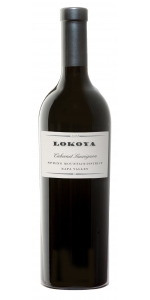
Lokoya Spring Mountain Cabernet Sauvignon is made from Napa Valley Cabernet Sauvignon.
Review:
The 2018 Cabernet Sauvignon Spring Mountain District is a monster of a mountain Cabernet that has a primordial bouquet of blackcurrants, smoked earth, chocolate, and graphite. While Spring Mountain wines tend to be more aromatic and complex right out of the gate, that’s not the case here, and this is going to need bottle age to round into form. Full-bodied on the palate, with a rich, concentrated mouthfeel, it has serious tannins, notable purity of fruit, and a great finish. With air, it picks up more and more classic Spring Mountain floral and exotic notes, and it’s flawlessly balanced, with gorgeous tannins and a great, great finish. This is a brilliant wine in the lineup and unquestionably one of the true gems from Spring Mountain in 2018. Give bottles 4-5 years and enjoy over the following 2-3 decades.
-Jeb Dunnuck 98 Points
San Giorgio Ugolforte presents a dark core of red and black berry fruit layered with earth, leather, smoke, and herbs. Complex and elegant, the wine is full on the palate and firm in tannin structure. Refreshing acidity frames a graceful finish. Classic Brunello di Montalcino.
This red is marked by cherry, plum, thyme, sage and loam aromas and flavors. Lively and firmly structured, featuring a saline undercurrent. An open-knit version, with nice equilibrium, fine energy and a long, resonant finish.
-Jeb Dunnuck 94 Points
-Wine Spectator 94 Points
Burgo Viejo Rioja Gran Reserva is made from 100 percent Tempranillo. 30 year old vines.
Burgo Viejo Gran Reserva shows a deep red ruby color and offers powerful aromas of blackberry jam, spice, leather, chocolate with toasty nuances. Smooth yet full-bodied with firm tannins and a long finish.



