" We don't sell the wine without touching the vine "
Checkerboard Vineyards is located on the southeast facing slope of Diamond Mountain in Napa Valley. The estate includes a winery, cave and four vineyard sites, joined by a two-and-one-half mile drive spanning the valley floor to the top of the ridge. This dramatic setting is the inspiration for the distinctive, exceptional wines of Checkerboard Vineyards.
The winery is dedicated solely to the vinification of Checkerboard Vineyards wines and was built to control every aspect of winemaking.
Eight custom Taransaud French Oak Upright Casks are used to create numerous, small lots of wine from micro-harvests of each vineyard.
he estate has four vineyard sites of different elevation, exposure and soil composition.
Spring Meadows Vineyard is situated at 600 feet in elevation on a meadow surrounded by Oak, big leaf Maple and Madrone trees. The soils are rich from the neighboring woods and the site enjoys full east to west sun exposure.
Coyote Ridge Vineyard is located on a long undulating ridgeline that runs Eastward downhill from the Aurora Vineyard knoll. The vineyard blocks are perched on the hillside above Nash Creek Canyon to the South and share the same red iron oxide clay as the upper blocks of Aurora Vineyard. Though the soils are similar, the Southern and slightly Eastern exposure of Coyote Ridge, along with its lower 900 foot elevation, allows the top of the summer fog line to reach the Vineyard. This creates an entirely different microclimate and growing cycle for its vines.
Aurora Vineyard is nestled in a small valley midway up Diamond Mountain on a large knoll located at an elevation of 1,200 feet. The knoll projects off the mountainside, giving the vineyard full Southern exposure and open light from the East and West and protection from Napa Valley's summer fog. Six acres of the vineyard are planted in the knoll's rich, volcanic soils that are riddled with basalt cobble in a loamy red clay. The remaining six acres are planted in a deep gravely mix of white volcanic ash and chips of decomposed Rhyolite that were washed down from the steep, rocky crags of Diamond Mountain above.
At 2,000 feet in elevation and at the top of the Estate is Nash Creek Vineyard. The blocks rest just below the East ridge of Diamond Mountain on a steeply sloping terrace composed entirely of Rhyolite. At this elevation, winter temperatures are colder and extend into early Spring, and bud break takes place up to six weeks later than our vineyards below. By early Summer, Nash Creek Vineyard catches up and surpasses the growth of the Aurora and Coyote Ridge Vineyards. This due to the lingering daytime heat absorbed by its rocky base and the nighttime convective warmth rising from the Napa Valley below, providing nearly round-the-clock grape maturation.
Farming practices at Checkerboard Vineyards are based on long-term sustainability and include water conservation and monitoring, permanent cover crops planted in alternating rows, and the use of entomology for pest control.
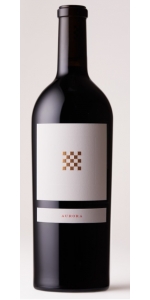
Vintners Dennis O’Neil and Steph Martin began development of Checkerboard Vineyards in 1999 and retained winemaker Martha McClellan to create a portfolio of wines reflecting the mountainside. The estate includes four vineyard sites of different elevation, exposure and soil composition, providing the foundation for a portfolio that includes Checkerboard Aurora Vineyard, Checkerboard Coyote Ridge Vineyard, Checkerboard Nash Creek Vineyard, Checkerboard Kings Row, Checkerboard Sauvignon Blanc, and Checkerboard Rose. Grapes are harvested at dawn in micro-lots and delivered steps away to the winery where clusters are sorted, discarding any blemished ones. Individual berries are hand-selected for vinification and transferred for fermentation, by hand, to Taransaud wooden tanks, stainless tanks, and individual wooden barrels.
Farming is based on long-term sustainability and includes water conservation and monitoring, permanent cover crops planted in alternating rows, and the use of entomology for pest control and the development of soils with good organic matter and microbiology. Checkerboard Vineyards is a member of Fish Friendly Farming which promotes environmentally-friendly land practices and water quality management. Aurora Vineyard is located in a small valley midway up Diamond Mountain and on a large knoll at an elevation of 1,200 feet. The knoll bulges outward, giving the vineyard full Southern exposure and open light from the East and West and protection from Napa Valley’s summer fog. Six acres are planted in the knoll’s rich, volcanic soils that are riddled with basalt cobble in a loamy red clay. The remaining six acres are planted in a deep gravely mix of volcanic ash and chips of decomposed Rhyolite that were washed down from the steep, rocky crags of Diamond Mountain above.
There's a fresh, sweet aroma to the 2016 Checkerboard Aurora Vineyard that builds excitement and anticipation for what's to come. On approach, the palate is juicy and expansive and explodes with flavors of blackberry, mulberry, dark cherry, caramel, leaf tobacco and green olive. The wine continues with a voluptuousness that's linear and constant yet lifted by natural acidity. The finish is showy, long and lingering with finely polished tannins. An exceptional vintage.

Pulled from a Gentleman's cellar, all wines from this cellar have been purchased by the owner either from the importer or direct from winery. They stayed in his cellar until being moved to the Timeless Wines warehouse.