
" We don't sell the wine without touching the vine "
Bodega Contador began in 1995 when Benjamin Romeo, winemaker and grower, acquired a centuries-old cave carved into the rock beneath the Castle of San Vicente de la Sonsierra, located at the foot of the Sierra Cantabria mountain range in La Rioja Alta, west of Rioja Álava. In 1996, Benjamin made the first vintage of his “La Cueva del Contador” wine and started to buy vineyards for his plan to become a “bodeguero”—a wine producer. Benjamin was the winemaker at Aratadi from 1985 to 2000, where he was able to apply his skill and continue to hone his craft. In 1999, he made the first vintage of “Contador” from vineyards he acquired.
In 2000, after seeing these first wines favorably received by the market and press, Benjamin dedicated himself full time to his personal project. Robert Parker’s Wine Advocate awarded 100 points to the 2004 and 2005 vintages of Contador made in his parents’ garage.
In collaboration with the architect Hector Herrera, Benjamin designed and opened a new winery in June 2008, to coincide with the summer solstice. The three floors or terraces mirror the original slopes of the site where it is located, enabling both fruit and wine to be moved by gravity.
The wines are sourced from sixty-two different plots which are organically farmed.
The wineries carries out green harvesting in May and June, and harvest in September by hand with grapes carefully placed in 14-16 kilo bins. The maximum amount of time the fruit sits in the bins is half an hour. Fermentation is temperature controlled in 10,000-litre truncated conical French oak vessels, and racking of the wine is done during a waning moon when the gravitational pull keeps the heavier particles at the bottom of the barrel allowing for greater clarity in the wine.
There is a holistic approach to the vine, so the winery uses fertilizers only in certain years with organic material composed by Bodega Contador viticulturists themselves from sheep manure. They apply herbal treatments that create an ambient environment for the vines to thrive, and treat the vines with copper sulfate when needed.
Benjamin oversees every aspect from vine to wine, including traveling to France to select the best oak trees for barrels and choosing the best-quality Spanish corks from high altitude mountain regions in Castellon, Toledo, and Gerona. As the son, grandson and great-grandson of winemakers, Benjamin uses rigorous attention to detail to produce wines of great and noble character
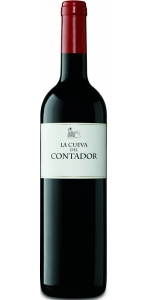
Benjamin Romeo La Cueva del Contador is made from 91% Tempranillo, 9% Garnacha.
Named after the centuries-old caves or “cuevas” carved out of the hillside below the castle of San Vicente in Sonsierra north of the Ebro, this wine is composed of 91 percent Tempranillo and 9 percent Garnacha. The fruit is sourced from eight different plots that yield about 1.2 kg per vine. Fermentation begins after a three-day cold maceration and the wine is aged for nineteen months in 100 percent new French oak and bottled without fining or filtration.
The palate offers flavors of blackberry coulis, Damson plums, Rosemary and well-integrated tannins; this wine is well balanced and youthful with a long powerful finish. Both red and black fruit are pronounced in the nose, but there are also mineral and herbal notes of gravel and lavender.
Review:
I found cleaner aromas and a fresher quality and finer tannins in the 2019 La Cueva del Contador, a quite complete wine with elegance and finesse combined with power and concentration. The oak is still noticeable after 18 months in new barriques, and I'd wait a little longer before pulling the cork. It has the perfume of La Cueva in the background. It should resurface with a little more time in bottle. 10,000 bottles produced.
-Wine Advocate 95 Points
This is a 6 pack with 2 bottles each from vintages from 2013, 2015, and 2016.
***Tenimenti Angelini Val di Suga Vigna Spuntali Brunello di Montalcino 2016:
The 2016 Vigna Spuntali Brunello di Montalcino is the most brooding of the lineup from Val di Suga and is sourced from the southwest of the region on sandy soils. There are aromatics of black raspberry, licorice, menthol, sage, cinnamon, and iron-rich earth. Its Mediterranean influence is felt on the palate with ripe black cherry, dried herbs, and sun-baked earth. This is the fullest bodied and most savory of the Val di Suga lineup, with more roundness and grip. Its structure will benefit from cellaring for several years and will be great drinking over the next 20 years or more. 2026-2040.
-Jeb Dunnuck 96 Points
***Tenimenti Angelini Val di Suga Vigna Spuntali Brunello di Montalcino 2015:
The 2015 Vigna Spuntali Brunello di Montalcino is more introverted on first opening, with notes of black plum, licorice, dried Mediterranean herb, and sun-baked earth. On the palate, it offers a tart dried fruit character, with a building tannin structure that finishes with tomato leaf, and bitter herbs. The most rustic and burly of the wines in the lineup of the 2015 Val di Suga vintage, it will benefit from allowing some time in cellar to see how this matures and its tarriness develops. Drink 2026-2036
-Jeb Dunnuck 94 Points
***Tenimenti Angelini Val di Suga Vigna Spuntali Brunello di Montalcino 2013:
Plenty of spices and fresh herbs on the nose, such as dried rosemary and nutmeg, to match the underlying dried redcurrants and cranberries. Full-bodied with plenty of concentration, but still shows a very sturdy, tannin backbone and punchy acidity, to drive this through to a long finish. Drink in 2021.
-James Suckling 94 Points
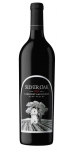
Silver Oak Cellars Napa Valley Cabernet Sauvignon is made from 76.61% Cabernet Sauvignon, 18.13% Merlot, 2.56% Cabernet Franc, 2.32% Petit Verdot, 0.38% Malbec.
Expressive and lively on the nose, the 2019 Silver Oak Napa Valley Cabernet Sauvignon has a black cherry and huckleberry aroma laced with dry floral notes. Integrated oak adds a light note of sweet nutmeg to this wine. Ruby in color, it has a fruit-forward entry with silky tannins that builds across the mid-palate and through a long and balanced finish. Structured while still approachable, this wine remains true to the signature Silver Oak winemaking style and will continue to improve through 2047 given proper cellaring conditions.
Review:
A beautifully compact wine that delivers complex and nuanced aromas of Bing cherry and black raspberry with tobacco, currant leaf, and cedarwood laced with dried sage. Cool raspberry, cherry, and blackberry fruit are perfectly represented, and the lengthy finish is crisp, lively, and energetic.
Decanter 96 Points



