
" We don't sell the wine without touching the vine "

| Country: | Japan |
| Region: | Yamagata |
| Winery: | Dewazakura Brewing Company |
| Grape Type: | Dewasansan (Sake) |
| Vintage: | NV |
| Bottle Size: | 750 ml |
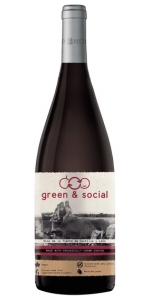
Green & Social Rueda Organic Tempranillo is made from 100 percent Tempranillo.
The launch of green & social is a step forward in pursuit of the sustainability by Cuatro Rayas and the starting point of new environmental initiatives in support of the social economy that the Cooperative launched. Lightweight recycled glass to reduce emissions. Aluminum capsule free of plastics and 100% recyclable. Sugar cane cap with zero carbon footprint. The Green and Social Organic Tempranillo has a bright and clean, mid-depth ruby red color and purple hue. Intense aroma with hints of ripe berries. Soft and velvety on the plate, perfect balance between tannins and acidity, round and long finish.
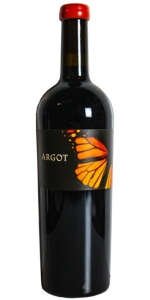
A dramatic, ridgetop landscape — rising 1500 feet above Lake Hennessey, staring west over Pritchard Hill — persistently influenced by a push/pull draw between The Valley’s floor and Lake Berryessa. This wild, untamed, eastern frontier of Napa Valley, produces singular, terroir-driven wines of captivating beauty, power and lift. An unseasonably wet and cool springtime produced significant shatter at Sage Ridge in 2019, reducing our yields by 50%, leading to a particularly flamboyant edition of this wine.
An incomparable expression of Cabernet Sauvignon — massively pure red fruit character, delivered on a ribbon of ultra-suave tannins and gorgeously seductive high tones. The palate never relents its come-hither posture. Aromatically, puts forth an intriguing botanical complexity that is unmistakably site-specific. As our experience with this one-of-a-kind terroir deepens, we remain endlessly excited for the potential of these unique ridgetop vineyards. Get your hands on a bottle and pull the cork…a wine built for immense near-term gratification.
Review:
"Deep garnet-purple colored, the 2019 Cabernet Sauvignon Sage Ridge Vineyard opens with open-knit notes of plum preserves, baked blackberries and boysenberry jam, leading to a core of crème de cassis, mocha, camphor and Indian spices with a touch of unsmoked cigars. The palate is full-bodied, concentrated and dense with black fruit preserves, framed by soft tannins and seamless freshness, finishing very long and very spicy. Only 75 cases were made. - Lisa Perrotti-Brown"
- Robert Parker's Wine Advocate (November 2021), 95 pts
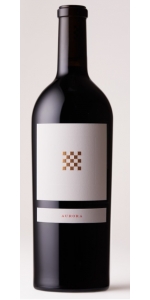
Vintners Dennis O’Neil and Steph Martin began development of Checkerboard Vineyards in 1999 and retained winemaker Martha McClellan to create a portfolio of wines reflecting the mountainside. The estate includes four vineyard sites of different elevation, exposure and soil composition, providing the foundation for a portfolio that includes Checkerboard Aurora Vineyard, Checkerboard Coyote Ridge Vineyard, Checkerboard Nash Creek Vineyard, Checkerboard Kings Row, Checkerboard Sauvignon Blanc, and Checkerboard Rose. Grapes are harvested at dawn in micro-lots and delivered steps away to the winery where clusters are sorted, discarding any blemished ones. Individual berries are hand-selected for vinification and transferred for fermentation, by hand, to Taransaud wooden tanks, stainless tanks, and individual wooden barrels.
Farming is based on long-term sustainability and includes water conservation and monitoring, permanent cover crops planted in alternating rows, and the use of entomology for pest control and the development of soils with good organic matter and microbiology. Checkerboard Vineyards is a member of Fish Friendly Farming which promotes environmentally-friendly land practices and water quality management. Aurora Vineyard is located in a small valley midway up Diamond Mountain and on a large knoll at an elevation of 1,200 feet. The knoll bulges outward, giving the vineyard full Southern exposure and open light from the East and West and protection from Napa Valley’s summer fog. Six acres are planted in the knoll’s rich, volcanic soils that are riddled with basalt cobble in a loamy red clay. The remaining six acres are planted in a deep gravely mix of volcanic ash and chips of decomposed Rhyolite that were washed down from the steep, rocky crags of Diamond Mountain above.
There's a fresh, sweet aroma to the 2016 Checkerboard Aurora Vineyard that builds excitement and anticipation for what's to come. On approach, the palate is juicy and expansive and explodes with flavors of blackberry, mulberry, dark cherry, caramel, leaf tobacco and green olive. The wine continues with a voluptuousness that's linear and constant yet lifted by natural acidity. The finish is showy, long and lingering with finely polished tannins. An exceptional vintage.
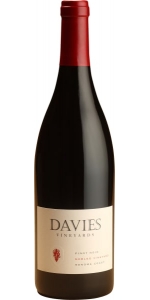
J. Davies Nobles Vineyard Pinot Noir is made from 100 percent Pinot Noir.
The 2020 Nobles Vineyard Pinot Noir’s aroma elegantly opens with blueberry compote, dark cherry and dried citrus peels, followed with a touch of baking spice and a hint of forest floor. The palate’s bright entry leads to notes of cranberry, red raspberry and a sprinkle of black tea, while a crisp acidity supports silky tannins to a clean finish.
Review:
Bountiful black-cherry flavors and good balance make this full-bodied wine difficult to resist. Black-fruit flavors are rich and well concentrated, backed by a light touch on the oak spices that emerge on the finish and add nice complexity.
-Wine Enthusiast 93 Points
This carries the forest green scent of the far-coast hills, a savory pinot noir with mineral intensity. The wine’s cherry-red fruit ripens on the eastern, leeward slopes of the second ridge in from the Pacific, that ripeness tamed by an earthy evergreen scent lasts for minutes, as if breathing the air at the edge of a redwood grove.
-Wine & Spirits 93 Points
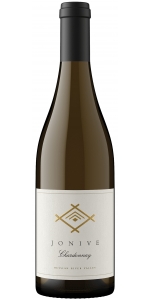
Jonive Chardonnay Russian River Valley is made from 100 percent Chardonnay.
Jonive’s Moon Dust Vineyard is planted to a range of clones, imparting unique characteristics and quality to the wines. 100% estate-owned vineyard planted in 1998 and 2007. Goldridge (Moon Dust) soil over clay loam. Eastern/Southern Exposure.
The wine has a typical light straw color and complex aromas of lemongrass, nutmeg, Meyer lemon, fresh oregano, and a touch of passionfruit. This Chardonnay has an enveloping mouthfeel that is at once crisp and linear as well as rich and expansive, a very unusual and beguiling combination of textures and mouthfeel. The browning of clone 17 enables the wine to be rich, but at a lower alcohol, and clone 95 contributes beautifully fresh acidity. The palate shows jasmine, honeydew melon, tarragon, lime, and lemongrass with a nice kiss of high-quality French oak. The extended lees contact gives the wine amazing length, energy, and vitality.
353 cases produced
14-month barrel aging in 67% new French oak barrels, 20% once used and 13% neutral
61% clone 17/Robert Young and 39% clone 95
13.3% alcohol
Reviews:
"This unfiltered Chardonnay explodes from the glass with brilliant aromas of fresh lime peel, orange blossom, chalk and green pear. The palate displays all of that aciddriven freshness, with flavors of juicy tangerine and flowers leading to a finish with echoes of salty lime zest."
— Tom R. Capo, 2025 Wine Enthusiast 95 Points
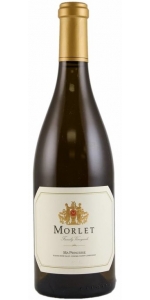
Morlet Family Vineyards Ma Douce Chardonnay is made from 100 percent Chardonnay.
The cool maritime breeze and mild and sunny mountain climate create ideal conditions for this hillside vineyard located on the second ridge from the Pacific Ocean. Handcrafted using classical Burgundian winemaking techniques, this wine is dedicated to Jodie Morlet. It is ‘My Sweet’ or ‘Ma Douce.’
Full yellow color. Aromas of lemon drop, Crème Brulée and orange zest intermixed with strong notes of minerality (wet stones) and fresh hazelnut. Full-bodied, mineral driven, this wine displays a creamy texture and very long mineral finish. Built to age gracefully for a decade, this wine is already very approachable.
Propietary Name Ma Douce
Name Meaning My Sweet “Douce brize” from the Ocean
Varietal composition Chardonnay
Type of wine Vineyard designated
Appellation Fort Ross-Seaview
Vineyard singularity On the second ridge off Ocean High elevation Goldridge soil
Typical harvest date End of October
Picking Manual, small lugs, refer truck
Sorting Cluster by cluster
Fermentation In barrel through native yeast 100% Malolactic
Upbringing Sur lies with bâtonnage
French oak from selected coopers
Bottling Unfiltered
Cellaring time 5-10 years
Serving Slightly below room temperature Decanted when served young
Review:
"Lots of white peach, quince, white flower, and green almond notes emerge from the 2020 Chardonnay Ma Douce, a full-bodied barrel sample with beautiful depth as well as freshness."96 Points Jeb Dunnuck:
Dewasansan Green Ridge - 1.8L is a sake.
With its floral nose and mellow fruity flavor, “Dewasansan” is a rewarding choice for wine drinkers new to the world of sake. It has a wholesome freshness, a green apple tartness and a refreshing finish. The delightful bouquet comes from Association No. 10 yeast, and the mellow rice taste from “Dewa 33,” a new rice strain developed in Yamagata Prefecture. The perfect sake for tuna sashimi and grilled seafood of all kinds.
Awards: Gold Medal, Ginjo class, 2002 U.S. National Sake Appraisal
Rice Variety: Dewasansan
Polishing Ratio: 50%
Alcohol Percentage: 15.8%
Sake Meter Value: +4.0
Acidity: 1.4
Yeast Type: Yamagata KA
Dewazakura Brewing Company
Many sake enthusiasts are surprised to learn that twenty-five years ago ginjo labels were hard to find in Japan. In those days, people were still drinking the cloyingly sweet sakes the breweries had been churning out since the ’50s; no one thought that customers would actually pay more for the quality ginjo and daiginjo sakes brewed in limited amounts for competitions.
In 1981, Dewazakura Brewing Company changed that with the release of "Oka," an affordably priced ginjo label with a polishing ratio of 50 percent and a lovely floral aroma. It was light, crisp and delightful. It was made to be drunk cold. Soon other breweries introduced their own ginjo labels. And so began one of the most creative periods in the history of sake, earning for Dewazakura the admiration and respect of even its most ardent competitors.
What made the brewery stand out was a drive for innovation. Dewazakura was not a wealthy brewery, or a long-established one, but they were open to change. When the opportunity arose in the years after the war to invite research technicians in from the National Research Institute of Brewing, they jumped at the chance. Drawing on the knowledge and skill of Hideo Abe, a former Institute research advisor, they put new ideas into practice without hesitation.
By 1991, Dewazakura had perfected its cold storage technique, aging freshly pressed sake at 28 degrees Fahrenheit to keep it as aromatic and flavorful as possible until bottling. In 1996 it introduced "Dewasansan," brewed from a new Yamagata rice strain of the same name, another hit which opened the way for other prefectures to introduce highly specific regional labels. This year, for the first time in history, Yamagata breweries received more gold medals than any other prefecture at the 2004 Japan National Sake Appraisal, an achievement due in no small measure to the pioneering efforts of the Dewazakura Brewing Company.
Gaja Sperss is made from 100 percent Nebbiolo.
Vibrant and intense notes of herbs and spices such as thyme, cloves and black pepper. On the palate the wine is tense, loaded with energy that will need serious ageing to fully develop although extremely approachable in its youth. Impressive fruit concentration, with dark and ripe fruits – prunes and black cherries. Acidity and tannins lift this wine to its freshest expression.
Nebbiolo based wines have not only complexity and structure but also great elegance and finesse. The distinctive silky tannins of the Nebbiolo make it the right wine to drink with meat. Usually a young vintage goes very well with richer dishes because of the stronger tannins; mature Barolos are more suitable with delicate white meat courses or braised meat courses with sauces or concentrated red wines reductions.
Review:
The 2019 Barolo Sperss is rich with dark mineral earth, black cherry, and Earl Grey tea. Long and mouthwatering, it has a powerful structure while retaining finesse. It is fantastically balanced, with gripping tannins, fresh acidity, and notes of forested earth and ripe red berries. A wine for the long haul, this is another great and noble wine to drink over the coming three decades.
-Jeb Dunnuck 99 Points
Peter Michael 'L'Esprit des Pavots' Estate Red is made from 59% Cabernet Sauvignon, 22% Merlot, 11% Cabernet Franc, 8% Petit Verdot.
The saturated garnet 2022 ‘L’Esprit des Pavots’ features an intense nose of cassis, black cherry, ripe plum and blackberries with hints of black olive, black tea and baking spices. The soft, supple entry and round generous tannins combine for a plush mouthfeel and elegant finish. This is a fleshy vintage of ‘L’Esprit des Pavots’ which can be approached in its early years but will continue to expand with age.
Review:
“The deep ruby/magenta-colored 2022 Cabernet Sauvignon L’Esprit Des Pavots is a blend of Knights Valley and Oakville… fruity upfront… rich and concentrated… polished tannins and a great finish. A great value in the vintage.”
- Jeb Dunnuck 95 points



