
" We don't sell the wine without touching the vine "
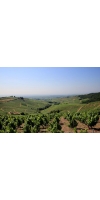
The oldest known ancestor of Dominique Piron, Etienne Bailly, was born around 1590 in Morgon, under the reign of King Henry III, in full wars of religion. 3 centuries of family Bailly and Piron followed one another, producing and selling wine from Gamay to Morgon.
Today, a new story is being written. With know-how, roots and terroirs, Dominique Piron has created a Domain among the leaders of the region.
At Maison Piron, there is no "recipe", but a multitude of possibilities and combinations, depending on the knowledge of the terroirs, the appellation, and the purpose. Grapes of quality that are ripe and representative of their soil, a severe sorting if necessary, a partial destemming depending on the maturity of the stalks, some "pigeages" and pumping over, lengths of fermentation depending on terroirs, appellations, and vintages. Few technical interventions. The major idea is "permanent adaptation to the elements". Piron wines are traditional. They express the soil from which they come from. It is a compromise between the search for the best tannins and the preservation of finesse, elegance and purity. A moderate maturation in barrels brings roundness without being overwhelming.
Starting with the Romans, wine growing has developed since the 3rd century. Dominique Piron’s oldest known ancestor was born in Morgon in 1590. Since then, there have been 14 generations of wine growers in the family. Morgon and Moulin à Vent wines have long been renowned among France’s finest wines.
Dominique Piron
1590 Oldest known ancestor Etienne Bailly, winemaker in Morgon
1950 Born in Côte du Py ; 14th generation in Morgon
1968 University of Dijon
1971 First vintage
1988 First grapes bought in Beaujolais
2003 Chenas with Lameloise
2016 President of the Interbeaujolais Bureau
Julien Revillon
1973 Born in Beaujolais
1997 Master of Wine Trade in Dijon
1998-2004 Burgundy, Bordeaux, Champagne
2005 Colombo in Rhône Valley
2013 Domaines Piron, Beaujolais
In a vineyard with difficult terrain− 30% steep slopes and a virtual patchwork of parcels, Dominique Piron is engaged in sustainable winegrowing. On winegrowing land filled with old broken-down granite and schist, the watchwords are natural balance and biodiversity.
For vinification, their goal is to create terroir wines, wines of character, that remain fruity, subtle and elegant.
Gamay is the heart and soul of Beaujolais crus.
A cross between the Pinot Noir and Gouais Blanc varieties, Gamay was originally imported from Croatia by the Huns in the 4th century. Gamay is a delicate variety and it is either excellent or nothing at all. At any rate, Gamay is a quite remarkable variety because it can either be enjoyed young for its fruitiness and elegance, or allowed to age, developing the structure and mineral qualities so appreciated by connoisseurs.
Morgon, the image of Dominique Piron.
Morgon wines are solid but never hard. They are racy and elegant. They always have a slight hint of black cherry (some would say kirsch, as the wine ages), and bright spicy notes. With their great structure, Morgon wines keep very well. Morgon, a sure value.
Eight other appellations, including Brouilly, Regnié, Fleurie, Chénas, Moulin à Vent, Saint Amour, Beaujolais rouge, rosé and white with the Chardonnay variety.
Domaines Piron, the specialist in Morgon.
A leading Beaujolais enterprise.
An international reputation with wines sold in 30 countries worldwide.
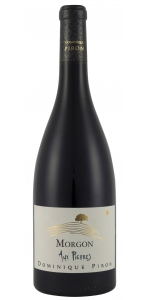
Dominique Piron Beaujolais Morgon Aux Pierres is made from 100% Gamay.
A mineral wine with fine tannins reflecting a perfume of concentrated dark fruits.
A small plot of vines of 85 ares acquired by Dominique Piron's grandfather in 1932. Registered on a place called "Aux Pierres", it is well named due to its blue stones, very typical of the Côte du Py. Year by year, the quality of the harvest has made it an emblematic plot of Piron's family. Elite of the domain, this special cuvee is produce only in case of exceptional vintage. It's a cuvee that can be kept for more than 10 years.
Review:
"This deep and powerful Morgon is just beginning to give its best. The spicy oak is there, but well integrated with the plum and blackberry fruit. Very good balance on the generous front palate, but at the back the richness makes a bold statement and the tannins just hold it in check. With a shade less ripeness this would be even more impressive. Drink or hold.
- James Suckling (April 2021), 92 pts
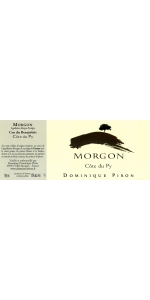
Dominique Piron Morgon Cote du Py is made from 100 percent Gamay.
The Morgon Cru is based in the heart of Northern Beaujolais. Côte du Py is the heart of Morgon, a little hill of very old blue stone rocks - the oldest soils of Beaujolais (around 430 millions years old), with a typical blue color.
Côte du Py has been known for centuries for being the best terroir of the village, producing long lived wines with strong structure and flavors.
Wines of the Côte du Py are very dark, profound and dense. Classic aromas of red berries, cherry, kirsh. Fruity, structured and mineral in the mouth with graphite flavors and spicy notes of black and white pepper. Wine can age up to 10 years.
Hand picked grapes are sorted manually and destemmed for 50 to 70%. Fermentation starts in concrete tanks and lasts for 18-25 days with remontages and pigeages. Then after pressurage starts the aging, for 2/3 in concrete tanks, and 1/3 in recent French oak barrels with batonages on fine lies only. After 10 month we do the blending, keeping only the best cuvees and best barrels, and do the bottling.
Pairs well with red meat like beef, duck and game (Hare, Dear, Wild Pork,…), cheses.
Dominique Piron Morgon Cote du Py is made from 100 percent Gamay.
The Morgon Cru is based in the heart of Northern Beaujolais. Côte du Py is the heart of Morgon, a little hill of very old blue stone rocks - the oldest soils of Beaujolais (around 430 millions years old), with a typical blue color.
Côte du Py has been known for centuries for being the best terroir of the village, producing long lived wines with strong structure and flavors.
Wines of the Côte du Py are very dark, profound and dense. Classic aromas of red berries, cherry, kirsh. Fruity, structured and mineral in the mouth with graphite flavors and spicy notes of black and white pepper. Wine can age up to 10 years.
Hand picked grapes are sorted manually and destemmed for 50 to 70%. Fermentation starts in concrete tanks and lasts for 18-25 days with remontages and pigeages. Then after pressurage starts the aging, for 2/3 in concrete tanks, and 1/3 in recent French oak barrels with batonages on fine lies only. After 10 month we do the blending, keeping only the best cuvees and best barrels, and do the bottling.
Pairs well with red meat like beef, duck and game (Hare, Dear, Wild Pork,…), cheses.
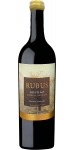
Rubus Special Edition Barossa Shiraz is made from 100 percent
The Rubus Project was created by Fran Kysela as a way to source & sell incredible wines at value prices. All wines in this international project are hand-selected by Fran Kysela. Rubus wines are fruit driven, true-to-type values that over deliver - a true representation of quality for the consumer at an excellent price.
Deep red with a slight purple hue on release. The wine has a rich mix of dark chocolate infused with coffee bean and black liquorice, then scents of tar, aniseed, raw (pure) soy and black olive on the nose. The palate is expansive, and yet balanced and finessed. An amalgam of dark berried flavors and textural sensations. The 100% new oak is completely absorbed, meshed with ripe tannins, completing a palate of impressive length and youthfulness.
Sourced from Thorn-Clarke’s St Kitts vineyard (Block 7) in the far north of the Barossa, the Rubus Reserve demonstrates both the strengths of the region and the unique characters of the vineyard.
A thin layer of topsoil over weathered marble, schist and shale mean the vines work hard to source water and nutrients. The result is naturally low yields concentrating the power and density of the fruit. Diurnal temperature variation is another important aspect of St. Kitts. Warm daytime temperatures are followed by cool nights with variations of up to 30°C (55°F) from the peak during the day into the cool night minimums.
Review:
“Earthy detail develops in this sleek and juicy shiraz, a tarry streak under fresh plum and bruised strawberry. The tannins have gravity and precision, their bracing intensity and concentration integrated into what panelist David Hawkins described as “a big, powerful wine with great liveliness.” While suited to aging, this is accessible now if you’re grilling meats to serve with it.”
- Wine & Spirits (February 2023), 94 pts
"Made by Thorn-Clarke for the US market, this has a rich and vivid nose with blueberry, violet, dark plum and subtle oak spice in play. The palate has a succulent feel with plenty of rich, open-knit blackberry and blueberry flavor. Smoothly delivered tannins carry long and even. Drink over the next decade."
- James Suckling (November 2021), 94 pts
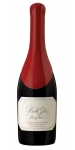
Belle Glos Clark and Telephone Vineyard Pinot Noir is made from 100 percent Pinot Noir.
The Clark & Telephone Vineyard was established in 1972 and planted with “own root” Martini clone vines. Located just 13 miles from the ocean and situated on a west-facing slope, this vineyard experiences weather patterns that pull from west to east to bring cool fog and coastal breezes inland until August when Santa Ana winds begin.
We harvested early in the morning so the fruit would arrive at the winery while the grapes were still cool to preserve their vineyard-fresh flavors. After destemming (but not crushing) the berries, we cold-soaked the must for 14 days to soften the skins and allow for ideal extraction. During fermentation in a combination of closed and open-top stainless steel fermenters, we used both punch-down and pump-over techniques to extract color and phenolics. We aged the wine in 100% French oak (60% new) for up to 12 months. After the wine underwent malolactic fermentation, we racked it twice before bottling.
Deep ruby red in color with lush aromas of ripe cherry, nutmeg, dark chocolate and holiday baking spices. Bold and complex flavors of black plum, crushed raspberry and blueberry pie linger on the palate. The texture is rich and lively, and leads into a warm and structured finish.