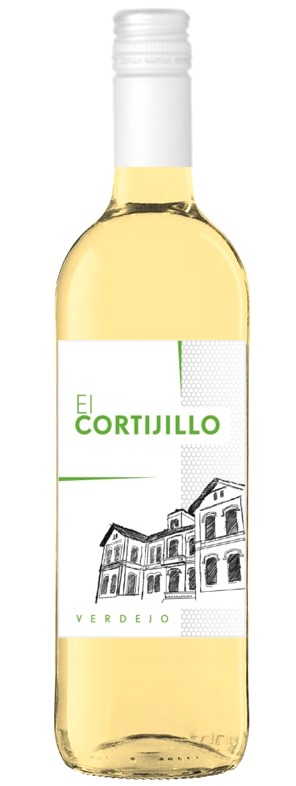
" We don't sell the wine without touching the vine "
| Country: | Spain |
| Region: | La Mancha |
| Winery: | El Cortijillo |
| Grape Type: | Verdejo |
| Vintage: | 2018 |
| Bottle Size: | 750 ml |

El Cortijillo Tempranillo La Mancha is made from 100% Tempranillo
Up front aromas of raspberry and cherry fruit, medium to light weight, Rhône wine in character, cherry fruit flavors, followed by bright acidity. Reminds of a mythical cross between a Pinot Noir and a Côtes-du-Rhône. Pleasant and fun, bistro red.
Made from 30 year old vine.
Delicious with Paella, hamburger or pasta. But also great with grilled vegetables. (bell pepper, eggplant, etc)
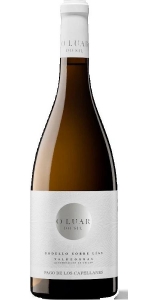
Pago de las Capellanes Blanco O Luar Do Sil Godello Sobre Lias is made from 100% Godello.
Giving voice to Godello vines, to the geology of granite and to the fullness of sensations. This is our vision and we achieve it with careful winemaking on lees, so that the wine’s own matter provides balance and floral complexity, so that it shapes a fine and vigorous structure, a stimulating delicacy.
The wine pays homage to its landscape, clean, fruity aromas that caress the mineral cold. Leading us along small paths among white flowers, Godello Sobre Lías reveals light, truth and life.
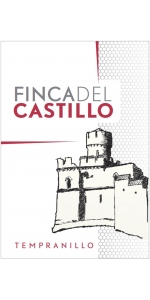
Finca del Castillo Tempranillo La Mancha is made from 30 year old vine Tempranillo (100%).
This pretty little red has a flavor reminiscent of good Cotes du Rhone. Medium bodied, flavorful; hints of raspberry and strawberry. Shows best with picnic fare and grilled meats. Perfect summer red.
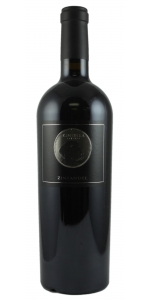
Kinsella Estates Spencer Zinfandel is made from 100 percent Zinfandel.
A complex amalgamation of tart blueberries, baked plums, warm earth, fresh black cherries, anise, pie crust, brown sugar and a slight note of sweet confectionary candy. On the palate, the wine is plush with great depth and an expansive roundness that seems to push outward with power. The complex flavor mirrors the nose, with a savory/spicy finish and a slightly sticky/resinous grip of the tannins.
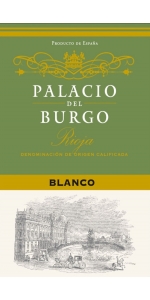
Palacio del Burgo Rioja Blanco is made from 100% Viura.
The wine shows a brilliant pale yellow color. The nose is elegant and very fruity, with straw and pineapple notes. The taste is intense, being extremely fruity with fresh balanced acidity.
Palacio del Burgo White Wine has been created to accompany all kinds of meals and be the perfect glass of wine to illuminate those memorable low light encounters. This wine is the product of the winemaker's efforts to highlight the fruit. The structure and mouth feel of the wine compliment and balance the fruit.
Enjoy it with white fish dishes and seafood.
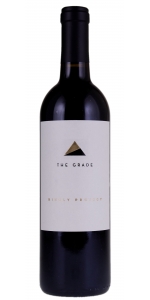
The Grade Cellar Kingly Project Cabernet Sauvignon is made from Napa Valley Cabernet Sauvignon.
"This is a noble expression of Cabernet Sauvignon" in full regalia, with decadent aromas and a mouthfeel viscous and sleek. "This vintage of the Kingly Project Cabernet Sauvignon enters the scene" -- Thomas Rivers Brown
Review:
The 2018 Cabernet Sauvignon Kingly Vineyard is endowed with tremendous richness and concentration. It emerges from the best spots within Block 5, which is a bit more protected from the elements. The 2018 is a bit closed today, but it has a lot of promise. Time in the glass brings out layers of inky dark fruit and the savory, minerally notes that are such signatures. This potent Calistoga Cabernet needs time to shine, but it is impressive today just the same.
-Vinous 96 Points
El Cortijillo Blanco La Mancha is made from 100% Verdejo
Pale straw-green, with greenish: very bright. Fine floral notes (acacia) and shades reminiscent of anise and fennel. Cheerful and palate pleasing bitter finish that drives its flavor.
The El Cortijillo Estate
El Cortijillo means the little farm in Spanish. The wine is made by Vinicola de Castilla in Manzanares (Ciudad Real) in an up to date, state of the art winemaking facility (30,000 sq meters/300,000 sq ft) with the capacity of producing 2 million liters and holding 8,000 barrels. Founded in 1976, it's a privately owned corporation (not a co-op). Since its inception, a DO La Mancha pioneer in fruit-driven young wines, barrel-aged reds and varietals. More than 600 international awards for their wines.
Production by type: 65% Red wine, 35% White and Sparkling.
Export sales represent 50% of the production. The winery exports to 22 countries.
Capacity is 20,000,000 liters, currently running at 12,000,000 liters of yearly production.
This Bodega likes to promote their Crianza wines.
The El Cortijillo Vineyards
The winery and the vineyards are all located in the "La Mancha" DO. Tempranillo is the primary grape varietals and it represents 70% of the total production.
They grow the following 5 red grape varietals:
· Tempranillo
· Cabernet Sauvignon
· Merlot
· Petit Verdot
· Syrah
They also grow the following 6 differents types of White grape varietals:
· Verdejo
· Airén
· Macabeo
· Sauvignon Blanc
· Moscato
· Chardonnay.
The wines are all produced with grapes they only grow themselves. They own 50 hectares, and they currently rent another 550 hectares (long term leasing contract).
Robert Mondavi Winery Napa Red Blend is made from 74% Cabernet Sauvignon, 13% Cabernet Franc, 9% Merlot, 4% Petit Verdot.
Robert Mondavi’s vision was to elevate Napa to the world stage. In celebration of his achievement, our Napa Tier wines are sourced from distinctive vineyards throughout the Napa Valley and truly emulate a classic Napa Valley style.
Nearly half of this year’s blend is sourced from the deep, well-drained soils of Oakville, which provides gorgeously dark, supple wines with fine tannins. Stags Leap District, Oak Knoll, Yountville, and Rutherford also find their place in the bottle, with the varying mesoclimates and soils of these vineyards integrating seamlessly into a 100% Napa Valley blend.
Review:
"Dominated by 80% Cabernet Sauvignon with smaller percentages of the other Bordeaux red grapes, this wine speaks of heritage and prestige. Broad, silky, and powerful, the graceful liquid is enhanced by dark chocolate, white pepper, black plum, violets, and sweet earth."
-Meridith May, Tasting Panel, January/February 2023 Pts. Tasting Panel
Bachelet Bertrand Maranges Rouge Premier Cru Clos Roussots is made from 100 percent Pinot Noir.
The Maranges appellation is the youngest of the Côte de Beaune family, making its debut in May 1989. It spans three villages: Dezize-lès-Maranges, Cheilly-les-Maranges and Sampigny-les-Maranges. Several hills and slopes make up this appellation, that are south/south-east-facing.
'Les Clos Roussots' is a Premier Cru vineyard in Cheilly-les-Maranges, producing wines with depth and structure.
The wine offers deep ruby color with purple highlights. Aromatic nose of dark berries, spice, and a mineral edge. The palate is full-bodied with firm yet silky tannins and a long finish.
Pairs well with roasted meats, game, and aged cheeses.