
" We don't sell the wine without touching the vine "
El Enemigo translates as the enemy. Nodding to the fact that at the end of any journey, most remember only one battle — the one fought within (the original enemy). This is the battle that defines us. The wines of El Enemigo are a tribute to those internal battles that make us who we are, brought to fruition by a winemaker, Alejandro Vigil, and a historian, Adrianna Catena who share a love of wine and reach back in time to capture the era when European immigrants first settled in Argentina. These settlers sought to make wines as fine, and finer, than those of their old homeland. By 1936, Malbec and Petit Verdot were the most widely planted fine varietals in Argentina, their blend considered the ultimate in refinement and aging potential.
Adrianna Catena is the daughter of Nicolás Catena. She has a Master’s Degree in Early Modern Iberian Atlantic history from the University of Oxford. Her dream is to continue the family legacy of winemaking while pursuing a passion for history and writing from a cottage surrounded by vineyards in the Argentine Andes.
El Enemigo is produced at BESA, located in the Vista Flores district in Tunuyán, Mendoza. The facility is named for the unique aspect of Mendoza’s high-altitude winemaking region nestled in the foothills of the Andes Mountains.
Alejandro Vigil is a soil expert, winemaker, and agronomist. He is the Chief Winemaker at Bodega Catena Zapata, the former head of the soil division at Argentina’s Wine Institute, and the former head of the soil division of INTA.
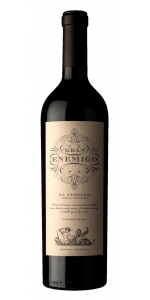
Enemigo El Enemigo Gran Enemigo is made from 100% Cabernet Franc.
In the spectrum of people who pay attention to detail, winemakers are often incredibly detail-oriented. This can sometimes spill over to become an internal battled, and, as Alejandro Vigil and Adrianna Catena state, "We are our own worst enemy." El Enemigo pays homage to this internal struggle.
The nose presents sweet aromas of black ripen fruits with hints of vanilla and chocolate, which appear after the oak ageing. The mouthfeel is sweet with structured, persistent tannins due to the natural acidity of this wine, leading into an excellent long finish.
Review:
The nose of the 2018 Gran Enemigo El Cepillo Single Vineyard, from a low-yielding and drier year, is full of curry, a note that was a constant across the three vintages I tasted together, but it tends to be stronger in low-yielding and dry years like this. It's also floral and comes through as aromatic and a little exotic, in a good way, with elegance, persistence and very pure flavors. It has fine-grained tannins, great acidity and balance. 7,200 bottles. All these single-vineyard bottlings mature in ancient 4,000-liter oak foudres for some 15 months.
-Wine Advocate 97 Points"Pretty and inviting on the nose with gorgeous aromas of floral violet, cassis and completed with a lifted, delicate liquorice note. The palate is graced with deep herb, pepper, crunchy red fruit and graceful, silky tannins."
-Decanter 97 Points
Stonestreet Estate Vineyards Rockfall Cabernet Sauvignon is made from Cabernet Sauvignon.
Sourced from one of our highest elevation vineyards, the 2017 Rockfall Vineyard Cabernet Sauvignon features a true wildness that expresses the rugged growing site 2,000ft above the fog line. Elegant aromas of blueberries, cassis, graphite and black tea with complex undercurrents of baking spices. This wine balances power with elegance through to its savory palate with a generous structure and ample tannins. The structure of this wine allows for many years of cellar aging to continue to bring out nuanced flavors and complexity.
Review:
The Rockfall Vineyard is between 2,000 and 2,200-feet in elevation, and the wine that originates there is powerful and concentrated in style, with robust red-fruit and mineral tones. Herbal and classic, it shows elegance and integrated oak and tannin within its context of intensity and structure. Enjoy best from 2027–2037. Virginie Boone
-Wine Enthusiast 96 Points
The 2024 Far Niente Winery Estate Bottled Chardonnay is a white wine from California known for its buttery and complex style, made from Chardonnay grapes grown in the Coombsville region. It features notes of citrus, melon, and pear, with a silky texture and a long, elegant finish that is complemented by hints of spice from oak aging.



