
" We don't sell the wine without touching the vine "
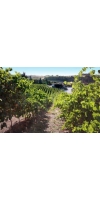
A wine region located in Italy, Emilia-Romagna is quite possibly the most developed and richest wine region in Europe. The fertile soil is fertile spans nearly the entire width of peninsula in Northern Italy. The wine region of Emilia-Romagna is situated between Marche and Tuscany to the south, and Veneto, Lombardy and Piedmont to the north.
The history of the viticulture goes back to the seventh century BC, which makes it one of the oldest wine regions in Italy. Introduced by the Etruscans and adopted by the Romans the Vitis labrusca were used for centuries, with Vitis vinifera being the most predominately grown grape today. Emilia-Romagna is famous for Lambrusco.
The significant geography of Emilia-Romagna us what creates the different terroirs in the region. The western part of the region consists of Apennine peaks and hills that make their way to the lower-lying plains just east of Modena, Parma, and Bologna. Beyond that lay the coastal plains of the Ferrara province, with a notable portion of land hitting just below sea level. Flowing east to west, the Po River marks the northern part of the rebion bordering the Adriatic Sea.
The wine production of Emilia-Romagna's wine production is divided almost identically between whites and reds, with the dominant vine varieties being Lambrusco, Barbera, Malvasia, Bonardo and Sangiovese.
-150x300.jpg "Lambrusco Amabile Bruscus San Valentino Red 2018")
Lambrusco Amabile Bruscus San Valentino Red is 100% Lambrusco from grapes grown in the province of Modena and Reggio Emilia.
Traditional vinification methods combined with modern technology to produce wines of guaranteed quality. After the grapes are pressed, they are transferred to fermentation tanks where the must is racked off in an average of 70 hours. The wine then completes its first rapid fermentation process and passes to the slower fermentation phase, during which time it is racked off several times to improve its clarity. The wine is placed in an autoclave at strictly controlled temperatures wherein it undergoes a second fermentation. This is known as the Charmat Method. The temperature is controlled for full development of the bouquet and for the lively and natural sparkle so characteristic of this wine.
Deep ruby red with violet reflections and a fine perlage.
Intense vinous bouquet with hints of ripe red fruits.
Lively, fresh, sweet and inviting with bright fruit and a delightful sparkle.
Excellent by itself or with desserts of dark chocolate, gorgonzola, cheesecakes.
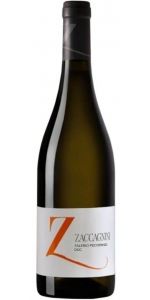
Zaccagnini Falerio Pecorino DOC 2024 is an italian white wine made from 100% Pecorino.
Straw yellow color, with golden to greenish reflections.
On the nose this wine is complex and intense, with floral, herbaceous and fruity notes.
Pairs well with any seafood, white meat and vegetables or soft cheese.
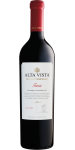
This vineyard is situated at over 3,000 feet in altitude in Valle de Uco, and the vines are over seventy years old. This light soil is sandy with some silt, is very permeable and has boulders and a broken layer of limestone at a depth of 2.5 feet. Traditional irrigation is fed by water from the Andes Mountains. Temis has the coldest climate of all Alta Vista’s terroirs. Nights are quite cool and days are warm and soft, with constant breezes that help to keep the vines and grapes healthy. The grapes have a slow, gradual cycle of ripeness that is balanced and ideal. Planted in 1942, the selection massale vines are characterized by small clusters with small, compact grapes.
Review:
There’s a touch of bark, grilled Mediterranean spice savoriness to the rich but fresh blackberries, salted black plums and graphite notes. Pretty saline and flavorful on the palate. The tannins are powerful yet fine-grained. A structured and characterful malbec from old vines in El Cepillo.
-James Suckling 94 Points
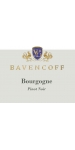
Bavencoff Bourgogne Pinot Noir is made from 100 percent Pinot Noir.
Color of medium intensity, purplish in its youth at present, changing to ruby then garnet, after several years in the bottle.
The nose offers intense aromas of cherries, kirsch and fresh strawberry. The palate is the perfectly balanced between round tannins and an elegant freshness. It is harmonious and medium-bodied with a silky and elegant texture and a delicious lingering finish.
Alcoholic fermentation in stainless tanks for 3 weeks. Malolactic fermentation : 80% in stainless tank and 20% in one year old casks (Allier).Manual harvest.
Produced from 100% Pinot Noir planted on clay and limestone soils.
Grilled or boiled red meats, roasts, mild game, soft cheeses like Camembert and Brie.



