
" We don't sell the wine without touching the vine "
| Country: | Spain |
| Region: | Rias Baixas |
| Winery: | Fefinanes (Palacio de) |
| Grape Type: | Albarino |
| Vintage: | 1583 |
| Bottle Size: | 1500 ml |
Fefinanes Albarino de 1583 Albarino is made from 100% Albarino.
Aged for 5 months in oak barrels (a combination of fine-grained American and French Allier barrels).
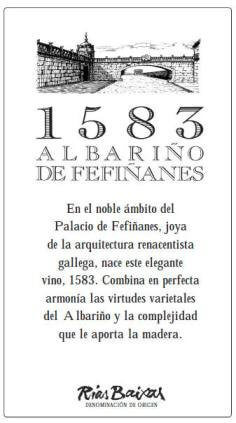
1583 is the birth date of the Viscount of Fefinanes, Gonzalo Sarmiento Valladares, builder of the Castle of Fefinanes, in Cambados.
They wanted to pay tribute to their ancestor with this wine that managed to reach a perfect harmony between the fruitiness of the Albarino grape and the complexity brought by the oak aging.
Lovely straw yellow color, clean and bright. The nose is reminiscent of ripe crystallized fruit and spices. The palate is elegant, round and well balanced, with a silky texture.
Excellent with shellfish, grilled or stewed fish, white meats, poultry.
Fefinanes Albarino de 1583 Albarino is made from 100% Albarino.
Aged for 5 months in oak barrels (a combination of fine-grained American and French Allier barrels).
1583 is the birth date of the Viscount of Fefinanes, Gonzalo Sarmiento Valladares, builder of the Castle of Fefinanes, in Cambados.
They wanted to pay tribute to their ancestor with this wine that managed to reach a perfect harmony between the fruitiness of the Albarino grape and the complexity brought by the oak aging.
Lovely straw yellow color, clean and bright. The nose is reminiscent of ripe crystallized fruit and spices. The palate is elegant, round and well balanced, with a silky texture.
Excellent with shellfish, grilled or stewed fish, white meats, poultry.
Fefinanes Albarino de 1583 Albarino is made from 100% Albarino.
Aged for 5 months in oak barrels (a combination of fine-grained American and French Allier barrels).
1583 is the birth date of the Viscount of Fefinanes, Gonzalo Sarmiento Valladares, builder of the Castle of Fefinanes, in Cambados.
They wanted to pay tribute to their ancestor with this wine that managed to reach a perfect harmony between the fruitiness of the Albarino grape and the complexity brought by the oak aging.
Lovely straw yellow color, clean and bright. The nose is reminiscent of ripe crystallized fruit and spices. The palate is elegant, round and well balanced, with a silky texture.
Excellent with shellfish, grilled or stewed fish, white meats, poultry.
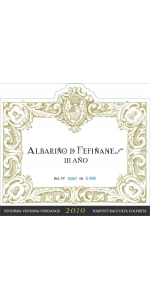
Palacio de Fefinanes Albarino "III Ano" is made from 100 percent Albarino
The III Año shows all the expressiveness of the Albariño grape, with full nose of mature fruit and a mineral character. Complex and meaty with firm structure in the mouth, it promises a splendid evolution which will favor a long life for this elegant wine with personality.
Aged for 3 years on the lees in stainless steel tanks.
Wine is aged for a total of 6 months: 4 months in French and American Oak barrels. No new oak, only 1, 2 and 3 year old barriques. During these 4 months, wine is aged on the fine lees with frequent Batonnage (stirring of the lees) in order to get the most expressive notes from the Albarino varietal. Then, it is transfered into a stainless steel tank, which allows the oak aromas to be assimilated and integrated.
1583 is the birth date of the Viscount of Fefinanes, Gonzalo Sarmiento Valladares, builder of the Castle of Fefinanes, in Cambados. They wanted to pay tribute to their ancestor with this wine that managed to reach a perfect harmony between the fruitiness of the Albarino grape and the complexity brought by the oak aging.
Excellent with shellfish, grilled or stewed fish, white meats, poultry
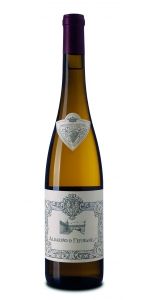
Fefinanes Albarino de Albarino is 100 percent Albarino
Fresh fruit aromas of apricot and peach slices with notes of lemon and green apple. Pretty notes of honey and wet nutmeg, and the mouth is round, clean, and pleasant with baked apple, honey, and lemon.
This is a classic Albariño which is good young, but actually improves over two to three years and remains quite drinkable for up to five years. Owner Juan Gil comments that the wine really starts to come into its own in June/July, and he actually prefers it 18 or more months after it's made. A Fefiñanes "vertical" of three or four vintages can provide some most interesting surprises.
Fefinanes Albarino de Albarino is 100 percent Albarino
Fresh fruit aromas of apricot and peach slices with notes of lemon and green apple. Pretty notes of honey and wet nutmeg, and the mouth is round, clean, and pleasant with baked apple, honey, and lemon.
This is a classic Albariño which is good young, but actually improves over two to three years and remains quite drinkable for up to five years. Owner Juan Gil comments that the wine really starts to come into its own in June/July, and he actually prefers it 18 or more months after it's made. A Fefiñanes "vertical" of three or four vintages can provide some most interesting surprises.
Fefinanes Albarino de 1583 Albarino is made from 100% Albarino.
Aged for 5 months in oak barrels (a combination of fine-grained American and French Allier barrels).
1583 is the birth date of the Viscount of Fefinanes, Gonzalo Sarmiento Valladares, builder of the Castle of Fefinanes, in Cambados.
They wanted to pay tribute to their ancestor with this wine that managed to reach a perfect harmony between the fruitiness of the Albarino grape and the complexity brought by the oak aging.
Lovely straw yellow color, clean and bright. The nose is reminiscent of ripe crystallized fruit and spices. The palate is elegant, round and well balanced, with a silky texture.
Excellent with shellfish, grilled or stewed fish, white meats, poultry.
The Palacio de Fefinanes Estate
Founded in 1904, Palacio de Fefinanes is housed inside a spectacular baronial palace which sits on the lovely main square of coastal Cambados. The facility was built in 1647 by vicount of Fefiñanes Gonzalo Sarmiento Valladares (1583-1659) and is currently owned by Juan Gil Careaga. Palacio de Fefiñanes was the first producer to bottle wine under the D.O. Rías Baixas denomination. The label design dates from 1928 and shows an engraving of the Fefiñanes Palace.
The winemaker is Cristina Mantilla.
"Clean, mineral-laced Albariños from a producer housed in a baronial palace."
- Anthony Dias Blue's pocket guide to wine 2006
The Palacio de Fefinanes Vineyards
Produced in the Rias Baixas region, where the vineyards are quite windy due to the proximity of the Atlantic Ocean. It also provides acidity and freshness to the wine. The winery has only a token acreage, and buys its Albariño grapes from producers under long-term contract and with technical assistance from the winery's enologist. They make two 100% Albariño wines: Albariño de Fefiñanes, a young traditional style Rías Baixas white (30,000 bottles/year); and 1583 Albariño de Fefiñanes, aged six months in 600 liter sherry butts (4,000 bottles/year - annual production: 100,000 liters). Year after year, local critics rate Albariño de Fefiñanes as one of the best.
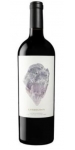
Alejandro Bulgheroni Lithology Cabernet Sauvignon is made from 100 percent Cabernet Sauvignon.
We only produced a scant 50 cases of this wine this year, far too small an amount considering how great it turned out. There’s that typical saturated to the rim deep purple color, with intense cassis, herb, and milk chocolate, bricks and forest floor, black plum pudding aromas. In the mouth, there’s a great balance, with notable oak and vanilla notes intertwined with dense black fruits. It’s an opulent and plush style, yet finishes with sweet grippy tannins.
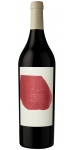
Paul Hobbs ALH Cabernet Sauvignon is made from 90% Cabernet Sauvignon, 7% Merlot, 3% Cabernet Franc.
This wine presents the eye with a magenta hue and a vibrant ruby red rim. The nose offers up an inviting bouquet of ripe red cherry, damp earth, and nuances of fresh violet. The palate is elegantly structured, with harmonious layers of fine-grained tannins and refreshing acidity. As the wine unfolds it reveals a sublime blend of black raspberry, wild thyme and dark cacao, while savory herbal notes add a further intriguing dimensional note. The finish is long and graceful with a touch of graphite—a hallmark of southern Coombsville's cool climate and rocky volcanic soils.
Review:
A cool, composed wine with gorgeous flavors and silky texture, showing blueberries, dark chocolate, pencil shavings, minerals, violets and pomegranate. Full-bodied yet light on its feet, this feels lacy and airy despite lots of depth and concentration.
James Suckling 96 Points



