
" We don't sell the wine without touching the vine "
Fleur de Miraval was born out of the shared passion and convictions of three families united around one simple idea… that of creating the rosé champagne they had dreamed of, but that did not yet exist.
So they sat down together to experiment, to blind taste, to debate with and challenge each other. Eventually they reached a natural consensus, giving shape to their definition of a unique rosé champagne. The Fleur de Miraval Champagne House came into being when the Pitt and Perrin families, representing the worlds of the Arts and Wine, joined forces with a family who had had their roots in Champagne for many generations: the Péters.
Together, they chose to give free rein to their creativity, with no holds barred, no limits, entertaining instead all possibilities, to make a stunning rosé the likes of which no-one had ever seen before.
Perrin Family:
Château de Beaucastel, birthplace of the Perrin family success story and a jewel of French viticulture in the terroir of the Châteauneuf-du-Pape appellation, was founded in 1549.
Over five generations the Perrin family have managed its vineyards, guided by their shared values: absolute respect for the earth and the terroir and the pursuit of truth, balance and elegance.
Today, their mastery of the saignée technique to bring out the energy and purity of fine rosé is their passion – and something for which they are renowned worldwide.
Peters Family:
The Péters family has been established at Mesnil-sur-Oger for six generations and making champagne from their own grapes since 1919.
Rodolphe Péters is now at the head of 50 acres, 40 of which are Grand Cru mainly around Mesnil-sur-Oger in the Côte des Blancs.
His champagnes of worldwide renown delight all lovers of great Chardonnays.
Pitt Family:
Brad Pitt explains: “For me, champagne conjures up feelings of celebration, quality, prestige and luxury. But rosé champagne is still relatively unknown. I wanted us to try to create the defining brand of rosé champagne, focusing all our efforts on just this one color. The result is spectacular and I’m very proud of it.”
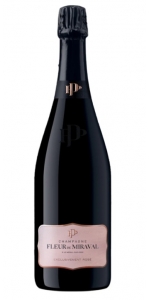
ER2 is characterized by the intensity that is the signature of the grand crus of the Côte des Blancs and by the complexity of its perpetual reserve. A delicate, slightly coppery, pink.
The wine is aged on lees in the dark in our cellars for three years.
Chardonnay 75% – Pinot Noir 25%. This edition has been made from a base of the 2017 vintage. Disgorged in April 2021. Dosage: 4.5 G/L.
This second edition made up of 75% of Chardonnays of different ages benefits from the richness of the 2012 vintage and the perfect balance of the 2014 vintage that occupy a large place in the heart of an intensified perpetual reserve.
The remaining 25% of young Pinot Noirs from the terroir of Vertus energize the delicate mineral, saline and iodized expression of the Chardonnay and heighten the wine’s aromatic expression.
Review:
"This graceful rosé Champagne layers a rich base of roasted almond, toast and smoke accents with nectarine and pureed raspberry fruit, oyster shell, blood orange zest and chalk notes. Fresh and fluid on the palate, with a creamy mousse consisting of fine, pinprick-sized bubbles. Long, rich finish. Chardonnay and Pinot Noir. Drink now through 2030." Wine Spectator 95 Points
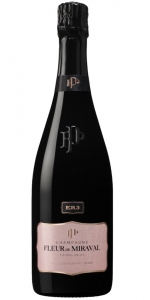
ER3 is the very essence of balance and delicacy – the intensity of Côte des Blancs grand crus and the complexity of its perpetual reserve are combined with immense finesse.
ER3 reveals an extremely delicate, blush pink hue. The nose is superb, with a beautifully complex and delicate aromatic palette that offers up aromas of white flowers, redcurrant, and wild strawberry, before unveiling slightly smoky notes. With a particularly fine and ethereal effervescence, the mouth is fresh and vibrant with superb white fruit and citrus evolving into more complex notes of candied fruit, soft spices, and toasted almonds. The finish is incredibly persistent, underpinned by a magnificent chalky minerality.
The wine is aged on lees in the dark in our cellars for three years.
Chardonnay 75% – Pinot Noir 25% / This edition has been made from a base of the 2018 vintage. / Disgorged in May 2022. / Dosage: 4.5 G/L.
Review:
"This graceful rosé Champagne layers a rich base of roasted almond, toast and smoke accents with nectarine and pureed raspberry fruit, oyster shell, blood orange zest and chalk notes. Fresh and fluid on the palate, with a creamy mousse consisting of fine, pinprick-sized bubbles. Long, rich finish. Chardonnay and Pinot Noir. Drink now through 2030. 750 cases made."
-Wine Spectator 95 Points
Henschke Henry's Seven Red Blend is made from 72% Shiraz, 13% Grenache, 12% Mataro, 3% Viognier.
20th ANNIVERSARY VINTAGE
Deep ruby with violet hues. Lifted raspberry, red currant, mulberry and Satsuma plum, with floral notes of violets, lavender, crushed flowering herbs and anise, pepper and mace spice. A rich and intense palate of well defined, concentrated red fruits; red currant, cut plum and spicy wild berries, give way to crunchy mid palate, firm-edged velvety tannins and excellent length.
Review:
Aromas of black fruit and green tobacco with bark and wet-earth undertones, following through to a medium to full body, creamy tannins and a juicy, savory finish. Intense and balanced.
-James Suckling 95 Points
Xavier Vignon Almutia Clair-Obscur Châteauneuf-du-Pape Blanc is 40% Grenache Noir, 25% Mouvedre, 10% Roussane, 10% Grenache gris, 10% Grenache blanc & 5% Syrah.
Worn in the Middle Ages, an Aumuce was a purple cap that served as a cloak for clergymen as a way of concealing their whiteness, just as the black skin of the grape conceals its white juices. In Latin, this cape is called en Almutia. A blend of black and white grape varieties.
Almutia is the definition of vivacity, liveliness, expressed through the pulp of mainly black grape varieties. The multi-vintage approach has been choosen to bring complexity to the wine.
Pale yellow and translucent with tangy notes of apple and pear on the nose. The palate is lively and ample, revealing aromas of citrus and honeysuckle.
The grapes were harvested early, in mid-August, i.e. one month before the harvest intended for the production of red wines.
The grapes are then destemmed and crushed, then placed in vats for draining followed by settling for severals days to sediment the pigments.
Fermentation in stainless steel tanks
No ageing in wood and no stirring of the lees to maintain the perfect level of acidity.
Pairs best with scallop or lobter risotto, soft cheeses & truffle.



