
" We don't sell the wine without touching the vine "
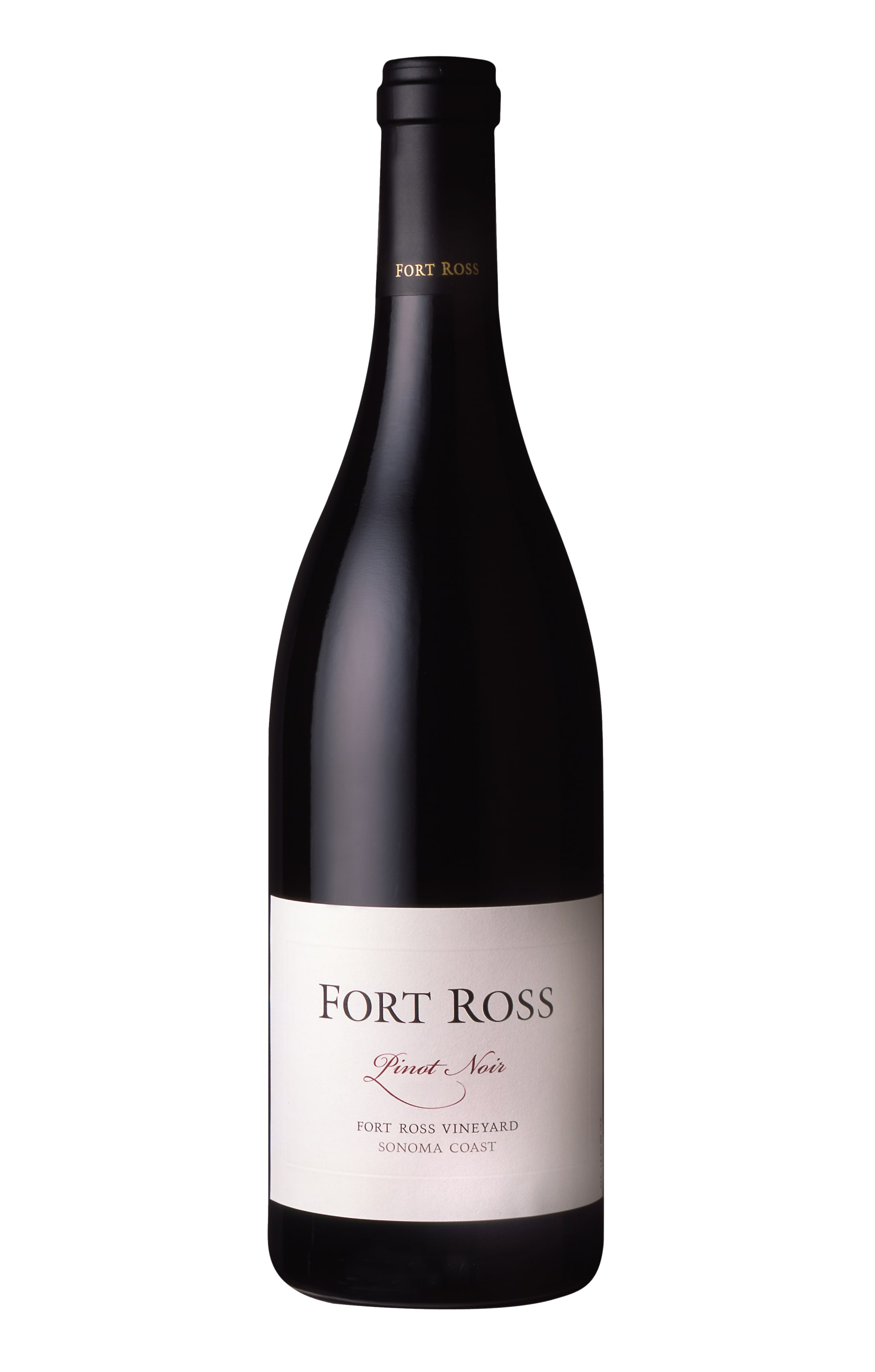
| Country: | United States |
| Regions: | California California (Sonoma County) |
| Winery: | Fort Ross |
| Grape Type: | Pinot Noir |
| Organic: | Yes |
| Vintage: | 2017 |
| Bottle Size: | 750 ml |
Our DuMOL Estate Vineyard is our original high-density vine planting from 2004. It’s organically farmed without irrigation – these vines work hard each season. We make a strict selection for this bottling, one of our flagship wines, so that only three acres of its nine total comprise this bottling; the balance forms the core of Highland Divide. This is the best of the best. The high vine density and exclusively Calera Selection produce a wine with a significant level of both tannin and acidity. This structure is buffered by a deep core of fruit extract, the product of the ripe grape skins themselves, and the essence of the wine. Each vintage can age for many years, and it gradually deepens into a woodsy, truffley, and enveloping wine with grand scale complexity while never relinquishing its inherent brightness.
The wine’s aromas and flavors are akin to black cherry, boysenberry, hibiscus, anise, moss, and juniper. The palate is simultaneously bright yet dark, with mineral drive, violet floral lift, and bay laurel freshness. Tannins and acidity fuse to lengthen these flavors, and the wine finishes with dried herbs and orange zest lift. Great aging potential. Drink between 2025 and 2034 and decant for an hour in its youth to hasten the development.
Review:
Medium to deep ruby-purple in color, the 2022 Pinot Noir Estate Vineyard comes barreling out with bold notes of fresh blackberries and black cherries opening out to suggestions of anise, garrigue, and lilacs. The medium-bodied palate reveals impactful black berry flavors with wonderfully spicy accents supported by grainy tannins and great tension, finishing long with a minerally lift. This is an all Calera vineyard. (LPB)
-The Wine Independent 97 Points
The nose here is brilliantly red fruited, with layer upon layer of subtle spice, bright floral notes, herbs, and stone. Its not all poetry and pageantry, though, and the first impression of the wine was simply, “oh that’s goooood.” A fair assessment, and sometimes that it all one requires. Further tastes show fine tannin throughout, a juicy, vibrant mouthfeel that is very likeable, and deft, long-developing layers of fruit that reveal themselves severally.
Patton Valley's flagship wine, The Estate is the most comprehensive expression of their vineyard site, and the wine that truly defines their place in a given vintage.
Review:
"Glistening red. Vibrant red fruit, floral and spice scents show very good clarity that picks up subtle hints of succulent herbs and smoky minerals with air. Juicy and energetic in the mouth, the 2017 offers gently sweet cherry raspberry and rose pastille flavors and a touch of spicecake. Smooth, well-integrated tannins make a late appearance on a long, floral-tinged finish that shows no rough edges.
- Josh Raynolds" - Antonio Galloni's Vinous (August 2020), 92 pts
The Marjorie vineyard sits in the center of the Cristom Estate with a gentle slope from 480 feet to 600 feet over some of the most consistent volcanic soils on the entire Estate. A little bit unique to itself, most of the Vineyard is planted over a moderately deep volcanic soil with some very rocky areas in the north and southeast corners. The vineyard wants to produce elegant wines of finesse with bright red fruit and succulent acidity.
Review:
Dark ruby, the 2021 Pinot Noir Marjorie Vineyard takes on a darker mineral profile with forward aromas of wet stone, black raspberry preserve, and layers of baking spices and crushed purple flowers. Moving to the palate, the wine is medium-framed, with ripe tannins, an angular texture, fresh acidity, and a spicy finish. This certainly needs more time and will gain complexity with time in cellar.
-Jeb Dunnuck 95 Points
Darkly alluring, the 2021 Pinot Noir Marjorie Vineyard is perfumed with dusty violets and lavender, giving way to dried black cherries. Luxuriously round, with juicy acidity, this cascades across the palate with crisp raspberry fruits as rosy inner florals amass toward the close. Hints of blood orange pucker the cheeks as the 2021 finishes staining and long with long lingering chalky mineral tones.
-Vinous 95 Points
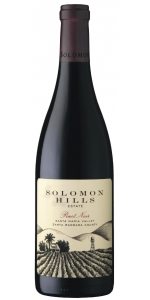
Solomon Hills Estate Pinot Noir is made from 100 percent Pinot Noir.
Solomon Hills Pinot Noir is always distinctive and singular in its ability to harness the Coastal influence of Santa Maria Valley. Earth tones alongside briar bush and blueberries contrast aromas of forest floor and fired red clay. The noticeable savory elements of cracked black pepper and teriyaki beef nicely balance ripe cherries and blackberries on the palate.
Review:
I loved the bouquet of the 2021 Pinot Noir Solomon Hills, a light ruby-hued effort with perfumed darker cherry, mulberry, leafy herb, and smoked earth nuances. It's medium-bodied, has a layered, seamless texture, integrated tannins, and a gorgeous finish. It's absolutely brilliant. Enjoy bottles over the coming decade or more.
-Jeb Dunnuck 96 Points
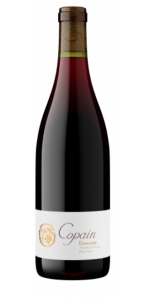
Copain Edmeades Pinot Noir is made from 100 percent Pinot Noir.
This wine embodies everything you love about Anderson Valley Pinot; flavors of strawberry, Rainier cherries with hints of spice.
VINTAGE NOTES:
The 2017 vintage began with significant rainfall prior to bloom, refilling the state’s reservoirs and ending California’s five-year drought. We saw a sudden spike in temperatures just prior to harvest, leading fruit to ripen quicker than anticipated. This sped up our harvest schedule, but due to our team’s vigilance, the fruit was still able to be picked at optimal ripeness. Temperatures then cooled back down by mid-September, allowing the remaining vineyards to complete ripening at an ideal pace. The rest of harvest was finished as planned, with yields coming in at their typical levels.
The historical Edmeades Vineyard sits along the western side of the small town of Philo in what’s known as the “deep-end” of Anderson Valley. Flanked by the Navarro River, there is a diversity of sandstone soils throughout the vineyard. The Edmeades vineyard is planted with vines facing southwest, allowing this vineyard to receive warmer afternoon weather. This helps to balance the prolonged cool fog influence this vineyard sees throughout the growing season.
Aromas: Raspberry, dried cherries, pennyroyal, orange zest.
Palate: Medium weight palate with soft tannins. Notes of cherry, pomegranate, and clove with light delicate cola notes on the finish.
Review:
The first vintage for this cuvée from Ryan, the 2017 Pinot Noir Edmeades Vineyard comes from mid-valley and was brought up in 27% new French oak. It's a beautiful wine with blueberry and wild strawberry fruits as well as complex spice, dried flowers, and some loamy soil notes. Medium-bodied, seamless, and silky on the palate, it's a lovely, layered wine that shines for its texture and balanced.
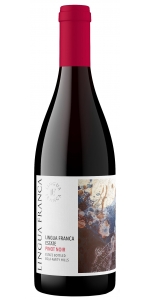
Lingua Franca The Plow Pinot Noir is made from 100 percent Pinot Noir.
A large proportion of fruit from some of our finest sites, 48% coming from Blocks 1 - 3, planted with PN777 clone. Another 44% is sourced from two blocks of the bold PN 115. The elegant and nuanced PN777 Pinot Noir grown on Gelderman-Jory soils creates the top notes of mineral, rose petal and savory elements while the PN115 provides the fruit, body and weight of the wine.
Loin of lamb, Filet Mignon, veal chop, veal scallopini, pasta with Bolognese sauce, charcuterie, hard cheeses, hamburger, Viennese boiled beef (Tafelspitz), Wienerschnitzel, Kalbi, Bulgogi. Teriyaki, Vietnamese shaking beef, Chinese broccoli beef or Feast of the Immortals? Experimentation is welcome!
Review:
The 2022 Pinot Noir Estate saw 20% whole clusters and 20% new oak. A representation of the vineyard, the blend can vary from year to year. The 2022 is a ripe ruby color and opens to notes of spice and ripe raspberries. Medium-bodied, it’s a great appellation wine, with ripe tannins and a great finish. Drink 2024-2036. A few thousand cases were produced.
-Jeb Dunnuck 94 Points
Fort Ross Vineyard Estate Pinot Noir is made from 100 percent Pinot Noir.
Bright aromas of raspberry and bing cherry meld with earthy spice and a hint of licorice. Cherry, raspberry and red plum greet the palate followed by savory touches. Refined, supple tannins and the Fort Ross Vineyard signature minerality are revealed through the layered, mouthwatering finish. With its vibrant acidity and extraordinary balance this classic coastal Pinot Noir will elegantly evolve.
Review:
Lots of redcurrants, mulled cherries, and spicy, dried herb-like notes emerge from the 2017 Pinot Noir Fort Ross Vineyard, a medium-bodied, elegant Pinot Noir with ripe tannins and terrific overall balance. It shows the more savory, concentrated style of the vintage and is an outstanding, complex 2017 to enjoy over the coming 7-8 years or so.
-Jeb Dunnuck 92 Points
Scented of cranberries and red and black cherries with nuances of charcuterie, dusty earth and woodsmoke, the 2017 Pinot Noir Estate Fort Ross Vineyard has a light to medium-bodied palate with a good interplay of fruit, earth and meaty nuance. It has a grainy, fresh frame and finishes long.
-Wine Advocate 92 Points
Suave, with a delicate mix of vibrant cherry, currant and huckleberry flavors that are backed by crunchy acidity. Shows minerally richness on the fine-textured finish. Drink now through 2025. 627 cases made.
-Wine Spectator 93 Points
In 1988 owners Lester and Linda Schwartz purchased a section of virgin forest and grasslands in the high coastal ridges of the Sonoma coast overlooking the Pacific Ocean. Told by academics that it was too risky plant a vineyard on these cool, foggy coastal ridges so close to the Ocean they were undeterred. After experimenting for several years with assorted clones, rootstocks and trellising systems they concluded that the property had the potential to grow exceptional Pinot Noir and Chardonnay. In 1994, after carefully sourcing exceptional heritage clones whose attributes they believed would reveal the terroir and varietal typicity, they began to prepare and plant the first vineyard blocks. Lester and Linda spent many days personally digging plant holes and planting vines as they meticulously laid out their 53-acre vineyard with roads, underground drainage and irrigation systems while developing and building a reservoir and designing a custom trellis system.
In tribute to their South African heritage, they sourced Pinotage bud wood from the original founding blocks in that country, and became the first private growers to import grapevine cuttings through the Foundation Plant Services that operates alongside the U.C. Davis School of Viticulture and Enology.
Today, Lester and Linda work closely with Jeff Pisoni, who came to Fort Ross as winemaker in 2009. They regularly walk the vineyard, making viticultural decisions and ultimately determining when best to harvest each block. Lester and Linda continue to oversee the day-to-day vineyard operations. Having worked tirelessly to carve this spectacular vineyard out of an untamed, extreme location, they have proved the academics wrong.
Vineyard:
Clinging to the steep ridgetops of the Sonoma Coast at the edge of the Pacific Ocean, the high elevation and diverse terroir of Fort Ross Vineyard set it apart in the world of fine wine. A mile from the ocean the vineyard is the closest to the Pacific Ocean in California. The 32 small, mountain-vineyard blocks traverse 53 acres that rise in elevation from 1,200 to 1,700 feet above sea level. These former grasslands spread north/south over a mountainous 975-acre area, an equation that leaves over 95% of the property’s native forest untouched. Varying in size from one-half to two acres, each small block has its own particular terroir and is planted with rootstocks, varietals, and clones, or field selections, best suited to reveal the terroir, varietal typicity, and clonal attributes. During the growing season the temperature ranges between 55 and 85 degrees. In response, Fort Ross Vineyard is planted to three varieties – Pinot Noir, Chardonnay and Pinotage. These heritage clones and field selections produce low yields with small bunches and berries that deliver wines of great fruit character and vibrancy.
The climatic and topographical conditions of Fort Ross Vineyard make farming a continuing challenge that requires a vine-by-vine approach with most work done by hand. Vineyard crews use narrow-gauge crawler tractors on some hillside areas, and even then, there are some blocks that are so steep they can only be reached on foot. Yields are naturally low, but in years when the berry set is higher, fruit is dropped to reach proper ripeness and balance. Sustainable growing practices ensure the health of the vineyard, including cover crops, integrated pest management, and erosion control measures. As the grapes ripen, netting is installed over each row to protect the fruit from birds that flock from the adjacent forests.
With its marine sedimentary soils, long, bright sunny days, gentle sea breezes, fog, and cool maritime-climate, these steep coastal ridges have become one of the most highly prized cool-climate growing regions in California. The vineyard benefits from the cool air and ocean breezes, is above the fog line during most of the daylight hours, and get enough sun and warmth to bring grapes to complete physiological ripeness.
In January 2012, Fort Ross Vineyard became part of the new, rigorously defined Fort Ross-Seaview American Viticultural Area (AVA) which established the region as separate and distinct from all other wine growing regions in California.
Winemaking:
Philosophy: The approach to winemaking at Fort Ross is gentle and minimalistic, as the aim is to produce exceptional wines that truly express the terroir and topography of this unique coastal vineyard. The vision is to create wines that reveal their fruit with elegant structure, balance and finesse.
Harvest to Barrel: Winemaker, Jeff Pisoni, and Owners Lester and Linda work closely together, repeatedly walking the vineyard, carefully tasting the grapes from each block. During the cool morning hours, each block is hand-picked into small trays, sometimes with several passes through a single block to ensure ideal fruit ripeness and acid balance. Grapes are hand sorted, destemmed, cold soaked for several days then fermented in simple open top fermenters and manually punched down. Shortly after pressing, the wines are aged in a combination of new and neutral French oak barrels. All of the wines – Pinot Noir, Chardonnay and Pinotage – are fermented using native yeast, which lengthens the process and changes its dynamic. It takes longer to initiate fermentation with native yeast, and the progression is slower, but according to winemaker Jeff Pisoni, “the results are more distinctive and complex.”
Art of Blending: Throughout winemaking, clones and blocks are kept separate to maintain their distinct flavor profiles and structural components. Blending trials determine how to combine the different clones into distinct wines that best reflect their component flavor profiles. Bottling the wines unfined and unfiltered is another minimalistic choice that helps to preserve vineyard expression and the wines’ pristine fruit, as well as contribute beautiful texture. Pisoni acknowledges that it’s not always the easiest road but he insists that the less intervention the better. “You have to be really cautious and careful, just as with native fermentation. It takes constant observation, both through tasting and under the microscope, but bottling without filtering results in a purer, fresher expression of the vineyard.”
M. Chapoutier Hermitage Monier de la Sizeranne is made from 100 percent Shiraz.
In Hermitage, Syrah achieves its noblest expression and La Sizeranne has become a benchmark wine for the region. M. Chapoutier's roots in the Rhône date back to 1808, when the family first settled in Tain l'Hermitage. The family purchased a winery owned by Comte Monier de la Sizeranne and over time, acquired a number of excellent vineyards, including some of the oldest in France. M. Chapoutier was the first winery to put Braille on a wine label in 1996. Maurice Monier de la Sizeranne was the owner of the plot of the Hermitage, la Sizeranne until he was blinded in a hunting accident and unable to take care of the land, choosing instead to sell to the Chapoutier family. Following his accident, Maurice became the inventor of the first version of abbreviated Braille, and Chapoutier included Braille on the wine labels as a tribute to his work.
he grapes ferment in open wooden vats after total destemming. Two daily treadings ensure a good extraction of the tannins. Maturation takes place in oak casks, of which one third is new. Several rackings permit a slow and natural clarification process. The wine is unfiltered and unfined.
Review:
I was blown away by the 2019 Hermitage Monier De La Sizeranne, and if there’s a best buy out there in 2019 Hermitage, this might be it. Blackberries, black raspberries, spice box, new leather, and bouquet garni all dominate the bouquet, and it’s full-bodied, with a round, layered mouthfeel, beautiful tannins, and a rare mix of richness and elegance. It’s a stunning wine that’s guaranteed to put a smile on your face over the coming 2+ decades. Hats off to the team at Chapoutier!
-Jeb Dunnuck 97 Points
Dark plum in color with abundant aromas of dark chocolate, black cherry, and sun-ripened blackberry with a hint of cedar. Layered flavors of blackberry and raspberry pie filling, accompanied by notes of cinnamon, chocolate, and nutmeg play on the palate. Smooth and focused with refined tannins and a medium finish.



