
" We don't sell the wine without touching the vine "
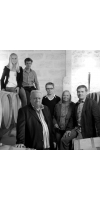
The SCEA des Vignobles Marcel Petit was created in 1986 by Mr. Marcel Petit with the acquisition of Château Pillebois from the Castillon Côtes-de-Bordeaux appellation.
In 1988, the vineyard grew with Châteaux Franc Lartigue and Grande Rouchonne, located in the Saint-Emilion appellation. It was that same year that the Vignobles Marcel Petit joined the Vignerons Indépendants de France.
In 1997, Mr. Marcel Petit retired, thus entrusting the vineyards to his daughter Elisabeth and his son-in-law Jean-Pierre Toxé. The vineyard then reached 22 hectares of vines, divided between Saint-Emilion and Castillon.
Then in 2019, the plots in AOC Castillon as well as the Château Pillebois were sold. The vineyard now covers 9.5 hectares of vines in AOC Saint-Emilion.
For almost 30 years now, the vineyard has continued to evolve and improve. Our know-how, passed down for two generations, is the result of collaborations with the best wine specialists, allowing us to make the most of our terroir.The continuous improvement of the techniques and the quality of our wines has always been carried out with the greatest respect for the wine traditions instilled by our ancestors.
For several years we have been committed to more environmentally friendly work.
More recently, in 2011, we joined the SME association (Environmental Management System), certification to ISO 14001 standards specializing in the good management of the environment and the biodiversity of our operations. It imposes a reduction in phytosanitary and weedkiller products, a recovery of all waste, as well as a zero impact of our cellar effluents and residues of phytosanitary products.
In 2013 we obtained the HVE 3 certification (High Environmental Value level 3). This certification, gradual from 1 to 3, attests to our commitment to respect and balance the environment and biodiversity on our farms.
Our wines are then bottled by us directly at the property. Our barrels are renewed at 30% each year in order to obtain subtle and delicate aromas in each of our vintages.
The technically well-equipped cellar allows us to monitor the vinification and aging of our wines with precision.
All the harvests of our Saint-Emilion grands crus are hand-sorted in order to keep only the best fruits in vats.
The vinifications are carried out by Jean-Pierre Toxé in close collaboration with the oenology laboratory Oenoteam and Stéphane Toutoundji, whose reputation is well established.
No products found
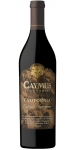
I feel this wine expresses the greatness of California and its hidden pockets where Cabernet can excel. The cold Pacific Ocean running the entire length of the state presents maritime influences – and with each small distance eastward the climate warms. Stony soils, south facing slopes and moderately warm conditions are the keys to producing dark, rich and good tasting Cabernet.
A small release from Caymus Vineyards, this wine is a California-appellation Cabernet Sauvignon – supple, dark and rich, bearing the signature hallmarks of Caymus. It is sourced from sites throughout the state which feature climatic conditions, soils and topography that are ideally suited to Cabernet. This project stems from excitement over California's diverse vineyard land, often in lesser-known areas, with the potential to produce exceptional Cabernet.
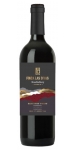
Finca las Divas Cabernet Franc Reserve Gualtallary is 100% Cabernet Franc.
Named in honor of different divas because of the detailed attention to each varietal and plot, consequence of the terroir, origin of the Andes slopes.
Deep violet red in color. Its aromas are intense and concentrated, with hints of black and red fruits with smoky touches obtained during its oak aging.
In the mouth it is persistent, full of juicy yet firm tannins and balanced acidity. It is frank and expressive, modern and of great personality.
Pairs with red meat, pasta with tomato sauce and hard cheeses.



