
" We don't sell the wine without touching the vine "
| BUY MORE! SAVE MORE! | ||||||||||||||||||||
|
| Country: | United States |
| Regions: | California California (Napa) |
| Winery: | Freemark Abbey |
| Grape Type: | Cabernet Sauvignon |
| Vintage: | 2018 |
| Bottle Size: | 750 ml |
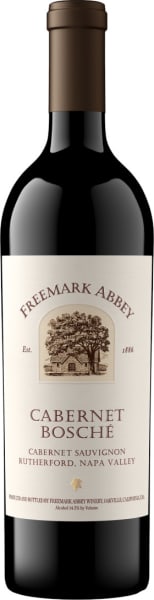
Freemark Abbey Bosche Cabernet Sauvignon is made from 93% Cabernet Sauvignon, 7% Merlot.
The nose exhibits aromas of black cherry, mocha, cassis and forest floor. The palate is bright yet creamy and filled with notes of forest fruits, leather, baking spices and soft vanilla. The textures are vibrant and integrated making this wine lovely now with the ability to age for decades in the cellar.
Review:
Blended with 7% Merlot from the famous site, along the benchlands of the Mayacamas, this is a juicy, delicious and sophisticated wine, with impressive, complementary bolts of freshness and intensity that are fully in sync. Notes of gravel, black cherry, currant and herb ride along a structured and generous palate of memorable greatness. Enjoy best from 2028–2038. Cellar Selection
- Wine Enthusiast 98 Points
For over half a century, America’s premier grape-growing state has enjoyed a reputation more or less interchangeable with Cabernet Sauvignon’s. It’s the king of red wine grapes in California—and also in France—for a reason: the amazing complexity that skilled winemakers are able to coax out of it when grown in optimum locations. They know all about this in the great, old chateaux of Bordeaux, as well as at many younger, but equally prestigious, wineries in Napa Valley. The world’s best Cabernet grapes are grown in these respective regions.
On the short list of the latter sits Freemark Abbey, a St. Helena winery founded in 1886, that hasn’t been “young” for a long time. With nearly 50 vintages’ worth of Napa Valley Cabernet Sauvignon vintages tucked away in its library, Freemark’s signature portfolio of wines represents one of the most fully realized Cabernet programs in America. They're produced by a winery whose contemporary rise to prominence has, from the 1960s to present, coincided with that of California’s fine wine industry.
Today, Freemark Abbey is many things to many people: a team of some of the most respected winemakers working in Napa Valley; a historic 1886 winery and pristine estate, with an enthusiastic hospitality program that highlights both; a collection of source vineyards up and down Napa Valley, representing several of California’s most distinctive terroirs; an extensive—and unparalleled—wine library that stretches back decades; and a winery that, because of its long history and international reputation, is one of Napa Valley’s true ambassador brands.
Freemark Abbey’s newly appointed Winemaker Emeritus, Ted Edwards, has overseen much of its ascendance. As he moves into a self-described “co-pilot” role to new Winemaker Kristy Melton, he can reflect on the changes he’s witnessed at this iconic St. Helena winery over 40 years.
Moving forward, Ted’s job will be to offer advice and counsel to Kristy and her winemaking team, to continue in a leading viticultural role, and to carry on as Freemark’s most experienced proponent. The two Rutherford vineyards, Bosché and Sycamore, are, like Ted himself, closely linked to the winery’s identity. This won’t change. What will change is Ted’s ability to focus his energy on the growing protocols at this pair of vineyards, which are closer to his winemaker’s heart than any others in Napa Valley.
The transition from Ted to Kristy in 2020 is just another step in the evolution of this extraordinary wine estate. There are bookends to the story, however, at least up to the present day: a pioneering, unstoppable woman founded the property 135 year ago, and today an equally unique and determined woman is taking charge.

Freemark Abbey Bosche Cabernet Sauvignon is made from 93% Cabernet Sauvignon, 7% Merlot.
Nestled in the heart of the Rutherford Bench, the Bosché Vineyard has the ideal terroir for growing elegant and balanced Cabernet. The 2019 vintage opens with aromas of chocolate covered cherry, blueberry, graphite, and forest floor. The palate is rich and supple with notes of forest fruit compote, cigar box, mocha, and carob. The tannins are already silky and integrated which means it drinks wonderfully now and will age gracefully for decades. .
Review:
From a valley floor site and a blend of 90% Cabernet Sauvignon and 10% Merlot, the 2019 Cabernet Sauvignon Bosche offers a great bouquet of both red and black fruits as well as notes of herbes de Provence, loamy earth, and spicy oak. Brought up in two-thirds new French oak, it’s medium to full-bodied, has ultra-fine tannins, and beautiful overall balance. A brilliant 2019, it will evolve for 20+ year
Jeb Dunnuck 96 Points

Freemark Abbey 'Sycamore' Cabernet Sauvignon is made from 95% Cabernet Sauvignon, 4% Petit Verdot, 1% Cabernet Franc.
Located on the southern end of the Rutherford Bench, Sycamore Vineyard’s proximity to the Mayacamas Mountains provides the perfect climate for growing a rich, textured Cabernet. The wine is intense in aromatic complexity, reminiscent of blackberry, pomegranate syrup, black tea, and forest floor. The palate is rich and textured with flavors of forest fruits, dark chocolate, bay leaf, and warm oak spices. The ‘Rutherford dust’ is evident in the tannin structure, giving it textures that are bold but integrated, making it lovely to drink now with the capability to age in the cellar for decades.
Primary Vineyard: Sycamore Vineyard—Rutherford (100%): Small 24-acre vineyard located about 1.2 miles south of Bosche, right up against the Mayacamas Range, this vineyard has a rich clay loam. Sycamore Vineyard produces small berries reminiscent of mountain fruit berries, with intense extract of color and flavor. The color is very dark early in the fermentation, with flavors of black currant and black berry with a forest floor complexity.
Review:
Even better, the 2019 Cabernet Sauvignon Sycamore Vineyard is jaw-dropping stuff and does everything right. More structured and tannic compared to the Bosche, it has loads of red and black fruits as well as sandalwood, camphor, bay leaf, and bouquet garni-like aromas and flavors. Full-bodied, deep, layered, and concentrated, yet still with this wonderful sense of elegance, it needs 3-5 years of bottle age and will evolve for 20-25 years as well.
-Jeb Dunnuck 97 Points

Freemark Abbey Sycamore Cabernet Sauvignon is made from
Wine Profile: Opaque dark ruby describes the color of this Rutherford wine. Black currant and Boysenberry notes dominate the aroma, with dark chocolate truffle, cocoa powder, Worcestershire sauce, cremini mushrooms and forest floor adding to the complexity. The oak adds the ideal amount of complexity with aromatic cedar, cinnamon and clove. The wine has great depth of black fruit flavor, with a strong expression of sweet black cherry. This full-bodied cabernet sauvignon has resolved tannins yet firm structure, with good acidity. Lovely long finish!
Primary Vineyard: Sycamore Vineyard—Rutherford (100%): Small 24-acre vineyard located about 1.2 miles south of Bosche, right up against the Mayacamas Range, this vineyard has a rich clay loam. Sycamore Vineyard produces small berries reminiscent of mountain fruit berries, with intense extract of color and flavor. The color is very dark early in the fermentation, with flavors of black currant and black berry with a forest floor complexity.
Review:
From a vineyard closer to the Mayacamas Mountains and first made in 1980, the 2016 Cabernet Sauvignon Sycamore Vineyards checks in as 88% Cabernet Sauvignon, 7% Merlot, and the rest Petit Verdot and Cabernet Franc. It spent 27 months in 66% new French. It offers more black fruits, earth, tobacco, cedar, and gravelly minerality as well as a touch more burly, masculine style on the palate. Nevertheless, it's still beautifully balanced, has considerable elegance, and a great finish.
-Jeb Dunnuck 95 Points
Deep garnet-purple colored, the 2016 Cabernet Sauvignon Sycamore Vineyards gives up powerful crème de cassis, dark chocolate-covered cherries, mulberries and baked plums scents with hints of lavender, camphor, pencil shavings and dusty soil. Medium to full-bodied, the palate is packed with rich, black fruits plus a beautiful perfumed undercurrent, framed by finely grained tannins and lovely freshness, finishing with a mineral lift. 1,989 cases were made.
-Wine Advocate 95 Points
Herbal, with characteristics of peppercorn, cedar and pencil shavings, this beautiful wine is also dusty and mineral-driven, with demure flavors of red and black currant. Full bodied and well structured, it shows an underlying softness that should continue to soften in the cellar. Enjoy best from 2026–2031.
-Wine Enthusiast 95 Points
The nose opens with aromas of blackberry, blueberry, black current and boysenberry. The fruit elements are complimented with notes of forest floor, cigar box, dark chocolate and espresso. The wine is rich and balanced and French oak barrels add the ideal amount of complexity with notes of baking spice and warm vanilla. This is a full-bodied wine with integrated tannins that give it a long, lingering finish. Stunning.
Primary Vineyard: Sycamore Vineyard—Rutherford (100%): Small 24-acre vineyard located about 1.2 miles south of Bosche, right up against the Mayacamas Range, this vineyard has a rich clay loam. Sycamore Vineyard produces small berries reminiscent of mountain fruit berries, with intense extract of color and flavor. The color is very dark early in the fermentation, with flavors of black currant and black berry with a forest floor complexity.
Review:
Mint, spearmint, dark-berry and blueberry aromas. Leaves and sage, too. Full-bodied and firm with fantastic depth. Cool fruit with menthol and mint. Spice. Refreshing. Firm tannins. Fantastic 2017. Drink or hold.
-James Suckling 97 Points

Alejandro Bulgheroni Lithology Beckstoffer Las Piedras Cabernet Sauvignon is made from 100 percent Cabernet Sauvignon.
From a St. Helena vineyard planted by early Napa settler Edward Bale more than 150 years ago, and later serving as the estate vineyard for the area’s first winery built by Henry Pellet in 1860, the Las Piedras site always gives us our prettiest wine. When placed next to Dr. Crane and To-Kalon wines, the Las Piedras show a certain elegance, with a very graceful entry and finely detailed complexity. We produce it with at least 75% new French oak, so there is a floral, spicy, and vanilla accent to the intense red and black fruits, cassis, and black cherry liqueur. What distinguishes this bottling is the beautifully fine tannins, delicate texture, and stunning purity. (Less than 100 cases made.)
Fermentation 70% Oak, 24% Concrete, 6% Puncheon
Review:
"The 2018 Cabernet Sauvignon Lithology Beckstoffer Las Piedras Vineyard comes from a world-class site outside of St. Helena and is all Cabernet that spent 20 months in 80% new oak. It offers a touch more red fruit as well ample cassis, spring flowers, loamy earth, and spice-like aromas and flavors. It has a wonderful sense of minerality, ultra-fine tannins, a dense, layered texture, and incredibly purity of fruit. It’s another just about off the charts release from this estate."
- Jeb Dunnuck 98 Points

Avennia Red Willow Cabernet Sauvignon is made from 100% Cabernet Sauvignon.
The Red Willow Cabernet is a true blockbuster.
Coming from one specific block of 30 year old vines at this iconic vineyard, then strictly barrel selected, this is the essence of powerful, old vine Washington Cabernet. After all of our efforts promoting the idea of the Bordeaux blend, it would take a pretty compelling argument to suspend that idea and make a 100% varietal Cabernet. In 2016 Red Willow provided us with just that. Each time we tasted it in the barrel, the belief grew that this was something special. Something we can't make every year. In the end we were won over, and decided to make a limited amount of this wine. But don't be fooled, as this too is a blend and a selection. Each year as we are tasting the grapes as harvest approaches, we notice that the vines near the bottom of this long, steep west-facing slope, are a little different. The vines at the bottom are in a little richer soil, and get a little more water, so we pick them separately, sometimes even a week or ten days apart, and keep them separate in barrel.
This wine is all from the top of the vineyard, with its lower yield and poorer soils giving more concentration and interest. Then further, nearly every combination of new and used French oak barrels were trialed to find the best blend. It's not enough just to use the four best barrels, but to trial each combination to see how they complement each other. For a wine with this much mass, 100% new French oak was used for the first time at Avennia. It is a wine that needs a little cellaring to start, but should last a very long time.
Review:
The flagship Cabernet, the 2018 Cabernet Sauvignon Red Willow Vineyard is all varietal, from old vines in a great vineyard in Yakima Valley, that spent 20 months in 80% new French oak. It reveals a deep purple hue as well as a backward, brooding nose of smoked blackcurrants, tobacco, scorched earth, and violets. It has beautiful richness yet takes plenty of coaxing to open up. On the palate, it's medium to full-bodied and has a nicely textured, balanced mouthfeel, plenty of tannins, and outstanding length. It's mostly potential at this point and is going to benefit from at least 4-5 years of bottle age, but my money is on it having 20+ years of prime drinking.
-Jeb Dunnuck 96 Points

Ayni Malbec Paraje Altamira is made from 100 percent Malbec.
Ayni is the Quechua term for the principle of reciprocity, practiced for centuries by the Andean people - "in order to receive, you first have to give." Chakana's renowned Paraje Altamira vineyard, which sits 3,300 feet above sea level, bears the name Ayni & is the source of the Ayni wines.
Deep ruby-red in color with violet hints. Complex and intense bouquet, featuring blackberries, cherries and plums, with delicate floral notes and spices. Balanced and fresh; full-bodied with good length of spices.
Pairs well with grilled meats and stews.
Review:
"Chakana is an organic and biodynamic producer in Mendoza, that harvests from a vineyard in Paraje Altamira to produce this terroir-focused, minimal intervention Malbec. Aged in a mixture of casks and barrels for 12 months, this is a pure, energetic red in which fresh red fruit aromas combine with spice, herbs and mineral notes. In the mouth, it’s fluid with lively acidity and firm, chalky tannins. A potent, long-lasting wine. Drinking Window: 2023 - 2030"
- Decanter Magazine, 94 pts

Bachelet Bertrand Santenay Blanc is made from 100 percent Chardonnay.
The Santenay Blanc comes from a parcel that is 1.2 hectares in size (3 acres) in the village called 'En Charron', at around 300 meters above sea level, with excellent sunshine and thin limestone soil, guaranteeing great aromatic finesse.
The wine shows a beautiful golden color, a fresh and slightly roasted nose combining lemon and lime aromas with a hint of vanilla. On the palate, almond and toasted hazelnut flavors, along with notes of white flowers and vanilla nuances.



