" We don't sell the wine without touching the vine "
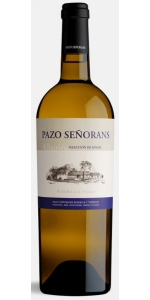
Pazo de Senorans Seleccion de Anada Albarino is made from 100 percent Albarino.
Straw yellow with greenish tints, vivid and brilliant. High intensity and very expressive. Profusion of aromas with traces of mineral. Great volume and ample body leaving a lasting impression from beginning to end.
Reviews:
The 2015 Albariño Selección de Añada is nothing short of phenomenal. For some reason, I hadn't tasted the young 2015 Albariño at the time it was released. It comes from the Los Bancales vineyard planted some 50 years ago and fermented with indigenous yeasts but without malolactic fermentation. It has a bright, almost fluorescent color and a complex, subtle and nuanced, elegant and expressive nose, with notes of sea shells and sea breeze, grass and white flowers. It's very clean, and the palate shows great balance and even feels a bit young. It has remarkable acidity and freshness (seven grams of tartaric acid) with good ripeness and 13% alcohol. This matured in tank with lees for over 30 months and was bottled in June 2024. It feels more serious and less exotic than earlier vintages. 18,000 bottles produced. This is the finest vintage that I can remember. Bravo!
-Wine Advocate 97 Points
Tech:
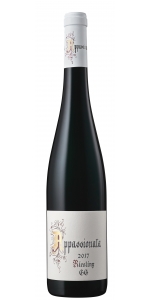
Inspired by the historical winemaking techniques of Erni Loosen’s great-grandfather, the Appassionata Riesling GG is made in the same way as the Dr. Loosen Grosses Gewächs (“Great Growth”) Rieslings he produces in Germany. The GG designation indicates a dry-style wine from a vineyard of special distinction — in this case, the old-vine Medici vineyard, planted in 1976. We farm this exceptional site, which is just a few miles east on the Chehalem Mountain ridge.
The fruit for this wine was harvested from old Rieslng vines (planted in 1976) in the Medici Vineyard, which is also in the Chehalem Mountains AVA, just a few miles from the winery. We lease this vineyard and have been farming it organically since 2015. The wine was fermented in a 3,000-liter German oak cask, and rests on the full lees for 12 months before bottling. The extended lees contact allows the wine to clarify and find its own harmonious balance naturally.
Production notes:
Whole-cluster pressing; natural fermentation in a neutral 3,000-liter oak cask; matured on the full lees for 12 months; no bâtonnage.
Review:
If you prefer a thinking person's wine you'll run out of superlatives to describe this Riesling from Dr Loosen's Oregon project with J Christopher Wines. From a personal favourite, the old vines of the Medici Vineyard, the winemaking shows serious patience and determination. Fermented in a 3,000-liter, neutral oak German Fuder cask. It rests on the full lees for two years and is then held in bottle for three to five years before release. Aged, savoury and delicious. Aromas are savoury and saline. Lanolin, dandelion, seafoam, and beeswax with hints of fresh herbs and dried lemon peel. The palate is brilliant, savoury and bright and complex. Energetic flavours of wet slate, savoury bee pollen, white tea and lanolin notes. The finish offers crushed stone vibrancy.
-Decanter 93 Points
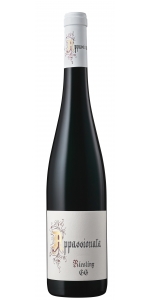
Inspired by the historical winemaking techniques of Erni Loosen’s great-grandfather, the Appassionata Riesling GG is made in the same way as the Dr. Loosen Grosses Gewächs (“Great Growth”) Rieslings he produces in Germany. The GG designation indicates a dry-style wine from a vineyard of special distinction — in this case, the old-vine Medici vineyard, planted in 1976. We farm this exceptional site, which is just a few miles east on the Chehalem Mountain ridge.
The fruit for this wine was harvested from old Rieslng vines (planted in 1976) in the Medici Vineyard, which is also in the Chehalem Mountains AVA, just a few miles from the winery. We lease this vineyard and have been farming it organically since 2015. The wine was fermented in a 3,000-liter German oak cask, and rests on the full lees for 12 months before bottling. The extended lees contact allows the wine to clarify and find its own harmonious balance naturally.
Production notes:
Whole-cluster pressing; natural fermentation in a neutral 3,000-liter oak cask; matured on the full lees for 12 months; no bâtonnage.
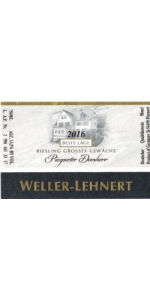
Weller-Lehnert Piesporter Domherr Grosses Gewachs Riesling is made from 100 percent Riesling.
Made in accordance with the stringent production criteria of the classification of the Bernkasteler Ring, wines with the designation “Grosses Gewächs Bernkasteler Ring” represent the premium line of the association’s dry wines. These Grand Crus can only come from the best sites of the steep slopes and are distinguished by their exceptional aging potential. To be awarded the status of “Grosses Gewächs”, selective hand-harvesting, a restriction of yields to 50 hl/ha and the passing of a stringent sensory examination by a highly qualified professional panel are required.
Piesporter Domherr is the ancient and original Piesporter Goldtröpfchen. It lies in the heart of Piesporter Goldtröpfchen right by the Mosel River. It consists of 4 hectares that are south-southeast facing.
The locatio on the river creates a mirror effect, offering optimum conditions for the production of outstanding mineral wine with fine, fruity elegance. Because of its prolonged vegetation period, Riesling (frequently referred to as the “queen of white varieties”) is often capable of expressing the characteristics of its terroir like no other.
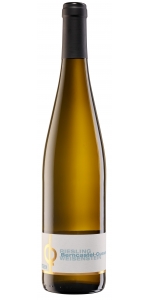
Bastgen Berncastel-Cueser Weisenstein Riesling Spatlese Trocken is made from 100 percent Riesling.
Bright, clean, fresh and zesty. Grapefruit like flavors. Fruity aromas and a nice minerality, typical of the Riesling grape grown on blue slate soil. Round, rich and a very long finish. The grapes for this wine are vigorously selected. Botrytis is not tolerated. At harvest the grapes are fully ripened, have a golden color, and a soft tartness. After a long spontaneous fermentation in a traditional 1000L barrel, the wine just reaches the dry stage. This gives the wine a creamy structure that interplays with ripe yellow and exotic fruit aromas.
They meticulously tend 4.5 ha (11.11 acres) of which 80% is Riesling. The soil is made of slate. Their vineyards are located in Kesten and Brauneberg, on a steep terrace, and planted to 50-year old vines. Fortunately for Bastgen, they own part of the famous Brauneberger Juffer Sonnenuhr. The vines produce very small, ripe berries that are very tasty.
Bastgen Berncastel-Cueser Weisenstein Riesling Spatlese Trocken is made from 100 percent Riesling.
Bright, clean, fresh and zesty. Grapefruit like flavors. Fruity aromas and a nice minerality, typical of the Riesling grape grown on blue slate soil. Round, rich and a very long finish. The grapes for this wine are vigorously selected. Botrytis is not tolerated. At harvest the grapes are fully ripened, have a golden color, and a soft tartness. After a long spontaneous fermentation in a traditional 1000L barrel, the wine just reaches the dry stage. This gives the wine a creamy structure that interplays with ripe yellow and exotic fruit aromas.
They meticulously tend 4.5 ha (11.11 acres) of which 80% is Riesling. The soil is made of slate. Their vineyards are located in Kesten and Brauneberg, on a steep terrace, and planted to 50-year old vines. Fortunately for Bastgen, they own part of the famous Brauneberger Juffer Sonnenuhr. The vines produce very small, ripe berries that are very tasty.
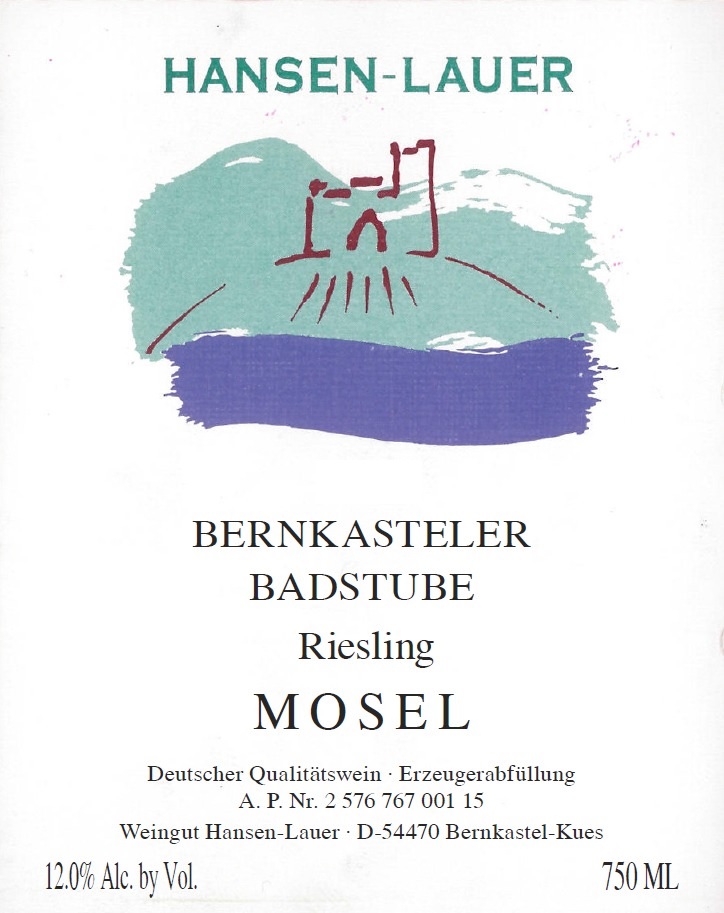
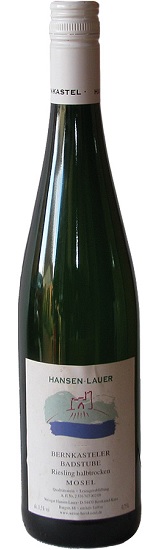
Hansen Lauer Bernkasteler Badstube Riesling is a nice Mosel-Riesling with a lot of minerality and a hint of stewed apple, cantalope and dried orange flavors. The finish is long and clean, which make it very easy to drink.
The Hahn Estate
The Hahn family has been in the wine business since 1650 and moved to Kobern, the present location, in 1892 to start a small winery. Konrad Hahn took over the operation in 1991, when his father retired, and works now with his Colorado-born wife Laurel Kerns-Hahn. The winery is recognized as one of the top estates in the region. The high quality of the wines is continuously confirmed by awards and medals received in regional and national as well as international competitions.
The Hahn Vineyard
The vineyards are located in Michelsberg, which is near the town of Piesport (Mosel Valley). In this most northern part, the Mosel valley is very narrow and the vineyards very steep. The warm micro climate and the use of terraces along the south facing slopes allows the vines to grow to full ripeness despite the northern location. The use of machinery is impossible and all work including harvesting is done by hand. The grapes for this wine were grown in slate soil, which is typical for the Mosel area and provides a unique minerality. The harmonious climate, warm summers and mild winters promote a long growing season providing fine fruit with balancing acidity and low alcohol.
A warm, but by far not as hot summer as 2003, continued into a beautiful sunny autumn. This allowed a perfect ripening of the grapes in 2005 vintage. Especially the always late ripening Riesling grapes achieved exceptional quality with must-weights similar to 2003 but with higher acidity levels and mineral concentration similar to 2004.
We view the 2005 vintage as the best vintage in our estate in years even though it is following several great vintages such as 2001, 2002 and 2003. We are very excited about this great vintage
Masseto 2020 is a wine that has embraced all the key traits of the vintage. It displays excellent concentration both in terms of colour and bouquet. They remain persistent and vivid in the glass without subsiding over time. The potency of this wine returns on the palate with beautiful length and balsamic flavours. The integrity of the tannin reveals the ageing potential typical of Masseto.
Review:
Intense and full on the nose, fragrant with ripe black fruit, floral aspects and soft spicing. Round and full on the palate, it's rich and muscular yet tight and neatly coiled with a liquorice, graphite, pepper, cinnamon and clove tang that gives this immediate but enjoyable spice. Feels well worked, juicy with high acidity that lifts the palate and gives freshness and brightness alongside really quite mouthwatering strawberry and raspberry fruit with such captivating dried floral and bitter orange rind aspects. Tannins are super fine and so well integrated yet this maintains a grip and hold from the very beginning through to a long and sustained finish. Nuanced and complex, still packing a punch in terms of power, but this feels sophisticated, suave, purposeful and controlled. Not elegant, this is more of a caged animal with it's full potential yet to be unveiled, but it is classy. A truly delicious wine with so much purity and sense of place. Malolactic fermentation in 100% new barroques, with each batch kept separate for the first 12 months of ageing before being blended and returned to barriques for another year, totaling 24 months. The wine was then aged for a further 12 months in bottle before being released.
-Decanter 100 Points
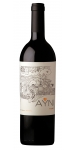
Ayni Malbec Paraje Altamira is made from 100 percent Malbec.
Ayni is the Quechua term for the principle of reciprocity, practiced for centuries by the Andean people - "in order to receive, you first have to give." Chakana's renowned Paraje Altamira vineyard, which sits 3,300 feet above sea level, bears the name Ayni & is the source of the Ayni wines.
Deep ruby-red in color with violet hints. Complex and intense bouquet, featuring blackberries, cherries and plums, with delicate floral notes and spices. Balanced and fresh; full-bodied with good length of spices.
Pairs well with grilled meats and stews.
Review:
"Chakana is an organic and biodynamic producer in Mendoza, that harvests from a vineyard in Paraje Altamira to produce this terroir-focused, minimal intervention Malbec. Aged in a mixture of casks and barrels for 12 months, this is a pure, energetic red in which fresh red fruit aromas combine with spice, herbs and mineral notes. In the mouth, it’s fluid with lively acidity and firm, chalky tannins. A potent, long-lasting wine. Drinking Window: 2023 - 2030"
- Decanter Magazine, 94 pts