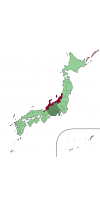
Hokuriki is a coastal area in Japan that divides into four prefectures or regions -- Toyama, Ishikawa, Niigata and Fukui Prefectures. Hokuriku lies along the Sea of Japan. It is famous for its hot springs, thanks to the Hakusan volcano in the region. Hokuriku has moist conditions. Summer brings a lot of clear skies and warm, sunny days while winter provides a lot of snowfalls. Long cold winters and mountainous terrains in Hokuriku takes pride allow its production of fine sake in great variety.
Plenty of fine sakes, such as the Ginban Banshu, Komedakeno, Denshin Rin, Ginkobai and Hanagaki Junmai among many more are commonly found in Hokuriku. Sakes produced in Hokuriku are known for rich flavors, distinct acidity, spices and refreshing aromas, making this region one of the most popular places to visit when it comes to sake.
No products found
Domaine Jean Grivot Nuits-Saint-Georges Premier Cru Aux Boudots is made from 100 percent Pinot Noir.
Domaine Jean Grivot is among the great names in Burgundian wine. Étienne Grivot and his wife Marielle took over from Étienne’s father Jean Grivot in 1987. The vineyards are densely planted and farmed organically “sans certification” while the aim in the cellar is for balance and clear expression of terroir.
Jean Grivot’s 38.3 acres spread across 22 appellations with vineyards in the communes of Vosne-Romanée, Vougeot, Chambolle-Musigny, and Nuits-Saint-Georges. Besides the three grand crus, there are 8 premier crus including the much lauded Les Beaux Monts and Suchots in Vosne-Romanée. The grapes are completely de-stemmed and fermentation is spontaneous.
Nuits-Saint-Georges Aux Boudots 1er cru lies in the “Zone Vosnoise” or northern end of Nuits-Saint-Georges just below Les Damodes. It borders Vosne-Romanée Aux Malconsorts 1er just to its north. Its position slightly lower on the slope with deep soil full of pebbles results in a richer and fuller wine.
The grapes are destemmed and maceration à froid usually lasts just a day or two. The alcoholic fermentation is spontaneous and malolactic fermentation occurs in barrel. Depending on the vintage, the proportion of new oak is around 30-60% for the premier crus.
The wine shows aromas and flavors of red berries, herbs, and purple flowers. The palate is rich with ripe fruit and medium weight with bright acidity and fine tannins. Aging in 30-60% new Burgundian pièce brings notes of vanilla, toast, and baking spices.
Red Burgundy might be the world’s most flexible food wine. The wine’s high acidity, medium body, medium alcohol, and low tannins make it very food-friendly. Red Burgundy, with its earthy and sometimes gamey character, is a classic partner to roasted game birds, grilled duck breast, and dishes that feature mushrooms, black truffles, or are rich in umami.
Reviews:
‘The 2020 Nuits Saint-Georges Aux Boudots Ter Cru has the best aromatics among Grivat Nuits Saint-Georges with very well defined red berry fruit, briary and lignt sous-bois aromas. The palate is medium-badied with fine-grain tannins, slightly savory on the entry, fresh and saline on the finish. This has real verve and class, though it will benefit from time in bottle
-Vinous 93-95 Points
A wine with the substance and structure to support the generous lashings of new oak used for maturation, and the overall effect is elegant and classic in style. Aux Boudots, where Grivot has 0.85ha, is at the northern edge of Nuits, just over the border from Vosne-Romanée Malconsorts. They began to pick on the 3rd of September – Etienne specified that they are very particular that the tannins are ripe and do what they can to prolong the vegetative cycle. Still, the grapes were picked with an entirely correct pH of around 3.4.
-Decanter 94 Points
Bertani Valpantena Amarone is made from 80% Corvina Veronese, 20% Rondinella.
The best grapes are selected so that only the healthiest and ripest bunches are sent to the drying rooms in the historic winery at Grezzana, where they are laid out in single-layer crates. In mid- January, the grapes are destemmed and crushed, then fermentation starts, at first at a temperature of 39°F- 41°F, which then reaches 72°F in the final stages.
WINEMAKING
The vines are vertical-trellised and Guyot-trained, with a planting density of 2024 plants per acre. Hand harvest is carried out in the middle of September.
This amarone is produced in the Valpantena hills, north of Verona. The soils are calcareous-marl in the east and calcareous-clay in the west, rich in iron.
TERROIR & VINTAGE NOTES
Bertani’s impact on Veneto wine making, particularly in Amarone production, is so considerable that ‘Bertani’ and ‘Amarone’ are nearly synonymous. Their 150+ year history is dotted with groundbreaking initiatives and royal accreditation. While respectful of their past, Bertani strives towards innovation, using progressive techniques and equipment allied with extensive experience and a deeply felt respect for tradition to provide wines of uncompromising quality.
On the nose, marked and intense aromas of very ripe cherries, sour cherries, spicy and nutty notes typical of the Valpantena. Good follow-through of red fruits on the palate, with supple tannins to give depth. This full bodied wine pairs well with rich dishes, mature cheeses and strong-flavored meats.