" We don't sell the wine without touching the vine "
| Country: | Austria |
| Region: | Poysdorf |
| Winery: | Martin Hugl |
| Grape Type: | Gruner Veltliner |
| Vintage: | 2016 |
| Bottle Size: | 1000 ml |

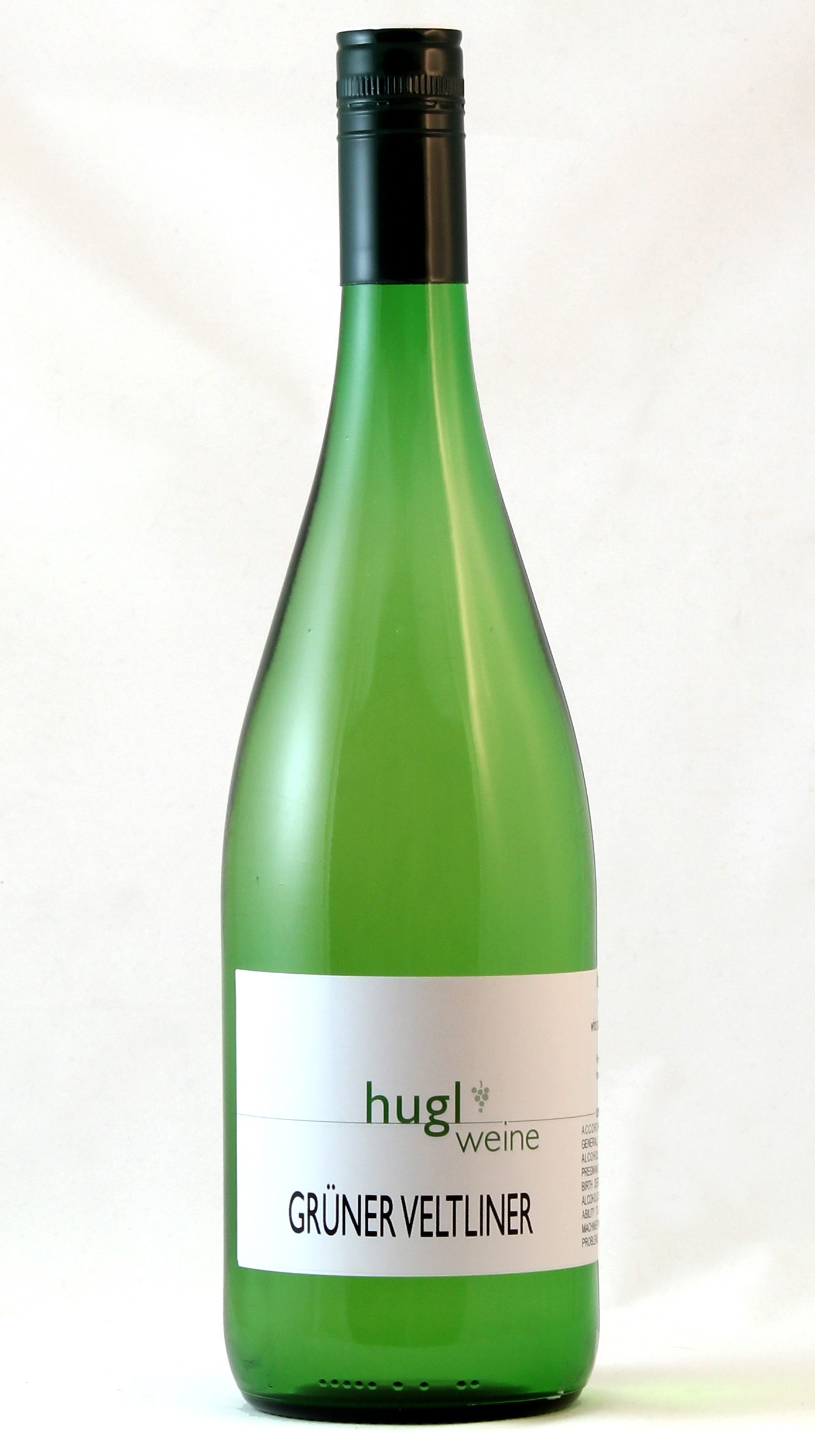
Hugl Rosselberg Horse Hill Gruner Veltliner is made from 100% Grüner Veltliner
A powerful, very ripe Grüner Veltliner, intense and full-bodied with a long finish.
The ripe grapes are processed very gently with 12 hours on the skins and then vinified in Stainless Steel tanks. No Oak.
A firm mineral backbone, gives it the strength of character to work well with many cuisines.
Hugl Rosselberg Horse Hill Gruner Veltliner is made from 100% Grüner Veltliner
A powerful, very ripe Grüner Veltliner, intense and full-bodied with a long finish.
The ripe grapes are processed very gently with 12 hours on the skins and then vinified in Stainless Steel tanks. No Oak.
A firm mineral backbone, gives it the strength of character to work well with many cuisines.
SALE!
Hugl Sparkling Gruner Veltliner NV is made from 100% Grüner Veltliner.
Did you know that most of the base wines for Austrian sparkling wines come from our region? Poysdorf lies on the same line of latitude as Champagne and the climate is similar in both Champagne and the Weinviertel. This gives us enough reasons to expand our portfolio with a top-quality “sparkler”. Of course, it can only be a Veltliner-Sekt!
Pale golden color with a glint of green. Yellow fruit aromas, dry with a soft, juicy structure and a pleasing streak of minerality. Notes of crisp apple and pear.
The ripe grapes are gently pressed and fermented refrigerated.
Vinified in Stainless Steel tanks. No Oak.
A firm mineral backbone, gives it the strength of character to work well with many cuisines.
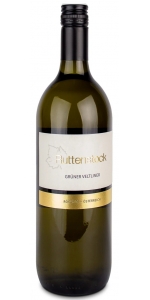
Ruttenstock Gruner Veltliner is made from 100 percent Gruner Veltliner.
Very fruity and light Gruner Veltliner with fresh aromas of citrus and green apples. Crisp on the palate with lively acidity structure.
Pair with cold appetizers, soup, fish, vegetables, salad.
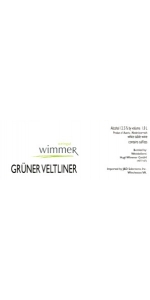
Wimmer Gruner Veltliner is made from 100 percent Gruner Veltliner.
Crisp lime flavors, white pepper and lentils, followed by a mouthful of mineral notes and gooseberry. A long lingering finish
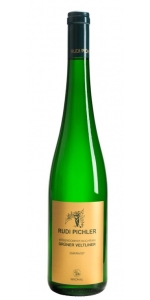
Rudi Pichler is among the elite growers of the Wachau producing wines of precision, power, and longevity. Grüner Veltliner and Riesling make up 95% of the production with the remaining 5% shared between Weißburgunder and Roter Veltliner. Rudi Pichler belongs to the prestigious Vinea Wachau and vinifies under the strict parameters of their codex.
Yields are kept low between 30 and 35 hectoliters per hectare with botrytis carefully removed by hand. Grapes are crushed by foot and receive between three and 36 hours of maceration on the skins. Vinification is entirely in stainless-steel tanks and malolactic fermentation is avoided.
Hochrain, a name meaning "high place," is a southeast-facing terraced vineyard in Wösendorf sitting between 200 and 300 meters of elevation. The vineyard consists of an unusually high content of loess, a mineral-laden soil that produces wines that are especially broad and rich.
Review:
“A stunning wine for this grape that is also rather easy to understand. The Reine Claude plum and peppery nose is complex, but already charming. As exciting as the simultaneously creamy and succulent mid-palate is, what makes this medium- to full-bodied gruner veltliner really stand out is the extremely long, crushed rock finish.”
James Suckling 96 Points
Hugl Gruner Veltliner (liter) is 100% Grüner Veltliner
This is an intense and concentrated wine offering pleasant citrus and grapefruit aromas, exotic tropical fruits with a hint of freshly ground white pepper. Full-bodied dry wine with a firm mineral backbone.
A firm mineral backbone, gives it the strength of character to work well with many cuisines.
The Martin Hugl Estate
This is a young family-run winery located in the north-east of Austria, in Ketzelsdorf-Poysdorf. The owners Sylvia and Martin Hugl aim to produce fruity, full-bodied wines that are typical of the region and the soils. They make use of the experience of their parents and combine it with their know-how and modern techniques to create high-quality wines. To keep quality high they limit quantity by cutting back, thinning, and green harvesting. A careful handling of the grapes during harvesting is as necessary, along with a cool fermentation in the cellar.
Total production in 2009 was 340,000 liters: 76% white, 24% red (actually no rose and sparkling wine, production - rose is planned for vintage 2010)
For the European market they use only varietal names and offer two types of wines made from Grüner Veltliner: Weinviertel DAC – a regional brand with specially controlled quality and rules for selling it, and Grüner Veltliner classic as a second type of Grüner.
Names of their Grüner Veltliner single vineyards, and quantities produced:
Zapfersberg: 5,000 liters
Rösselberg: 15,000 liters
Waldberg: 25,000 liters
Unführ: 3,000 liters
Luss: 3,000 liters
Baumfeld: 3,000 liters
Junge Geringen: 10,000 liters
Alte Geringen: 15,000 liters
The Martin Hugl Vineyard
In addition to using the best cellar technologies, they emphasize the work in the vineyards and the soils. Prime south- and south-west-facing hillsides and the loam soil ideally suited for wine growing are the basic conditions for high quality. They own and cultivate 22 hectares of vineyards and cooperate additionally with several partners who are cultivating grapes according to their quality targets. They buy grapes from 25 hectares of vineyards.
Grüner Veltliner is the most widely planted grape variety in Austria, accounting for 37% of the country's total vineyard area, about 50,875 acres. Most of these vines are in the large wine region known as Niederösterreich (Lower Austria), along the Danube River, north of Vienna. It also grows in a few other Eastern European countries, such as Slovakia, Yugoslavia and the Czech Republic, but the variety is most closely associated with Austria, where it has been cultivated since Roman times. Grüner Veltliner is the indigenous variety of Austria.
Weingut Prager Achleiten Riesling Smaragd is made from 100 percent Riesling.
Franz Prager, co-founder of the Vinea Wachau, had already earned a reputation for his wines when Toni Bodenstein married into the family. Bodenstein’s passion for biodiversity and old terraces, coupled with brilliant winemaking, places Prager in the highest echelon of Austrian producers.
Smaragd is a designation of ripeness for dry wines used exclusively by members of the Vinea Wachau. The wines must have a minimum alcohol of 12.5%. The grapes are hand-harvested, typically in October and November, and are sent directly to press where they spontaneously ferment in stainless-steel tanks.
Achleiten sits east of Weißenkirchen and is one of the most famous vineyards in the Wachau. The steeply-terraced vineyard existed in Roman times. Some sections have just 40 cm of topsoil over the bedrock of Gföler Gneiss, amphibolitic stone, and slate. “Destroyed soil,” as Toni Bodenstein likes to say.
Tasting Notes:
Austrian Riesling is often defined by elevated levels of dry extract thanks to a lengthy ripening period and freshness due to dramatic temperature swings between day and night. Wines from Achleiten’s highly complex soils are famously marked by a mineral note of flint or gun smoke, are intensely flavored, and reliably long-lived.
Food Pairing:
Riesling’s high acidity makes it one of the most versatile wines at the table. Riesling can be used to cut the fattiness of foods such as pork or sausages and can tame some saltiness. Conversely, it can highlight foods such as fish or vegetables in the same way a squeeze of lemon or a vinaigrette might.
Review:
The 2020 Ried Achleiten Riesling Smaragd offers a well-concentrated, fleshy and spicy stone fruit aroma with crunchy and flinty notes. It needs some time to get rid of the stewed fruit flavors, though. Full-bodied, fresh and crystalline, this is an elegant, complex and finely tannic Riesling that needs some years rather than a carafe to polymerize the tannins and gain some finesse. Tasted at the domain in June 2021.
At Prager, I could not determine that 2020 would be inferior to the 2019 vintage; on the contrary, the 2020 Smaragd wines fascinated me enormously in their clear, cool, terroir-tinged way. A 38% loss had occurred mainly because of the hail on August 22, although predominantly in the Federspiel or Riesling vineyards. There was no damage in the top vineyards such as Ried Klaus, Achleiten or Zwerithaler. "Interestingly, the vines are in agony for about two weeks after the hail. There was no more growth, no development of ripeness and sugar," reports Toni Bondenstein. The Veltliner then recovered earlier, while even picking a Riesling Federspiel in October was still a struggle. "Why Riesling reacted more intensively to the hail, I don't know myself either," says Bodenstein. Whole clusters were pressed to preserve acidity and to compensate for the lower extract, and compared to 2019, the 2020s were left on their lees longer. In June, however, the 20s in particular showed outstanding early shape.
-Wine Advocate 94 Points
Light yellow-green, silver reflections. Yellow stone fruit nuances with a mineral underlay, notes of peach and mango, a hint of tangerine zest, mineral touch. Juicy, elegant, white fruit, acidity structure rich in finesse, lemony-salty finish, sure aging potential.
-Falstaff 95 Points
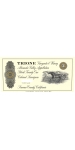
Winemaking: This wine is a classic Bordeaux blend of 78% Cabernet Sauvignon, 10% Malbec, 8% Merlot, 2% Cabernet Franc, 2% Petit Verdot .
Block 21 Cabernet is a single vineyard selection from the Trione Cloverdale Ranch, located on the western flank of the Mayacamas Mountains, in the northern portion of Alexander Valley. The vines, planted in 2001 with Bordeaux clone 337, grow in clay and sandy loam soils underlain with a high percentage of gravel. Cabernet Sauvignon grown in this ideal terroir develops deep, concentrated flavors and fine, smooth tannins.
The Trione Block 21 Cabernet Sauvignon is deep, dark, and foreboding. The wine is rich with black currant and dark chocolate aromas and flavors. Inhale, close your eyes and envision an old saddle, favorite wallet or baseball glove, those rustic leather notes are prominent. The structure is tight but has length and verbosity. This wine is age worthy and will continue to develop for 10 years and beyond. Cheers!