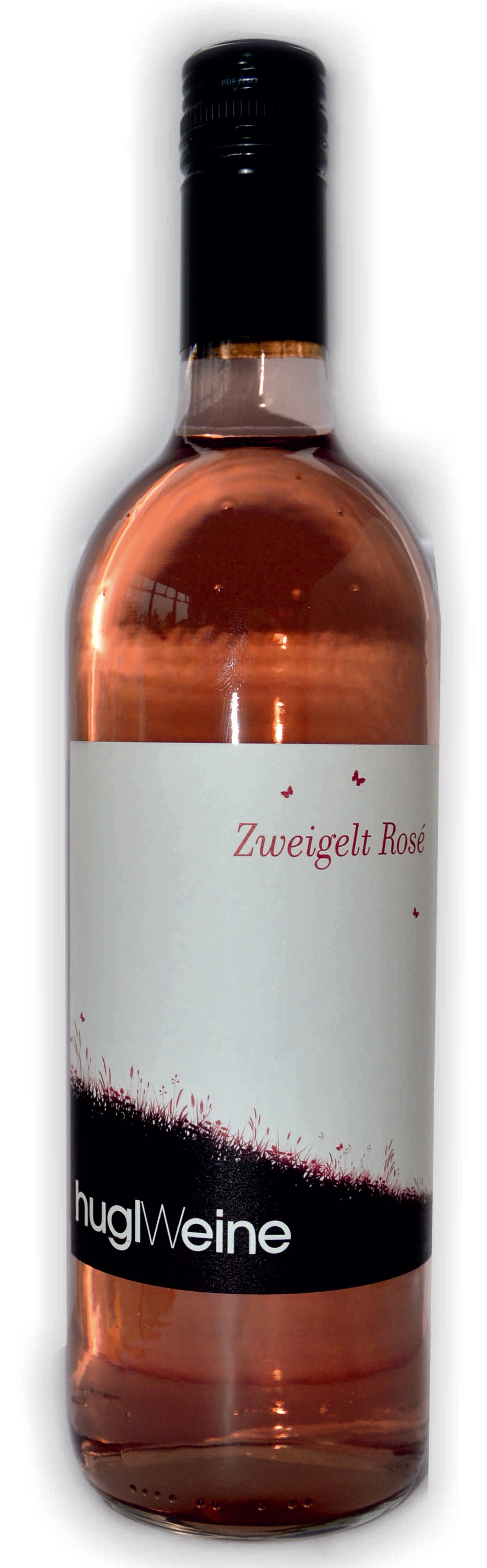
" We don't sell the wine without touching the vine "
| BUY MORE! SAVE MORE! | ||||||||||||||||
|
| Country: | Austria |
| Region: | Poysdorf |
| Winery: | Martin Hugl |
| Grape Type: | Zweigelt |
| Vintage: | 2022 |
| Bottle Size: | 750 ml |
Despite its relative youth, Zweigelt is actually an Austrian classic. This variety was created in 1922, when Dr. Fritz Zweigelt crossed two grapes - St Laurent and Blaufränkisch. Originally, it was intended for the new variety to be called Rotburger, referring to the place where it was born, Klosterneuburg. But this name never took hold, and instead, Zweigelt was named after the man who was the key in its development.
Today, Zweigelt is the most widely planted red variety in Austria, growing in nearly 9% of this country's vineyards. It is a robust grape, highly resistant to dryness, frost and various diseases.
The wine boasts a pale rosé color, it has plenty of fruity aromas, with red cherry and wild strawberry flavors. It is medium-bodied, but it still have a nice long and pleasant finish with a light cinnamon type of spice to it.
Only the best grapes are harvested with a lot of experience and know-how and further processed. The grapes are fermented directly gently pressed and cooled. The fermentation takes place exclusively in stainless steel tanks.
Perfectly at home on any picnic, delicious with fried chicken, and tames the heat when paired with spicy dishes. There is also a slight watermelon note that makes it perfect for spring and summer. A great pairing with barbecued shrimp.
The Martin Hugl Estate
This is a young family-run winery located in the north-east of Austria, in Ketzelsdorf-Poysdorf. The owners Sylvia and Martin Hugl aim to produce fruity, full-bodied wines that are typical of the region and the soils. They make use of the experience of their parents and combine it with their know-how and modern techniques to create high-quality wines. To keep quality high they limit quantity by cutting back, thinning, and green harvesting. A careful handling of the grapes during harvesting is as necessary, along with a cool fermentation in the cellar.
Total production in 2009 was 340,000 liters: 76% white, 24% red (actually no rose and sparkling wine, production - rose is planned for vintage 2010)
For the European market they use only varietal names and offer two types of wines made from Grüner Veltliner: Weinviertel DAC – a regional brand with specially controlled quality and rules for selling it, and Grüner Veltliner classic as a second type of Grüner.
Names of their Grüner Veltliner single vineyards, and quantities produced:
Zapfersberg: 5,000 liters
Rösselberg: 15,000 liters
Waldberg: 25,000 liters
Unführ: 3,000 liters
Luss: 3,000 liters
Baumfeld: 3,000 liters
Junge Geringen: 10,000 liters
Alte Geringen: 15,000 liters
The Martin Hugl Vineyard
In addition to using the best cellar technologies, they emphasize the work in the vineyards and the soils. Prime south- and south-west-facing hillsides and the loam soil ideally suited for wine growing are the basic conditions for high quality. They own and cultivate 22 hectares of vineyards and cooperate additionally with several partners who are cultivating grapes according to their quality targets. They buy grapes from 25 hectares of vineyards.
Grüner Veltliner is the most widely planted grape variety in Austria, accounting for 37% of the country's total vineyard area, about 50,875 acres. Most of these vines are in the large wine region known as Niederösterreich (Lower Austria), along the Danube River, north of Vienna. It also grows in a few other Eastern European countries, such as Slovakia, Yugoslavia and the Czech Republic, but the variety is most closely associated with Austria, where it has been cultivated since Roman times. Grüner Veltliner is the indigenous variety of Austria.

SALE!
Hugl Zweigelt Secco Rose is made from 100% Zweigelt
Despite its relative youth, Zweigelt is actually an Austrian classic. This variety was created in 1922, when Dr. Fritz Zweigelt crossed two grapes - St Laurent and Blaufränkisch. Originally, it was intended for the new variety to be called Rotburger, referring to the place where it was born, Klosterneuburg. But this name never took hold, and instead, Zweigelt was named after the man who was the key in its development.
Today, Zweigelt is the most widely planted red variety in Austria, growing in nearly 9% of this country's vineyards. It is a robust grape, highly resistant to dryness, frost and various diseases.
Lively, fruity bouquet of strawberry, cherry and floral aromas. Refreshing and beautifully balanced, this is a great wine to enjoy as an aperitif. This is a Secco for the whole day and the whole night
The wine is made of 100% Zweigelt grapes of 15-35 years old (25 years old in avarage).
The soil is mainly loam and loess.
It is made using the Charmat method and the wine is aged for 3 months on the lees in stainless steel tanks.
The wine is slightly filtered before bottling.
Drink by itself as an aperitif, it is also a great picnic or brunch wine and will be a good pick to celebrate any occasion.

Pioneiro Red Wine Vinho Regional Peninsula de Setubal is made from 60% Castelao (also known as Periquita), 30% Aragones and 10% Syrah
Aged 5 months in French oak barrels
The story of this wines begun more than a century ago, with the pioneering dream of Venâncio da Costa Lima: to bring good wines to every corner of Portugal. Pioneiro wine brand was created to pay homage to his vision.
What's Unique? Pioneiro (meaning “pioneer” in Portuguese) wine vintage style label pay homage to the founder’s dream, dating back to 1914. But in a relaxed, casual way, typical of this wine producer mood.
Intense garnet color, complex nose with touches of ripe fruit, jam and spices, full-bodied flavor and a very balanced finish.
Castelao: as the most widely-grown red grape variety in Portugal it is still often referred to in Portuguese as "Periquita" or "Joao de Santarem", although that name is legally owned by José Maria da Fonseca in the Setúbal Peninsula outside of Lisbon. It is highly adaptable to different climatic conditions and its remarkable versatility enables winemakers to make a range of wines – from the easy drinking and quaffable reds and rosados to the powerful and intense reds perfectly suited to lengthy cellaring. Castelão comes into its own and is most expressive in the Sétubal Peninsula, where it makes meaty and intense wines with aromas of red berries and blue flowers that marry well with the deft use of oak.
Made from 15 year old vines planted on sandy soils.
Classic vinification at controlled temperature (25 °C) with prolonged maceration for phenolic extraction. Wine went through malolactic fermentation.
It was aged 5 months in French Oak barrels.
Wine was slightly filtered before bottling to avoid sedimentation in the bottle and to ensure stability.
Pasta, Cheese, red meat and game.

Despite its relative youth, Zweigelt is actually an Austrian classic. This variety was created in 1922, when Dr. Fritz Zweigelt crossed two grapes - St Laurent and Blaufränkisch. Originally, it was intended for the new variety to be called Rotburger, referring to the place where it was born, Klosterneuburg. But this name never took hold, and instead, Zweigelt was named after the man who was the key in its development.
Today, Zweigelt is the most widely planted red variety in Austria, growing in nearly 9% of this country's vineyards. It is a robust grape, highly resistant to dryness, frost and various diseases.
The wine boasts a pale rosé color, it has plenty of fruity aromas, with red cherry and wild strawberry flavors. It is medium-bodied, but it still have a nice long and pleasant finish with a light cinnamon type of spice to it.
Only the best grapes are harvested with a lot of experience and know-how and further processed. The grapes are fermented directly gently pressed and cooled. The fermentation takes place exclusively in stainless steel tanks.
Perfectly at home on any picnic, delicious with fried chicken, and tames the heat when paired with spicy dishes. There is also a slight watermelon note that makes it perfect for spring and summer. A great pairing with barbecued shrimp.
Despite its relative youth, Zweigelt is actually an Austrian classic. This variety was created in 1922, when Dr. Fritz Zweigelt crossed two grapes - St Laurent and Blaufränkisch. Originally, it was intended for the new variety to be called Rotburger, referring to the place where it was born, Klosterneuburg. But this name never took hold, and instead, Zweigelt was named after the man who was the key in its development.
Today, Zweigelt is the most widely planted red variety in Austria, growing in nearly 9% of this country's vineyards. It is a robust grape, highly resistant to dryness, frost and various diseases.
The wine boasts a pale rosé color, it has plenty of fruity aromas, with red cherry and wild strawberry flavors. It is medium-bodied, but it still have a nice long and pleasant finish with a light cinnamon type of spice to it.
Only the best grapes are harvested with a lot of experience and know-how and further processed. The grapes are fermented directly gently pressed and cooled. The fermentation takes place exclusively in stainless steel tanks.
Perfectly at home on any picnic, delicious with fried chicken, and tames the heat when paired with spicy dishes. There is also a slight watermelon note that makes it perfect for spring and summer. A great pairing with barbecued shrimp.
SALE!
Hugl Zweigelt Secco Rose is made from 100% Zweigelt
Despite its relative youth, Zweigelt is actually an Austrian classic. This variety was created in 1922, when Dr. Fritz Zweigelt crossed two grapes - St Laurent and Blaufränkisch. Originally, it was intended for the new variety to be called Rotburger, referring to the place where it was born, Klosterneuburg. But this name never took hold, and instead, Zweigelt was named after the man who was the key in its development.
Today, Zweigelt is the most widely planted red variety in Austria, growing in nearly 9% of this country's vineyards. It is a robust grape, highly resistant to dryness, frost and various diseases.
Lively, fruity bouquet of strawberry, cherry and floral aromas. Refreshing and beautifully balanced, this is a great wine to enjoy as an aperitif. This is a Secco for the whole day and the whole night
The wine is made of 100% Zweigelt grapes of 15-35 years old (25 years old in avarage).
The soil is mainly loam and loess.
It is made using the Charmat method and the wine is aged for 3 months on the lees in stainless steel tanks.
The wine is slightly filtered before bottling.
Drink by itself as an aperitif, it is also a great picnic or brunch wine and will be a good pick to celebrate any occasion.

Hugl Zweigelt Classic is made from 100 percent Zweiglt.
Despite its relative youth, Zweigelt is actually an Austrian classic. This variety was created in 1922, when Dr. Fritz Zweigelt crossed two grapes - St Laurent and Blaufränkisch. Originally, it was intended for the new variety to be called Rotburger, referring to the place where it was born, Klosterneuburg. But this name never took hold, and instead, Zweigelt was named after the man who was the key in its development.
Today, Zweigelt is the most widely planted red variety in Austria, growing in nearly 9% of this country's vineyards. It is a robust grape, highly resistant to dryness, frost and various diseases.
The wine boasts a concentrated color, fruity and spicy aromas, cherry flavors. Full-bodied, smooth and round, the wine is an ideal food companion.

Hugl Gruner Veltliner (liter) is 100% Grüner Veltliner
This is an intense and concentrated wine offering pleasant citrus and grapefruit aromas, exotic tropical fruits with a hint of freshly ground white pepper. Full-bodied dry wine with a firm mineral backbone.
A firm mineral backbone, gives it the strength of character to work well with many cuisines.

This is a 3 LITER DOUBLE MAGNUM BOTTLE.
Opus One 2022 is made from 80% Cabernet Sauvignon, 8% Petit Verdot, 6.5% Cabernet Franc, 5% Merlot, 0.5% Malbec
Opus One 2022 exudes charm and sophistication from the glass. Primary aromas of blueberry, cassis, and dried rose petals with underlying notes of olive, cigar box, and graphite create a rich and inviting bouquet. On the palate, bright red-fruit flavors, cocoa, and fresh orange peel waltz together into a harmonious and balanced profile. Long and elegant, the finish delivers touches of wet stone, vanilla, and a hint of coffee. Fine-grained tannins and juicy ripeness signal the promise of a long future in the cellar.
Review:
Chocolate, cherry and rose petal aromas on the nose. Very open and alive - this has a great energy from the aromatics alone with soft cedar shavings, vanilla bean and bramble fruit. Juicy and lively, this is full of fun - fruity and concentrated. The tannins are just wonderful, creamy and slightly grippy, extending the flavours vertically. Tons of juicy, succulent fruit - this feels quite modern but still with that flash of sunshine and ripeness. Long lasting with purity and delicacy that make it so enjoyable. A wonderful creation from Michael Silacci. This is not your typical blockbuster at all, this is a darling of a wine. 0.5% Malbec completes the blend. The Opus team chose to pick early and quickly given the heat spikes in 2022, starting with the Merlot on 24th August. Ageing 18 months in French oak.
-Decanter 97 Points

J. Lohr Hilltop Cabernet Sauvignon is made from 94% Cabernet Sauvignon, 3% Petit Verdot, 2% Malbec, 1% Cabernet Franc.
Displays blackberry and blueberry compote aromas garnished with crushed violet, cracked pepper, and black tea. Plump fruit on the palate with fine-grained tannins. Juicy layers of black and red currants lead to a bright finish accented by pastry notes from the 16 months aging in French cooperage.
-Tasting Panel 94 Points
-Wine Enthusiast 94 Points

La Parcelle 8 Cabernet Sauvignon presents bold and complex aromas of black fruits, chocolate, and toast alongside earthy, herbal, and floral notes. On the palate, it displays a full body, ripe tannins, and a lasting finish.
La Parcelle 8 Cabernet Sauvignon pairs well with roasted lamb, braised short ribs, mushrooms, or fine cheeses.
Review:
Complex and intense with a rare mineral quality for the hot 2020 vintage. Fresh blueberries, wild herbs, hot stones and graphite. A hint of violet. Tannins are quite chalky and tense on the medium- to full-bodied palate. Extremely long with an ethereal finish. It goes on and on, lasting for two minutes. Effortless intensity and concentration, but almost weightless. This delivers exceptional freshness for this vintage. Harvested from 18th March. Already drinkable now, but it will last. 100% century-old, ungrafted cabernet sauvignon.
-James Suckling 99 Points