
" We don't sell the wine without touching the vine "
The Indwe Estate
At the southern-most tip of Africa, where the Atlantic and Indian Oceans meet, one finds the ‘Cape of Storms’, or more commonly, Cape Agulhas. On this peninsula lies the Elim ward and Overberg region, where we source the grapes for Indwe Sauvignon Blanc. Indwe is the Xhosa name for the Blue Crane, South Africa’s national bird. It is an endangered species and endemic to South Africa, particularly the Overberg region. The Blue Crane is very special to the amaXhosa and amaZulu, often associated with warriors and royalty.
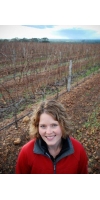
Owner and Winemaker is Trizanne Barnard. During her productive vinous career, she has seized every possible opportunity to broaden her knowledge and experience, pressing them for every drop of goodness they offered, enriching her life, her work and her wine. With a B.Sc Agric under her belt she stepped into the real world of wine, completing harvests in Western Australia, Alsace, Bordeaux, Rhone and Douro Valley.
Back on home soil, after a year at Klein Constantia she was challenged with setting up a winery in the Helderberg. After four successful years,she decided it was time to venture on my own, creating her own project.
The Indwe Estate
At the southern-most tip of Africa, where the Atlantic and Indian Oceans meet, one finds the ‘Cape of Storms’, or more commonly, Cape Agulhas. On this peninsula lies the Elim ward and Overberg region, where we source the grapes for Indwe Sauvignon Blanc. Indwe is the Xhosa name for the Blue Crane, South Africa’s national bird. It is an endangered species and endemic to South Africa, particularly the Overberg region. The Blue Crane is very special to the amaXhosa and amaZulu, often associated with warriors and royalty.
Owner and Winemaker is Trizanne Barnard. During her productive vinous career, she has seized every possible opportunity to broaden her knowledge and experience, pressing them for every drop of goodness they offered, enriching her life, her work and her wine. With a B.Sc Agric under her belt she stepped into the real world of wine, completing harvests in Western Australia, Alsace, Bordeaux, Rhone and Douro Valley.
Back on home soil, after a year at Klein Constantia she was challenged with setting up a winery in the Helderberg. After four successful years,she decided it was time to venture on my own, creating her own project.
The Vineyards
The historic mission settlement of Elim on the Agulhas Plain comprises 6 500 hectares of land.  Half of this land is under agriculture and for the past one hundred years has been cultivated and the remaining + 3 000 hectares of Elim ferricrete fynbos is managed by the Moravian Church and the community at the Elim mission station.
Elim was established in 1824 by Moravian missionaries and sacramental wine was required for church services, and the first vineyard planting in this region subsequently occurred over 100 years ago however viticulture didn’t really establish until 1997 when it resumed again.
First Vineyard plantings: 1996 – Lands End. After Lands End, The Berrio planted the next vineyards in 1997.
Producers in Elim:
Total hectares of vineyards 129.16 Ha = 319.161 Acres
White grape varietals found on Elim: approximately 80% Sauvignon Blanc, 15% Semillon and the rest is small parcels of Viognier, Nouvelle.
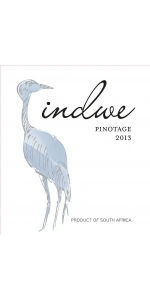
Indwe Pinotage Coastal Region is made from 100 percent Pinotage.
Pinotage is a true South African grape variety, Our signature grape smilar to the Blue Crane being our national bird. Indwe Pinotage grapes are meticulously sourced from our grape producers along the Coastal region of the Western Cape ensuring complexity, depth and purity of fruit. The wine is layered with sweet cherry notes, and subtle hints of mocha and vanilla flavors.
Robert Mondavi Winery Cabernet Sauvignon is made from 91% Cabernet Sauvignon, 5% Petit Verdot, 3% Cabernet Franc, 1% Malbec.
The 2022 Robert Mondavi Napa Valley Cabernet Sauvignon shows notes of plum, blackberry, licorice, chocolate, violet, and warm spice. Dark plum and black fruit carry through to the palate. Fresh and lively with plush tannins and a polished structure.
Review:
"A solid representation of Napa Valley Cabernet Sauvignon, this wine sources fruit from St. Helena down to Carneros, with the bulk of the blend coming from the Wappo Hill property in Stags Leap. All five Bordeaux varieties are included in the blend. Fermentation begins with a cold soak in stainless steel, followed by 26 days on skins, and 18 months of ageing in 31% new French oak. The wine opens with powerful Kirsch aromatics, lifted by bright Bing cherry, warm baking spices, new wood cedar, and white pepper. It is plush and layered on the palate, with black-toned fruit and robust, lingering tannins that carry through a long finish of dark red and black fruit, warming spices, and mineral tension. A balanced expression of power and fruit-forward ripeness, this vintage showcases both depth and structure, making for a bold yet polished Napa Cabernet."
- Jonathan Cristaldi, February 2025 Pts. Decanter
A very good introduction to Napa Valley cabernet for drinkers who are unfamiliar. This offers ripe, generous red and black fruit on a velvety texture of fine-grained tannins. Black cherries, dark plums and blackberries come up in the aroma and then go deeper on the palate. Contains 7% petit verdot, 8% merlot, 3% cabernet franc and 1% malbec. Aged in all French barrels, 31% new, which add accents of cinnamon and cedar. Drink now or hold.
-James Suckling 92 Points
'La Carrière', French for “The Quarry”, reflects the vineyard’s spoon shape and tremendously rocky soils. Situated between 1,200 and 1,700 feet (366 and 518 meters) above sea level on steep mountain slopes exceeding 40 percent in grade, the vineyard has ideal southern and southeastern exposures. The shallow, rocky soils provide excellent drainage with restricted fertility, resulting in lower fruit yields with profound richness and character. ‘La Carrière’ provides a signature complexity and liquid minerality from its mountainous origin.
Vintage Notes
The combination of a wet winter with significant rains in December through March and cool weather delayed budbreak nearly a month. Flowering and fruit set were also pushed back and the weather during the later flowering was favorable resulting in decent fruit set and slightly above average yields for the Chardonnay vineyards—a marked improvement over the record-low yielding 2022 vintage. The growing season was temperate without major heat spikes allowing the berries to hold onto their acidity which carried through into the wines. Harvest was almost a month later than normal with the last Belle Côte block coming in on November 2nd.
The name “La Carrière” aptly describes this site’s bowl shape and its tremendously rocky soils. Situated between 1,200 and 1,700 feet above sea level on steep mountain slopes exceeding 40 percent in grade, the vineyard has ideal southern and southeastern exposures. The site’s shallow rocky soils provide excellent drainage, low fertility, and usually the lowest yields on the estate. La Carrière, with its concentrated “liquid minerality,” effectively reflects its mountainous origin.
The 2023 ‘La Carrière’ bursts from the glass with a gorgeous medley of jasmine, white peach blossoms, lemon meringue pie, and white roses with hints of vanilla cream, honey, orange zest, and pastry. A vibrant, juicy entry leads to a well-delineated mid-palate structure and continues into a long, mouth-watering finish. As an expression of the steepest Chardonnay blocks of the Knights Valley ranch, the 2023 ‘La Carrière’ is full of energy with great drive, freshness, and nerve, inviting the consumer to enjoy another glass.
Review:
A driving force of appetizing acidity powers this full-bodied, brilliant, elegant and intricate wine. It offers mineral and citrus flavors in equal measure, starting with a lot of fresh lemon and lime zest aromas, then richer baked apple, lemon blossom and brown butter flavors. Feels so focused, linear and alive. Drink now or
hold. - James Suckling 98 Points



