
" We don't sell the wine without touching the vine "
| BUY MORE! SAVE MORE! | ||||||||||||||||||||
|
| Country: | Chile |
| Region: | Colorado |
| Winery: | La Despensa |
| Grape Type: | Pais |
| Organic: | Yes |
| Vintage: | 2023 |
| Bottle Size: | 750 ml |
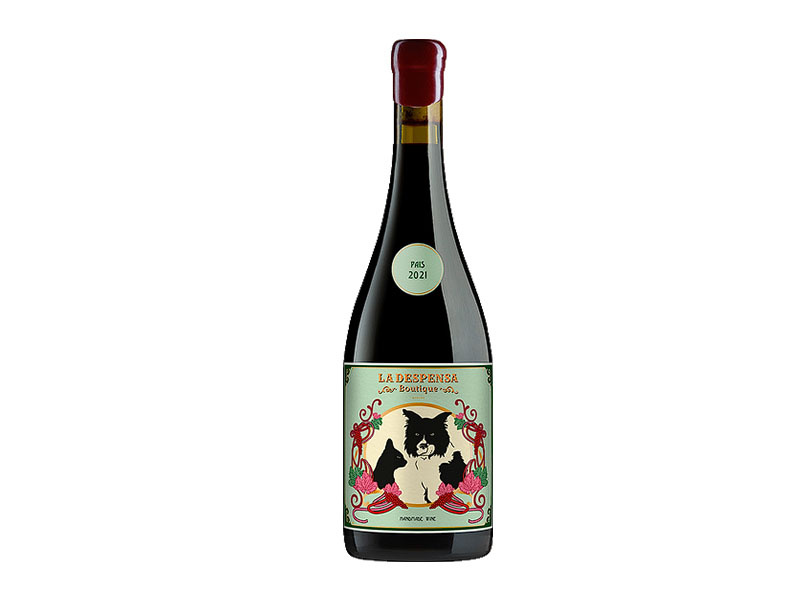
La Despensa Boutique Pais is made from 90% Pais (also known as Criolla Chica) and 10% Cinsault.
Aged 10 months in Flextank and used oaked barrels.
This is one of the oldest vineyard of Pais in Colchagua Valley, as it is 120-150 years old, all dry farmed.
At La Despensa, the team is proudly Colchagüino. All the wines are produced from grapes grown in the Colchagua Valley. They say they'll never make wines from another valley!
They get their classic Rhône-blend grapes from their own organic vineyard in Santa Ana.

Chakana Cabernet Franc is made from 100 percent Cabernet Franc.
Chakana is the name of the Southern Cross constellation. Its rotation in the sky throughout the year made it an effective agricultural calendar for the ancient Andean people.
Expressive and ripe nose, juicy texture and intense fruit. Excellent balance, well integrated tannins and stunning minerality.

La Despensa Boutique Pais is made from 90% Pais and 10% Cinsault.

La Despensa Boutique Colchagua Grenache is made from 100 percent Grenache.
Clean and fresh, like all our wines, with varietal typical notes of fresh summer fruit but with slightly grippy tannins that will enable the wine to age. Translucent in color, typical of newer vine Grenache.
Very versatile and pairs well with almost any type of food. Would go great with pulled pork and rich tomato based pasta sauces

La Despensa Boutique Pool Blend 75% Cinsault, 15% Pais, 5% Marsanne and 5% Roussanne.
A genuinely unique wine - La Despensa is the only producer of Cinsault in Colchagua and Pais from this valley is also extremely rare! The Cinsault and the 2 whites come from a new vineyard planted in 2017 and the Pais from a 150 year old, dry-farmed vineyard in Pumanque about 20 minutes from the winery that they run themselves organically. The Cinsault and Pais give notes of raspberry and strawberry and the white Roussanne and Marsanne a little mouthfeel and a hint of tropical fruit.
Organically grown grapes (not certified) from our own vineyard in Santa Ana, and Pumanque in the Colchagua Valley. Irrigated as sparingly as possible via drip irrigation (dry-farming for the 150 year old Pais). Hand harvested and sorted personally by me in the vineyard (I personally check every single bunch), then destemmed with the crusher removed from the destemmer. Grapes are fermented in open top bins and concrete tank and blended immediately after pressing. MLF occurs with the wine already blended. Wines are racked in November and again in January before being bottled after about 10 months ageing in 50% neutral oak barrels and 50% Flextank.
Versatile, goes well with beef, chicken, pasta, great for Summer BBQs
Review:
"The red blend 2021 Wines Pool Blend was produced with an unusual blend, especially for a wine from Colchagua, of 75% Cinsault, 15% País and 5% each Marsanne and Roussanne. It has kept a moderate 13.5% alcohol and retained good freshness (pH 3.44) after maturing exclusively in Flextank and being bottled unoaked. This is fruit-driven and straightforward, with a medium-bodied palate and fine tannins. 2,400 bottles produced. It was bottled in March 2022. - Luis Gutiérrez"
- Robert Parker's Wine Advocate (April 2023), 90 pts

La Despensa Boutique Cinsault is made from 100% Cinsault.
A genuinely unique wine - they are the only producers of Cinsault in Colchagua! From a new vineyard planted in 2017, the team at La Despensa thinks they’ve hit the jackpot with this variety in this valley. Much more structure, color and intensity than the typical Chilean Cinsaults from further south, this is an easy drinking but serious version of this wonderfully fruity variety!
Review:
"Apparently the first and only Cinsault from Colchagua, the 2021 Boutique Cinsault was produced with vines planted in 2017 and worked organically (but is not certified), and it's much darker and more structured than the examples from the south. It fermented in concrete with selected yeasts and went through malolactic in stainless steel and then 60% of the volume matured in used barriques for six months. It has 13.5% alcohol and kept good freshness, and it's varietal, balanced and easy to drink but not banal. 1,200 bottles were filled in March 2022. - Luis Gutiérrez"
- Robert Parker's Wine Advocate (April 2023), 91 pts

La Despensa Boutique Field Blend is made from 45% Grenache, 35% Syrah, 15% Mourvedre and 5% Roussanne.
This is La Despensa's flagship Rhône-blend, produced from grapes from their own, organic vineyard in Colchagua. Their passion is to produce very high-quality grapes - it’s the vineyard work that they love the most. So this blend is always a little different year after year, as they make whatever the vineyard gives them. In 2020 they incorporated a little Roussanne to the blend, which adds some mouthfeel and a tiny background note of tropical fruit, to accompany the fresh fruit and structure that the other varieties bring out.
Review:
"A very vivid and bright nose with lots of red fruit and flowers. Some sweet currants, raspberries and pomegranate in the forefront followed by a nice touch of bay leaf, graphite and flowers. Juicy and bright on the palate with a medium body and firm and fresh tannins. Very drinkable. 45% grenache, 35% syrah, 15% mourvedre and 5% roussanne. Co-fermented. Enjoy now."
- James Suckling (February 2023), 92 pts
La Despensa Boutique Pool Blend 75% Cinsault, 15% Pais, 5% Marsanne and 5% Roussanne.
A genuinely unique wine - La Despensa is the only producer of Cinsault in Colchagua and Pais from this valley is also extremely rare! The Cinsault and the 2 whites come from a new vineyard planted in 2017 and the Pais from a 150 year old, dry-farmed vineyard in Pumanque about 20 minutes from the winery that they run themselves organically. The Cinsault and Pais give notes of raspberry and strawberry and the white Roussanne and Marsanne a little mouthfeel and a hint of tropical fruit.
Organically grown grapes (not certified) from our own vineyard in Santa Ana, and Pumanque in the Colchagua Valley. Irrigated as sparingly as possible via drip irrigation (dry-farming for the 150 year old Pais). Hand harvested and sorted personally by me in the vineyard (I personally check every single bunch), then destemmed with the crusher removed from the destemmer. Grapes are fermented in open top bins and concrete tank and blended immediately after pressing. MLF occurs with the wine already blended. Wines are racked in November and again in January before being bottled after about 10 months ageing in 50% neutral oak barrels and 50% Flextank.
Versatile, goes well with beef, chicken, pasta, great for Summer BBQs.

Blanc de Noirs (white from black) is the counterpart to Blanc de Blancs (white from white). Made primarily from the red grape Pinot Noir, this is a complex, medium-bodied, brut sparkling wine that is aged on the yeast lees in the bottle for two to three years prior to disgorgement.
Reviews:
"Lively and refined but festive, with pretty accents of strawberry, lemon, apple and graham cracker that sail on the crisp yet supple finish."
— Wine Spectator 93 Points

Maysara Arsheen Pinot Gris is made from 100 percent Pinot Gris.
No oak
Arsheen was an Archeamenian Princess during the 500 B.C. Era. She taught Astronomy and was granted the role of winemaker in the palace due to her impeccable palate and knowledge.
A bright expression of fruit right up front, allowing you to mingle and recline in a shaded garden on a sunny day. The wine floats atop a delicate hint of salinity that will reward pairings of shellfish and citrus based preparations. Arsheen has a smart, refreshing character that will bestow clarity and a ready-set-go!
At Maysara Winery & Momtazi Vineyard, we are committed to cap-turing the complete expression of our land and conveying it to you through superior quality in every bottle. We practice only low-impact, holistic farming methods in our Demeter Certified Biodynamic Vineyard. We are confident these practices are the best way to capture the true essence of the soil in our fruit and ensure health of our vines and the unique accent of our terroir for generations. This philosophy is carried into the cellar, where Demeter Certified Biodynamic wine-making practices produce wines with intensity, sophistication and elegance while maintaining a purity of both fruit and earth.
Starting gunshot to any coursed meal, or even as a cocktail… try as a Bianco, with campari, lemon, ice and a splash of soda…



