
" We don't sell the wine without touching the vine "
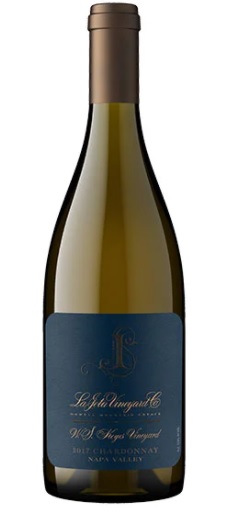
| Country: | United States |
| Regions: | California California (Napa) |
| Winery: | La Jota |
| Grape Type: | Chardonnay |
| Organic: | Yes |
| Vintage: | 2019 |
| Bottle Size: | 750 ml |
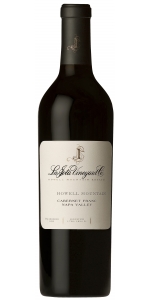
La Jota Howell Mountain Cabernet Franc is made from 100% Cabernet Franc.
The 2019 Cabernet Franc opens with aromas of cassis and graphite when poured in the glass. The firm tannins set the stage on the palate melded with rich flavors of boysenberry and pain de grille with a silky mouthfeel and lingering finish.
Review:
Savory in black pepper, smoked meat and cigar box, this wine is high-toned aromatically, with lovely hints of violet and dried herb, sage and bay leaf. Mountain-sturdy tannins give it structure, power and room to age, with lasting acidity to keep it fresh. Enjoy best from 2029–2039
.-Wine Enthusiast 95 Points

All older vintage wines have been purchased from a single collectors cellar. Pictures can be requested before shipment.
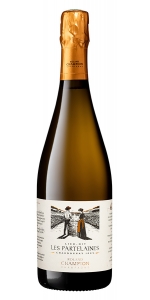
This plot was the first plot that Roland Champion family grandparents, Roland & Jacqueline bought together, just after their wedding, their first common property, not derived from their family heritage!
Roland Champion Champagne Partelaine Chardonnay Brut Nature is a sparkling wine made from 100% Chardonnay.
On the nose, this Champagne reveals subtle aromas of white chocolate, tonka bean and a beautiful minerality.
On the palate, it is very fine, with a beautiful vivacity, citrus notes and saline finish, reminiscent of the limestone terroir of Chouilly.
Pairs well with white fish, seafood and matured cheeses.
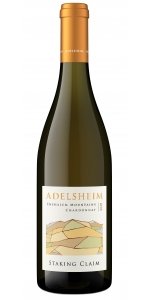
Adelsheim Vineyard Chardonnay Staking Claim is made from 100% Chardonnay.
Review:
Grapefruit pith, flint, roasted almonds and toasted lemons here. It’s medium-bodied, flinty and gently toasty with bright acidity and a fresh, tight finish. Sustainable.
-James Suckling 92 Points
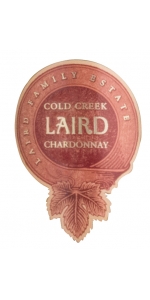
Laird Chardonnay Cold Creek is 100% Chardonnay
Our Cold Creek Chardonnay is grown in the slightly cooler microclimate of the Sonoma side of the Los Carneros district to the west, where thick fog and cool marine winds protect its tender skins. Indigenous to the Burgundy region of France, Clones 15 and 95 at a 50:50 ratio exhibit an approachable style and luminous, golden color.
Tasting Notes: The appearance of golden straw leads you through an aromatic journey with notes of tropical fruits, sweet nectarine, melon, and vanilla. The wine has flavors of jasmine, citrus, and ripe Fuji apple that are complemented by a creamy mouthfeel and hints of lemon curd. The finish lingers on the palate, making you yearn for the next sip.
Vineyard: 100% Cold Creek Ranch
Appellation: Los Carneros
Varietal: 100% Chardonnay
50% Malolactic Fermentation
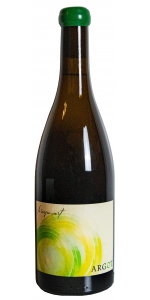
Argot Le Rayon Vert Chardonnay is made from 100 percent Chardonnay.
"Le Rayon Vert", the phenomenon which occurs as the sun dips below the horizon, and a brilliant green flash occurs when sunlight prisms through Earth's atmosphere. Jules Verne wrote "a green which no artist could ever obtain on his palette”, akin to the ethereal, green halo all truly pedigreed Chardonnays radiate from the glass.
Wafting from the glass like a freshly opened stick of Wrigley's gum. Both intense and vibrant, the full-bodied palate delivers Granny Smith apple and stone fruits; confections of custard and sticky vanilla bean; animated by bursts of spearmint and pine forest.
Review:
The 2019 Chardonnay Le Rayon Vert comes from fruit grown on Sonoma Mountain. It slides out of the glass with graceful notes of lemon tart, lime leaves, and fresh grapefruit, leading to suggestions of almond croissant, sea spray, honeysuckle, and aniseed. The medium-bodied palate is fantastically tight-knit with gorgeous tension and layer upon layer of citrus and mineral flavors, finishing very long and chalky. This is amazing.
-The Wine Independent 97 Points
La Jota W.S. Keyes Chardonnay is made from 100 percent Chardonnay.
Review:
La Jota Vineyard Co. was founded in 1898 by Frederick Hess, an immigrant from Switzerland, who established a German-language newspaper in San Francisco. No doubt influenced by other European immigrants involved in California's nascent wine industry, Hess purchased 327 acres of a Mexican land grant—Rancho La Jota—on Howell Mountain to plant vineyards. He built the stone winery from volcanic ash rock quarried on the property; his first fermentation tanks also came from the estate, from a stand of nearby coastal redwoods.
The rocky, shallow soils, the abundance of wind and fog, and the remoteness of Howell Mountain terroir were reminiscent of Europe where some of the best wines in the world were being produced. Hess, along with other early pioneers, believed that Napa Valley could achieve the same distinction – and they were right. At the 1900 Paris Exposition, only two years after the winery's construction, La Jota garnered international recognition after Hess won a bronze medal for his "Blanco."
Prohibition effectively ended wine production in the United States and the market for Howell Mountain's superior wines collapsed. Although Prohibition ended in 1933, the damage was already done. A few Howell Mountain wineries attempted to start up again, but none succeeded. Ultimately the wineries were left empty and the region became home to numerous "ghost" wineries. A half-century went by, and in 1974, former oilman Bill Smith acquired the "ghost" La Jota Vineyard Co. and planted vines on the estate. Eight years later, in 1982, the revived La Jota winery was officially bonded. In 2005, California wine pioneer Jess Jackson and his wife Barbara Banke purchased La Jota.
Today, the winery proudly carries on the century-old La Jota Vineyard Co. winemaking tradition, producing small lots of mountain Cabernet Sauvignon, Merlot, Cabernet Franc, and Chardonnay.
There are 28 acres planted across three estate vineyards, each with its own distinct personality. The Hill vineyard is the highest, sunny and steep. The Meadow vineyard is the largest, and the Winery Block vineyard sits next to the original 19th century stone winery. The Winery Block is planted with St. George rootstock, and comprised of unique, phylloxera-resistant Cabernet Franc vines that date back over 40 years.
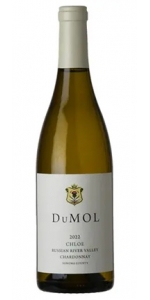
DuMOL 'Chloe' Chardonnay is made from 100 percent Chardonnay.
Our first vintage of Chloe was 2000, and although the vineyard mix has changed over the years, the wine has always focused on the central Russian River Valley district to represent the richest side of DuMOL Chardonnay. The wine has lower acidity than our coastal wines, making it more approachable in its youth, and the flavors focus more on orchard fruits than citrus. The neighboring El Diablo and Flora Marie vineyards sit overlooking the river on gravelly loam soils and provide the wine's deep fruit generosity. These are the first vineyards we harvest each year as the lean soils really advance their crop’s ripening. We offset this fruit richness with grapes from our Green Valley Bressay Estate, which overflow with tense structure and coastal acidity. It’s a seamless combination that produces a thrilling result, and Chloe is the first of our designate Chardonnays you should open each vintage.
The wine’s aromas and flavors are akin to peach, apricot, oatmeal and anise. Fresh thyme and honey notes combine with tangerine and lemon curd. It’s a deeply textural and expansive wine that gently glides along the palate. Lively acidity and spicy notes of ginger and white pepper provide lift and energy to the finish. A beautiful, layered, and richer style to enjoy soon after release. Drink between late-2024 and 2029 and serve no cooler than 55º F.
Review:
A Central Russian River Blend, the 2022 Chardonnay Chloe is a bright yellow hue and captures a wide spectrum of citrus with notes of orange, Meyer lemon, fresh pineapple, toasted spice, and a hint of almond through the mid-palate as well as a nice lift of citrus on the finish. It’s a beautiful wine offering a richer tone through the range. Drink 2024-2034.
-Jeb Dunnuck 96 Points
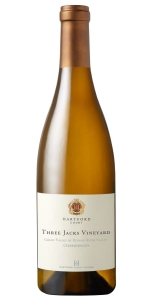
Hartford Court Three Jacks Chardonnay is made from 100 percent Chardonnay.
The Three Jacks Vineyard Chardonnay exhibits aromas of lemon curd, orange marmalade, and brioche, with juicy flavors of pear, candied citrus peel, chamomile, and a rich, mineral-driven texture. The wine is full-bodied, weighty, and rich yet remarkably agile on its feet because of firm underlying acidity.
The 2019 Chardonnay Three Jacks Vineyard, from vines planted in 1995, was barrel fermented and matured in 31% new French oak for 14 months. It's one of the best iterations I've tasted, combining expansive flavor and texture with precise, laser-like acidity. It offers delicate, pure scents of apricot, dried tarragon, white pepper and citrus blossoms with a stony undercurrent. The medium-bodied palate has dynamic energy from its oily texture and shimmery acidity, and it finishes with tense, mineral-driven flavors. It has much more to give as it unfurls in bottle and will be long lived in the cellar.
- Robert Parker's Wine Advocate 95 Points

All older vintage wines have been purchased from a single collectors cellar. Pictures can be requested before shipment.
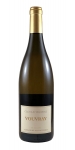
Gaudrelle Monmousseau Clos le Vigneau Vouvray is made from 100% Chenin Blanc
Clos Le Vigneau is a single vineyard from an area known as "les Gués d'Amant" or "Lover's Gap". Most of the vines were planted in 1929.
Off dry in style with honey, earth and apricot notes. Wines from the town of Vouvray have been known to age well for 40 years. This particular bottling should hold for at least 5-7 years.