
" We don't sell the wine without touching the vine "
Vignobles Lassagne is owned by Nicolas Lassagne and his wife Sabrina. It encompasses three properties, beginning with Chateau des Arnauds, which was founded 1952 by Paul Lassagne, Nicolas' grandfather. He started with only 2 hectares and grew to 7 hectares. In 1979. Nicolas’ father Daniel joined the winery and bought more vineyards surrounding the cellar, increasing acreage to 29 hectares. Nicolas came on board in 2001, continuing family traditions and bringing his own expertise to his role of winemaker. With the acquisition of Chateau Maltus in 2015, Vignobles Lassagne now has 32 hectares (80 acres) of vineyards. Vineyards are planted with Merlot, Cabernet Sauvignon and Cabernet Franc.
Vignobles Lassagne encompasses these three properties:
No products found
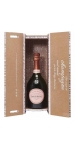
Laurent-Perrier Cuvee Rose Petal Jacket NV is made Pinot Noir from 10 crus in the Montagne de Reims
After the “Signature”, “Constellation”, “Safari”, “Butterfly” and “Bamboo” robes, Laurent‑Perrier unveils “Petals”. A robe of light where Dalhia or Strelitzia petals are subtly woven in iridescent Pop colours. A harmony of colours in shades of red and pink with highlights of orange or blue, recalling all of the fresh, crisp nuances of the red and black fruit palette of this great rosé champagne.
Laurent‑Perrier has been designing a reusable metal case with its clasp since 2017, to enhance the quality of the wine, matching the generously shaped Cuvée Rosé bottle.
The Cuvée Rosé from Laurent-Perrier is the most recognized rosé champagne in the world. The house uses its proprietary maceration technique and the wine is crafted for a fragrance and not mixed for a color. Held in an elegant bottle inspired by King Henri IV, it has been widely acknowledged for its consistent high quality for more than 40 years, and it is the benchmark for rosé champagne around the world.
Laurent-Perrier Cuvée Rosé is truly remarkable for its highly expressive bouquet, stemming from very careful preservation of fresh fruit aromas during the wine making. Made with 100% Pinot Noir from 10 different "crus " (or villages), from the North and South areas of the Montagne de Reims, as well as the famous village of Bouzy. Grapes from carefully selected plots are meticulously sorted and de-stemmed before going into the vats, and the controlled maceration helps with the color extraction and the development of the full aromatic richness of the Pinot Noir.
Intensely fruity flavors, clean and slightly sharp, the wine opens to the sensation of freshly picked red berries: strawberries, Morello cherries, black currants and raspberries. The finish is supple and rounded.
Its aromatic depth makes it ideal for pairing with marinated raw fish, grilled prawns, exotic dishes, Parma ham and red fruit desserts. Those who are more daring will try it with Asian or Indian cuisine.
Review:
Generosity no less than grace defines this 100% Pinot Noir from ten different crus primarily in the Montagne de Reims. Slightly coppery salmon-pink in the glass, it displays a radiant nose of ripe red berries that pop against glimmers of spiced biscotti and roasted cashew. On a broad palate of pure silk, raspberry and black cherry are underlined by blood-orange rind and crushed rock before a long, almost voluptuous finish that's slightly savory with dried mint.
-Tasting Panel 97 Points
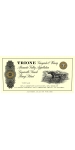
A tribute to the family patriarch, Henry Trione, this deep red wine is an artful blend of the five classic Bordeaux varieties: 35% Cabernet Sauvignon, 34% Merlot, 13% Petit Verdot, 13% Cabernet Franc and 5% Malbec. Cabernet Sauvignon forms the base structure and Merlot contributes fruit flavors and velvety texture; the Malbec, Cabernet Franc and Petit Verdot add depth, color and spice. We harvested the fully ripe grapes from select blocks on three Trione ranches in Alexander Valley, just ahead of early rains.
Winemaker Notes:
Aromas of black currants, blackberry pie and warm spices are the wine’s first impressions. On the palate Henry’s Blend is soft and supple, a seamless integration of ripe fruit, French oak and fine-grained tannins. Delicious now, the solid structure and abundant fruit suggest this wine will age well for 6–7 years with proper cellaring.



