
" We don't sell the wine without touching the vine "
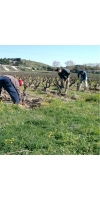
Lirac is a rather substantially sized region of France, located in the Southern Rhone Valley. Lirac is situated to the west of the Rhone Valley. Lirac is most widely known for producing red wine varieties that are full-bodied in addition to a sizeable amount of Rose. Lirac does also produce a minimal quantity of white wine, with those being more weighty varieties of Grenache Blanc, Bourboulenc, and Clairette. Rose from the Lirac region are notably less expensive than the Rose of the nearby Tavel region, however they are an equally, if not better, alternative to the Tavel Rose, as their quality depends more on the juice than on the Prestige of the Tavel name. Lirac and Tavel have come to be fiere competitors for the Rose category. The regions of Lirac and Tavel are only separated by a parish boundary, so both regions benefit from the same climate and excellent drainage with soils consisting of sandstone and limestone. The reds produced by Lirac are the Southern Rhone varieties of Syrah, Grenache, Cinsault, and Mourvedre. These Lirac reds are comparable to the delicate Cotes du Rhone wines. With that success, producers in the Lirac region are also making wine styles similar to Chateauneuf du Pape.
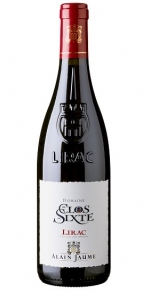
Alain Jaume Domaine du Clos de Sixte Lirac is made from 50% Grenache, 35% Syrah, 15% Mourvedre
An intense red garnet color. On the nose, aromas of red and black ripe fruit (kirsch and wild blackberry). The mouth is full, with aromas of blackcurrant liqueur and spice. Tannins are both harmonious and elegant thanks to the fleshiness of the wine. Hints of licorice and vanilla on the finish, which gives the wine length and complexity.
Soil type LIRAC vineyard is facing Chateauneuf du Pape, opposite side of the Rhône river. As showed by the picture and following geologist George Truc, soils are almost similar in both side. They are marked by the violence wrought by the Rhone river. It consists of a layer of marine molasses of the Miocene period covered by alpine alluvium. The presence of a great number of rounded stones known as "galets" in the earth is evidence of the time when the Rhone, then a torrent, tore fragments of rock from the Alps and deposited them on the plain. LIRAC is one of the up-coming best area from the southern Rhône valley, as it delivers outstanding wines. Winemaking & ageing Traditional wine-making in stainless still vats. Hand sorted bunches, crushed and destemmed grapes. Fermentation temperature : 30°C. 18 days of vatting with pigeages.
Alain Jaume Domaine du Clos de Sixte Lirac is made from 50% Grenache, 35% Syrah, 15% Mourvedre
An intense red garnet color. On the nose, aromas of red and black ripe fruit (kirsch and wild blackberry). The mouth is full, with aromas of blackcurrant liqueur and spice. Tannins are both harmonious and elegant thanks to the fleshiness of the wine. Hints of licorice and vanilla on the finish, which gives the wine length and complexity.
Soil type LIRAC vineyard is facing Chateauneuf du Pape, opposite side of the Rhône river. As showed by the picture and following geologist George Truc, soils are almost similar in both side. They are marked by the violence wrought by the Rhone river. It consists of a layer of marine molasses of the Miocene period covered by alpine alluvium. The presence of a great number of rounded stones known as "galets" in the earth is evidence of the time when the Rhone, then a torrent, tore fragments of rock from the Alps and deposited them on the plain. LIRAC is one of the up-coming best area from the southern Rhône valley, as it delivers outstanding wines. Winemaking & ageing Traditional wine-making in stainless still vats. Hand sorted bunches, crushed and destemmed grapes. Fermentation temperature : 30°C. 18 days of vatting with pigeages.
Alain Jaume Domaine du Clos de Sixte Lirac is made from 50% Grenache, 35% Syrah, 15% Mourvedre
An intense red garnet color. On the nose, aromas of red and black ripe fruit (kirsch and wild blackberry). The mouth is full, with aromas of blackcurrant liqueur and spice. Tannins are both harmonious and elegant thanks to the fleshiness of the wine. Hints of licorice and vanilla on the finish, which gives the wine length and complexity.
Soil type LIRAC vineyard is facing Chateauneuf du Pape, opposite side of the Rhône river. As showed by the picture and following geologist George Truc, soils are almost similar in both side. They are marked by the violence wrought by the Rhone river. It consists of a layer of marine molasses of the Miocene period covered by alpine alluvium. The presence of a great number of rounded stones known as "galets" in the earth is evidence of the time when the Rhone, then a torrent, tore fragments of rock from the Alps and deposited them on the plain. LIRAC is one of the up-coming best area from the southern Rhône valley, as it delivers outstanding wines. Winemaking & ageing Traditional wine-making in stainless still vats. Hand sorted bunches, crushed and destemmed grapes. Fermentation temperature : 30°C. 18 days of vatting with pigeages.
Review:
"I love the dark and meaty aromas of this Lirac, which also has an herbal freshness and just a hint of bitter chocolate. Medium- to full-bodied with licorice and restrained forest berry fruit on the velvety palate. Extremely well-balanced finish. From organically grown grapes. Drink or hold."
- James Suckling (April 2024), 92 pts
Alain Jaume Lirac Rouge Roquedon is made from 60% Grenache, 20% Syrah, 10% Mourvedre, 10% Carignan.
A blend of Grenache, Syrah, Mourvèdre, and Carignan grown on clay and sandy soils, mostly on terraces covered by pebble stones. Lirac is located in front of Chateauneuf du Pape, on the opposite side of the Rhone River.
Lirac Roquedon reveals an intense red garnet color and a nose dominated by a bouquet of red and black ripe fruits (kirsch and wild Blackberry). The mouth is full, with flavors of blackcurrant, liquor and spice. Tannins are both harmonious and elegant. The palate finishes with hints of liquorice and vanilla, which brings length and complexity to the wine.
Traditional wine-making in stainless still vats. Crushed and destemmed grapes. Fermentation temperature : 30°C. 18 days of vatting with pigeages. Ageing mainly in vats and about 10% in oak barrels. Bottling 15 months after the harvest.
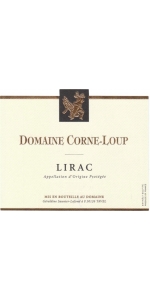
Corne Loup Lirac Rouge is made from 50% Grenache, 40% Syrah and 10% Mourvedre
Dry - less than 4 grams/liter
Color: dark red ruby.
Aromas: red berries, truffles and spices.
Flavors: complex and rich. It shows red and black fruits, with an herbal spice type of aromas coming from the surrounding vegetation (Garrigue).
The average age of the vines is 40 years. (The oldest vines are 80 years old).
The soil is mainly sandy marl and small pebble stones.
Pairs with lamb, duck, turkey, red meat, game and cheese.
Corne Loup Lirac Rouge is made from 50% Grenache, 40% Syrah and 10% Mourvedre
Dry - less than 4 grams/liter
Color: dark red ruby.
Aromas: red berries, truffles and spices.
Flavors: complex and rich. It shows red and black fruits, with an herbal spice type of aromas coming from the surrounding vegetation (Garrigue).
The average age of the vines is 40 years. (The oldest vines are 80 years old).
The soil is mainly sandy marl and small pebble stones.
Pairs with lamb, duck, turkey, red meat, game and cheese.
MAGNUMS
Corne Loup Lirac Rouge is made from 50% Grenache, 40% Syrah and 10% Mourvedre
Dry - less than 4 grams/liter
Color: dark red ruby.
Aromas: red berries, truffles and spices.
Flavors: complex and rich. It shows red and black fruits, with an herbal spice type of aromas coming from the surrounding vegetation (Garrigue).
The average age of the vines is 40 years. (The oldest vines are 80 years old).
The soil is mainly sandy marl and small pebble stones.
Pairs with lamb, duck, turkey, red meat, game and cheese.
Corne Loup Lirac Rouge is made from 50% Grenache, 40% Syrah and 10% Mourvedre
Dry - less than 4 grams/liter
Color: dark red ruby.
Aromas: red berries, truffles and spices.
Flavors: complex and rich. It shows red and black fruits, with an herbal spice type of aromas coming from the surrounding vegetation (Garrigue).
The average age of the vines is 40 years. (The oldest vines are 80 years old).
The soil is mainly sandy marl and small pebble stones.
Pairs with lamb, duck, turkey, red meat, game and cheese.
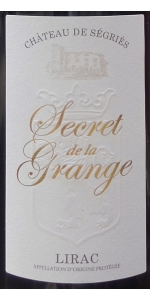
Segries Secret Grange Lirac Rouge is made from 50% Grenache and 50% Syrah.
This is a new wine for Chateau de Segries. 2013 is the first vintage.
The wine is dark and inky.
The aromas are intense and complex. It has fruit flavors of course, Strawberry and Blackberry, but it also have some interesting spice components, garrigue, pepper and licorice.
The finish is long and very pleasant as the tannins are round and well integrated.
La Grange is the name of the parcel where the grapes are grown. The soil is Clay and Limestone.
The average age of the vines is 80 years old.
Classic vinification in temperature controlled tanks. The skin contact maceration lasted 30 days and was completed in cement tanks.
The wine went through MaloLactic fermentation and was bottled without filtration.La Grange is the name of the parcel where the grapes are grown. The soil is Clay and Limestone.
The average age of the vines is 80 years old.
Classic vinification in temperature controlled tanks. The skin contact maceration lasted 30 days and was completed in cement tanks.
The wine went through MaloLactic fermentation and was bottled without filtration.
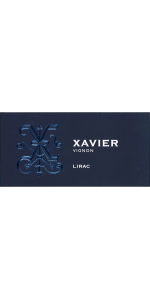
Xavier Vignon Lirac Rouge is made from 80% Grenache and 20% Syrah.
Ripe fruit, ranging from raspberries and cherries to hints of stone fruit. Yet, it's not over the top or simply fruity. This full-bodied wine adds hints of leather, garrigue and licorice along the way, evolving from creamy to velvety on the palate and through the lasting finish.
Pairs with lamb Tagine with dry fruits - Duck breast fillet with green pepper sauce - BBQ Prime rib of beef.
Review:
A focused, dense and serious Lirac red. It has notes of dark berries, dried herbs, bay leaves and baking spices on the nose, following through to a full body with plush tannins. Dense, intense core of sweet berries and spices and a focused finish. Drink or hold.
-James Suckling 91 Points
Force Majeure Cabernet Sauvignon Red Mountain is made from 100 percent Cabernet Sauvignon.
The estate Cabernet Sauvignon is grown primarily along the southwest ridge of the vineyard. The vines produce small berries with bountiful flavor, concentration and intensity, but also a good degree of finesse, excellent structure and layers of complexity that will continue to develop during extended bottle aging for those who want to cellar and age their wines. The wine is powerful, elegant, full-bodied.
Bottled unfined and unfiltered.100% free run
Pumpovers and punch-downs, up to 45 day macerations
Native yeast, 5 day cold soaks
22 months in 75% new French oak barrels
Fermented in concrete and stainless closed top tanks.
Review:
Another gem is the 2019 Cabernet Sauvignon Red Mountain Estate, a deep, concentrated, powerful Red Mountain Cabernet Sauvignon that I suspect will be up there with the legendary wines from this terroir. Beautiful cassis, graphite, lead pencil shavings, and damp earth notes give way to a full-bodied effort that has a liqueur of rocks-like minerality, flawless balance, building yet polished tannins, and a great finish. Hide bottles for 4-5 years, and it will evolve for 25-30 years if properly stored. Best After 2026.
-Jeb Dunnuck 98+ Points
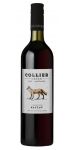
Collier Creek Crafty Fox Merlot is made from 93% Merlot and 7% Teroldego.
Nestled in the heart of the Lodi Appellation, where farmland ran as far as the eye could see, Collier Creek is a place that reminds us of simpler times. Make like a Crafty Fox and fill your den with Merlot that digs into notes of dark fruit and vanilla with a velvet mouthfeel and dry finish.
RS: 3 g/L
TA: 5.5 g/L
Pair with grilled tri-tip, veal scallopini, burger w/ gorgonzola & caramelized onions, classic baked lasagna.



