
" We don't sell the wine without touching the vine "
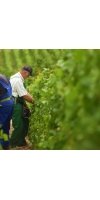
Frédéric Barnier joined Maison Louis Jadot in 2010 as Technical Director, working under the guidance of Jacques Lardière. For 42 years, the legendary Lardière was responsible for the winemaking and bottling of all Maison Louis Jadot wines, and he is considered to be one of Burgundy’s finest winemakers. He briefly retired, then came out of retirement to launch Resonance Wines, Jadot’s new brand from Oregon. Frédéric now leads the winemaking team with the Maison Louis Jadot philosophy: no compromise on quality.
Maison Louis Jadot was founded in 1859 by the man whose name it bears, Louis Henry Denis Jadot. The first of his family arrived in Beaune from Belgium in 1794 and soon began purchasing Premier and Grand Cru vineyards. With grape growing a part of his heritage, Louis Henry set about gaining experience first in the cellars, in the evaluation of wines, and then in the vineyards, in the study of viticulture.
Jadot invests in Burgundy, only purchasing grapes from the highest quality producers where they have a relationship and vinifying the wine on-site rather than buying ready-made wines.
For its Beaujolais and Mâconnais wines, Jadot practices a further, though expensive, practice called réplis, in which wines of a higher appellation are incorporated into a wine bearing the appellation below them. Thus, for example, Jadot’s Beaujolais-Villages will customarily contain a percentage of wines from Beaujolais crus.
Maison Louis Jadot’s principles of vinification balance tradition and technology, and focus on the purest expression of each wine’s terroir, taking the lightest possible hand in winemaking and a restrained use of oak maturation. For its village level Côte d’Or wines, Jadot practices a further, though expensive, practice called réplis, in which wines of a higher appellation are incorporated into a wine bearing the appellation below them.
Jadot’s cellar practices, including long macerations, the choice of wild yeast when possible for fermentation, fermentation temperature and other winemaking methods are also designed to preserve the character of the fruit in the wines. For both red and white wines, Maison Louis Jadot places great importance on the restrained use of new oak in the aging process. Time in cask and percentage of new oak is dictated differently by each vintage. In keeping with its non-interventionist philosophy, Jadot considers that very great vintages, complete and harmonious by themselves, require minimum contact with new oak.
In 1970, aware that Maison Louis Jadot’s future growth lay in its increasing role as owner-producer, Gagey engaged Jacques Lardière, a brilliant young enologist, as his assistant and eventual technical director. Lardière, now retired, is today acknowledged as one of Burgundy’s finest winemakers, an artist with the reins of nature in one hand and those of technology in the other. In 1984, André Gagey’s son, Pierre-Henry Gagey, joined the firm. He had a strong background in business administration and management, and an inherited knowledge of wines. In February of 1985, the négociant firm of Maison Louis Jadot was purchased by the owners of Kobrand Corporation, sole United States importer of Jadot Burgundies since 1945. In 1991, Pierre-Henry Gagey assumed the position of President, and in 2012 upon Lardière’s retirement, promoted Frederic Barnier to succeed him.
As Louis Henry traveled he acquired a faithful clientele, and in 1859 purchased the respected négociant firm of Lemaire-Fouleux and gave the firm his name. After his death, his son, Louis Baptiste Jadot, enthusiastically carried on the work his father had begun. He expanded his export markets as well as his clientele in France, reinvesting his profits in the acquisition of vineyards in some of the finest and most famous Grands Crus and Premiers Crus of the Côte d’Or.
In 1939, Louis Baptiste Jadot died and left control of the firm to his eldest son, Louis Auguste Jadot, who had assisted in the direction of the business under his father since 1931. He opened and greatly developed the new export market of the United States, as well as those of Great Britain, Holland, South America and New Zealand.
In 1954, André Gagey joined Maison Louis Jadot as assistant to Louis Auguste Jadot. When Louis Auguste Jadot died in 1962, survived only by his wife, André Gagey was appointed managing director of the firm. He had full responsibility for its operations, under Mme. Jadot’s ownership and direction. As managing director, Gagey was for nearly three decades responsible for the final decisions over selection and purchase of all grapes and wines bottled under the Jadot label, as well as the care and maintenance of the vineyards within the Jadot estate.
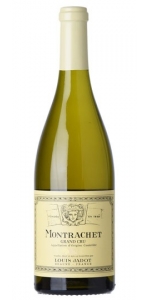
Louis Jadot Montrachet Grand Cru is made from 100 percent Chardonnay.
Le Montrachet is situated to the south of the Côte de Beaune, on both villages of Puligny Montrachet and Chassagne Montrachet (like the Batard Montrachet Grand Cru).
The terroir is extremely chalky with a lot of stones, perfectly drained and easy to overheat with south-south-eastern exposition.
The Montrachet is produced with Chardonnay
Grapes are harvested by hand and put in small cases in order not to damage the fruits. Grapes are pressed softly, they ferment in oak barrels produced by our cooperage. 1/3 are new barrels. Aging usually lasts 15 months on fine lies before bottling.
Review:
Aromas of buttered toast, honeyed peaches, white flowers and mint introduce the 2019 Montrachet Grand Cru (Maison Louis Jadot), a full-bodied, layered and enveloping wine that's satiny and sumptuous, with lively acids and fine depth at the core. While I'd give the nod to the stunning Demoiselles as Jadot's best white wine this year, this Montrachet—purchased from the Chassagne-Montrachet side, from the house's usual source—is undeniably promising.
-Wine Advocate 94-96 Points

All older vintage wines have been purchased from a single collector’s cellar. Pictures can be requested before shipment.
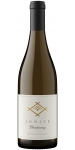
Jonive Chardonnay Russian River Valley is made from 100 percent Chardonnay.
Jonive’s Moon Dust Vineyard is planted to a range of clones, imparting unique characteristics and quality to the wines. 100% estate-owned vineyard planted in 1998 and 2007. Goldridge (Moon Dust) soil over clay loam. Eastern/Southern Exposure.
The wine has a typical light straw color and complex aromas of lemongrass, nutmeg, Meyer lemon, fresh oregano, and a touch of passionfruit. This Chardonnay has an enveloping mouthfeel that is at once crisp and linear as well as rich and expansive, a very unusual and beguiling combination of textures and mouthfeel. The browning of clone 17 enables the wine to be rich, but at a lower alcohol, and clone 95 contributes beautifully fresh acidity. The palate shows jasmine, honeydew melon, tarragon, lime, and lemongrass with a nice kiss of high-quality French oak. The extended lees contact gives the wine amazing length, energy, and vitality.
353 cases produced
14-month barrel aging in 67% new French oak barrels, 20% once used and 13% neutral
61% clone 17/Robert Young and 39% clone 95
13.3% alcohol
Reviews:
"This unfiltered Chardonnay explodes from the glass with brilliant aromas of fresh lime peel, orange blossom, chalk and green pear. The palate displays all of that aciddriven freshness, with flavors of juicy tangerine and flowers leading to a finish with echoes of salty lime zest."
— Tom R. Capo, 2025 Wine Enthusiast 95 Points



