
" We don't sell the wine without touching the vine "
Marañones Winery is a coming together of vineyards and people. Our winery logo conveys this idea through the representation of various spaces assembled into one.Our people are devoted to wine making. Our wines reflect the nature, the character of both vineyards and people. This is our company.
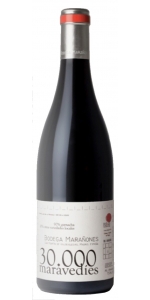
Maranones 30.000 Maravedies Vinos de Madrid Sierra Gredos is made from 90% Garnacha and 10% local grape varietals called Morenillo (Morate).
“The first of our red wines would be 30,000 maravedíes, which is our Comarca wine, a regional wine, village wine.
30,000 maravedíes is the coming together of all soils, orientations, dominantly Garnacha at 90 percent with a remaining 10 percent of local grapes.
The name also reflects the union between history, the winery, the structure and the place. Álvaro de Luna paid 30,000 maravedíes to buy the whole region from the monks who fostered the cultivation of the vine. It is a historical name. It refers to what was paid for the Valley and pays homage to the Valley. It also evokes what the monks had developed. This history is part of our heritage and we continue it.
This village wine wants to tell you the whole history of the Valley. At the end it delivers a structure tending towards the mineral, the floral, length, fruitiness and ease of drinking.”
30-70 year-old vines produce a vibrant, fresh wine that boasts juicy red berry, wild herb, flower and balsamic flavors with hints of sweet spice. Smooth tannins provide finesse and longevity.
-150x300.jpg "Maranones Garnacha Vinos de Madrid Sierra Gredos 2020")
“Marañones is so to say our signature vine. This is why the winery was named after this location.
It is part of the mountain at 800 m in altitude, oriented North. We find there the three types of granite of San Martin: the white granite, the brown and the pink. Each vineyard at Marañones has a different soil. Some are on a hill. Others are more towards the plains.
In this wine we wish to convey the Marañones area so representative of the whole winery. this is why we make this wine from the great Garnacha grape. We use a mix of vines since it is not a Parcela wine, which would be much more delicate and of more limited production.
The 100 percent Garnacha expresses itself fully, both in the nose and in the mouth, with flavours of blackthorn, a sensation of fleshy fruit retaining a slightly crispy texture. Then comes a full silkiness, with the granularity of these granite soils rich in quartz. That nugget of quartz is noticeable in the texture, length, fineness, elegance and the floral element of the wine.”
bright, ruby Grenache with wild herb, flower and crunchy red fruit flavors. Sharp tannins add structure to this full-bodied wine.
Pago de Carraovejas El Anejon is made from 93%, Cabernet Sauvignon 5% and Merlot 2%.
El Anejon vineyard is a terraced plot on a steep slope, oriented toward the sun and with great views of the Castle of Peñafiel. The soil of the narrow terraces has a compact, loamy limestone texture. The presence of the white-colored limestone calcium salts contributes to a distinctive minerality in this wine. Only made in exceptional vintages.
Review:
"A single-plot wine from the top terraces of the site from an excellent vintage, the 2021 El Anejon is powerful and truly outstanding. Tempranillo is blended with Cabernet Sauvignon and Merlot to an exceptional end, aged 12 months in larger French oak barrels after a triple selection of the grapes. Sharp red fruit has an underbelly of herbal earthiness beneath the fruit, while tight, refreshing acidity accentuates the mineral-driven texture. Bottled in June 2023, this might be the producer’s best wine of the vintage, which is saying a lot, as they’re all of outstanding quality. This will hit a high point in 5-7 years and keep going another 20. - Virginie BOONE"
- Jeb DUNNUCK (August 2°25), 98 pts
Thorn Clarke Terra Barossa Cabernet Sauvignon is made from 100% Cabernet Sauvignon
The range is named is named in honor of the rich soils in the region which are a major factor in the Barossa’s reputation as one of the great wine regions of the world.
The wine shows a bright red with a purple hue on release. Lifted blackcurrant balances the fresh herb characters on the nose. A hint of eucalyptus is evident. The palate has bright currant characters throughout. Spice and chocolate add to the complexity of the wine. The tannins are ripe and grainy and give the wine good structure.



