
" We don't sell the wine without touching the vine "
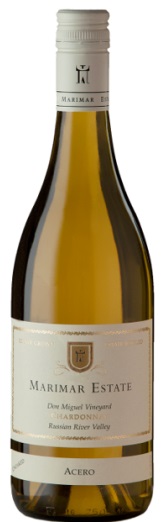
| Country: | United States |
| Regions: | California California (Sonoma County) |
| Winery: | Marimar Estate |
| Grape Type: | Chardonnay |
| Vintage: | 2011 |
| Bottle Size: | 750 ml |
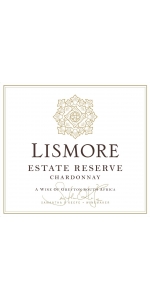
Lismore Chardonnay Reserve made from 100 percent Chardonnay.
A careful selection of the best of the vintage that exemplifies the extraordinary terroir of Lismore. This Reserve Chardonnay shows intense citrus, stone fruit, jasmine and walnut layered with honey and vanilla carried by a distinct minerality and crisp acidity with a lingering citrus finish.
Wine Made in the Soil
The vineyards are planted in decomposed shale over clay at 300 meters in the foothills of the Sonderend Mountain Range. A low mean February temperature lends to an extended ripening period that can put harvest 3-4 weeks later than traditional wine growing regions in South Africa. The intense citrus notes and the lingering finish are consistent trademarks of Lismore's specific terroir. The restrained minerality of the Chardonnay is a clear indication of the cool climate in which it is grown.
Wine of Origin "Greyton" has been designated by SAWIS recognizing the special terroir of this region.
Delightful with warm curries which lift the aromatics or a traditional pairing of smoked salmon highlighting the fresh acidity.
Review:
100% Chardonnay matured in Burgundian oak (33% new) for 11 months. This Reserve Chardonnay shows intense citrus, stone fruit, jasmine and walnut layered with honey and vanilla carried by a distinct minerality and crisp acidity with a lingering citrus finish.
-Karen McNeil 95 points
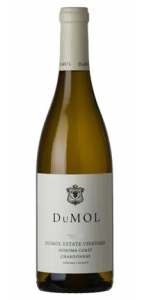
Our organically farmed high-density Estate parcel sits at the top of the ridge amongst the diverse coastal forest. Although the soil is sandy, there’s a vein of clay in the subsoil that holds winter rain and allows us to dry-farm the vines. The tight spacing keeps the clusters and soil shaded during the summer heat, which allows the fruit to retain all the nuance of the site. The wine produced here has a character - a signature - all to itself and cannot be replicated elsewhere; it's the antithesis of fruity, forward, easy-to-understand Californian Chardonnay. The grapes are small with thick skins, producing a high level of fruit extract, which translates to deep texture and structure in the wine itself. Concentration allied to freshness is the essence of this wine, and it ages beautifully in bottle for ten to twelve years.
The wine’s aromas and flavors are incredibly complex and diverse, akin to citrus oil, preserved lemon, sage, fennel and caraway. The wine is deep, powerful, and layered with oyster shell freshness cutting through the natural density. Lemongrass, spearmint, and grapefruit power the finish, which pulsates with intensity. You could decant this for an hour before serving to hasten its development. Drink between 2025 and 2030. Serve no cooler than 55º F.
Review:
From a site surrounded by dense forest on two sides, the 2022 Chardonnay DuMOL Estate Vineyard is a bright straw hue and has a more vibrant aromatic nose of fresh mint, bright lime, flint, crushed stones, and white peach. Medium to full-bodied, it boasts a remarkably firm structure with a bit of tannin, a chalky texture, and a savory slanting profile, and it’s long and persistent on the finish. It has an assertive but crystalline feel and a crunchy brightness. It demands a bit of time. Drink 2025-2035.
-Jeb Dunnuck 96 Points
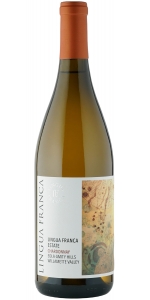
Floral notes leap out of the glass of the 100% Estate-grown Chardonnay 2022, with notes of jasmine, gardenia and lemon blossom. The contribution of low-yielding CH548 blocks seem to impress their character on the late vintage. The palate is round and fresh, entering with green apple and creamy lemon, which develop into chamomile and sea salt, with a round-textured, long finish of floral and saline notes.
The Estate Chardonnay will be an excellent accompaniment to rich and subtle dishes such as halibut with chanterelle sauce, plank smoked copper river xalmon with dill mayonnaise, Lobster Newberg, Quenelles de Brochet avec sauce a l’Armoricain, black cod with shellfish sauce. It is equally delightful with more casual dining options featuring béchamel sauces or cheese-rich dishes, such as a fondue, pasticcio or even lasagna.
Revieww:
The medium yellow/straw-colored 2022 Chardonnay Estate has a forward feel in the glass, with a great nose offering notes of bright flinty reduction, green apples, lime zest, and white flowers. Medium-bodied and long on the palate, it has persistent drive, with a pure savory feel and a graceful saline finish with a note of lime pith. It will drink well over the next 10 years.
-Jeb Dunnuck 94 Points
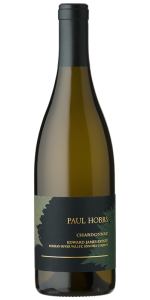
Paul Hobbs Edward James Estate Chardonnay Russian River Valley is made from 100 percent Chardonnay.
This small five-acre estate named after Paul's great-grandfather, Edward James, rewards us with a chardonnay that is pale straw in color with inviting aromas of lemon zest, red apple skin, gardenia, and honeysuckle. A creamy mouthfeel on the palate evolves into poached pear, ginger spice, and brioche that come together with a crunchy acidity and lively finish.
Review:
The 2022 Chardonnay Edward James Estate was named after Paul’s grandparents on his father’s side and originates in a vineyard planted entirely to Hyde Wente clone of Chardonnay. It was raised in French oak for 18 months on the lees. In the glass, it’s highly expressive and layered with aromas of toasted spice, incense, honeysuckle, quince, and preserved citrus. Medium to full-bodied, it has a fantastic, long, supple texture with a linear, crystalline feel, great, evenly fresh acidity, and a salty, mouthwatering finish. This is my favorite of the white wines at this tasting. Drink 2025-2037.
-Jeb Dunnuck 97 Points
Paul Hobbs George Menini Estate Chardonnay is made from 100 percent Chardonnay.
Located on the southwestern edge of the Russian River Valley appellation in an area known as the Sebastopol Hills, this Chardonnay from George Menini Estate displays pale straw in color and boasts an elixir of white and yellow florals, tart yellow apple, bartlett pear, and baking spice. A precise yet supple wine with notes of juicy Gravenstein apple, vibrant sea salt, and crushed rock, complemented by a cool-climate zing of acidity. An impressive level of complexity for a young vineyard.
Review:
Lots of pears and pear blossom with lemon rind undertones. Medium body with plenty of fruit and energetic acidity with a pumice undertone. Some terra-cotta, too. Flavorful finish. Salty, too. Complex. Lots going on here. Drink or hold.
-James Suckling 97 Points
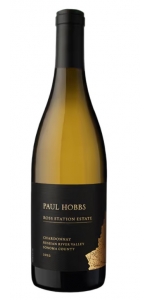
Colored in pearlescent pale straw tones flecked with gold, our 2022 chardonnay from Russian River Valley’s cool Green Valley opens with a refreshing swirl of clover and fresh-cut alfalfa laced with spring blossoms around hints of white peach and citrus that open to crisp Fuji apple and warm baking spice. Apple notes carry through in the mouth over complex layers of crème caramel and butterscotch, all lifted with the bright energy of juicy acidity and savory oyster shell minerality. The rich, structured finish is touched with sea salt—the briny tension in elegant balance with a touch of new oak.
Green tint to the light yellow color. A very tight 2022 for this hot vintage, showing tension and focus. Medium- to full-bodied with super integrated tannins that show such length and intensity. It gives a beautiful nod to grand cru Burgundies of yesteryear. Love this. Drink or hold.
-James Suckling 97 Points
Technically from Green Valley of the Russian River Valley, the 2022 Chardonnay Ross Station Estate is a bright yellow green hue and comes from the Hudson Vineyard, which sits on pure Goldridge soils and includes some of the later ripening Calera clones. Aged 18 months in barrel, the wine has a Grand Cru-like richness and layered depth. In the glass, it shows off a wonderful bouquet of candied apple, honeysuckle, lemon oils, and almond. The palate is rounded, with a silky texture and great acidity that propels it through the palate to its long finish with notes of almond. This is an exceptional wine to drink over the next 10-12 years. 460 cases were produced. Drink: 2024-2036.
-Jeb Dunnuck 97 Points
Don Miguel Vineyard
Russian River Valley AVA
Why "Acero"?
Acero is the Spanish word for steel and refers to the fact that this wine has never seen any oak. Especially selected for fruit intensity and aromatics, the grapes are fermented in stainless steel to capture the purity of the flavors. After completing malolactic fermentation, the wine is kept in the tank until bottling in late spring.
The Clones
The blend of clones in the 2011 Acero is 67% See and 33% Rued.
The Vinification
The grapes were harvested October 1-2, gently whole-cluster pressed and cold fermented together in stainless steel tanks at 55 degrees F. After completing the primary fermentation, the wine went through 100% malolactic in the same tank. It was bottled in August 2012.
Tasting Notes
This is another classic bottling of Acero -- attractive bright fruit, fresh and lively, with notes of lemon cream, white peach and ginger. Crisp and vibrant in the mid palate, it shows great balance, full flavors and a dry, long finish. It is easy to drink and to enjoy, perfect with foods like tapas and light dishes. I would recommend serving it at 46-48 F.
The Marimar Estate
Exporting a Legacy To California
Nestled in the rolling hills of western Sonoma County, the Russian River/Green Valley appellation is a perfect microclimate for growing Chardonnay and Pinot Noir. Only 10 miles from the Pacific Ocean and 50 miles north of San Francisco, the site is influenced by the sea's cooling breezes and drifting fog. That is why Marimar Torres selected this privileged location to "export" the Torres family legacy of fine wines to California.
A Catalan Farmhouse-Winery
Built in 1992 with a capacity of 15,000 cases, the winery sits on a hill surrounded by vines. The production wing is outfitted with carefully selected equipment, to allow the control essential to producing a wine based on minimal handling. Its three barrel rooms with independent temperature and humidity controls provide flexibility to experiment with various vinification techniques, in order to best express the fruit's character.
The Marimar Vineyard
The Don Miguel Vineyard: A Unique Site
Marimar came to live in California in 1975. After two years of searching, she acquired the land and began planting the vineyard in 1986. Today there are 30 acres planted with Chardonnay and 30 with Pinot Noir. The wines are made entirely from estate-grown grapes. Named in honor of the late patriarch of the family, the vineyard is unique in California because it is totally European in style. The vines are trained very close to the ground on an open vertical trellis, following the slope of an east-facing hillside; the rootstocks are phylloxera resistant; and the planting density is 2000 vines per acre, four times more than is traditional in California. Such high density promotes root competition and diminishes vigor, naturally reducing the output per vine.
Yields are low and labor is intensive, but the vines live longer and produce grapes with greater concentration of flavors, more refined and elegant aromas, and better balance. To contribute complexity, Marimar did extensive research to select several clones of each varietal: See, Rued and Spring Mountain for Chardonnay; and Cristina 88, Swan, Pommard, Lee, Dijon 115 and Dijon 667 for Pinot Noir. Each clone brings different attributes to the final blend, resulting in wines with deep layers of flavor
Grand Veneur Chateauneuf-du-Pape Rouge Les Origines is made from 50% Grenache, 30% Mourvedre and 20% Syrah
Matured in vats (grenache) and in oak casks (syrah and mourvèdre).
Deep and brilliant, purple-red colour. An exciting nose with aromas of black fruit (blackcurrant, cherry) spices and vanilla. This great aromatic complexity is found on the palate : the spices and ripe fruit appear with an elegant woodiness and harmonious tannins. The finish has good aromatic length and introduces a touch of liquorice and pepper.
A terrific Châteauneuf du Pape with great concentration and finesse.
Best between 2 and 20 years. Best to decant if young (less than 5 years old).
Soil type Extreme north of Châteauneuf du Pape. This plateau is made with a high quantity of red clay mixed with rocks. This area is considerated to be one of the best to produce rich and powerful red wines. By definition, LES ORIGINES will always deliver a great complexity and ageing potential. Winemaking & ageing Harvest is sorted by hand, destemmed and crushed. Fermentation temperature is controlled at 30°C. Vatting period of 18 to 20 days. Matured in vats (grenache) and in oak casks (syrah and mourvèdre).
Review:
"The 2019 Châteauneuf Du Pape Les Origines is also deep purple-hued and has a classic bouquet of crème de cassis and blackberry fruits intermixed with notions of graphite, chocolate, and spicy wood. Rich, full-bodied, and concentrated, this is beautifully done and despite its more modern elevage, it has plenty of Provençal character and charm."
- Jeb Dunnuck (October 2020), 94-96+ pts
"Warm in feel, with a gush of plum puree and blackberry paste flavors, liberally laced with black licorice and roasted alder notes. A solidly built, modern version, with a nice tug of warm earth on the back end. Best from 2022 through 2034. —J.M."
- Wine Spectator's Insider (June 9th 2021), 93 pts
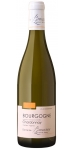
Boussey Bourgogne Blanc Cote d'Or Vieilles Vignes is made from 100 percent Chardonnay.
The grapes for Bourgogne Blanc Chardonnay Vieilles Vignes are grown on a parcel located within the city of Meursault.
The wine displays a refreshing nose of lime, citrus fruits, flint, honey and a touch of dried fruit. The palate is full of flavors, with honeysuckle, citrus and some salinity with an excellent balance between acidity and roundness.
Pair with cheese, seafood, nems, Spanish tapas and apple tart.



