
" We don't sell the wine without touching the vine "
| BUY MORE! SAVE MORE! | ||||||||||||||||||||
|
| Country: | United States |
| Regions: | California California (Napa) |
| Winery: | Prestige Wine Company |
| Grape Type: | Cabernet Sauvignon |
| Organic: | Yes |
| Vintage: | 2020 |
| Bottle Size: | 750 ml |
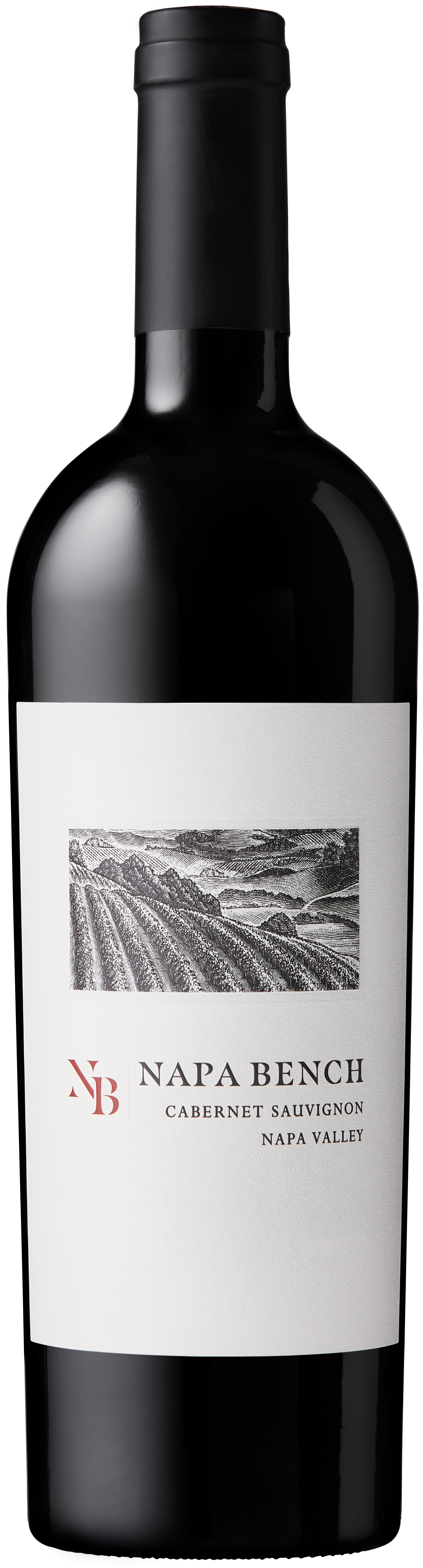
Napa Bench Cabernet Sauvigon Napa Valley is made from 95% Cabernet Sauvignon, 3% Merlot, 2% Petite Verdot.
The wine is aged in French oak barrels for 16 months.
The Bench lands of Napa Valley are where we find Cabernet Sauvignon with Power and Strength. Elegant and supple tannins complete the structure. Bench lands are the geological middle ground that connect the Valley Floor with the Mountain rises, perfectly drained soils!
NAPA BENCH Cabernet Sauvignon is a sophisticated blend of Napa Valley Cabernet Sauvignon. We start with Cabernet Sauvignon 95%, blend Merlot 3%, and finish with Petite Verdot 2%. The wine is aged in French oak barrels for 16 months.
Tasting Notes
NAPA BENCH is rich and flavorful. Red and dark fruits are apparent in the nose with Plum, Currant and Blackberry tones. The aroma is layered and shows the power of Cabernet and of oak nuance. The pallet is fine grained tannin, long and refined with a high degree of Deliciosity! The finish lingers and invites a second glass. Share with your favorite friends, and always with your hottest date.
One of the most experienced wine industry experts in California, Tom Hinde has extensive expertise in all facets of the wine business – from vineyard cultivation to winery management and hands-on artisan winemaking – his broad skill set has been instrumental in the success of many brands created by him.
Tom’s impressive resume spans over three decades with prior posts at some of California’s most acclaimed wineries: from 2005 to 2010, Tom was President, CEO and Director of Winemaking for Flowers Vineyard and Winery, a specialty Pinot Noir and Chardonnay producer located on the Sonoma Coast.
From 1997 to 2005, Tom was General Manager for Kendall-Jackson Wine Estates and helped develop two famed Napa Valley Cabernet Sauvignon programs as part of the winemaking teams for Lokoya and Cardinale. Additionally, Tom supported the winemaking team at Stonestreet Winery and launched the world-renowned Vérité Estate. For seven years, Tom was General Manager at La Crema and Hartford Family Winery where he helped build La Crema into one of Sonoma County’s most prominent wine producers.
At Prestige, Tom has leveraged his longstanding grower relationships to source from Napa Valley’s most sought-after fruit, providing him with the top-quality grapes necessary to craft the finest Cabernet Sauvignon from the region. From Sonoma County, he and David outsource the best fruit from Russian River Valley region one of the best wine growing regions in the world. This combined with Tom’s deft winemaking approach and exceptional palate has propelled the highly coveted wines world-wide.
Tom has a Bachelor of Science degree in Business Administration from the University of Toledo and a winemaking certificate from the highly regarded University of California, Davis. Tom lives in Santa Rosa and Truckee, California, with his wife and three children.

Quattro Theory Chardonnay Napa Valley is made from 100 percent Chardonnay.
VISION: Working with cool-climate fruit, Landon achieves a Napa Valley Chardonnay that is more traditional in style with balanced acidity, minimal oak and non-malolactic fermentation to highlight a full range of varietal fruit expression, taking inspiration from the coastal Chardonnays of Sonoma County.
VINEYARDS: The grapes for this Chardonnay are sourced from two vineyards: three blocks in our estate Vista Montone Vineyard located just east of Carneros, and Frasamani, a long-term grower partner vineyard located in the southernmost part of Carneros. These sites were selected for the variety of vineyard aspects (N, NE) and various vine age, soils and clones, which offer a complex palette of aromas, flavors and textures. The grapes are harvested by hand at night in small lots over a few weeks, picked when perfectly poised to achieve the vision for our wine style. GROWING SEASON: 2022 brought dry conditions given the persisting drought. Harvest started earlier given the warm temperatures with the fruit showcasing balanced acidity and freshness with remarkable flavors and textures. Even though yields were down, quality was excellent.
WINEMAKING: Our cellar is set up to handle each lot individually through the winemaking process, with every step intentionally designed to emphasize the natural aromatic and varietal character with minimal intervention. Each pick is whole-cluster pressed over two hours, with 23 check ins to ensure desired style— a gentle, yet labor-intensive program to help retain natural acidity and to isolate the exact desired press of juice. The juice is gently pumped to stainless-steel tanks then chilled to undergo cold stabulation for 5 days, keeping the light juice lees in suspension to enhance aromatics. The juice is then racked off the lees to each vessel and individually inoculated to begin a cold fermentation to completely dry, and then rests on the lees (yeast) for 6 months for a final build of body and flavors before the blend is assembled.
EXPERIENCE: With its expressive flavors and restrained oak presence, this Chardonnay offers the balance, structure and complexity to make it a perfect white wine option to go with food or enjoyed on its own. This wine’s range of fruit flavors includes crisp Asian pear, to stone fruit to tropical fruit. Suggested pairings include pan-seared scallops, butternut squash ravioli and mushroom and mozzarella pizza.
Review:
Bright, fresh green apples in the nose and tangy, appetizing lemon zest and kiwis on the palate give this lively wine a palate-cleansing expression that will be fantastic for pairing with fish, shellfish and poultry.
-Wine Enthusiast 93 Points

I feel this wine expresses the greatness of California and its hidden pockets where Cabernet can excel. The cold Pacific Ocean running the entire length of the state presents maritime influences – and with each small distance eastward the climate warms. Stony soils, south facing slopes and moderately warm conditions are the keys to producing dark, rich and good tasting Cabernet.
A small release from Caymus Vineyards, this wine is a California-appellation Cabernet Sauvignon – supple, dark and rich, bearing the signature hallmarks of Caymus. It is sourced from sites throughout the state which feature climatic conditions, soils and topography that are ideally suited to Cabernet. This project stems from excitement over California's diverse vineyard land, often in lesser-known areas, with the potential to produce exceptional Cabernet.

Bella Union by Far Niente Napa Cabernet Sauvignon is made from 77% Cabernet Sauvignon, 15% Merlot, 5% Malbec, 2% Cabernet Franc, 1% Petit Verdot.
The 2021 Bella Union Napa Valley Cabernet possesses beautiful and intriguing aromas of dark plum, black cherry, hints of clove and barrel spice. The palate is well-structured with velvety tannins complemented by generous layers of fruit flavors of blackberry, fig, and raspberry preserves that give way to a melting finish.
Review:
With small percentages of Merlot, Cabernet Franc, Malbec, and Petit Verdot, this exquisitely aromatic and textural Cabernet begins with a perfume of crushed violets and black cherry. Concentrated flavors of blackberry liqueur, vanilla, and sandalwood flow across chewy, velvet- lined tannins.
-Tasting Panel 95 Points

Our 2021 Gaspare Vineyard Cabernet Sauvignon is made from our grapes grown on the BSEW Estate in the Gaspare Vineyard blocks. Our vineyard is located in the Oak Knoll District of Napa Valley, which is known for it’s moderate growing climate which encourages consistent ripening throughout the growing season. Our 2021 vintage exhibits aromas of blackberry, brown sugar and cedar. It has a dark fruit flavor finished by powerful but elegant.
Review:
The 2021 Gaspare Vineyard Cabernet Sauvignon has a deep garnet-purple color. The nose is a little trapped behind the oak at this youthful stage, allowing glimpses and blackcurrant jelly and juicy plums notes with hints of menthol and anise. Full-bodied, the palate similarly sports a good amount of oak, backed up by the seductive black fruits and approachable, grainy tannins, finishing with a spicy kick.
-Wine Independent 93 Point

Silver Oak Alexander Valley Cabernet Sauvignon is made from 95.2% Cabernet Sauvignon, 2.5% Cabernet Franc, 1.9% Merlot, 0.4% Petit Verdot
The Silver Oak Alexander Valley Cabernet Sauvignon 2019 has notes of red cherry, raspberry, blackberry, iris, vanilla and clove. Ruby in color, this elegant wine has great acidity and lift on the mid-palate. Black currant and warm baking spices linger with a deep and fruity finish. It will provide drinking pleasure through 2047 given proper cellaring.
Review:
Silver Oak's 2020 releases of Napa and Alexander Valley Cabernets are downright impressive. Tasted four years after the fires, in September of 2024 at the Alexander Valley winery, neither wine showed any sign of the hardened tannic structure or overwrought fruit often associated with the vintage. Instead, these wines remain true to Silver Oak’s signature style, with blackcurrant, fig, and plum fruits layered with white pepper, sweet cedar, and coriander spice. Medium-bodied, with sculpted tannins that persist through the lengthy finish, the Alexander Valley Cabernet in particular retains all the hallmarks of a balanced, inviting, and vibrant Silver Oak red.
-Decanter 94 Points
Truly gorgeous, fruity, velvety and enjoyable for a full-bodied cabernet. It is rich in blueberries, cherry cream, black cherries and raspberries on the palate, with very smooth, layered tannins and a soothing mouthfeel. So easy to drink now, but it will age well, too.
-James Suckling 94 Points

Silver Oak Cellars Napa Valley Cabernet Sauvignon is made from 81.6% Cabernet Sauvignon, 14.8% Merlot, 1.8% Petit Verdot, 1.4% Cabernet Franc, 0.4% Malbec.
Ruby in color, the 2020 Silver Oak Napa Valley Cabernet Sauvignon is a harmony of black and blue fruit notes that dance delicately on the palate. Plum and blueberry intertwine with whispers of baking spices, creating a tapestry of flavors that unfold in layers of complexity. On the palate, it is a study in elegance—smooth and effortlessly refined. Silky tannins provide structure without imposing, ensuring a seamless journey from the first sip to the last.
Review:
A super creamy, delicious and detailed red with oodles of red fruit, silky tannins and a full body. It tastes pure, fresh, almost delicate, offering raspberries, cherry cream, blueberries, cafe au lait and subtle oak toast on the palate. A gentle, layered, pretty wine that seems not at all affected by the wildfire smoke that year.
-James Suckling 95 Points

Bydand Cabernet Sauvignon Napa Valley is made from 100% Cabernet Sauvignon
Aged for 22 months in 80% new French oak, 20% neutral French oak
Rooted in the heart of Napa Valley’s bench-land, Bydand's small but mighty vineyard sources are family-owned estates that share their passion for Napa Cabernet Sauvignon. These hand-picked sites provide a rich diversity of aromas and texture that show off the best of their appellation. Bydand Cabernet Sauvignon delivers charismatic black fruit and earth-driven aromas in a silky smooth package. Juicy blackcurrant and wild blackberries meet graphite, subtle toast and spice on the palate. Structured but seamless, it offers grace and complexity the entire length of its confident, unhurried finish.

Mascot is a small-production label founded by Will Harlan in Napa Valley. The wines under this label are made from the younger vines of Harlan Estate, BOND, and Promontory, but The Mascot bottles share an exclusive preview at the development of their estates. Founded as an initial experiment to see what the young vines were capable of producing, the wines were initially only shared with close friends and family. By 2008, Will officially released the first vintage to the public since production had increased significantly. They create just one wine made from Cabernet Sauvignon, and the bottle is aged for five years before release. Assembled into a single, youthful expression, this wine shares a glimpse into the evolution and pedigree of its parent estates.
Tasting Notes:
A mild winter with scant rainfall introduced the 2020 growing season. Conditions remained pleasantly even-keeled throughout the spring, except for some light precipitation in March. It is worth noting that decades of research and steady viticultural progress have enabled our vines to begin achieving tannin and textural ripeness earlier in the season, and this fact—along with the drought conditions experienced in preceding years—led to one of the earliest picking windows in our history. This development proved crucial to the 2020 vintage, when we were fortunate to have fully completed our harvest before the Glass Fire began in late September. A vibrant purity manifests within this vintage’s generosity, which advances without excess of weight or volume. Aromas of gentle red fruit give way, eventually, to a savory darkness and finely wrought core. An effortless, structural tension transforms into a silky softness on the palate that envelopes The Mascot’s inner depth and dimension. The 2020 vintage resonates rather than roars: its intricate threads of tannin, acidity, and nuance interweave to form a complete expression that shimmers with sensory detail.

The 2020 Cabernet is a shining example of how delicious, elegant and beautiful our Cabernet can be. The aromas of ripe plum, black cherry and stone fruits entice the nose. The wine is beautifully structured with a soft, velvety feel on the palate. The soft, subtle tannins make it seem that you are drinking a more mature wine. The hint of spice integrated with dark stone fruits segue into a long, lingering and enticing mouthfeel. This vintage is not one to miss, it’s approachable now and destined to be off the charts in years to come
Review:
Lastly, the 2020 Cabernet Sauvignon Shibumi Knoll Vineyard is all varietal and spent 22 months in 75% new barrels. It's another beautifully balanced and impeccably made wine from this team that has tons to love, and in this case, it certainly represents a relative value as well. Cassis, darker chocolate, scorched earth, and graphite are just some of its aromatics, and it's concentrated and has full-bodied richness, fine tannins, and the pure, layered, impressive style of the vintage front and center.
-Jeb Dunnuck 94 Points

Cardinale Napa Valley Cabernet Sauvignon is made from 91% Cabernet Sauvignon, 9% Merlot.
Super structured and with minerality to spare, this Cabernet Sauvignon offers a real presence on the palate from start to finish. Generous notes of dark chocolate balance beautifully with a blue and black fruit flavor explosion, finishing with a subtle whisper of rose petal.
Reviews:
- James Suckling 98 Points

Holocene The Black Square Cabernet Sauvignon is made from 100 percent Cabernet Sauvignon.
There is something ethereal about Cabernet Sauvignon grown in the cobblestone soils of the Walla Walla Valley. This region offers aromatic exuberance, elegance, finesse, a polished texture, layered complexity, and remarkable length. It is a place where one can craft a singular, stand-alone example of this varietal—unique not only in the United States but worldwide—while still echoing some of our favorite wines from Bordeaux.
In 2022, Winemaker Todd Alexander embarked on a new (yet familiar) journey that he had been patiently awaiting the perfect moment to explore. The Black Square is in its inaugural vintage, and this 2022 is 100% Cabernet Sauvignon grown in the Rocks District of Milton-Freewater, Oregon, which is part of the Walla Walla Valley.
The Black Square embodies elegance and grace framed by great structure, supple texture, and acidity to ensure longevity. It shows ample fruit with complex savory notes. This is not a heavy wine that is monolithic and dull—there are already plenty of those available. This wine offers a unique expression of Cabernet; it may be the most delicious wine Todd Alexander has ever crafted, venturing into new territory for Rocks District Cabernet Sauvignon.
Review:
As black as squid ink, The Black Square is balance personified. A concentrated blackberry aroma seems as dark as the wine's name, with equally dark espresso, olive and charred steak notes joining it in the abyss. A dark plum and ripe boysenberry flavor combo is accompanied by traces of salty Mission olives, wet slate and silky smooth tannins. The one bright feature illuminating the way is the wine's amped-up acidity. None so black
-Wine Enthusiast 98 Points Number 5 in the Top 100

Colgin Cellars Jubilation Napa Valley is made from 53% Cabernet Sauvignon, 26% Merlot, 13% Cabernet Franc, 8% Petit Verdot.
In keeping with the extraordinary growing season, the 2021 Jubilation by Colgin Cellars is brimming with intense fruits and pure mineral notes of stone and graphite. Vivid aromas of black cherry, baking spices and savory herbs resonate on the nose. Sleek, yet silky tannins glide across the palate with a graceful feel. The succulence of the palate lingers with subtle flavors of cocoa and licorice.
Review:
Splendid aromas of plums, bark, earth, cedar and some light chocolate and wet earth undertones. It’s medium- to full-bodied, with creamy and very fine tannins giving it depth and length. A blend of vineyards, including Colgin Vineyards and Vine Hill. Gorgeous now.
James Suckling 97 Points



