
" We don't sell the wine without touching the vine "
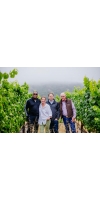
The winery gets its name from the vineyard proximity to the Pacific Ocean and the historic name of the area. The Oceano Dunes are thought to be the center of an energy vortex much like Sedona.
A unique combination of education and experience brought co-owners Rachel Martin and Kurt Deutsch to launch Oceano Wines in 2016 in San Luis Obispo, California.
Rachel Martin and her family founded Boxwood Winery in 2005. After 11 years running all aspects of viticulture, winemaking, distribution and branding, she started her own wine project with Kurt Deutsch, Oceano Wines. Kurt, a former actor on stage and screen, current film and theater, is a three time grammy award wining music producer. The two met in her hometown during Kurt's movie premier, "Last Five Years", at the Middleburg Film Festival. Rachel exposed Kurt to the delight of wine and vine.
The debut release of the Oceano Wines 2016 Spanish Springs Vineyard Chardonnay (a Pinot Noir is to follow) is the happy result of any number of coincidences and fortuitous happenings.
The backstory of how this came to be reads like a romance novel. Co-proprietors Rachel Martin and Kurt Deutsch were seated at the same table at the Middleburg Film Festival’s screening of “The Last Five Years” in October 2014. While it wasn’t a set up, it was the first step in what would become a romance first and then a business partnership. Both of these relationships evolved out of the seemingly unlikely intersection of their careers.
That they ended up at the table together happened because Martin is a founding board member of the film festival (she is intimately involved with the food and drink aspect – no surprise given her position as Executive Vice President of Winery Operations at nearby Boxwood Estate Winery). For Deutsch’s part, he was there because his company Sh-K-Boom is a producer of the film that was being screened. As the relationship progressed, Deutsch became more and more intrigued by Martin’s world, which soon led to another made-to-order coincidence.
It occurred to Deutsch that his father’s longtime friend and neighbor owned a vineyard in California. Deutsch suggested that Martin buy some grapes to make a wine. They made the trip to Henry Warshaw’s Spanish Springs Vineyard located about 10 miles south of the sleepy town of San Luis Obispo more as wine country tourists than aspiring vintners. While Warshaw sought Martin’s input on the wine side of ANZA Vineyard Estates at Spanish Springs, a 16-home wine country community that includes this vineyard, neither of them were looking to make a wine. But at the same time Martin was impressed by what she saw. And after meeting with the vineyard manager, George Donati of Pacific Vineyard Company, she was even more so.
After returning to the East Coast, they decided that they couldn’t let this opportunity pass. Particularly because the vineyard was becoming known for the quality of its fruit and they feared that if they didn’t jump in now, they wouldn’t have the chance later. Jump they did.
"Spanish Springs is a rarity within the sprawling Central Coast AVA because it is closer to the Pacific Ocean than any other vineyard in this appellation, not to mention the Golden State itself."
Spanish Springs Vineyard is the sole source of fruit for the chardonnay (and soon pinot noir) made by Oceano Wines. Located nearly at the southern end of the sprawling Central Coast AVA (American Viticultural Area), Spanish Springs is perfectly situated to grow chardonnay – the vineyard also produces a number of other grapes, both white and red – that epitomizes balance and elegance. While the Central Coast designation is among the largest AVAs in all of North America, stretching practically from San Francisco to Santa Barbara, and from the coast to inland nearly 50 miles, Spanish Springs is a rarity within it because it is closer to the Pacific Ocean than any other vineyard in this “coastal” appellation, not to mention the Golden State itself.
Perched on the slopes of Price Canyon, a mere one-and-a-half miles from the ocean, the vineyard is ideally situated so it can be enrobed by the cool marine layer that rolls in reliably each morning from the ocean before the mid-day sun gradually melts it away. The chardonnay is allowed to gently warm up. Then, as afternoon turns to evening, cooling Pacific breezes pick up to ensure that the grapes never over ripen to the point where sugar levels translate into high-alcohol wine. A complex mix of sandstone, shale and limestone at the base, with soils reflective of these same sedimentary rocks, results in the lithe, fresh style of chardonnay that Oceano is intent on making.
The vineyard, about 10 miles south of San Luis Obispo, was originally conceived as a part of a wine country community of 16 home sites nestled in 300 pristine acres of rolling hills and meadows called ANZA Vineyard Estates at Spanish Springs. The development, abutting Pismo Reserve State Park, offers residents the opportunity to make wine using fruit from its namesake vineyard. But when it became apparent that the quality of the fruit was world class in all respects, winemakers came calling.
Not surprisingly, given the unspoiled nature of the place, the vineyard is SIP Certified. This Sustainable In Practice designation is arguably more stringent than what is mandated by the USDA’s Organic program as well as biodynamic practices because it touches on every part of the grape-growing and winemaking process, from planting to the way the finished wine is packaged and shipped. So, while there are about 100,000 acres of planted vineyards in the Central Coast AVA, the San Luis Obispo Coast designated for Oceano Wines’ chardonnay are truly special.
No products found
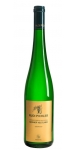
Rudi Pichler is among the elite growers of the Wachau producing wines of precision, power, and longevity. Grüner Veltliner and Riesling make up 95% of the production with the remaining 5% shared between Weißburgunder and Roter Veltliner. Rudi Pichler belongs to the prestigious Vinea Wachau and vinifies under the strict parameters of their codex.
Yields are kept low between 30 and 35 hectoliters per hectare with botrytis carefully removed by hand. Grapes are crushed by foot and receive between three and 36 hours of maceration on the skins. Vinification is entirely in stainless-steel tanks and malolactic fermentation is avoided.
Hochrain, a name meaning "high place," is a southeast-facing terraced vineyard in Wösendorf sitting between 200 and 300 meters of elevation. The vineyard consists of an unusually high content of loess, a mineral-laden soil that produces wines that are especially broad and rich.
Review:
“A stunning wine for this grape that is also rather easy to understand. The Reine Claude plum and peppery nose is complex, but already charming. As exciting as the simultaneously creamy and succulent mid-palate is, what makes this medium- to full-bodied gruner veltliner really stand out is the extremely long, crushed rock finish.”
James Suckling 96 Points
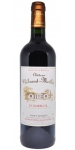
Thibeaud-Maillet Pomerol is made from 100 percent Merlot
Deep ruby with black rim. The nose is spicy, with blackberry, cherry, vanilla, chocolate and a delicate oak presence.
The wine is balanced, the tannins are present, but well integrated and round.
The finish is long and pleasant.
Harvest is done manually and the berries are selected with optical sorting before entering the cellar. Fermentations are carried out at controlled temperature with 3 to 4 weeks of skin contact. Once the malolactic fermentation is completed; the wines are put into barrels (50% new) and aged for 12 months. The estate uses three barrels from three different coopers: Vicard (Charentes)supplying most of the barrels with medium toast and a fine grain, Cadius from Burgundy supplies also fine grain/ medium toasts barrels and last but not least Sylvain, a local cooper is used for three barriques a year, those bring a bit more austerity but also a certain backbone to the blend.
Aged in French oak barrels for 15 months (50% new oak).
Delicious with grilled meat and grilled vegetables.
Review:
Spice, ripe cherry, dark plum, paprika and tobacco aromas. Medium- to full-bodied with tight-grained tannins, compact fruit and a long, firm finish. Drink from 2027.
-James Suckling 92 Points



