
" We don't sell the wine without touching the vine "
| BUY MORE! SAVE MORE! | ||||||||||||||||||||
|
| Country: | United States |
| Regions: | California California (Napa) |
| Winery: | Pahlmeyer |
| Grape Type: | Merlot |
| Organic: | Yes |
| Vintage: | 2022 |
| Bottle Size: | 750 ml |
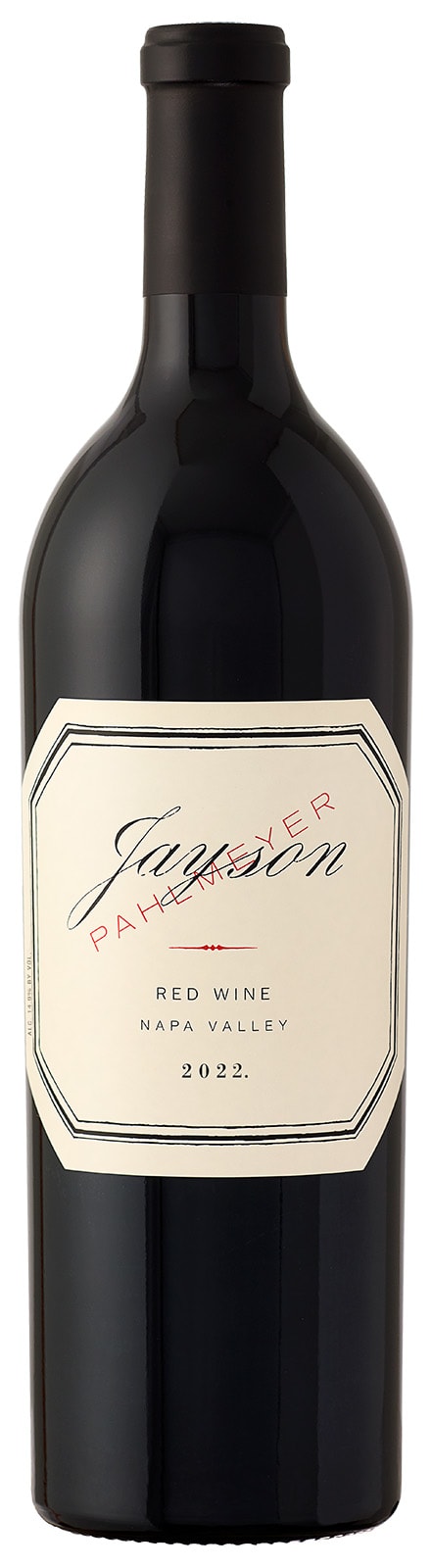
Pahlmeyer Jayson Red Napa Valley is made from 51% Merlot, 27% Cabernet Sauvignon, 11% Malbec, 7% Petit Verdot, 4% Cabernet Franc.
Voluptuousness meets vibrance in this classic Bordeaux-inspired blend. Ripe Merlot-dominant aromas of juicy macerated raspberry unfurl with hints of pencil lead, clove, cedar, and fresh sage. The compact fruit core, flanked by fine, polished tannin, surges open on a full, silky palate, giving way to complex underpinnings of earth and spice. A beam of bright acidity keeps the fruit fresh and focused through a soft, lingering finish of dusty plum and cocoa.
It’s best to serve this rich, layered wine at a temperature between 60°F and 65°F. Open and opulent in its youth, this wine is ready to match with a range of flavorful summer dishes such as Carolina-style pulled pork, bánh mì sandwiches, or bacon cheddar burgers.
Review:
This is a very polished wine in 2022, well-built with neatly knit tannins that form a solid foundation for the dark currant and blackberry fruit that floods the mid-palate. Good depth of concentration and driving energy create a sense of tension and vibrancy. Indeed not a shy wine, yet more approachable, with tannins almost melting away on the finish—very characteristic of the warm vintage. Grape sources include William Hill and Broken Rock in Napa, Stagecoach, Waters, and Round Pond in Rutherford, along with Cabernet Franc and Cabernet Sauvignon from the iconic Monte Rosso Vineyard in Sonoma. Grapes are sorted by hand, fermented in stainless steel with a small percentage in oak tanks, and then aged for 15 months in 80% new French oak. (JC)
-Decanter 94 Points
Jason Pahlmeyer understood that making wines with exceptional concentration, complexity, and ageability required venturing to extremes. That’s what drew him to the rugged parcel of vines on the ridgeline of Atlas Peak that would become his iconic estate vineyard. That is why, more than 35 years later, Pahlmeyer remains defined by mountain fruit, possessing the soulful character born of demanding terroir and exacting fieldwork.
More hours of sunlight lead to greater ripeness and complexity.
Cooler temperatures result in more complete phenolic ripeness and greater fruit intensity.
Low-Fertility, low-vigor soils yield smaller berries with greater concentration.
We farm responsively for balance and depth.
We vinify gently for honest and vivid expression.
Vineyards above 1,400 feet—such as our Water’s Ranch, Stagecoach, and Antica parcels—typically benefit from three more hours of sunshine per day compared to lower altitudes that are often cloaked in morning fog. This additional sunlight ensures the berries achieve a deep, rich color and complex flavor compounds.
With daytime temperatures averaging 5-10 F cooler, our mountain vines respire less acidity to produce energy; the acidity retained in the grapes results in greater freshness and balance in the wines. Cooler temperatures also prolong the growing season, allowing the clusters to hang longer on the vine and achieve optimal flavor development. Our Rancho Chimiles parcel, while slightly lower in elevation, sits close to the San Pablo Bay and enjoys cooling afternoon breezes that moderate temperature.
Thinner, rockier, poorer, and better-drained high-elevation soils naturally stress the vines, reducing yields by generating fewer shoots with limited clusters and smaller, thicker-skinned berries. The higher skin-to-juice ratio brings higher acidity, more tannin, and greater flavor concentration.
Farming our mountain parcels vine-by-vine, we can achieve a careful balance between broad structure and phenolic maturity. Dramatic mountain terrain challenges us with various slope grades, sun aspects, and microclimates. Through meticulous fieldwork, we optimize hang time and reach optimal ripeness, moderating Brix levels (e.g., 26.7 Brix for Cab and 24.5 for Chardonnay) so that our wines possess focused fruit and tremendous finesse.
From vine to barrel, we handle the fruit with extreme care. We hand harvest, block by block only when each vine has reached optimal ripeness. The fruit, picked before sunup when skins are cool and firm, are gravity-fed to tank. Throughout the fermentation process, we employ little to no pumping, extracting juice gently with a basket press and bottling unfined and unfiltered to retain the purist, most eloquent expression of the wine.

Alain Jaume Domaine du Clos de Sixte Lirac is made from 50% Grenache, 35% Syrah, 15% Mourvedre
An intense red garnet color. On the nose, aromas of red and black ripe fruit (kirsch and wild blackberry). The mouth is full, with aromas of blackcurrant liqueur and spice. Tannins are both harmonious and elegant thanks to the fleshiness of the wine. Hints of licorice and vanilla on the finish, which gives the wine length and complexity.
Soil type LIRAC vineyard is facing Chateauneuf du Pape, opposite side of the Rhône river. As showed by the picture and following geologist George Truc, soils are almost similar in both side. They are marked by the violence wrought by the Rhone river. It consists of a layer of marine molasses of the Miocene period covered by alpine alluvium. The presence of a great number of rounded stones known as "galets" in the earth is evidence of the time when the Rhone, then a torrent, tore fragments of rock from the Alps and deposited them on the plain. LIRAC is one of the up-coming best area from the southern Rhône valley, as it delivers outstanding wines. Winemaking & ageing Traditional wine-making in stainless still vats. Hand sorted bunches, crushed and destemmed grapes. Fermentation temperature : 30°C. 18 days of vatting with pigeages.
Review:
-Wine Enthusiast 92 Points

Tenuta di Arceno is a 2,500 acre estate nestled in the rolling hills of the Chianti Classico region in Tuscany.
Once an ancient Etruscan settlement, the estate has 220 acres planted under vine, leaving the rest of the land
to rolling hills of olive groves, open fields, and forests inhabited by wild boar and truffles. Arcanum La Porta
is composed entirely of Sangiovese sourced from the estate’s prized La Porta Vineyard. This single variety,
single vineyard wine holds its head high as a worthy homage to the great tradition of wine in Tuscany.
TASTING NOTES
The nose has floral tones reminiscent of rose petals, sweet plums and a hint of
cassis and vanilla. On the palate, the entrance is soft but defined by firm fresh
acidity with flavors of raspberries and our trademark flavor of the La Porta
Vineyard, candied orange peel. The finale is long with notes of cinnamon spice,
and mild cedar on the finish.
FOOD PAIRINGS
Aged Parmigiano Reggiano, Pasta Bolognese, Rack of Lamb
SERVE
Decant one to two hours before enjoying with family, friends and food
WINE STATISTICS
composition: 100% Sangiovese
alcohol: 14.0%
aging: French oak - 12 months
total acidity: 5.1 g/l
ph: 3.59 g/l
bottles produced: 19,464 (3,244 six packs)
Cellar Release

Double Diamond by Schrader Oakville Cabernet Sauvignon is made from 100 percent Cabernet Sauvignon.
Barrels: 54% new French oak, 46% second-use Schrader Darnajou French Oak
The 2022 Cabernet Sauvignon offers concentration, lively acidity, and refined tannins that have become the hallmark of the 2022 vintage. The nose holds notes of black raspberry, toasted cedar, juicy plum, and pennyroyal mint—a Napa Valley Cabernet Sauvignon signature. The palate is mouthwatering with intricately woven layers of blackberry compote, dark chocolate shavings, oolong tea, and flint. The dynamic flavors carry across the mid-palate in vivid harmony into a long, floral finish. This wine is ready to drink upon release but will cellar well for years to come.
Double Diamond is sourced exclusively from a complement of prime vineyard estates. Sourced from the same famed vineyards as its beloved inspiration Schrader Cellars in Napa Valley’s world-renowned Oakville AVA, including our To Kalon Vineyard.
Review:
-Decanter World Wine Awards 94 Points
-Jeb Dunnuck 91 Points

O'Shaughnessy Estate Napa Valley Cabernet Sauvignon is made from 89% Cabernet Sauvignon, 3% Malbec, 3% Petit Verdot, 3% St. Macaire, 1% Cabernet Franc, and 1% Carmenère.
Blended from our three Estate vineyards in arguably the three best appellations within the Napa Valley: Howell Mountain, Mt. Veeder and Oakville. Howell Mountain gives us structure and ripe red fruit, while Mt. Veeder adds an extra punch of tannins along with savory mineral driven qualities, Oakville balances out the mountains with its silky texture and pure fruit. This Cabernet is deep ruby red with an opaque center. Bold aromas of aged leather, black currant, and rum raisin, creating a layered and complex bouquet. A luxuriously sweet and rich entry, unfolding with ripe blackberry and velvety cocoa powder. The texture is smooth yet structured, balanced by moderate tannins and a medium level of acidity, leading to a long, elegant finish.
Review:
-Jeb Dunnuck 93 Points

The Bard is Realm Cellars' flagship proprietary red, a Cabernet Sauvignon-dominant blend drawn from some of Napa Valley's finest sites. It is the estate's largest-production and most complex cuvee, assembled from dozens of components across the valley - Realm's broadest painter's palette - and takes its name and Shakespearean label from the literary spirit behind the winery.
Winery: Realm Cellars is one of Napa's most sought-after cult producers, crafting opulent, structured and age-worthy Bordeaux-variety reds from elite hillside and valley-floor vineyards. Its single-vineyard and proprietary bottlings have earned a devoted collector following.
Region: Napa Valley's warm days and cool, fog-touched nights, across a mosaic of volcanic and alluvial soils, produce the ripe dark fruit and firm backbone that define this blend.
Review:
-James Suckling 96 Points
-Antonio Galloni (Vinous) 94 Points
-Joe Czerwinski (Robert Parker) 93 Points

Black Stallion Napa Valley Limited Release Red.
The winery takes its name from a major equestrian area that once occupied the grounds. Its calling card is Cabernet Sauvignon, made in a classic Napa Valley style that offers richness and finesse. While single-vineyard wines are occasionally bottled, most Black Stallion wines are made from small lots cherry-picked from the valley’s disparate winegrowing zones. These are then painstakingly blended to create luxurious, unforgettable wines that capture the depth and brilliance of Napa Valley’s diverse growing regions.
Review:
-Wine Enthusiast 90 Points

Bydand Cabernet Sauvignon Napa Valley is made from 100% Cabernet Sauvignon
Aged for 22 months in 80% new French oak, 20% neutral French oak
Rooted in the heart of Napa Valley’s bench-land, Bydand's small but mighty vineyard sources are family-owned estates that share their passion for Napa Cabernet Sauvignon. These hand-picked sites provide a rich diversity of aromas and texture that show off the best of their appellation. Bydand Cabernet Sauvignon delivers charismatic black fruit and earth-driven aromas in a silky smooth package. Juicy blackcurrant and wild blackberries meet graphite, subtle toast and spice on the palate. Structured but seamless, it offers grace and complexity the entire length of its confident, unhurried finish.

Dominus Napa Valley Red Blend is made from 88% Cabernet Sauvignon, 7% Cabernet Franc, 5% Petit Verdot.
The historic Napanook Vineyard, a 124-acre site west of Yountville, was planted in 1838. This vineyard was the source of fruit for some of the finest Napa Valley wines. Estate-bottled in the spirit of the Bordeaux châteaux, Dominus Estate is dry-farmed to allow natural stress and good concentration of fruit. Grape clusters are crop-thinned to allow sun and air to pass in between, helping to achieve full maturation and soften the tannins. Only 20% to 40% new French oak barrels are used in order to limit the extraction of oak notes. To express the unique terroir, the classic Bordeaux grape varietals of Cabernet Sauvignon, Merlot, Cabernet Franc and Petit Verdot are planted with different root stocks best suited for the varying soil composition of gravel, heavy clay and loam.
Reviews:
One of the legendary Dominus, the 2021 Cabernet Sauvignon is unquestionably in the same league as the 2018, 2016, 2015, 2013, 2010, and 1991, and to my mind, wine simply doesn't get any better. Sporting a dense purple hue as well as an incredible perfume of blackcurrants, crushed stone, cedar pencil, smoke tobacco, and baking spices, it s rich, full-bodied, and voluptuously textured, with ripe yet building tannins. It reminds me slightly of the 2010 (maybe the 2013), and I suspect it will have a similar evolution. Hide bottles for 7-8 years, and it will evolve gracefully for 30+ years. Hats off to the team of Christian Moueix and director Tod Mostero.
Jeb Dunnuck 100 Points

Pulled from a Gentleman's cellar, all wines from this cellar have been purchased by the owner either from the importer or direct from winery. They stayed in his cellar until being moved to the Timeless Wines warehouse.

Setriolo Chianti Classico 2024 is made predominantly from Sangiovese, with a touch of Merlot. Setriolo is a tiny family estate at Castellina in Chianti, where the Soderi family have grown grapes since the early nineteenth century; after decades of selling their fruit, they bottled their first estate wine in 2005 and today farm just over three and a half hectares organically.
Hand-harvested and fermented in stainless steel with a two-week maceration, a portion aged a year in French oak, this is a classic, honest Chianti Classico: ruby red with aromas of fresh cherry and raspberry lifted by a note of licorice, with good tannic structure, softness and a savory Tuscan finish.



