
" We don't sell the wine without touching the vine "
Former Dolphin QB Damon Huard had to travel 3000 miles away from home to learn about the fine wines coming from his home state of Washington. It was teammate and NFL Hall of Famer, Dan Marino, who went into his personal cellar to introduce Damon to Washington State wines during the 1997 season. Over the next decade, the formers QB’s conversation about wine evolved into a discussion about owning and operating their own winery upon Huard’s retirement and return to Washington State. Damon’s family has deep roots in the heart of Washington wine country, helping pioneer the valley into the agricultural powerhouse that it is today. “The vision of making a truly great Washington wine is one that Damon and I have shared for a long time,” said Marino, one of the most decorated quarterbacks in NFL history and a member of the NFL’s Hall of Fame. “Although there are more than 900 wineries in Washington State, we believe the industry is still in its adolescence and we want to be part of it as it grows into the world’s next great wine region.” Passing Time was launched with the 2012 vintage of cabernet and released in the spring of 2015 to rave reviews from wine critics and customers alike.
Passing Time may seem like an obvious name for a wine brand that includes two former NFL quarterbacks as partners, but it wasn’t that easy, Marino said. “There’s the subtle football reference. When it’s fourth down in the red zone and you’re down by six with seconds left, it’s ‘Passing Time.’ And when you’re enjoying a bottle of great wine with good friends, it’s just Passing Time. We think it’s the perfect metaphor for the wine, and we can’t wait to share it with wine lovers who share our passion for great wine.”
- Dan Marino, Doug Donnelly, Kevin Hughes, Damon Huard
Winemaker :
We are proud to have Chris Peterson as our consulting winemaker. After spending eight years as Assistant and Production Winemaker at DeLille Cellars, he co-founded Avennia in 2010. Peterson’s wines have found considerable acclaim from critics locally and nationally. He was recently named the 2017 "Winemaker of the Year" by Seattle Magazine.
Before his Woodinville career, Chris was the first graduate of Walla Walla’s highly regarded School of Enology and Viticulture, where he also taught a Wines of the World class. His travels to and study of Old World wine regions have informed his desire to make unique and compelling wines using traditional techniques. His years in the Washington wine industry and the quality of his work have allowed us to partner with premier sites to fulfill the Passing Time vision.
No products found
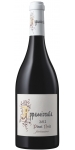
J. Christopher Appassionata Fortissimo Pinot Noir is made from 100 percent Pinot Noir.
Inspired by the three movements of Beethoven’s “Appassionata” Piano Sonata, there are three Appassionata Pinot Noirs, released at different tempos.
The finale of the Appassionata Pinot Sonata is Fortissimo (dynamically forceful). Selected for ultimate expressivity and longevity, it is not released until 10 years after the vintage. This is the epitome of expressive excellence that we are seeking in Willamette Valley Pinot Noir – a wine that combines brooding intensity with lilting grace and can stand alongside the classic wines of the world. The 2012 Fortissimo is muscular and full-bodied, with a deep color and seamless structure. In this phase of maturation, tertiary aromas begin to show a profound complexity and subtle earthiness that only develops with bottle age and cannot be accelerated
Review:
Loosen Bros. and J. Christopher Wines just released the Fortissimo and it is showing great acidity and fine-grained tannins. Its aromas and flavors of sweet red cherries, roasted pork shoulder and orange-pekoe tea are alive and kicking. Enjoy 2023–2032.
-Wine Enthusiast 95 Points
More intense than you might expect from an 11 year old Pinot Noir, certainly one that has been held back at the estate for 10 years before release. Grilled raspberry leaf and reductive smoky notes greet you on the nose here, with sweet black fruits softening the tangy red cherry and cranberry of Oregon Pinot, all wrapped up with waves of leather, sage and tobacco. This has power and succulence, and even at 10 years old it feels pretty young, just at the beginning of its development with a good decade ahead of it. Late release is an unusual approach in Oregon, but not so unusual if you follow Loosen’s winemaking in the Mosel, where he has been known to keep Riesling between 20 and 30 years in barrel. In this case the barrel ageing is for around two years, with the rest taking place in the bottle. Old fashioned winemaking, delicious results. 20% new oak. Fermented with natural yeast, unfiltered and unfined. Tim Malone winemaker. First time on the Place from this wine, from a vineyard in the foothills of the Chehalem Mountains in Oregon’s Willamette Valley. Heavy bottle.
- Jane Anson - Inside Bordeaux 97 Points
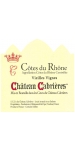
Chateau Cabrieres Cotes du Rhone Rouge Vieilles Vignes is made from 50% Grenache and 50% Syrah.
Château Cabrières’ Côtes du Rhône vineyard is located south of Orange, on the edge of Châteauneuf-du-Pape. The area of the vineyard is 1.53 hectares. The soil is comprised of clay-limestone mixed with pebbles.
Bright cherry red color with an expressive red fruit nose (strawberry and raspberry). Soft tannins in mouth, with freshness and spices. This CDR tastes like a baby Châteauneuf-du-Pape!
Pairs with charcuterie, pizza, pasta and mild cheeses.



