
" We don't sell the wine without touching the vine "
| Country: | United States |
| Regions: | Oregon Oregon (Willamette) |
| Winery: | Patton Valley Vineyard |
| Grape Type: | Pinot Noir |
| Vintage: | 2017 |
| Bottle Size: | 750 ml |
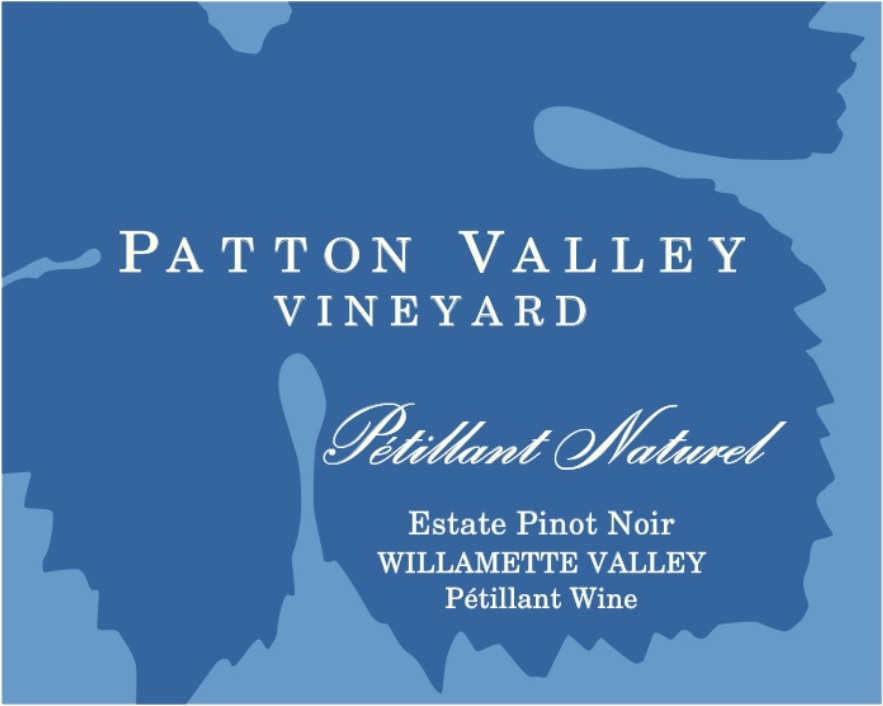
Patton Valley Petillant Naturel Riesling is made from 100 percent Riesling.
Good friends and good wine make this funny world go ‘round, right? Without those friends letting us buy some of their precious Riesling, we couldn’t make this delicious wine. Even if we did have to beg. A little.
We are using some really great vineyard sites to make this wine, and they are as diverse as they are excellent. Preserving the inherent “riesling-ness” is as important here as making this sparkle, so we’ve been extra careful to be clean, true, and simple with this. Native yeast ferments and minimal handling with fastidious cleanliness make this an absolute natural wonder. A small dosage of organic sugar kicks off the bottle ferment to make it sparkle.
This smells like apples, pears, apricot, and the sea. Not kidding. The palate is fizzy, fun, and fresh with an appley bite and pear - almond lushness. All angles and elbows, the lees and sediment widen the palate with pleasing breadth.
VINEYARDS:
25% Norris McKinley, Ribbon Ridge AVA - LIVE
50% Windridge, Chehalem Mountains AVA - LIVE
25% Wascher, Dundee Hills AVA - USDA Organic
pH: 3.04
The nose here is brilliantly red fruited, with layer upon layer of subtle spice, bright floral notes, herbs, and stone. Its not all poetry and pageantry, though, and the first impression of the wine was simply, “oh that’s goooood.” A fair assessment, and sometimes that it all one requires. Further tastes show fine tannin throughout, a juicy, vibrant mouthfeel that is very likeable, and deft, long-developing layers of fruit that reveal themselves severally.
Patton Valley's flagship wine, The Estate is the most comprehensive expression of their vineyard site, and the wine that truly defines their place in a given vintage.
Review:
"Glistening red. Vibrant red fruit, floral and spice scents show very good clarity that picks up subtle hints of succulent herbs and smoky minerals with air. Juicy and energetic in the mouth, the 2017 offers gently sweet cherry raspberry and rose pastille flavors and a touch of spicecake. Smooth, well-integrated tannins make a late appearance on a long, floral-tinged finish that shows no rough edges.
- Josh Raynolds" - Antonio Galloni's Vinous (August 2020), 92 pts
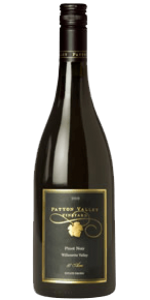
The contrast between our 10 Acre and West Block Pinot noirs exemplifies how slight geographical differences can have significant influence on the flavor profile of a wine. Planted in 1997, The 10 Acre block of Pinot noir is the oldest planting on the Patton Valley Estate Vineyard. Located on the east-facing slope of our vineyard, this area gets full sun in the cool morning hours, leading to a slower, more gradual ripening process and a wine that is typically elegant and lighter in body with prevailing red fruit character.
The 2011 10 Acre Pinot noir shows abundant aromatics, immediately woodsy but overwhelmingly fresh with lavender and red plum, sweet caramel and malt. The palate is lush and broad with sweet cherry, cigar box, and the faintest hint of peat smoke. Soft and very subtle tannins give this wine a solid backbone. A great acid profile makes this wine likely to offer boundless enjoyment when consumed in the short term, or if given some time to rest, the distinct potential of becoming something much more profound. Drink now or cellar 5-8 years.
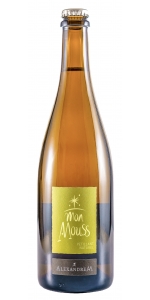
Alexandre M Mon Mouss Petillant Naturel NV is made from 100% Chenin Blanc.
Mon Mouss is my nick name at school. Monmousseau = Mon Mouss.
Mousseux means bubbly ... Mon Mouss is also a play of word meaning MY BUBBLY.
The wine is a Pet'nat' produced using a Methode Ancestrale. Lime tree and litchi with apple and pear flavors.
Serve as Aperitif or with seafood, oysters, light hard cheeses, and just for fun, by itself.
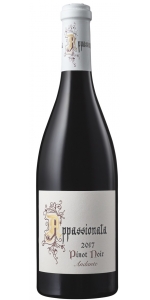
Appasionata Andante Pinot Noir Willamette Valley is made from 100 percent Pinot Noir.
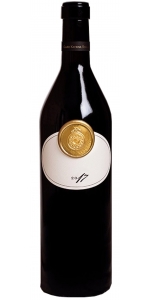
Buccella Cuvee Katrina Eileen Napa Valley is made from 100% Cabernet Sauvignon.
Named after our first-born daughter, Cuvée Katrina Eileen is primarily composed of fruit from a vineyard in the Western Hills of Yountville, where yields are miniscule. The extremely rocky soil of the vineyard produces concentrated clusters of perfectly ripened Cabernet Sauvignon. In German, the name “Katrina” represents purity and fittingly, this wine is made entirely from the Cabernet Sauvignon grape, providing a pure expression of this decadent varietal. It also reflects our daughter’s personality with flavors that are complex, unreserved and expressive.
Always a 100% Cabernet blend, our 2017 Cuvée Katrina Eileen is an opulent and mouth-enriching wine. Captivated by the inky-black color, luscious scents of dark espresso and cinnamon stick leap out, along with powerful elements of graphite and cassis. Remarkably rich and seamless, while boasting flavors of blueberry compote, dark chocolate and black raspberries, this is a compelling and luxurious wine focused upon velvety texture, silky tannins and incredible length. An intentional breadth on the palate and length in the finish are hallmarks of this wine.
The wine is, unsurprisingly, lively and brisk with fresh citrus, red fruit, and the snap of cool watermelon. Almost addictively compelling, a single sip is impossible. The wine pairing here is easy: anything and everything... or nothing but good times.
The crown cap holds in the fizz, and the wax finish helps us keep bottle variation to a minimum (looks cool, too).
This special bottling, done entirely by hand, should be opened and enjoyed cold, in one sitting, and with friends, as its charms are many but, alas, ephemeral.
We made a tiny little 66 cases of this special wine last year as a reckless, insouciant, and scientific experiment and, suffice to say, it was an unexpected hit. This year we’ve quadrupled our production so, you know, we hope you all like this one as much as the last. Our rosé is always a special thing to us, and when conjured up in this old, fun way, it takes on something altogether otherworldly.
Producing these wild, delicious, and unique wines always has inherent risks, but the payoff is well worth it. After halting primary fermentation, we brought the wine down to a very cool temperature and let it settle off of its primary lees. Adding 13g/l dosage of sugar and yeast to the wine in bottle provides the sparkle and lees-y feel as it gets turned into alcohol and CO2, and not disgorging makes it hazy, creating broader palate weight, pleasing textures, and balance throughout.
Vineyards: 100% Patton Valley Estate Vineyard, Gaston, OR
Harvest dates: August 29th-31st 2016
Dijon Clones: 113, 115, 667 and 777
pH: 3.30
The Patton Valley Vineyard Estate
Patton Valley Vineyard was founded in 1995 by Monte Pitt and Dave Chen, two former business school classmates. The estate is located in Washington County, just north of the town of Gaston. Jerry Murray joined the team as Cellar Master and Assistant Winemaker.
The Patton Valley Vineyard
Located in the northern reach of the Willamette Valley, the vineyard is sited on a hill with views of Patton Valley to the southwest and the Tualatin Valley to the east. This is a 72-acre parcel with the ideal combination of soil, exposure and elevation. The vineyard currently consists of 23 acres planted to a diverse selection of Pinot noir clones. Utilizing sustainable farming practices, coupled with intense hands-on viticulture and low-impact winemaking techniques, they produce wines that are true to the variety and to their particular site, striving for balanced wines with supple texture, richness and ripe fruit flavors.

All older vintage wines have been purchased from a single collectors cellar. Pictures can be requested before shipment.
Bachelet Bertrand Maranges Rouge is made from 100 percent Pinot Noir.
The Maranges appellation is the youngest of the Côte de Beaune family, making its debut in May 1989. It spans three villages: Dezize-les-Maranges, Cheilly-les-Maranges and Sampigny-les-Maranges. Several hills and slopes make up this appellation, that are south/south-east-facing. This appellation produces mainly red wines comprising 95% of total production.
Bachelet Bertrand Maranges is produced from two villages, Aux Artaux and En Crevèches, both situated in the Cheilly-les-Maranges area.
The wine offers a deep red color with purplish highlights, a powerful nose with aromas of raspberries, blackcurrants, and small red candied fruits. A silky texture on the palate, complemented by delicate tannins and a lingering finish.
Pairs well with roasted meats, stews, and mature cheeses.



