Upon discovery of the Knights Valley Ranch in 1982, Sir Peter Michael pledged his 100×100 vision for the ranch and winery to remain under family stewardship for 100 years.
Once referred to as Sugar Loaf Ranch spanning just over 600 acres, today the Knights Valley Ranch encompasses nearly 750 acres (304 hectares), inclusive of vineyards on the hillsides of Mount St Helena at elevations reaching 2,000 ft. (609 meters), meandering down through forests to the valley floor where the winery, gardens and olive orchards reside.
Sir Peter and Lady Michael embraced the land as their home away from home, creating a sanctuary for generations to come. Today, their son Paul, and his wife Emily, continue the vision. And with each generation, the commitment and passion deepens.
Peter Michael is an engineer by training, an entrepreneur by daring, and a vintner by adventurous intent. Born in 1938, Peter grew up in Croydon, in South London, not far from Charing Cross. Following meeting Maggie at a ballroom dance class and later marrying, he founded a variety of businesses, ranging from technology to broadcasting, culminating in the establishment of his eponymously named winery in 1987. In 1989, Peter Michael was knighted Sir Peter Michael by Queen Elizabeth II of England.
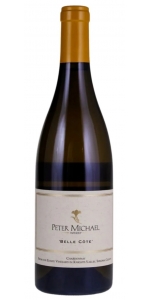
'Belle Côte', French for “Beautiful Slope”, was named by Sir Peter after the famous ski run in Courchevel, France. The oldest of the four Knights Valley Estate Chardonnay vineyards, ‘Belle Côte’ consistently exemplifies the potential of crafting exceptionally high-quality Chardonnay from our mountain vineyards. Planted at 1,700 to 1,800 feet (518 to 549 meters), Belle Côte has a southeastern exposure and a western border of native trees, which shelter the vines from the hot afternoon sun. These unique attributes create a naturally cool microclimate that provides an extended growing period and slow-ripening fruit, resulting in a later picking schedule that often continues into October (two to three weeks longer than most Chardonnay vineyards in Napa and Sonoma Counties).
The combination of a wet winter with significant rains in December through March and cool weather delayed budbreak nearly a month. Flowering and fruit set were also pushed back and the weather during the later flowering was favorable resulting in decent fruit set and slightly above average yields for the Chardonnay vineyards—a marked improvement over the record-low yielding 2022 vintage. The growing season was temperate without major heat spikes allowing the berries to hold onto their acidity which carried through into the wines. Harvest was almost a month later than normal with the last Belle Côte block coming in on November 2nd.
As the oldest of the four Peter Michael Winery estate Chardonnay blocks, 'Belle Côte' exemplifies the consistent quality of Chardonnay these mountain vineyards produce. Due to the naturally cool climate of the site’s high elevation, and mitigated exposure to the hot afternoon sun by its southeastern exposure and a stand of trees on its western border, the vines are allowed to slowly ripen. The growing season for Belle Côte typically extends into October, two to three weeks longer than most Chardonnay vineyards in Napa and Sonoma Counties.
With highly expressive aromatics of orange blossom, jasmine, candied orange peel, and rose petal, the 2023 'Belle Côte' showcases its unique terroir and thirty-three-year-old vines with a rich, creamy entry, dense, broad, juicy mid-palate and a lengthy, refined finish. There is a seamless quality to this wine that matches power, gras, and intensity with structure and weightlessness. The 2023 'Belle Côte' can be enjoyed in its youth or after many years of cellaring.
Review:
This extraordinary estate-grown wine from a great vintage is super vibrant, energized and tangy, with vital acidity supporting luscious ripe pear and apple flavors on a silky texture. Can't think of anything it lacks. Seamless, layered, yet structured and fresh, boding well for longer-term aging. It has a melts-in-the-mouth quality and an extra long finish. Drinkable now and best from 2030.
-James Suckling 100 Points
'La Carrière', French for “The Quarry”, reflects the vineyard’s spoon shape and tremendously rocky soils. Situated between 1,200 and 1,700 feet (366 and 518 meters) above sea level on steep mountain slopes exceeding 40 percent in grade, the vineyard has ideal southern and southeastern exposures. The shallow, rocky soils provide excellent drainage with restricted fertility, resulting in lower fruit yields with profound richness and character. ‘La Carrière’ provides a signature complexity and liquid minerality from its mountainous origin.
Vintage Notes
The combination of a wet winter with significant rains in December through March and cool weather delayed budbreak nearly a month. Flowering and fruit set were also pushed back and the weather during the later flowering was favorable resulting in decent fruit set and slightly above average yields for the Chardonnay vineyards—a marked improvement over the record-low yielding 2022 vintage. The growing season was temperate without major heat spikes allowing the berries to hold onto their acidity which carried through into the wines. Harvest was almost a month later than normal with the last Belle Côte block coming in on November 2nd.
The name “La Carrière” aptly describes this site’s bowl shape and its tremendously rocky soils. Situated between 1,200 and 1,700 feet above sea level on steep mountain slopes exceeding 40 percent in grade, the vineyard has ideal southern and southeastern exposures. The site’s shallow rocky soils provide excellent drainage, low fertility, and usually the lowest yields on the estate. La Carrière, with its concentrated “liquid minerality,” effectively reflects its mountainous origin.
The 2023 ‘La Carrière’ bursts from the glass with a gorgeous medley of jasmine, white peach blossoms, lemon meringue pie, and white roses with hints of vanilla cream, honey, orange zest, and pastry. A vibrant, juicy entry leads to a well-delineated mid-palate structure and continues into a long, mouth-watering finish. As an expression of the steepest Chardonnay blocks of the Knights Valley ranch, the 2023 ‘La Carrière’ is full of energy with great drive, freshness, and nerve, inviting the consumer to enjoy another glass.
Review:
A driving force of appetizing acidity powers this full-bodied, brilliant, elegant and intricate wine. It offers mineral and citrus flavors in equal measure, starting with a lot of fresh lemon and lime zest aromas, then richer baked apple, lemon blossom and brown butter flavors. Feels so focused, linear and alive. Drink now or
hold. - James Suckling 98 Points
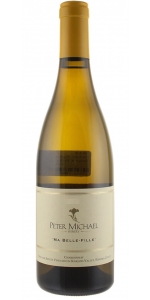
'Ma Belle-Fille' was named by Sir Peter as a warm tribute to Emily Michael, his "Daughter-in-Law", and mother of the third generation of the family. Planted at the highest elevation on the estate, the marine influence on Ma Belle-Fille vineyard is greater, resulting in cooler daily temperatures in the summer and autumn months. Situated above the summer fog ceiling and exposed to the southeast, the vineyard receives the very first rays of sunshine each morning and remains sunny all day long. This full exposure, combined with cooler temperatures, causes the fruit to mature earlier than the rest of our estate.
Vintage Notes
The combination of a wet winter with significant rains in December through March and cool weather delayed budbreak nearly a month. Flowering and fruit set were also pushed back and the weather during the later flowering was favorable resulting in decent fruit set and slightly above average yields for the Chardonnay vineyards—a marked improvement over the record-low yielding 2022 vintage. The growing season was temperate without major heat spikes allowing the berries to hold onto their acidity which carried through into the wines. Harvest was almost a month later than normal with the last Belle Cote block coming in on November 2nd.
At the highest elevation on the estate, the marine influence on Ma Belle-Fille is greater, resulting in cooler daily temperatures in the summer and autumn months. Situated far above the summer fog ceiling and exposed to the southeast, the vineyard receives the very first rays of sunshine each morning and remains sunny all day long. This full exposure, combined with cooler temperatures, causes the fruit to mature earlier than the rest of our estate.
Beautifully perfumed with layers of honeysuckle, jasmine and dried orange peel accented by apricot, vanilla cream and spring flower notes, the 2023 ‘Ma Belle-Fille’ delivers with a rich, creamy entry and generous, structured mid-palate showing great drive and intensity with a long, mouth-watering finish. A truly special wine from an extraordinary vintage.
Review:
So delicious and drinkable from the first whiff to the lingering finish. An uber-chardonnay that packs in all the richness of fruit and smooth spiciness of oak fermentation, with vibrant acidity and a silky texture. Well balanced in a cool, ideal vintage and a great candidate for aging longer term. Drinkable now and best from 2030.
James Suckling 99 Points
‘Le Caprice‘, as in “Capricious,” is an ode to the fickle nature of the Pinot Noir grape. Situated above sea level on steep mountain slopes, some exceeding 50 percent in grade, the vineyard faces east and northeast. It benefits from both the cooling influence of the Pacific Ocean to the west and the mild, sunny mountain climate. The soil of the vineyard is a composite of clay, silt, and volcanic gravels, which help the wine display polished tannins, body, and a hint of mineral graphite. ‘Le Caprice’ delivers the most pronounced profile of red fruit of our three estate Pinot Noir wines.
The Seaview Estate experienced an exceptionally wet winter with well above average rainfall and cooler-than-average temperatures into March which delayed budbreak by nearly a month. The weather during flowering was uneven and cool, giving rise to less fruit setting—slightly better than in 2022 but still only about 60% of a normal crop. Overall, the growing season was cooler than usual which continued through harvest. Harvest began a full month later than 2022 with the final blocks coming in on October 26th. The wines maintained a vibrant acidity with several blocks producing lower than average alcohol levels.
Situated over 1,000 feet above sea level on steep mountain slopes, some exceeding 50 percent in grade, the vineyard site faces east and northeast. It benefits from both the cooling influence of the Pacific Ocean, just on the other side of the coastal ridge, and the mild, sunny mountain climate. The soil of the vineyard is a composite of clay, silt, and volcanic gravels, which produces a wine with polished tannins, body, and a hint of graphite minerality. Le Caprice presents the most fruit-driven style among the trio of estate Pinot Noirs.
A brilliant mélange of red rose petals, black and red cherry, dried orange peel, candied plum, and blackberry soar from the glass of the 2023 'Le Caprice', embodying the terroir from the steepest vineyard blocks of our Seaview Estate. The lifted nose is framed by hints of baking spices and wild strawberries. The round, supple entry leads to a focused, juicy mid-palate with a long, smooth finish. The 2023 vintage is a seamless, classy, and harmonious expression of 'Le Caprice'.
Review:
A fresh, linear, eye-opening young wine that's delicious and appetizing, and will develop more complexity and nuance with time in the bottle. Stunning aromas of black cherries, vibrant raspberries and cedary spices lead to mouthwatering red cherry, cranberry, star anise and mineral flavors that expand on the palate. Drinkable now and best from 2030.
-James Suckling 98 Points
Weingut Prager Achleiten Riesling Smaragd is made from 100 percent Riesling.
Franz Prager, co-founder of the Vinea Wachau, had already earned a reputation for his wines when Toni Bodenstein married into the family. Bodenstein’s passion for biodiversity and old terraces, coupled with brilliant winemaking, places Prager in the highest echelon of Austrian producers.
Smaragd is a designation of ripeness for dry wines used exclusively by members of the Vinea Wachau. The wines must have a minimum alcohol of 12.5%. The grapes are hand-harvested, typically in October and November, and are sent directly to press where they spontaneously ferment in stainless-steel tanks.
Achleiten sits east of Weißenkirchen and is one of the most famous vineyards in the Wachau. The steeply-terraced vineyard existed in Roman times. Some sections have just 40 cm of topsoil over the bedrock of Gföler Gneiss, amphibolitic stone, and slate. “Destroyed soil,” as Toni Bodenstein likes to say.
Tasting Notes:
Austrian Riesling is often defined by elevated levels of dry extract thanks to a lengthy ripening period and freshness due to dramatic temperature swings between day and night. Wines from Achleiten’s highly complex soils are famously marked by a mineral note of flint or gun smoke, are intensely flavored, and reliably long-lived.
Food Pairing:
Riesling’s high acidity makes it one of the most versatile wines at the table. Riesling can be used to cut the fattiness of foods such as pork or sausages and can tame some saltiness. Conversely, it can highlight foods such as fish or vegetables in the same way a squeeze of lemon or a vinaigrette might.
Review:
The 2020 Ried Achleiten Riesling Smaragd offers a well-concentrated, fleshy and spicy stone fruit aroma with crunchy and flinty notes. It needs some time to get rid of the stewed fruit flavors, though. Full-bodied, fresh and crystalline, this is an elegant, complex and finely tannic Riesling that needs some years rather than a carafe to polymerize the tannins and gain some finesse. Tasted at the domain in June 2021.
At Prager, I could not determine that 2020 would be inferior to the 2019 vintage; on the contrary, the 2020 Smaragd wines fascinated me enormously in their clear, cool, terroir-tinged way. A 38% loss had occurred mainly because of the hail on August 22, although predominantly in the Federspiel or Riesling vineyards. There was no damage in the top vineyards such as Ried Klaus, Achleiten or Zwerithaler. "Interestingly, the vines are in agony for about two weeks after the hail. There was no more growth, no development of ripeness and sugar," reports Toni Bondenstein. The Veltliner then recovered earlier, while even picking a Riesling Federspiel in October was still a struggle. "Why Riesling reacted more intensively to the hail, I don't know myself either," says Bodenstein. Whole clusters were pressed to preserve acidity and to compensate for the lower extract, and compared to 2019, the 2020s were left on their lees longer. In June, however, the 20s in particular showed outstanding early shape.
-Wine Advocate 94 Points
Light yellow-green, silver reflections. Yellow stone fruit nuances with a mineral underlay, notes of peach and mango, a hint of tangerine zest, mineral touch. Juicy, elegant, white fruit, acidity structure rich in finesse, lemony-salty finish, sure aging potential.
-Falstaff 95 Points
Pearmund Cellars Ameritage Red is made from 33% Cabernet Sauvignon, 30% Merlot, 17% Malbec, 10% Cabernet Franc, 10% Petit Verdot.
Cherry, currant, and herbaceous flavors. Balanced tannins with a lingering finish. Full-bodied and complex. Limited production.