" We don't sell the wine without touching the vine "
| Country: | Portugal |
| Winery: | Venancio da Costa Lima |
| Grape Type: | Castelao |
| Organic: | Yes |
| Vintage: | 2016 |
| Bottle Size: | 750 ml |
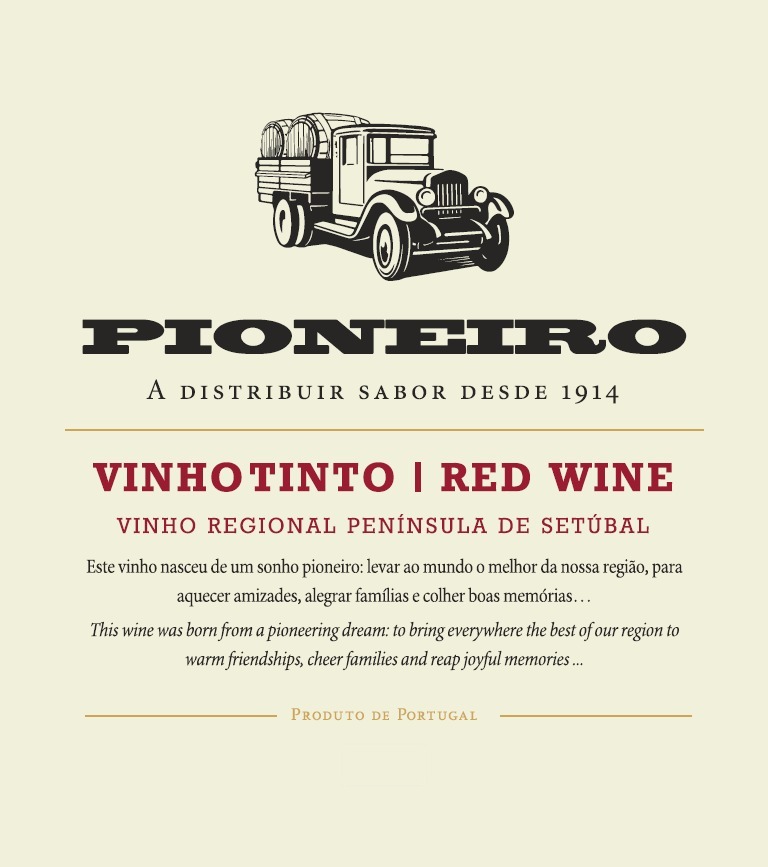
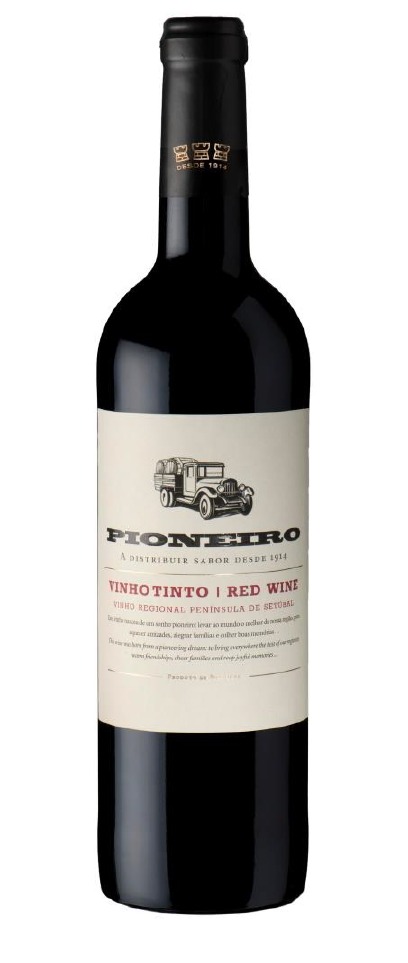
Pioneiro Red Wine Vinho Regional Peninsula de Setubal is made from 60% Castelao (also known as Periquita), 30% Aragones and 10% Syrah
Aged 5 months in French oak barrels
The story of this wines begun more than a century ago, with the pioneering dream of Venâncio da Costa Lima: to bring good wines to every corner of Portugal. Pioneiro wine brand was created to pay homage to his vision.
What's Unique? Pioneiro (meaning “pioneer” in Portuguese) wine vintage style label pay homage to the founder’s dream, dating back to 1914. But in a relaxed, casual way, typical of this wine producer mood.
Intense garnet color, complex nose with touches of ripe fruit, jam and spices, full-bodied flavor and a very balanced finish.
Castelao: as the most widely-grown red grape variety in Portugal it is still often referred to in Portuguese as "Periquita" or "Joao de Santarem", although that name is legally owned by José Maria da Fonseca in the Setúbal Peninsula outside of Lisbon. It is highly adaptable to different climatic conditions and its remarkable versatility enables winemakers to make a range of wines – from the easy drinking and quaffable reds and rosados to the powerful and intense reds perfectly suited to lengthy cellaring. Castelão comes into its own and is most expressive in the Sétubal Peninsula, where it makes meaty and intense wines with aromas of red berries and blue flowers that marry well with the deft use of oak.
Made from 15 year old vines planted on sandy soils.
Classic vinification at controlled temperature (25 °C) with prolonged maceration for phenolic extraction. Wine went through malolactic fermentation.
It was aged 5 months in French Oak barrels.
Wine was slightly filtered before bottling to avoid sedimentation in the bottle and to ensure stability.
Pasta, Cheese, red meat and game.
The Prisoner Wine Company The Prisoner Red Blend is made from a blend of Zinfandel, Cabernet Sauvignon, Petite Sirah, Syrah, and Charbono.
Bright aromas of ripe raspberry, vanilla, and coconut give way to flavors of fresh and dried blackberry, pomegranate, and vanilla, which linger harmoniously for a smooth and luscious finish.The Prisoner Red Blend was inspired by the wines first made by the Italian immigrants who originally settled in Napa Valley. The Prisoner is now the most recognized red blend, leading the resurgence of interesting blends by incorporating Zinfandel with the unlikely mix of Cabernet Sauvignon, Petite Sirah, Syrah, and Charbono.
On the nose, dried blackberry, dried açai berries, and hints of cedar and tobacco leaf are accented by sweet spices of clove, cinnamon, and nutmeg. Flavors of ripe dark cherry, blackberry coulis, and hints of anise linger harmoniously for a soft, vibrant finish balanced by ripe tannins.
Chef Brett recommends pairing The Prisoner Red Blend with Kalbi Short Ribs or Chicken Mole Tostada.
Vineyards: When you outgrow winemaking tradition, you must forge your own path. And we did. The Prisoner exists because of the collaboration with our growers, many of which have been with us since the very beginning—from the Solari Family Vineyard in Calistoga, where old school sensibilities meet new techniques, to the Korte Ranch in St. Helena, a vineyard whose diligence outlasted the Prohibition and has sustained four generations.
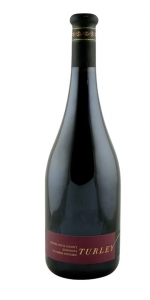
After working with the fruit for over a decade, Turkey is proud to present the first single-vineyard bottling for Turley from the Del Barba Vineyard. Contra Costa is a delta where the San Joaquin and Sacramento rivers meet, and these head-trained vines are planted in deep dehli blow sand, made up of decomposed granite coming down from the Sierra Mountains. The resulting wine embodies the best the delta has to offer: silken textures, ultra fine tannin, and dark saline fruits.
Review:
"The 2023 Zinfandel del Barba is ripe, boisterous and super-expressive. Floral overtones and bright acids run through a core of red/purplish fruit. Sandy soils confer lovely aromatic presence to this pure Zinfandel. This is an especially accessible offering from Turley."
-Vinous 91-93 Points
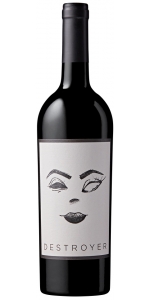
Destroyer North Coast Red is made from 65% Cabernet Sauvignon 20% Merlot 10% Zinfandel 5% Syrah
DESTROYER Red Wine Blend is a whimsical blend of North Coast varieties. We start with Cabernet Sauvignon 65%, and then add Merlot 20%, Zinfandel 10% and finish with Syrah 5%. 65% is grown in Lake County in the Red Hills AVA, the balance is Napa Valley. This wine is aged in French oak for 10 months.
DESTROYER is rich and flavorful. Red and dark fruits are apparent in the nose with Plum, Cherry and Blueberry tones. The aroma is elegant and shows subtle signs of oak nuance. The pallet explodes with deep deliciousness! The finish lingers and invites a second glass or two. Invite your favorite friends to try, and share with your hottest date.
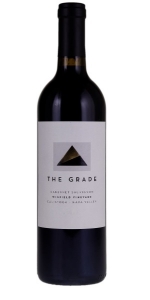
The Grade Napa Cabernet Sauvignon Winfield Vineyard is made from Napa Valley Cabernet Sauvignon.
“2016 produced wines that are very giving, round, coating and streamlined. Year after this year, this bottling aims to highlight the best attributes of the Winfield Vineyard, and also creates a wine that possesses qualities that allow it to age well in the cellar and evolve over many years.
“This wine expresses a focused balancing act of dark, rich black fruit, and a fine tannin structure, illuminated through the core with a laser-like acidity. The wine displays a deep purple-red hue with a cranberry halo. Aromas of cassis, cinnamon, citrus oil, roasted meat, and lilac swell from the glass.
“The palate is marked by a wave of jet-black brambly fruit up front, followed by an exotic spice mid-palate and a long, complex finish that lasts and lasts expressing notes of flowering jasmine, and oolong tea. The silky tannins hold everything together and will certainly allow this wine to evolve in the cellar for at least 7-10 years.” - Thomas River Brown
Review:
Coming from the Winfield Vineyard in Calistoga, the 2016 Cabernet Sauvignon is another brilliant wine from the hands of winemaker Thomas Rivers Brown. This deep purple-colored effort boasts tons of blueberry and jammy blackberry fruits as well a medium to full-bodied, concentrated, yet elegant style on the palate. It has the purity of fruit that’s the hallmark of the vintage, ripe, sweet tannins, and no hard edges, and is already hard to resist.
-Jeb Dunnuck 94 Points
The Grade Napa Cabernet Sauvignon Winfield Vineyard is made from Napa Valley Cabernet Sauvignon.
“2016 produced wines that are very giving, round, coating and streamlined. Year after this year, this bottling aims to highlight the best attributes of the Winfield Vineyard, and also creates a wine that possesses qualities that allow it to age well in the cellar and evolve over many years.
“This wine expresses a focused balancing act of dark, rich black fruit, and a fine tannin structure, illuminated through the core with a laser-like acidity. The wine displays a deep purple-red hue with a cranberry halo. Aromas of cassis, cinnamon, citrus oil, roasted meat, and lilac swell from the glass.
“The palate is marked by a wave of jet-black brambly fruit up front, followed by an exotic spice mid-palate and a long, complex finish that lasts and lasts expressing notes of flowering jasmine, and oolong tea. The silky tannins hold everything together and will certainly allow this wine to evolve in the cellar for at least 7-10 years.” - Thomas River Brown
Review:
Coming from the Winfield Vineyard in Calistoga, the 2016 Cabernet Sauvignon is another brilliant wine from the hands of winemaker Thomas Rivers Brown. This deep purple-colored effort boasts tons of blueberry and jammy blackberry fruits as well a medium to full-bodied, concentrated, yet elegant style on the palate. It has the purity of fruit that’s the hallmark of the vintage, ripe, sweet tannins, and no hard edges, and is already hard to resist.
-Jeb Dunnuck 94 Points
Pioneiro Red Wine Vinho Regional Peninsula de Setubal is made from 60% Castelao (also known as Periquita), 30% Aragones and 10% Syrah
Aged 5 months in French oak barrels
The story of this wines begun more than a century ago, with the pioneering dream of Venâncio da Costa Lima: to bring good wines to every corner of Portugal. Pioneiro wine brand was created to pay homage to his vision.
What's Unique? Pioneiro (meaning “pioneer” in Portuguese) wine vintage style label pay homage to the founder’s dream, dating back to 1914. But in a relaxed, casual way, typical of this wine producer mood.
Intense garnet color, complex nose with touches of ripe fruit, jam and spices, full-bodied flavor and a very balanced finish.
Castelao: as the most widely-grown red grape variety in Portugal it is still often referred to in Portuguese as "Periquita" or "Joao de Santarem", although that name is legally owned by José Maria da Fonseca in the Setúbal Peninsula outside of Lisbon. It is highly adaptable to different climatic conditions and its remarkable versatility enables winemakers to make a range of wines – from the easy drinking and quaffable reds and rosados to the powerful and intense reds perfectly suited to lengthy cellaring. Castelão comes into its own and is most expressive in the Sétubal Peninsula, where it makes meaty and intense wines with aromas of red berries and blue flowers that marry well with the deft use of oak.
Made from 15 year old vines planted on sandy soils.
Classic vinification at controlled temperature (25 °C) with prolonged maceration for phenolic extraction. Wine went through malolactic fermentation.
It was aged 5 months in French Oak barrels.
Wine was slightly filtered before bottling to avoid sedimentation in the bottle and to ensure stability.
Pasta, Cheese, red meat and game.
Venâncio da Costa Lima was born in 1892 in the town of Quinta do Anjo, at the heart of a modest family. His mother died when he was very young and he was raised by his aunt and uncle, on a farm. Due to his father’s profession (a butcher), Venâncio’s first job was as a livestock tradesman to the region’s butcheries.
He quickly diversified his business, trading essentially in agricultural products.
In 1914 he founded the Casa Agrícola Venâncio da Costa Lima, in Quinta do Anjo. Primarily focused on selling wine, olive oil and grain, the firm later specialised exclusively in the production and sale of wine.
Between the 1930’s and 1950’s, Venâncio da Costa Lima was the second largest wine producer in the region.
During his lifetime, he became a highly recognised and esteemed person in the region, occupying the following positions:
- Chief-leader of the Quinta do Anjo township
- Councilman of the Setúbal Municipality
- Mayor of Palmela (1937-1946), carrying out remarkable work for the Council
- Owner in the Agricultural and Restaurant industries
He died on November 1st 1956, at the age of 64. This being the date for the local celebrations in the town where he was born, that year they were cancelled entirely due to the great dismay that his death provoked in the region.
Because he was childless, Venâncio bequeathed the winery to his six nieces and nephews who, from that time on, specialised in this region´s wines (Moscatel, red and white). Having passed through four generations, this winery remains a family business, managing 3 million litres annually.
It is currently in an investment phase, rebuilding the entire production area.
Recently recognised as producer of the "Best Muscat in the World "- Muscats du Monde 2011, this company has projected its name on a large scale and works daily towards producing the best wines in the region.
Venancio da Costa Lima Winery
Venâncio da Costa Lima is one of the oldest wineries in the Palmela region, beginning its activity in 1914.
Still a family business, this winery is already in its fourth generation.
As a producer of Table Wines, Certified Wines (Setúbal Peninsula Regional wines & DO Palmela wines) and Setúbal Moscatel, this company maintains its goal: to produce wines that are current and modern, but always display the profile and characteristics of a wine from this region. We also produce what is considered one of this region’s ex-libris:
the Setúbal Moscatel.
Always striving to perfect the art of wine making, this company’s journey has involved constant technological modernisation, enabling the quality of our wines to evolve.
Recently recognised as producer of the Best Muscat in the World (Muscats du Monde 2011), this winery has invested in its portfolio, image and notoriety, working daily to build a company that is current and competitive.
Get to know our story and discover this region’s flavours!
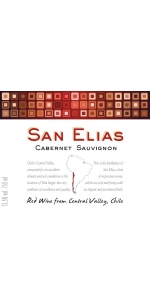
Siegel San Elias Cabernet Sauvignon is made from 100 percent Cabernet Sauvignon.
Fresh and delicate cassis tones, a great structure. Draw the cork half an hour before serving and serve at room temperature.
Smooth and fruity on the palate, the wine goes well with pasta, salads.
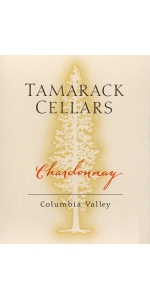
Tamarack Chardonnay is made from 100% Chardonnay.
Bright aromas of ruby red grapefruit, mango and stone fruit are found in the bouquet while on the palate, the bright acidity of this wine showcases flavors of guava, crisp Granny Smith apples and Asian pears. Combing the best of both cooperage techniques, the combination of aging in stainless steel highlights the fruit while the aging in neutral French oak provides an added complexity to the wine.
Aged 60% in neutral premier French oak and 3% in new premier French Oak 37% stainless steel.Dropped by gravity straight to the press, the juice is pumped directly to barrel or tank and chilled, inoculated with Chardonnay 3079 yeast, primary fermentation started and finished, secondary fermentation started but completed to preferred taste, typically around 50% completion. All fermentation is done in a 58 degree Fahrenheit barrel room.
Walla Walla Valley Appellation: Alderbanks Vineyard
Columbia Valley Appellation: Bacchus and Gamache Brothers Vineyards
Yakima Valley Appellation: Olsen Brothers and French Creek Vineyards
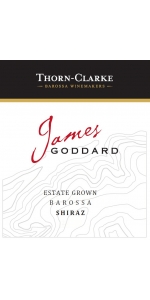
James Goddard was an ancestor of the Clarke family. Born in West Sussex, England in 1823, James spent his 74 years as a sailor, a whaler, a bullock driver, farmer, prospector, miner and hotel keeper. From an illiterate runaway living rough on the streets of London, he became a rich, successful and admired pillar of South Australian society.
James arrived in Adelaide in 1839 as a 16-year-old sailor. Twelve years later, his life changed forever with the news of gold findings. For the next 20 years, James roamed the country learning the geology that improved his chances of prospecting.
James Goddard Shiraz is made from 100 percent Shiraz.
In 1870, he tried his luck near his farm in the Barossa Valley and discovered the region’s first gold deposits, creating the prosperous Lady Alice Mine. The Lady Alice Mine, though it is no longer operational, was & still is the most successful gold mine in South Australia. From these roots, the Thorn-Clarke family has been connected to the region for the last 150 years.
James Goddard Shiraz is a blend Shiraz sourced from the Milton Park vineyard in the north of Eden Valley, and the St Kitts vineyard in the far northern area of the Barossa. Fruit is harvested in the cool of the night to maintain maximum flavour and freshness and it is fermented for 8 days. The ferment is pumped over twice daily to extract the colour and flavour from the fruit. Once finished fermentation the wine was then matured in a blend of French and American oak for a period of 10 to 12 months depending on the vintage.
Deep vibrant red with purple hues to the rim. The nose shows lifted plums, vibrant purple berries and a delicate spice note. The palate has concentrated satsuma plum, blackberry with lovely charry oak in the background. Long, juicy and even with plush fruit on the finish.
Review:
“Blended from two estate vineyards, St. Kitts and Milton Park, this shiraz offers its richness without any aggression or overt perfume. It’s just lush and delicious, a friendly embrace of firm tannins and purple-red fruit. The texture and flavor combine in a saturated meatiness, for Korean barbecue.”
- Wine & Spirits Magazine, 92 points
SALE!
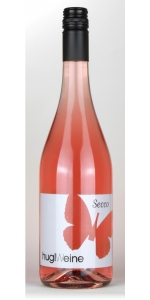
Hugl Zweigelt Secco Rose is made from 100% Zweigelt
Despite its relative youth, Zweigelt is actually an Austrian classic. This variety was created in 1922, when Dr. Fritz Zweigelt crossed two grapes - St Laurent and Blaufränkisch. Originally, it was intended for the new variety to be called Rotburger, referring to the place where it was born, Klosterneuburg. But this name never took hold, and instead, Zweigelt was named after the man who was the key in its development.
Today, Zweigelt is the most widely planted red variety in Austria, growing in nearly 9% of this country's vineyards. It is a robust grape, highly resistant to dryness, frost and various diseases.
Lively, fruity bouquet of strawberry, cherry and floral aromas. Refreshing and beautifully balanced, this is a great wine to enjoy as an aperitif. This is a Secco for the whole day and the whole night
The wine is made of 100% Zweigelt grapes of 15-35 years old (25 years old in avarage).
The soil is mainly loam and loess.
It is made using the Charmat method and the wine is aged for 3 months on the lees in stainless steel tanks.
The wine is slightly filtered before bottling.
Drink by itself as an aperitif, it is also a great picnic or brunch wine and will be a good pick to celebrate any occasion.
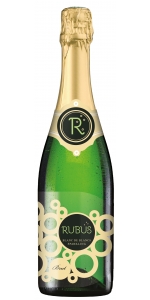
Rubus Brut Blanc de Blanc NV is made from 1/3 Ugni Blanc, 1/3 Airen, 1/3 Muscat .
The Rubus Project was created by Fran Kysela as a way to source & sell incredible wines at value prices. All wines in this international project are hand-selected by Fran Kysela. Rubus wines are fruit driven, true-to-type values that over deliver - a true representation of quality for the consumer at an excellent price.
Elegant pale yellow color with fine bubbles. Floral and fruity on the nose, with aromas of fresh butter and cake. On the palate, the wine is crisp and harmonious - a delightful sparkling wine.
Machine harvest. The base wine is fermented at a low temperature. The second fermentation takes place at 14°C for 2 weeks, followed by dosing.

Zombie Zin Zinfandel is made from 95% Zinfandel and 5% Syrah
Be careful if you go out at night. The Zombie Zin is designed to be consumed in hiding with the only friends you have left... post apocalypse.
The Zombie Zin is sporting a new label design with a torn look, that suggests a window into another world. The colors are more vibrant earth-tones and the capsule is a deep red.
The Zombie Zinfandel is very dark in color, almost a black-purple. The aromas are of ripe, dense black fruits and a hint of dried herbs. The flavors are complex and rich, sporting succulent blackberries, powdered cinnamon, cola and cherry jam. Just a hint of black pepper in the long finish.
The grapes for the Zombie are sourced throughout California, mostly from the dry, hot sandy soils of the Delta region and the Central Valley. The final blend benefitted from some inky Syrah grapes that came from the Central Coast. The wine was fermented in Stainless Steel and aged for about a half a year in American oak.
Pairs well with bloody BBQ meats, sinister soups with eye of newt, bubbly caldron of fleshy stew.
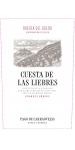
Pago de Carraovejas Cuesta Liebres is made from 100% Tinto Fino. The plot is located on a terraced hillside located at 900 m above sea level with slopes that range between inclines of 30% and 40%. Red cherry color with purple hues. Ripe fruit aromas, vanilla notes. Suave and unctuous in the mouth. A strong and noble character.
The harvest is carried out by hand using small crates and after passing through a refrigerated container it is transferred into tanks via gravity. The alcoholic and malolatic fermentation is carried out in small French “Haute Futaie” Oak casks with unique and original local yeasts and fermenting bacteria from the vineyard itself, to bring out the very best of the terroir, respecting the uniqueness of each and every vintage. Clarified with egg whites and bottled by gravity with natural cork stoppers.
Review:
"From the vineyard of the same name, the 2021 Cuesta De Las Liebres is a knockout, from a hillside vineyard of terraced vines. Aged 24 months in French oak, the first year in new, the second in second-use, all fine-grained, and bottled in June 2024, the tannins are well-integrated and dusty, nearly chalky. It’s truly a beautiful expression of variety, vintage, and site, reaching perfection in its fine-tuned, full-bodied layers of rich cassis, oak spice, and even a touch of garrigue. There’s lovely acidity throughout that brightens the palate, with beguiling notes of violet that never fade away. It’s a seamless, polished, gorgeous wine that will be hard to resist, though aging will continue to see it melt into one over the next 15-18 years. - Virginie BOONE"
- Jeb DUNNUCK (August 2025), 100 pts
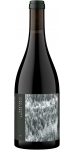
Zena Crown Vineyard The Sum Pinot Noir is made from 100 percent Pinot Noir.
Massed from multiple vineyard blocks and clones, this wine has a timeless beauty that can be inherently understood by innate human nature. Wines of this stature, much like great art, reflect the complex and compelling relationship between humanity and Earth. Expressing Autumn, S (The Sum) leads with Gala
apple, Japanese plum, gun powder, dirt, and garlic power on the nose, with barely ripe cherry on the finish. 60% whole-cluster fermentation bolsters the wine, sustaining the tannic imprint and tension that uncoils like a rattlesnake strike on the finish.
Review:
A jeweled ruby hue, the 2021 Pinot Noir The Sum takes on fantastic crystalline and pure aromas of wild strawberries, raspberries, dark stones, menthol, and cedar spice, but it’s not very oaky. Medium-bodied, it has ripe tannins, with ripe acidity and a bit more modest acidity compared to the other wines from Zena Crown, but it’s long on the palate, with a more autumnal sensibility, and it’s going to show its best over the next 12-15 years.
-Jeb Dunnuck 95 Points