" We don't sell the wine without touching the vine "
| Country: | Portugal |
| Winery: | Venancio da Costa Lima |
| Grape Type: | Fernao Pires |
| Organic: | Yes |
| Vintage: | 2017 |
| Bottle Size: | 750 ml |

Pioneiro Red Wine Vinho Regional Peninsula de Setubal is made from 60% Castelao (also known as Periquita), 30% Aragones and 10% Syrah
Aged 5 months in French oak barrels
The story of this wines begun more than a century ago, with the pioneering dream of Venâncio da Costa Lima: to bring good wines to every corner of Portugal. Pioneiro wine brand was created to pay homage to his vision.
What's Unique? Pioneiro (meaning “pioneer” in Portuguese) wine vintage style label pay homage to the founder’s dream, dating back to 1914. But in a relaxed, casual way, typical of this wine producer mood.
Intense garnet color, complex nose with touches of ripe fruit, jam and spices, full-bodied flavor and a very balanced finish.
Castelao: as the most widely-grown red grape variety in Portugal it is still often referred to in Portuguese as "Periquita" or "Joao de Santarem", although that name is legally owned by José Maria da Fonseca in the Setúbal Peninsula outside of Lisbon. It is highly adaptable to different climatic conditions and its remarkable versatility enables winemakers to make a range of wines – from the easy drinking and quaffable reds and rosados to the powerful and intense reds perfectly suited to lengthy cellaring. Castelão comes into its own and is most expressive in the Sétubal Peninsula, where it makes meaty and intense wines with aromas of red berries and blue flowers that marry well with the deft use of oak.
Made from 15 year old vines planted on sandy soils.
Classic vinification at controlled temperature (25 °C) with prolonged maceration for phenolic extraction. Wine went through malolactic fermentation.
It was aged 5 months in French Oak barrels.
Wine was slightly filtered before bottling to avoid sedimentation in the bottle and to ensure stability.
Pasta, Cheese, red meat and game.

Kershaw Chardonnay Deconstructed Groenland Shale CY548 is made from 100 percent Chardonnay.
The inspiration for this Chardonnay stems from my belief that the Elgin region has both a signature grape as well as particular terroirs within its demarcated boundary that reflect regional credentials. This Chardonnay was selected from a sub-region of Elgin from a specific vineyard and an individual clone (CY548).
Tasting Notes:
Sourced from the foothills of the Groenland Mountain in Northern Elgin this clone has been taken from Corton Charlemagne cuttings. It produces wines that have aromatics oscillating between lemon blossom, white flowers, petrichor and struck stone. Full in body they exude concentration with white stone fruit yet reinforced with an austere texture and robustness that makes for excellent aging potential. The Bokkeveld Shales adds structure and concentration to the flavor.
Vineyards:
Sourced from the foothills of the Groenland Mountain in Northern Elgin this clone has been taken from Corton Charlemagne cuttings.
Winemaking:
Grapes were hand-picked in the early autumnal mornings, placed into small lug baskets and tipped directly into a press before being gently whole-bunch pressed up to a maximum of 0.6 bar or until a low juice recovery of 580 liters per ton was obtained. The juice gravity-flowed directly to barrel (no pumps were used at all) without settling. The unclarified juice had no enzymes or yeast added to it and therefore underwent spontaneous fermentation until dry, with malolactic discouraged. The wine rested in barrel for 4 months prior to judicious sulfuring and a further 7 months’ maturation in barrel before racking and bottling.
Barrel: Selection: A small number of artisanal coopers are selected from mostly Burgundy, with only French oak was chosen. Up to 40% of the oak is new with the remainder split into 2nd and 3rd fill barrels of predominantly 228 litres.
Look at pairing this with textured fish, straightforward chicken dishes, pan-fried or grilled pork dishes, soft-rind cheeses, cream or creamy dishes be it with pasta or the aforementioned fish, chicken or pork, to allow the complexity of the wine to shine through. If using mustard, preferably use Dijon mustard as it uses verjus (soured grape juice) and not vinegar. Also look to delicate herbs (tarragon, dill, basil, parsley) rather than hard stalked herbs (rosemary, thyme, oregano, etc). Avoid smoked meats or fish as well as highly spiced dishes as this can overwhelm the wine and clash with the oak. I would try oysters; Lobster grilled or boiled but not thermidor as it is too rich; turbot, dover sole, sea bass, yellowtail with a shellfish sauce; fish pie; roasted free-range chicken with tarragon; roast loin of pork with garlic and ginger; truffle risotto; pasta in a clam sauce; slice of brie de meaux.
Review:
"Perfume of flowers, minerals and citrus zest. The palate is dense and focused, almost chewy with an opulent mandarin mid palate and long, savory finish. Matured in 50% new oak that is seamlessly integrated with the wine."
- International Wine Review (Richard Kershaw Lifts Elgin To New Heights, February 2019), 94 pts

Kershaw Syrah Deconstructed Lake District Cartref SH22 is made from 100 percent Syrah.
The inspiration for this Syrah stems from my belief that the Elgin region has both a signature grape as well as particular terroirs within its demarcated boundary that reflect regional credentials. This Syrah was selected from a sub-region of Elgin from a specific vineyard and an individual clone.
Sourced from a single parcel in the Western part of Elgin, the 22 clone produces fuller, well-colored yet finely structured wines. They tend to be more concentrated as yields are low with more black fruit, black pepper and meaty notes. The Cartref soils, a mixture of decomposed sandstone, pebbles and quartz, add gracefulness and heighten the fruit intensity.
The grapes were handpicked under autumnal skies into small lug baskets and then manually sorted on a conveyor before the stems were removed. The destemmed berries fell onto a vibrating table in order to remove jacks and substandard berries before dropping uncrushed into a small 500kg conical hopper and forklifted into open-topped fermenters. The grapes underwent a 3-day maceration before spontaneous fermentation began. A gentle pigeage (punch-down of the cap) program was charted and the grapes remained on skins for 26 days. The wine was then racked to barrel under gravity and the remaining pomace basket-pressed. Malolactic then proceeded in barrel followed by a light sulfuring and 17-month maturation. No finings were necessary and the wine was simply racked and bottled unfiltered.
Review:
"The 2017 Kershaw Deconstructed Lake District Cartref SH22, matured 50% in new oak for 17 months, is a little more open on the nose compared to the SH9c and delivers a touch more red berry fruit, quite candied in style and suggesting strawberry pastilles. The palate is medium-bodied with a saline entry, fine definition and a mélange of red and black fruit laced with licorice toward the poised finish. Excellent.- Neal Martin"
- Antonio Galloni's Vinous (April 2021), 93 pts

Praia Aveleda Vinho Verde NV is made from 40% Loureiro, 20% Trajadura, 20% Arinto, 20% Azal.
Praia, which means "beach" in Portuguese, is a smooth and fresh wine with delicate and lovely fruity flavors. Slightly spritzy, it is well balanced and very refreshing.
The region is typical for its unique wines that are fresh and light, combined with a very well balanced acidity. These characteristics result from the region's unique soil and climate, with a strong Atlantic influence that you will identify when you taste it.
The wine is ideal as an aperitif or throughout a meal, especially with fish, seafood, white meat and salads. Due to it freshness, it is particularly pleasant in a relaxed and informal ambiance.

After working with the fruit for over a decade, Turkey is proud to present the first single-vineyard bottling for Turley from the Del Barba Vineyard. Contra Costa is a delta where the San Joaquin and Sacramento rivers meet, and these head-trained vines are planted in deep dehli blow sand, made up of decomposed granite coming down from the Sierra Mountains. The resulting wine embodies the best the delta has to offer: silken textures, ultra fine tannin, and dark saline fruits.
Review:
"The 2023 Zinfandel del Barba is ripe, boisterous and super-expressive. Floral overtones and bright acids run through a core of red/purplish fruit. Sandy soils confer lovely aromatic presence to this pure Zinfandel. This is an especially accessible offering from Turley."
-Vinous 91-93 Points

The Black Oak White Zinfandel is a wonderful warm weather sipper. This is sometimes called our ‘hammock wine’ for lazy days by the river.
Lovely perfume aromas that remind one of ripe melons, honeysuckle in summer, and cherry blossoms in spring. The flavors are bright and delicately sweet, with a very good balance of fresh acidity that lightens up the complex texture. The succulent flavors are of juicy tangerine, white peaches and just picked strawberries. All this with an additional hint of lemon-lime and sass that make this a very approachable and fun wine selection.
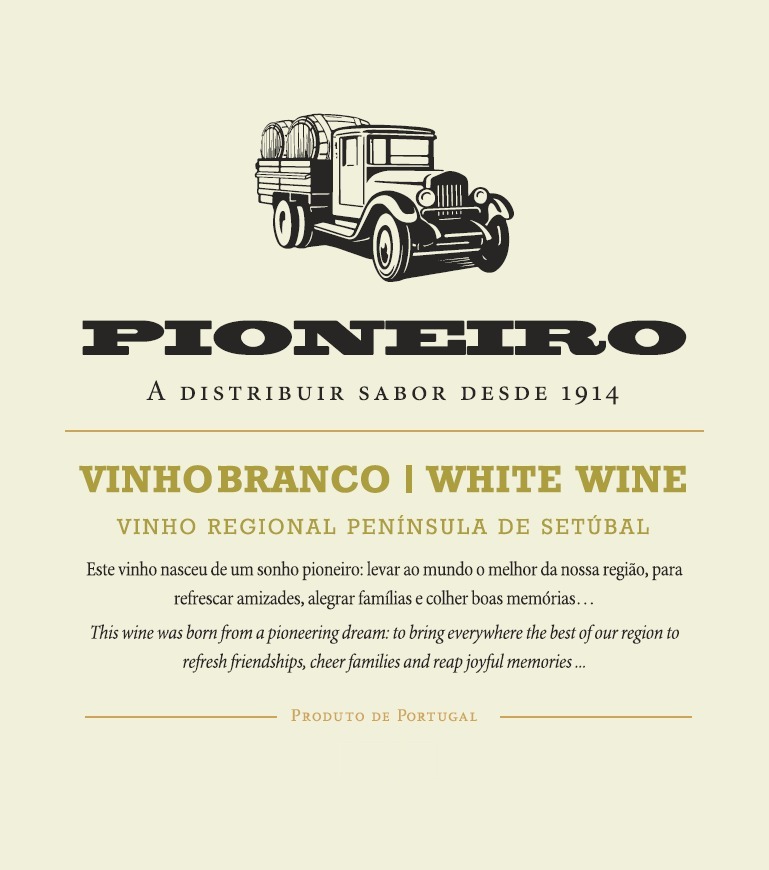
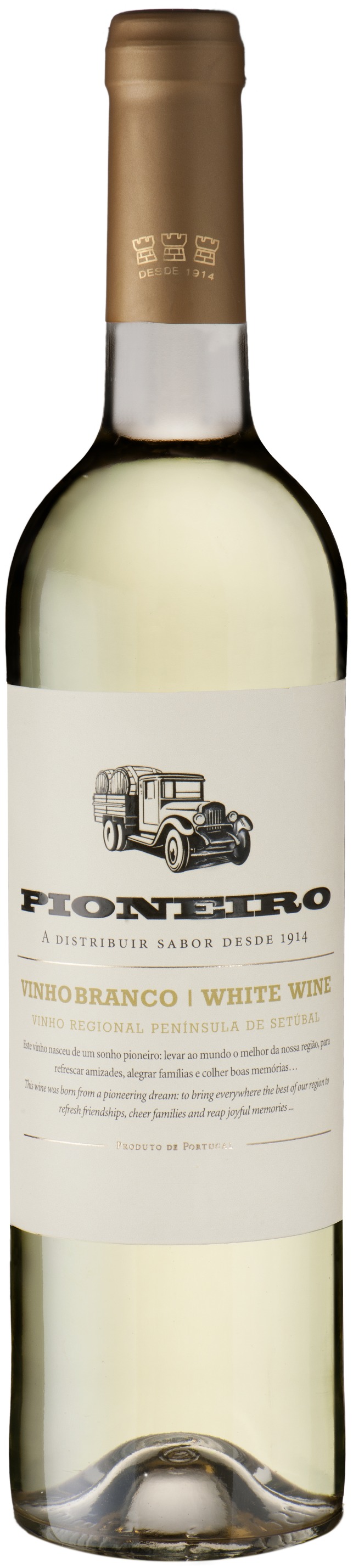
Pioneiro White Wine Vinho Regional Peninsula de Setubal is made from 70% Fernao Pires and 30% Moscatel Graudo
Aged on the fine lees for 5 months in stainless steel tanks
The story of this wines begun more than a century ago, with the pioneering dream of Venâncio da Costa Lima: to bring good wines to every corner of Portugal. Pioneiro wine brand was created to pay homage to his vision.
What's Unique? Pioneiro (meaning “pioneer” in Portuguese) wine vintage style label pay homage to the founder’s dream, dating back to 1914. But in a relaxed, casual way, typical of this wine producer mood.
Yellow citrine. Intense floral aroma with notes of tropical fruit, balanced and fresh flavor. A modern profile and young wine.
Made from 15 year old vines, planted on sandy soils.
Upon arrival at the winery, the grapes are destemmed and pressed gently with a pneumatic press. Then, the juice is transfered in a temperature-controlled stainless steel tank in order to start the alcoholic fermentation.
The wine didn't go through malolactic fermentation.
Pairs with fish or white meat dishes, shellfish and salads
Venâncio da Costa Lima was born in 1892 in the town of Quinta do Anjo, at the heart of a modest family. His mother died when he was very young and he was raised by his aunt and uncle, on a farm. Due to his father’s profession (a butcher), Venâncio’s first job was as a livestock tradesman to the region’s butcheries.
He quickly diversified his business, trading essentially in agricultural products.
In 1914 he founded the Casa Agrícola Venâncio da Costa Lima, in Quinta do Anjo. Primarily focused on selling wine, olive oil and grain, the firm later specialised exclusively in the production and sale of wine.
Between the 1930’s and 1950’s, Venâncio da Costa Lima was the second largest wine producer in the region.
During his lifetime, he became a highly recognised and esteemed person in the region, occupying the following positions:
- Chief-leader of the Quinta do Anjo township
- Councilman of the Setúbal Municipality
- Mayor of Palmela (1937-1946), carrying out remarkable work for the Council
- Owner in the Agricultural and Restaurant industries
He died on November 1st 1956, at the age of 64. This being the date for the local celebrations in the town where he was born, that year they were cancelled entirely due to the great dismay that his death provoked in the region.
Because he was childless, Venâncio bequeathed the winery to his six nieces and nephews who, from that time on, specialised in this region´s wines (Moscatel, red and white). Having passed through four generations, this winery remains a family business, managing 3 million litres annually.
It is currently in an investment phase, rebuilding the entire production area.
Recently recognised as producer of the "Best Muscat in the World "- Muscats du Monde 2011, this company has projected its name on a large scale and works daily towards producing the best wines in the region.
Venancio da Costa Lima Winery
Venâncio da Costa Lima is one of the oldest wineries in the Palmela region, beginning its activity in 1914.
Still a family business, this winery is already in its fourth generation.
As a producer of Table Wines, Certified Wines (Setúbal Peninsula Regional wines & DO Palmela wines) and Setúbal Moscatel, this company maintains its goal: to produce wines that are current and modern, but always display the profile and characteristics of a wine from this region. We also produce what is considered one of this region’s ex-libris:
the Setúbal Moscatel.
Always striving to perfect the art of wine making, this company’s journey has involved constant technological modernisation, enabling the quality of our wines to evolve.
Recently recognised as producer of the Best Muscat in the World (Muscats du Monde 2011), this winery has invested in its portfolio, image and notoriety, working daily to build a company that is current and competitive.
Get to know our story and discover this region’s flavours!

Saint Pierre Saint Julien is made from 79% Cabernet Sauvignon and 21% Merlot.
Chateau Saint-Pierre Saint-Julien 4th Grand Cru Classé boasts a rich and brilliant purple color, a complex aromatic expression marked by beautiful ripe fruits combined with soft spices, chocolate and licorice nuances. Well-balanced and a good texture, the palate is round and subtle, supported by velvety tannins that enhance the elegant and pure character of this Saint Julien.
Review:
"Very pretty and typical for the appellation with aromas of blackcurrants, violets and sandalwood that follow through to a full body with layers of polished tannins and a long, flavorful finish. Lasts a long time on the palate. Classic structure. Drink after 2027."
- James Suckling (January 2022), 96 pts

Vintage Notes: A cool summer and early fall allowed a longer ripening season, helping benefit this years Cabernet Franc, as its natural spice was allowed to mature and become better defined.
Pearmund Cellars Cabernet Franc is made from100% Cabernet Franc. Known primarily as a blending grape in Bordeaux’s left bank. Its ability to grow and mature in Virginia makes it one of the States finest varietals.
Tasting Notes: A nose of cherries, raspberries and fennel. Peppery spice continues on the palate with notes of cocoa and sweet cedar wood, allowing for easy drinking. A hint of pepper will linger on the finish.