
" We don't sell the wine without touching the vine "
| BUY MORE! SAVE MORE! | ||||||||||||||||||||
|
| Country: | Croatia |
| Winery: | Podrumi Krešić |
| Grape Type: | Graševina |
| Organic: | Yes |
| Vintage: | 2025 |
| Bottle Size: | 750 ml |
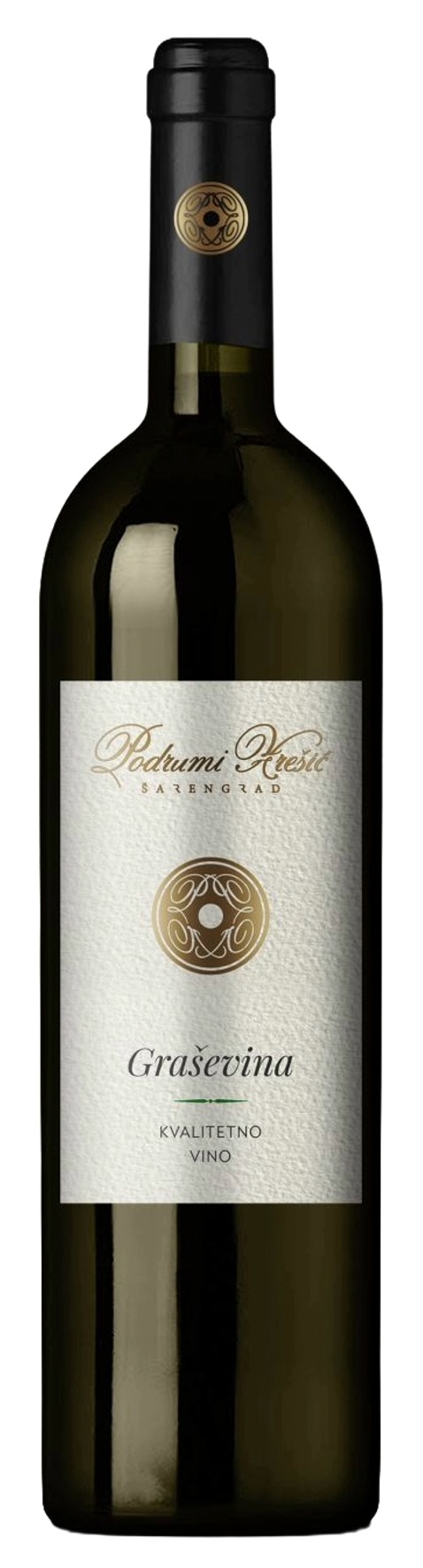
Podrumi Krešić Graševina is made from 100% Graševina.
From the banks of the Danube in picturesque Šarengrad, Croatia, this wine reflects a story of love for the land and winemaking tradition. The Podrumi Krešić winery was founded by Dario Krešić, with the first vineyard planted in 2006. Today, six carefully selected vineyard sites between Šarengrad and Opatovac produce distinctive wines from the Slavonia region.
Graševina (also known as Welschriesling) is Croatia’s most widely planted grape variety. This fresh, aromatic white wine offers notes of green apple, citrus, and white flowers, with a crisp acidity and clean finish.
Pairs well with fresh seafood, light salads, and appetizers.
Podrumi Krešić was founded by Dario Krešić on the banks of the Danube in picturesque Šarengrad, Croatia. The winemaking story began in 2006 with the planting of the first vineyard. Today, six carefully selected vineyard locations between Šarengrad and Opatovac produce distinctive wines from the Slavonia region of eastern Croatia.
The winery focuses on Graševina (Welschriesling), Croatia's most widely planted and celebrated grape variety, which thrives in the continental climate and rich soils along the Danube river valley.

The Barossa has a core of traditional growers of German Silesian descent, dating back five generations, staunchly continuing on the traditions of their forebears. Occasionally one or two parcels of fruit of overwhelming quality come over the weighbridge; this is such an example. This wine is sourced from up to 70-year-old, low-yielding shiraz vines from a selection of historical grower vineyards at Tappa Pass and Light Pass, growing in low-fertility Neoproterozoic soils more than 542 million years old, that range from red-brown earths to terra rossa. These vineyards provide shiraz fruit from both the Eden and Barossa Valleys of the Barossa zone, vinified in traditional open-top fermenters. Matured in 24% new and 76% seasoned French hogsheads for 18 months prior to blending and bottling.
Deep crimson with violet hues. Vibrant aromas of blueberry, blackberry, Satsuma plum and raspberry with hints of anise, crushed marjoram, cardamom, violets and cedar. The palate is rich, plush, and complex, with juicy blueberry and mulberry, spicy blackberry paste, and layers of fine velvety tannins creating incredible depth and length.
Review:
This was an excellent vintage in the Barossa and this exceptional wine from 70-year-old low yielding vines is a beautiful expression of the season. Dark plummy dark chocolate characters with a dry dusty complexity. The palate is sublimely integrated and balanced, exhibiting poise and style. The sweet fruit on the middle palate is complemented by the minerally oyster shell edge. Terrific wine.
-Wine Pilot 96 Points

This chardonnay has a characteristic pale yellow color with a shade of gold and subtle nose that will remind you the fresh butter nuts and roasted almonds. On the palate, it is full bodied and fruity with a pleasant roundness.
Average age of the vines is 25 years old.
We produce a part of this cuvee with 12 hours skin maceration and another part from directly pressed grapes.
Wine was slightly filtered before bottling to insure the wine remains stable.
Best friend as an aperitive or with freshwater fish, shellfish and goat cheeses.

This dry Rosé is very aromatic on the fruitiness with a great style and elegance.
Average age of the vines is 25 years old.
We produce a part of this cuvee with 12 hours skin maceration and another part from directly pressed grapes.
Wine was slightly filtered before bottling to insure the wine remains stable.
This wine is the perfect friend for barbecue, salads and of course aperitif. This is ideal for warm days in the garden, as well as elegant poultry dishes.

Alain de la Treille Rose d'Anjou is made from 50% Gamay, 50% Grolleau
The Rosé d'Anjou AOC, also known as Anjou Rosé AOC, produces medium-sweet rosés. Wines are made predominantly from Grolleau, with percentages of Cabernet Franc, Cabernet Sauvignon, Gamay, Malbec and Pineau d'Aunis permitted. Anjou soils reflect the geological identity of its border position between Armorican and Parisian basins. The terroirs consist of metamorphic and crystalline rocks (schist, sandstone) known as Anjou Noir, and ‘Terres Blanches’ (white earth) limestone known as Anjou Blanc. The AOC covers 1,890 hectares (4,668 acres).
The Grolleau grape derives its name from the French word ‘grolle’, meaning crow – a reflection of the dark black color of the grapes.
Crisp and refreshing with vibrant aromas of strawberry and raspberry. Juicy and well-balanced with a long finish.
Selective juice extraction to preserve color & aromas. Temperature controlled fermentation is followed by aging on the fine lees. No malolactic fermentation; no oak.
To be served chilled (10°C/50°F) with barbecued meats, salads, any spicy food, poultry dishes and of course appetizers.

Alain de la Treille Sauvignon Blanc is made from 100 percent Sauvignon Blanc.
This Sauvignon Blanc has a slight amber color with a fresh aromatic nose. Grassy and mineral flavored with a refreshingly crisp mouthfeel. Vines are located outside the Loire Valley AOC boundaries, hence the Vin de France classification.
Best friend as an aperitif, with all your fish meals and seafood, but as well with charcuteries, Don't hesitate to try it with goat cheese.

Alain Jaume Bellissime Cotes du Rhone Rose is made from 50% Grenache Noir, 25% Cinsault, 20% Syrah and 5% Mourvedre
Salmon-pink color, clear and brilliant. The nose is fruity and spicy, reminiscent of wild strawberry and fine Provencal spices. The palate is full, well-balanced and fruity, with a long, fresh finish. A beautiful and delicate rosé.
A part is drawn off the skins with short maceration and the other part is from direct press. Fermentation in stainless steel at cool temperature. Bottling 5 months after harvest.

Masseto 2020 is a wine that has embraced all the key traits of the vintage. It displays excellent concentration both in terms of colour and bouquet. They remain persistent and vivid in the glass without subsiding over time. The potency of this wine returns on the palate with beautiful length and balsamic flavours. The integrity of the tannin reveals the ageing potential typical of Masseto.
Review:
Intense and full on the nose, fragrant with ripe black fruit, floral aspects and soft spicing. Round and full on the palate, it's rich and muscular yet tight and neatly coiled with a liquorice, graphite, pepper, cinnamon and clove tang that gives this immediate but enjoyable spice. Feels well worked, juicy with high acidity that lifts the palate and gives freshness and brightness alongside really quite mouthwatering strawberry and raspberry fruit with such captivating dried floral and bitter orange rind aspects. Tannins are super fine and so well integrated yet this maintains a grip and hold from the very beginning through to a long and sustained finish. Nuanced and complex, still packing a punch in terms of power, but this feels sophisticated, suave, purposeful and controlled. Not elegant, this is more of a caged animal with it's full potential yet to be unveiled, but it is classy. A truly delicious wine with so much purity and sense of place. Malolactic fermentation in 100% new barroques, with each batch kept separate for the first 12 months of ageing before being blended and returned to barriques for another year, totaling 24 months. The wine was then aged for a further 12 months in bottle before being released.
-Decanter 100 Points

Quercia Nelle Langhe Langhe Arneis is made from 100% Arneis.
A fresh, aromatic white wine from the Langhe hills of Piemonte. Pale straw yellow with greenish highlights. Delicate aromas of white peach, almond, and white flowers. Crisp and refreshing on the palate with good acidity and a pleasant, lingering finish.



