
" We don't sell the wine without touching the vine "
I am a new customer.
By creating an account at Timeless Wines you will be able to shop faster, be up to date on an orders status, and keep track of the orders you have previously made.

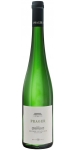
Franz Prager, co-founder of the Vinea Wachau, had already earned a reputation for his wines when Toni Bodenstein married into the family. Bodenstein’s passion for biodiversity and old terraces, coupled with brilliant winemaking, places Prager in the highest echelon of Austrian producers.
Smaragd is a designation of ripeness for dry wines used exclusively by members of the Vinea Wachau. The wines must have minimum alcohol of 12.5%. The grapes are hand-harvested, typically in October and November, and are sent directly to press where they spontaneously ferment in stainless-steel tanks.
Zwerithaler is a sub-site of Buschenberg and sits to the east of Weißenkirchen. The name Zwerithaler, meaning "nestled between the valleys," is a near monopole of Weingut Prager. It has a complex soil of paragneiss with alternating layers of dark and calcareous rock. Zwerithaler Kammergut is a 0.34-hectare parcel planted before WWI. The wine from these ungrafted, 100-year-old vines was bottled separately by Prager for the first time in 2015.
Light greenish yellow, silver reflections. Fine savory, delicate nuances of anise, tobacco notes, delicate yellow fruit, a touch of mango and honey blossom. Full-bodied, juicy white apple fruit, well-integrated, silky acidity structure, finesse and long persistence, saline finish, lingers for minutes, Veltliner at its best.
-Falstaff 99 Points
"The aromas of this old-vine gruner veltliner leap out and shake you to the core. Full-bodied and full of weighty and balanced layers of papayas, mangoes, nectarines, chives, white tea and oranges. Fantastic concentration, giving so much pleasure already, but it will keep blossoming if you give it time. From vines planted in 1907. Sustainable. Drink or hold."
-James Suckling 98 Points
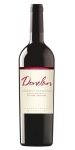
The nose of our the Cabernet Sauvignon shows remarkable purity, opening with juicy fruit-punch and layered notes of blue and red fruit dried with sweet herbs. The palate builds with blackberry pie filling, baker’s chocolate, and freshly ground coffee, underscored by an earthiness of loam and underbrush. Acidity is finely tuned, carrying structure through the middle and sides of the wine. For those who can wait, cellar this bottle for several years. For those who cannot, double decant 4–5 hours before serving and let the wine come fully alive.
Blackberry pie filling, baker’s chocolate, freshly ground coffee, earthy loam and underbrush, red and blue fruit dried with sweet herbs
Review:
"How do you do Cabernet the Donelan way—and do it in Sonoma? The answer began with archetyping older styles of Cabernet. The vineyard lies near Skipstone, encompassing sites such as T-T Vineyard, Obsidian, and Constant on Diamond Mountain. For Joe Donelan, the goal was to craft a Cabernet reminiscent of what Mondavi was producing in the 1970s and early 1980s—wines defined by freshness, clarity, and balance rather than sheer weight. The result is vivid, bright, and pure-fruited, with an immediate freshness factor. Red berry fruit, cherry, and cassis lead the way, framed by a medium-bodied structure with velvety-textured tannins and a creamy mid-palate that makes the wine deeply engaging and remarkably easy to drink. Sagebrush and black olive notes lend savoury complexity, joined by subtle hints of tobacco, all carrying through to a long, mineral-driven, fruit-focused finish. - Jonathan CRISTALDI"
Decanter (January 5th 2026), 97 points



